David Estlund - Böcker
Visar alla böcker från författaren David Estlund. Handla med fri frakt och snabb leverans.
7 produkter
7 produkter
677 kr
Skickas inom 5-8 vardagar
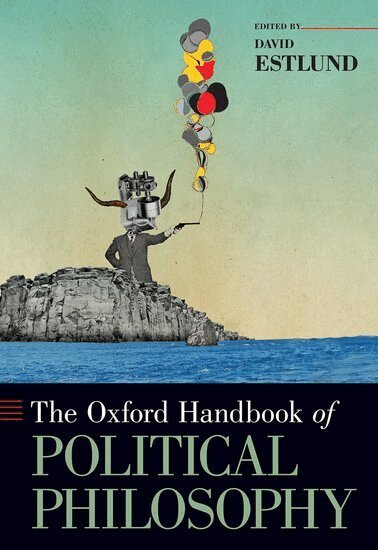
Even though political philosophy has a long tradition, it is much more than the study of old and great treatises. Contemporary philosophers continue to press new arguments on old and timeless questions, but also to propose departures and innovations. The field changes over time, and new work inevitably responds both to events in the world and to the directions of thought itself. This volume includes 22 new pieces by leaders in the field on both perennial and emerging topics of keen interest to contemporary political philosophers. In addition to longstanding issues such as Authority, Equality, and Freedom, and Democracy, there are articles on less classical topics such as Race, Historical Injustice, Deliberation, Money and Politics, Global Justice, and Ideal and Non-Ideal Theory. All of the pieces combine clarity and accessibility with a top scholar's critical and original point of view. The introductory essay briefly situates this snapshot of the state of the art in a broader view of developments in political philosophy in the last 40 years, and looks forward to future developments. Students and scholars alike will find the pieces to be valuable not only surveys but as provocations to think further about the questions, puzzles, and practical problems that animate recent work in political philosophy. The issues will be of interest to many working in philosophy, political science, law, economics, and more.
2 541 kr
Skickas inom 5-8 vardagar
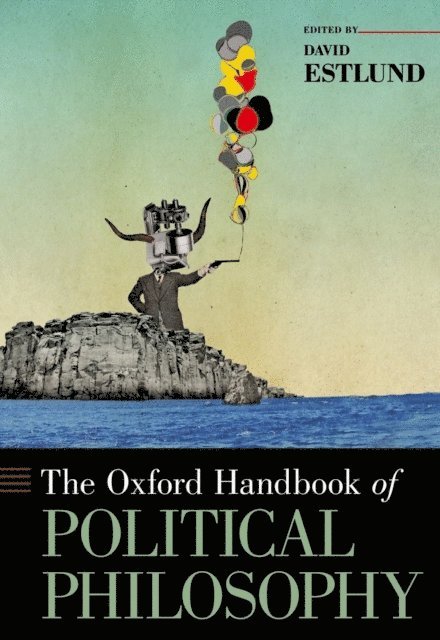
Even though political philosophy has a long tradition, it is much more than the study of old and great treatises. Contemporary philosophers continue to press new arguments on old and timeless questions, but also to propose departures and innovations. The field changes over time, and new work inevitably responds both to events in the world and to the directions of thought itself. This volume includes 22 new pieces by leaders in the field on both perennial and emerging topics of keen interest to contemporary political philosophers. In addition to longstanding issues such as Authority, Equality, and Freedom, and Democracy, there are articles on less classical topics such as Race, Historical Injustice, Deliberation, Money and Politics, Global Justice, and Ideal and Non-Ideal Theory. All of the pieces combine clarity and accessibility with a top scholar's critical and original point of view. The introductory essay briefly situates this snapshot of the state of the art in a broader view of developments in political philosophy in the last 40 years, and looks forward to future developments. Students and scholars alike will find the pieces to be valuable not only surveys but as provocations to think further about the questions, puzzles, and practical problems that animate recent work in political philosophy. The issues will be of interest to many working in philosophy, political science, law, economics, and more.
1 259 kr
Tillfälligt slut
496 kr
Skickas inom 7-10 vardagar
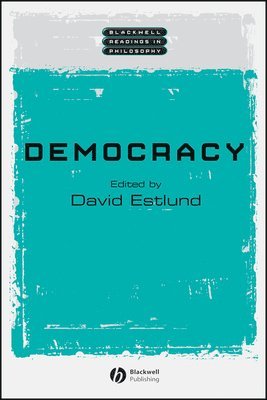
Democracy brings together some of the most sophisticated thinking on democratic theory in one concise volume. Written by experts in the field, these contemporary readings are distinctively philosophical, but will appeal to students in historical, empirical, legal, or policy- oriented disciplines which deal with democratic theory.
367 kr
Skickas inom 7-10 vardagar
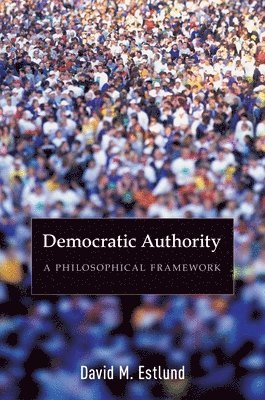
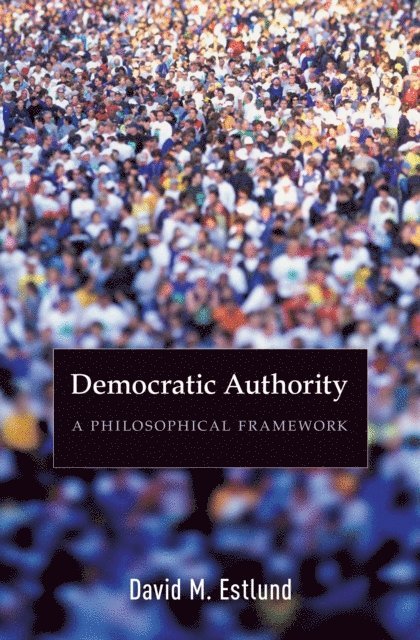
Democracy is not naturally plausible. Why turn such important matters over to masses of people who have no expertise? Many theories of democracy answer by appealing to the intrinsic value of democratic procedure, leaving aside whether it makes good decisions. In Democratic Authority, David Estlund offers a groundbreaking alternative based on the idea that democratic authority and legitimacy must depend partly on democracy's tendency to make good decisions. Just as with verdicts in jury trials, Estlund argues, the authority and legitimacy of a political decision does not depend on the particular decision being good or correct. But the "epistemic value" of the procedure--the degree to which it can generally be accepted as tending toward a good decision--is nevertheless crucial. Yet if good decisions were all that mattered, one might wonder why those who know best shouldn't simply rule. Estlund's theory--which he calls "epistemic proceduralism"--avoids epistocracy, or the rule of those who know. He argues that while some few people probably do know best, this can be used in political justification only if their expertise is acceptable from all reasonable points of view.If we seek the best epistemic arrangement in this respect, it will be recognizably democratic--with laws and policies actually authorized by the people subject to them.
343 kr
Skickas inom 7-10 vardagar
A leading political theorist’s groundbreaking defense of ideal conceptions of justice in political philosophyThroughout the history of political philosophy and politics, there has been continual debate about the roles of idealism versus realism. For contemporary political philosophy, this debate manifests in notions of ideal theory versus nonideal theory. Nonideal thinkers shift their focus from theorizing about full social justice, asking instead which feasible institutional and political changes would make a society more just. Ideal thinkers, on the other hand, question whether full justice is a standard that any society is likely ever to satisfy. And, if social justice is unrealistic, are attempts to understand it without value or importance, and merely utopian?Utopophobia argues against thinking that justice must be realistic, or that understanding justice is only valuable if it can be realized. David Estlund does not offer a particular theory of justice, nor does he assert that justice is indeed unrealizable—only that it could be, and this possibility upsets common ways of proceeding in political thought. Estlund engages critically with important strands in traditional and contemporary political philosophy that assume a sound theory of justice has the overriding, defining task of contributing practical guidance toward greater social justice. Along the way, he counters several tempting perspectives, including the view that inquiry in political philosophy could have significant value only as a guide to practical political action, and that understanding true justice would necessarily have practical value, at least as an ideal arrangement to be approximated.Demonstrating that unrealistic standards of justice can be both sound and valuable to understand, Utopophobia stands as a trenchant defense of ideal theory in political philosophy.
525 kr
Skickas inom 3-6 vardagar
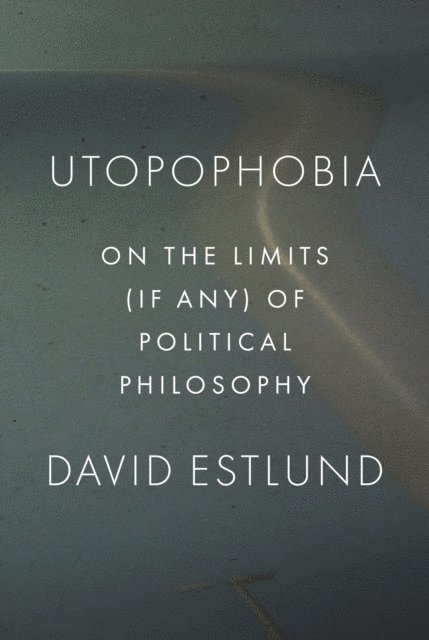
A leading political theorist’s groundbreaking defense of ideal conceptions of justice in political philosophyThroughout the history of political philosophy and politics, there has been continual debate about the roles of idealism versus realism. For contemporary political philosophy, this debate manifests in notions of ideal theory versus nonideal theory. Nonideal thinkers shift their focus from theorizing about full social justice, asking instead which feasible institutional and political changes would make a society more just. Ideal thinkers, on the other hand, question whether full justice is a standard that any society is likely ever to satisfy. And, if social justice is unrealistic, are attempts to understand it without value or importance, and merely utopian?Utopophobia argues against thinking that justice must be realistic, or that understanding justice is only valuable if it can be realized. David Estlund does not offer a particular theory of justice, nor does he assert that justice is indeed unrealizable—only that it could be, and this possibility upsets common ways of proceeding in political thought. Estlund engages critically with important strands in traditional and contemporary political philosophy that assume a sound theory of justice has the overriding, defining task of contributing practical guidance toward greater social justice. Along the way, he counters several tempting perspectives, including the view that inquiry in political philosophy could have significant value only as a guide to practical political action, and that understanding true justice would necessarily have practical value, at least as an ideal arrangement to be approximated.Demonstrating that unrealistic standards of justice can be both sound and valuable to understand, Utopophobia stands as a trenchant defense of ideal theory in political philosophy.