David Goldfield – författare
Visar alla böcker från författaren David Goldfield. Handla med fri frakt och snabb leverans.
11 produkter
11 produkter
Häftad, Engelska, 2013
2 717 kr
Skickas inom 3-6 vardagar
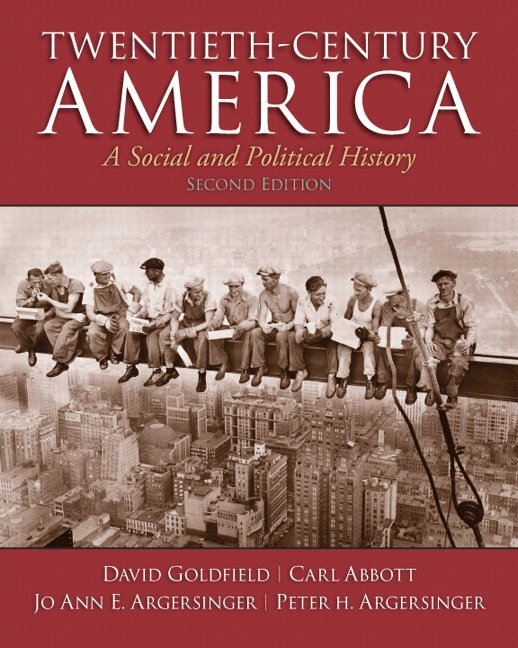
A compelling story of 20th century events and people, including those familiar and unfamiliar to students. The goal of this book is to emphasize what students need to know about America’s past to function best in the society that emerged from the 20th century. The authors accomplish this by using a strong, clear narrative as well as integrating political and social history. Twentieth Century America fits the experiences of particular groups into the broader perspective of the American past while giving voice to minor and major players alike. The text is organized chronologically, so students can understand the sequence of events in history. Upon completing this book readers will be able to: Recall the events and people that shaped 20 th century American history Understand how 20 th century America fits into the whole of American history Apply what they have learned to their own lives
Häftad, Engelska, 1991
328 kr
Skickas inom 10-15 vardagar
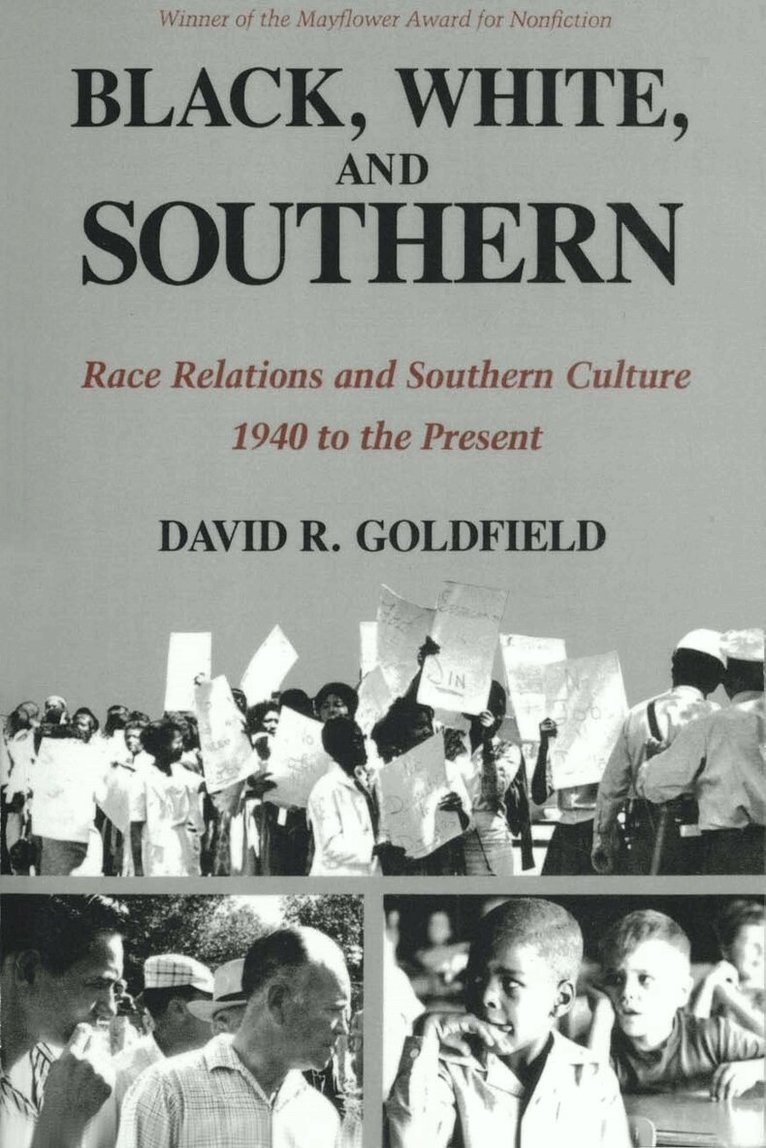
In Black, White, and Southern, David R. Goldfield shows how the struggles of black southerners to lift the barriers that had historically separated them from their white counterparts not only brought about the demise of white supremacy but did so without destroying the South's unique culture. Indeed, it is Goldfield's contention that the civil rights crusade has strengthened the South's cultural heritage, making it possible for black southeners to embrace their region unfettered by fear and frustration and for whites to leave behind decades of guilt and condemnation.In support of his analysis Goldfield presents a sweeping examination of the evolution of southern race relations over the past fifty years. He provides moving accounts of the major moments of the civil rights era, and he looks at more recent efforts by blacks to achieve economic and class parity.This history of the crusade for black equality is in the end they story of the South itself and of the powerful forces of redemption that Goldfield attests are still working to shape the future of the region.
Häftad, Engelska, 1999
318 kr
Skickas inom 10-15 vardagar
The urban growth of Virginia during the decade and a half before the Civil War has been an unjustly neglected subject in American history. With this authoritative book David Goldfield fills a long-standing gap in historical scholarship by providing much new information and a fresh perspective on urban development in the Old Dominion during the turbulent antebellum years.According to Goldfield's interpretation, the urbanization of Virginia was prompted, in part, by the response of the state's leaders to the sectionalism that increasingly influenced prewar southern ideas. Caught up in the intense competition for western trade and commerce, Virginia's urbanizers dreamed of railroads and canals flung across the continent and bringing the wealth of the West into the Old Dominion.To realize these heroic visions, the state's entrepreneurs planned railroad networks, invested in manufacturing, and sought to establish trade with Europe. Lynchburg and Petersburg became centers for tobacco manufacturing, the ports of Alexandria and Norfolk saw a resurgence of shipping activity, and Richmond developed flour-milling and iron-manufacturing industries. Local governments, labor systems, and the cities themselves expanded to accommodate urban growth, embracing the farmer as a partner in the urban economy. Finally, a distinct urban consciousness developed to provide an intellectual framework for the urbanization process.Despite the unprecedented growth of Virginia's cities, however, their dreams of economic independence remained unfulfilled. By 1861 the state was more economically dependent on its northern rivals than it had ever been before. As the state reluctantly seceded from the Union, the subject of urban economic growth elicited sharp debate at the secession convention. Urban Virginia would have to wait until the ""New South"" years to renew the dreams of economic independence.
Häftad, Engelska, 2004
244 kr
Skickas inom 10-15 vardagar
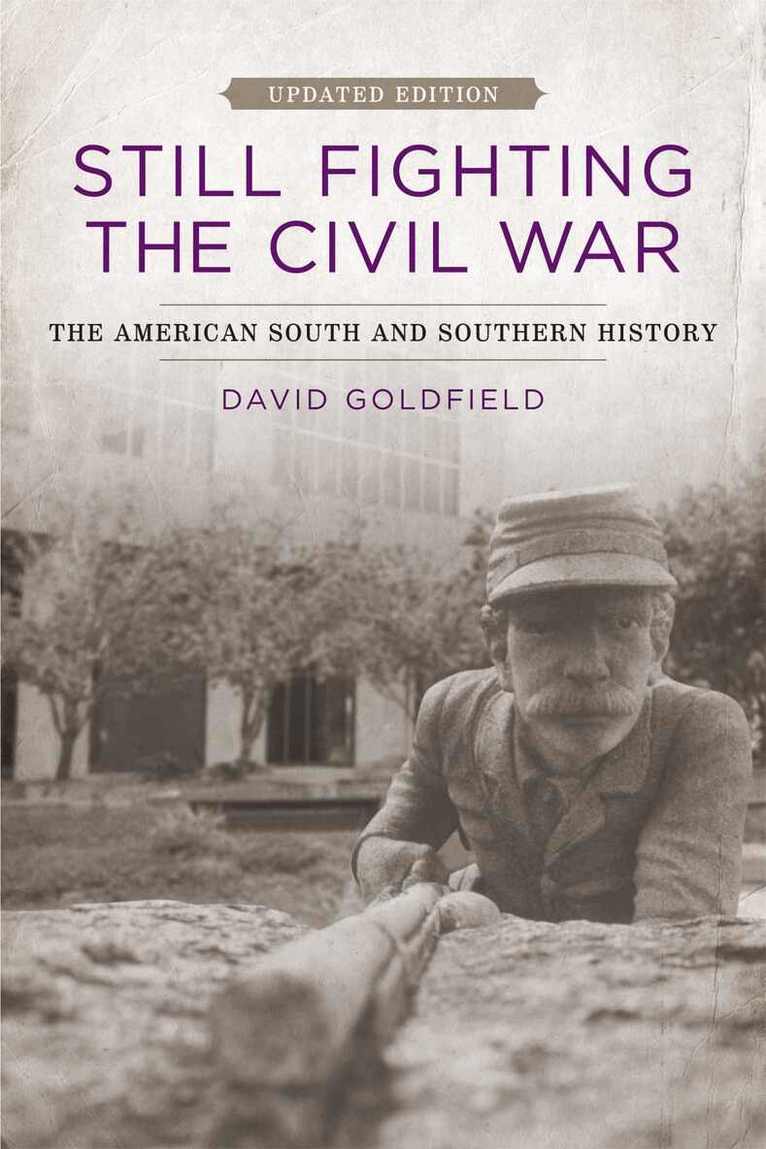
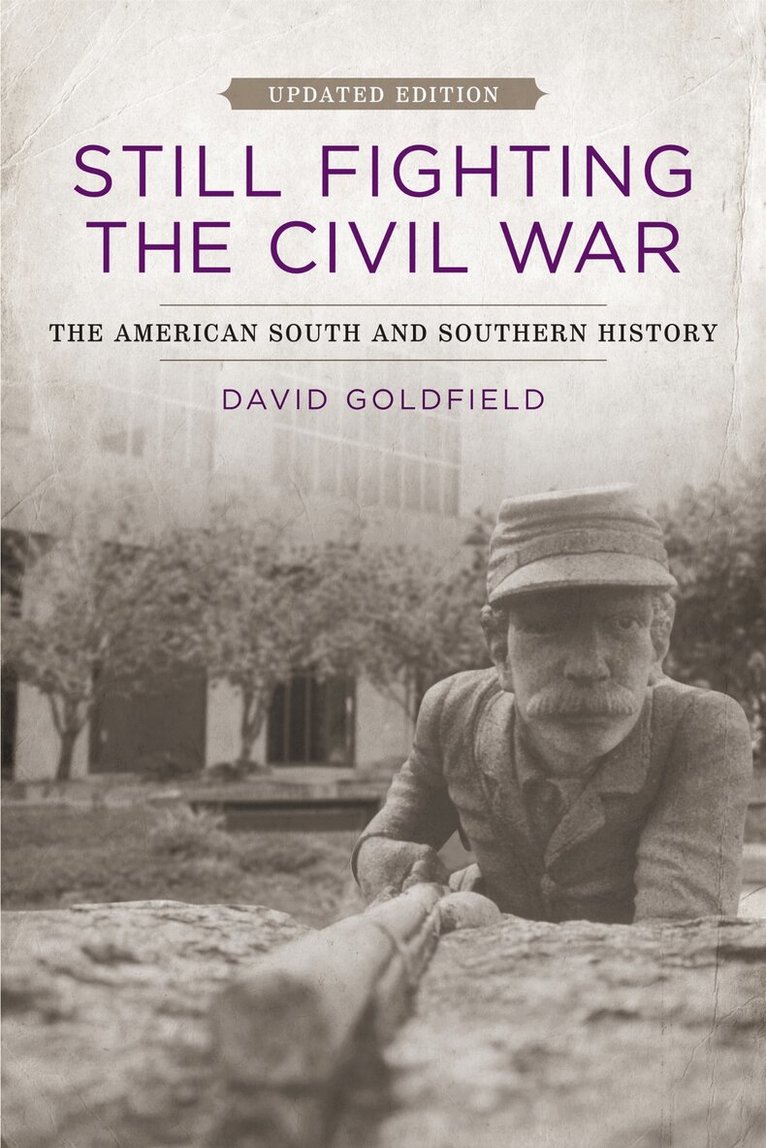
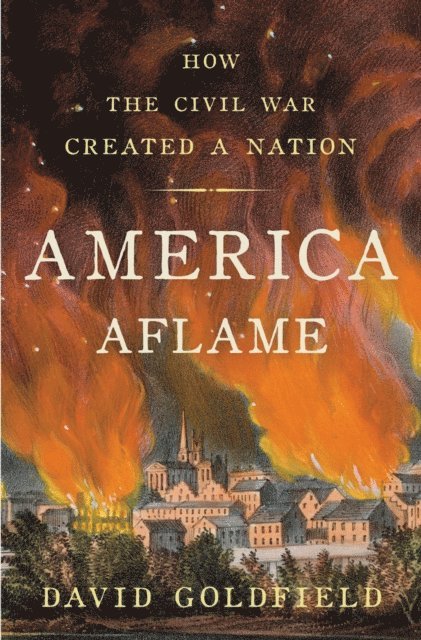
Newcomers to the South often remark that southerners, at least white southerners, are still fighting the Civil War -- a strange preoccupation considering that the war formally ended more than one hundred and thirty-five years ago and fewer than a third of southerners today can claim an ancestor who actually fought in the conflict. But even if the war is far removed both in time and genealogy, it survives in the hearts of many of the region's residents and often in national newspaper headlines concerning battle flags, racial justice, and religious conflicts. In this sweeping narrative of the South from the Civil War to the present, noted historian David Goldfield contemplates the roots of southern memory and explains how this memory has shaped the modern South both for good and ill.He candidly discusses how and why white southern men fashioned the myths of the Lost Cause and the Redemption out of the Civil War and Reconstruction and how they shaped a religion to canonize the heroes and reify the events of those fated years. Goldfield also recounts how blacks and white women eventually crafted a different, more inclusive version of southern history and how that new vision has competed with more traditional perspectives.As Goldfield shows, the battle for southern history, and for the South, continues -- in museums, public spaces, books, state legislatures, and the minds of southerners. Given the region's growing economic power and political influence, the outcome of this war is more than a historian's preoccupation; it is of national importance. Integrating history and memory, religion, race, and gender, Still Fighting the Civil War will help newcomers, longtime residents, and curious outsiders alike attain a better understanding of the South and each other.
Häftad, Engelska, 2013
328 kr
Skickas inom 10-15 vardagar
In the updated edition of his sweeping narrative on southern history, David Goldfield brings this extensive study into the present with a timely assessment of the unresolved issues surrounding the Civil War's sesquicentennial commemoration. Traversing a hundred and fifty years of memory, Goldfield confronts the remnants of the American Civil War that survive in the hearts of many of the South's residents and in the national news headlines of battle flags, racial injustice, and religious conflicts. Goldfield candidly discusses how and why white southern men fashioned the myths of the Lost Cause and Redemption out of the Civil War and Reconstruction, and how they shaped a religion to canonize the heroes and deify the events of those fateful years. He also recounts how groups of blacks and white women eventually crafted a different, more inclusive version of southern history and how that new vision competed with more traditional perspectives.The battle for southern history, and for the South, continues- in museums, public spaces, books, state legislatures, and the minds of southerners. Given the region's growing economic power and political influence, understanding this war takes on national significance. Through an analysis of ideas of history and memory, religion, race, and gender, Still Fighting the Civil War provides us with a better understanding of the South and one another.
Inbunden, Engelska, 2021
509 kr
Skickas inom 10-15 vardagar
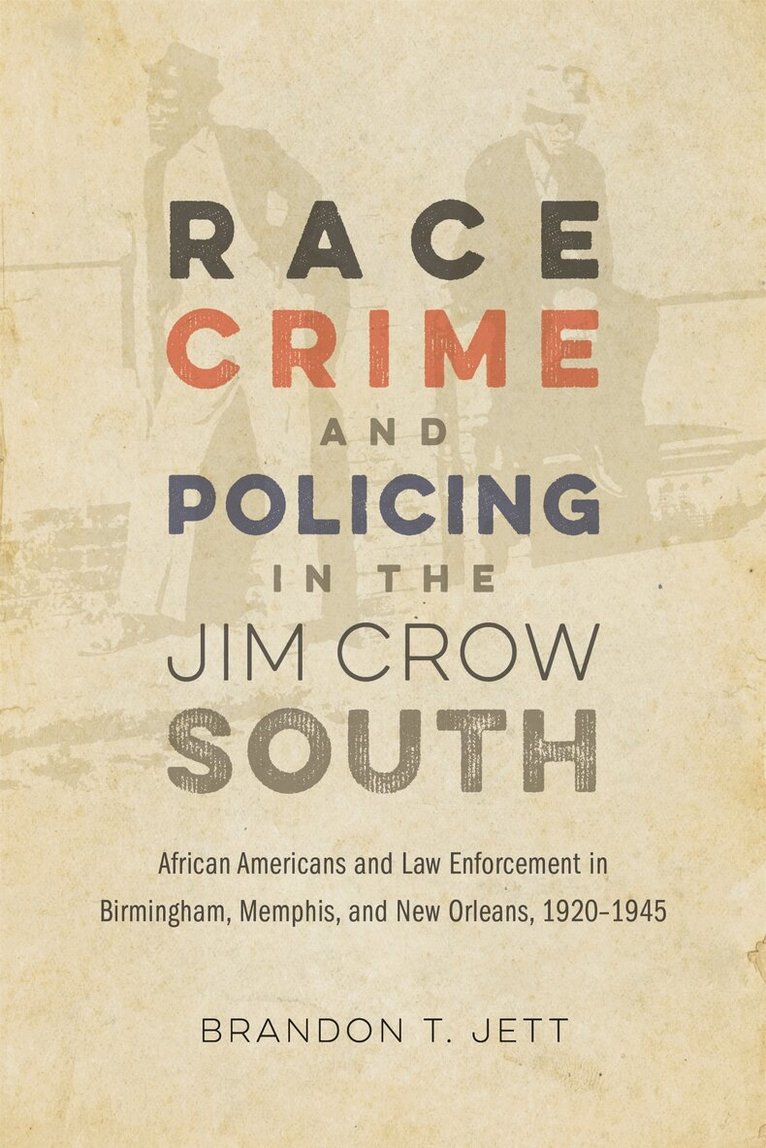
Throughout the Jim Crow era, southern police departments played a vital role in the maintenance of white supremacy. Police targeted African Americans through an array of actions, including violent interactions, unjust arrests, and the enforcement of segregation laws and customs. Scholars have devoted much attention to law enforcement's use of aggression and brutality as a means of maintaining African American subordination. While these interpretations are vital to the broader understanding of police and minority relations, Black citizens have often come off as powerless in their encounters with law enforcement. Brandon T. Jett's Race, Crime, and Policing in the Jim Crow South, by contrast, reveals previously unrecognized efforts by African Americans to use, manage, and exploit policing. In the process, Jett exposes a much more complex relationship, suggesting that while violence or the threat of violence shaped police and minority relations, it did not define all interactions.Black residents of southern cities repeatedly complained about violent policing strategies and law enforcement's seeming lack of interest in crimes committed against African Americans. These criticisms notwithstanding, Blacks also voiced a desire for the police to become more involved in their communities to reduce the seemingly intractable problem of crime, much of which resulted from racial discrimination and other structural factors related to Jim Crow. Although the actions of the police were problematic, African Americans nonetheless believed that law enforcement could play a role in reducing crime in their communities. During the first half of the twentieth century, Black citizens repeatedly demanded better policing and engaged in behaviors designed to extract services from law enforcement officers in Black neighborhoods as part of a broader strategy to make their communities safer. By examining the myriad ways in which African Americans influenced the police to serve the interests of the Black community, Jett adds a new layer to our understanding of race relations in the urban South in the Jim Crow era and contributes to current debates around the relationship between the police and minorities in the United States.
Häftad, Engelska, 2023
383 kr
Skickas inom 10-15 vardagar
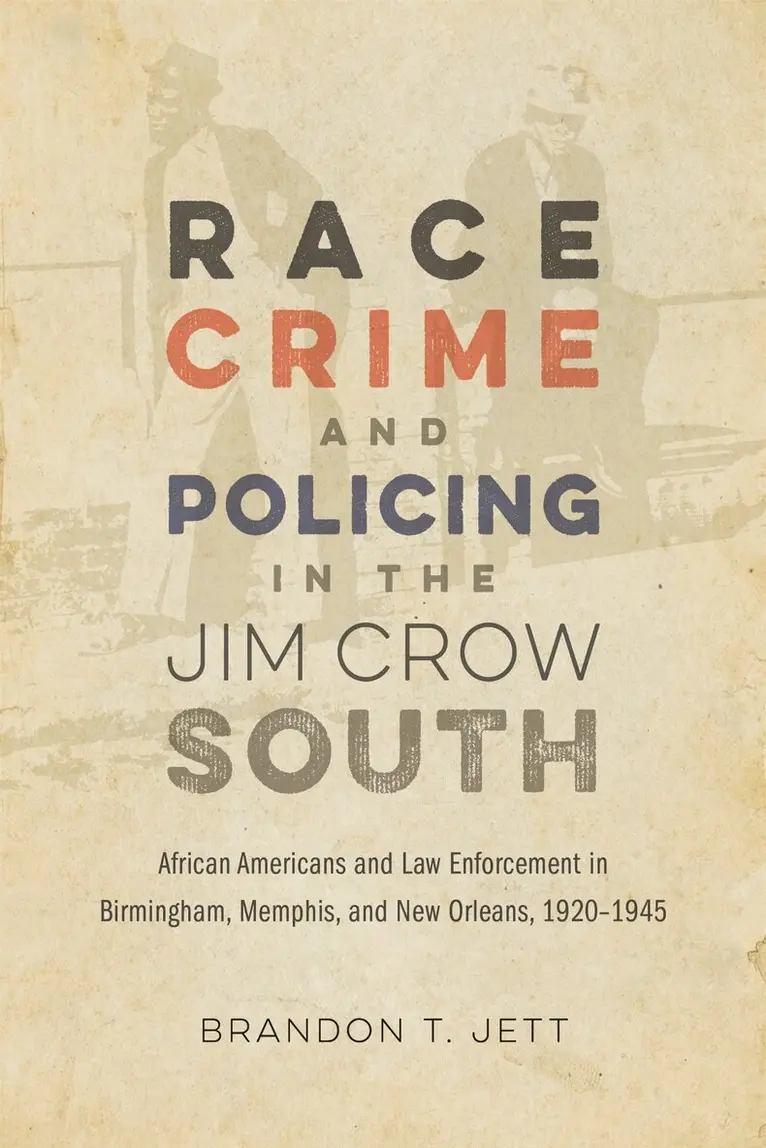
Throughout the Jim Crow era, southern police departments played a vital role in the maintenance of white supremacy. Police targeted African Americans through an array of actions, including violent interactions, unjust arrests, and the enforcement of segregation laws and customs. Scholars have devoted much attention to law enforcement's use of aggression and brutality as a means of maintaining African American subordination. While these interpretations are vital to the broader understanding of police and minority relations, Black citizens have often come off as powerless in their encounters with law enforcement. Brandon T. Jett's Race, Crime, and Policing in the Jim Crow South, by contrast, reveals previously unrecognized efforts by African Americans to use, manage, and exploit policing. In the process, Jett exposes a much more complex relationship, suggesting that while violence or the threat of violence shaped police and minority relations, it did not define all interactions.Black residents of southern cities repeatedly complained about violent policing strategies and law enforcement's seeming lack of interest in crimes committed against African Americans. These criticisms notwithstanding, Blacks also voiced a desire for the police to become more involved in their communities to reduce the seemingly intractable problem of crime, much of which resulted from racial discrimination and other structural factors related to Jim Crow. Although the actions of the police were problematic, African Americans nonetheless believed that law enforcement could play a role in reducing crime in their communities. During the first half of the twentieth century, Black citizens repeatedly demanded better policing and engaged in behaviors designed to extract services from law enforcement officers in Black neighborhoods as part of a broader strategy to make their communities safer. By examining the myriad ways in which African Americans influenced the police to serve the interests of the Black community, Jett adds a new layer to our understanding of race relations in the urban South in the Jim Crow era and contributes to current debates around the relationship between the police and minorities in the United States.
Inbunden, Engelska, 2024
422 kr
Skickas inom 3-6 vardagar
The 1968 burning of the Lazy B Stables in Charlotte, North Carolina, attracted little notice beyond coverage in local media. By the mid-1970s, however, the fire had become the center of a contentious and dubious arson case against a trio of Black civil rights activists, who became known as the "Charlotte Three." The charges against the men garnered interest from federal law enforcement agents, investigative journalists— including one who later earned a Pulitzer Prize for coverage of the trials—numerous New Left and Black Power activists, and Amnesty International, which declared the defendants "political prisoners." In Going to Hell to Get the Devil, J. Christopher Schutz offers the first comprehensive examination of this controversial case and its outcome. In the 1960s and 1970s, Charlotte's leaders sought to portray their home as a placid, business-friendly, and racially moderate community. When New Left and Black Power activists threatened that stability, city leaders employed a variety of means to silence them, including the use of law enforcement against African Americans they deemed too zealous. In the Charlotte Three case, prosecutors paid prisoners for testimony against the Black activists on trial, resulting in their convictions with lengthy prison sentences. The unwanted publicity surrounding the case of the Charlotte Three became a critical pivot point in the Queen City's post–World War II trajectory. Going to Hell to Get the Devil tells more than the story of an arson case; it also tells the story of the South's future, as the fate of the Charlotte Three became emblematic of the decline of the African American freedom struggle and the causes it championed.
Inbunden, Engelska, 2024
502 kr
Skickas inom 5-8 vardagar
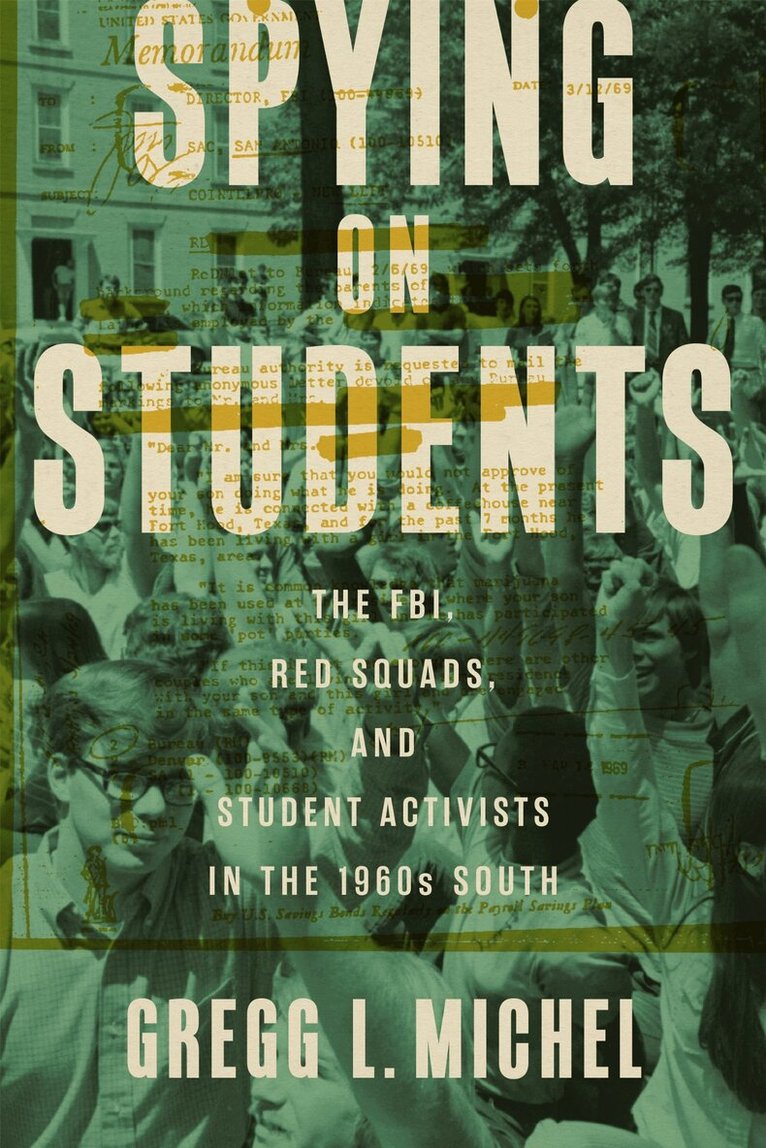
Gregg L. Michel's Spying on Students focuses on the law enforcement campaign against New Left and progressive student activists in the South during the 1960s. Often overlooked by scholars, white southern students worked alongside their Black peers in the civil rights struggle, drove opposition to the Vietnam War, and embraced the counterculture's rejection of conventions and norms. While African Americans bore the brunt of police surveillance and harassment, federal agencies such as the FBI and local police intelligence units known as Red Squads subjected white student activists to wide-ranging, intrusive, and illegal monitoring. By examining the experiences of white students in the South, Michel provides fresh insights into the destructive, weaponized spying tactics deployed by state actors in their attempts to quash dissent in the region.Drawing on previously secret FBI files and records of other investigative agencies, Michel demonstrates that authorities at all levels of government turned the full power of their offices against white activists listening to their conversations, infiltrating their meetings, and sowing discord within their families and schools. Efforts to surveil and repress social activism reflected officials' fear of growing unrest on the part of white students who questioned the southern racial status quo and recoiled as the horrors of Vietnam laid bare the shibboleth of American exceptionalism. As white students revolted on campuses elsewhere, most notably at Berkeley and Columbia, law enforcement sought to curtail such disruptions in the South. In their view, white students threatened domestic tranquility and therefore warranted close monitoring.Spying on Students presents a unique perspective on state actors' war on dissent, exposing their suspicion of opposing political beliefs and revealing their paranoia as they sought to preserve the existing racial order. The work complicates further the dominant narrative of the era that casts white southern students as opponents of social change. The counterintelligence operations employed against them show not only that white students valued political engagement and social activism but also that authorities considered them a menace to the country as a whole.
Inbunden, Engelska, 2025
509 kr
Skickas inom 10-15 vardagar
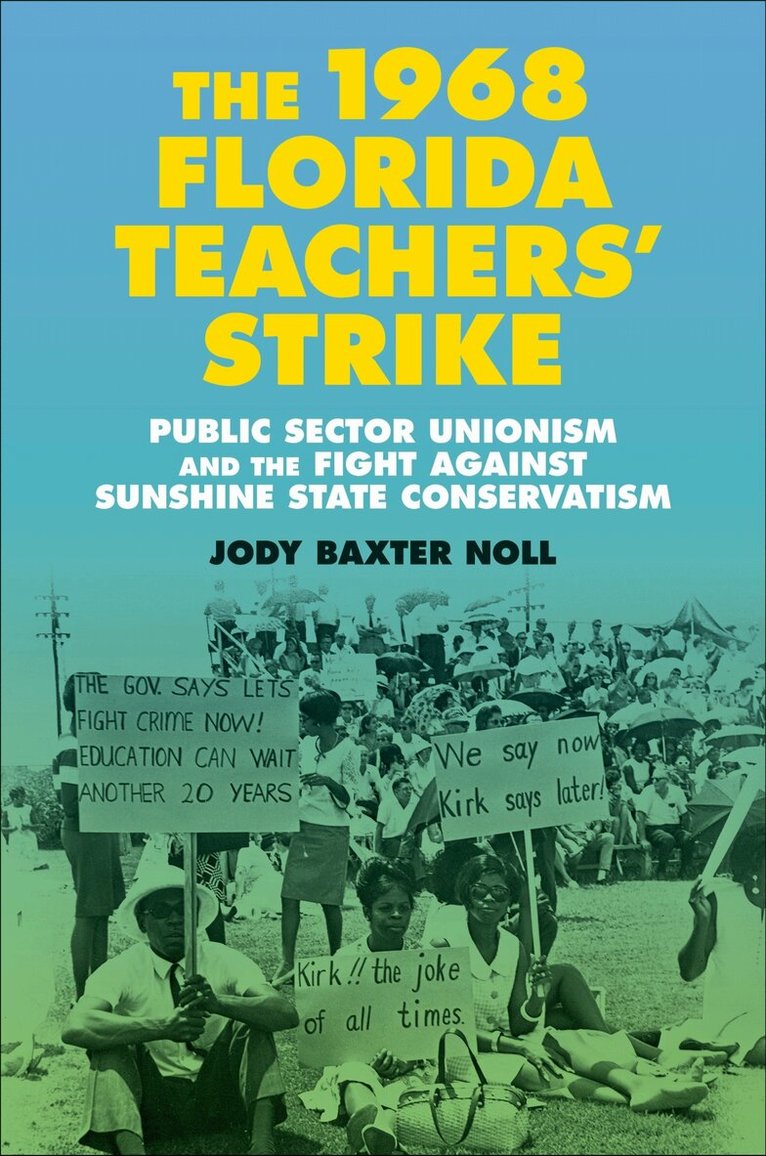
In early 1968, more than 27,000 teachers across Florida mailed their resignation letters, initiating the country's first statewide teachers' strike. The striking teachers fought for and won a monumental victory, improving education in the state and gaining collective bargaining rights for all public sector employees. Even as the influence of industrial labor unions decreased across the country, the Florida teachers' strike and the spirit of teacher militancy that swept the nation during the late 1960s and 1970s demonstrate that a vibrant labor movement remained. Jody Baxter Noll's study challenges the prevailing view of these decades as a period of decline for the American labor movement by turning the spotlight on teachers and public sector unionism.In his examination of the 1968 strike and its aftermath, Noll illuminates the vital role of teachers in shaping political and social policy in the United States. As a predominantly women-led workforce, teachers challenged notions of feminine passivity in their mobilization efforts and used their union to fight for gender equality. The strike also provides insight into how interracial unionism could be a potent weapon for labor movements, even in the Deep South.In exploring the political and social factors that prompted the teachers' strike, Noll considers Florida's instrumental role in forming modern conservatism. Led by Republican governor Claude Kirk, the first Republican governor elected in the Deep South since Reconstruction, Florida helped to create a blueprint for Republicans to build a New Right powerhouse throughout the country. Though Florida has remained on the periphery of much scholarship on the ascendancy of the New Right, Noll demonstrates that the state more accurately reflects the nation's political attitudes than much of the rest of the South because of its economic, racial, social, and political diversity.
Inbunden, Engelska, 2025
509 kr
Skickas inom 10-15 vardagar
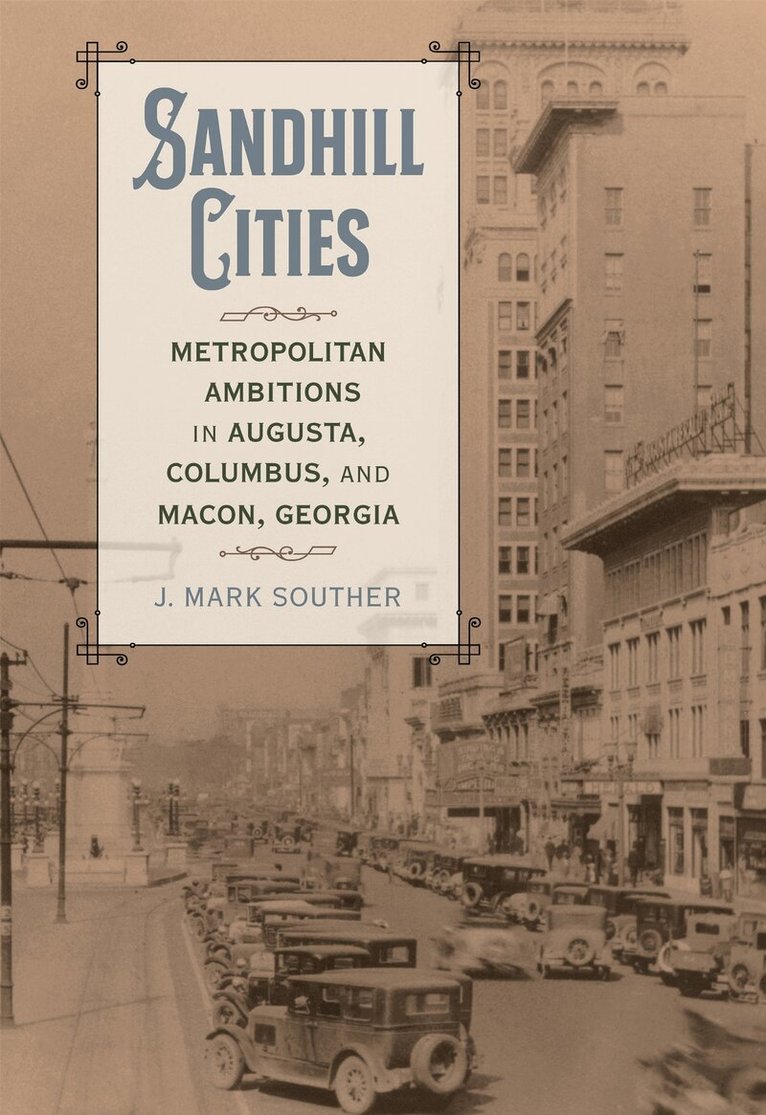
Sandhill Cities is a comparative history of Augusta, Columbus, and Macon, Georgia, in the twentieth century. Weaving together southern, urban, and environmental history, J. Mark Souther narrates urban boosters' hopes and actions in their pursuit of metropolitan stature in three midsized cities situated along the fall line running through the middle of the state.