Brandon T. Jett - Böcker
Visar alla böcker från författaren Brandon T. Jett. Handla med fri frakt och snabb leverans.
3 produkter
3 produkter
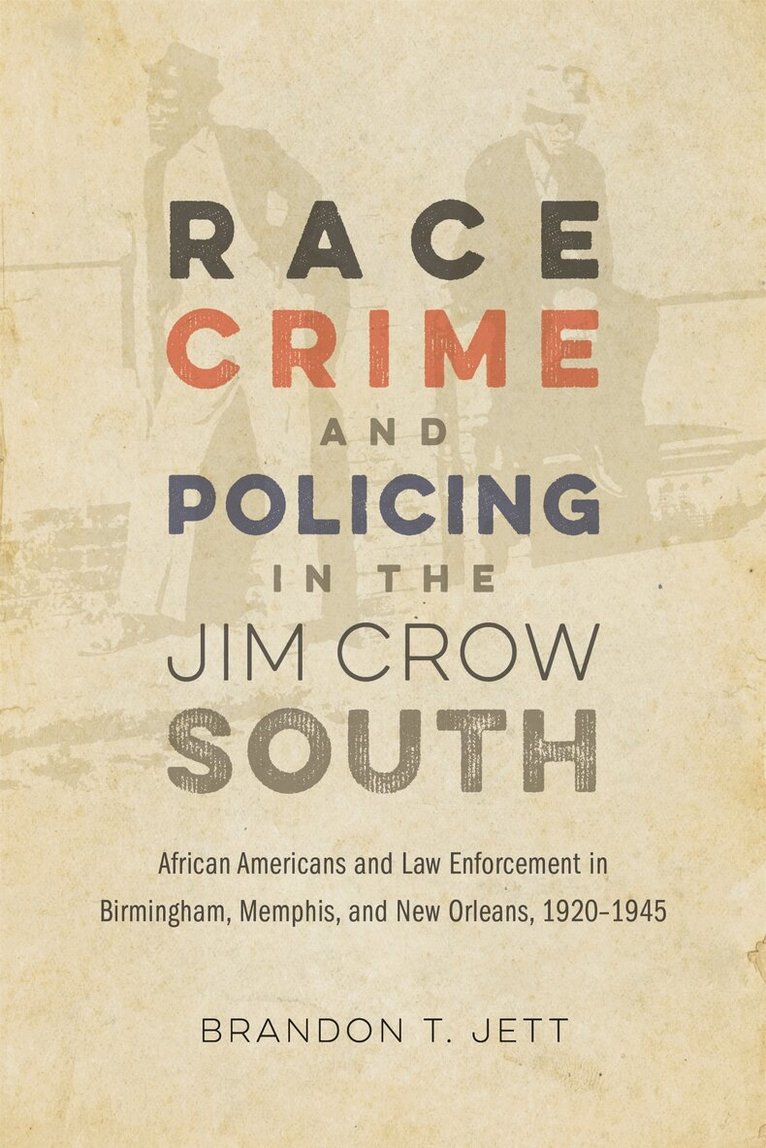
Race, Crime, and Policing in the Jim Crow South
African Americans and Law Enforcement in Birmingham, Memphis, and New Orleans, 1920-1945
Inbunden, Engelska, 2021
502 kr
Skickas inom 10-15 vardagar
Throughout the Jim Crow era, southern police departments played a vital role in the maintenance of white supremacy. Police targeted African Americans through an array of actions, including violent interactions, unjust arrests, and the enforcement of segregation laws and customs. Scholars have devoted much attention to law enforcement's use of aggression and brutality as a means of maintaining African American subordination. While these interpretations are vital to the broader understanding of police and minority relations, Black citizens have often come off as powerless in their encounters with law enforcement. Brandon T. Jett's Race, Crime, and Policing in the Jim Crow South, by contrast, reveals previously unrecognized efforts by African Americans to use, manage, and exploit policing. In the process, Jett exposes a much more complex relationship, suggesting that while violence or the threat of violence shaped police and minority relations, it did not define all interactions.Black residents of southern cities repeatedly complained about violent policing strategies and law enforcement's seeming lack of interest in crimes committed against African Americans. These criticisms notwithstanding, Blacks also voiced a desire for the police to become more involved in their communities to reduce the seemingly intractable problem of crime, much of which resulted from racial discrimination and other structural factors related to Jim Crow. Although the actions of the police were problematic, African Americans nonetheless believed that law enforcement could play a role in reducing crime in their communities. During the first half of the twentieth century, Black citizens repeatedly demanded better policing and engaged in behaviors designed to extract services from law enforcement officers in Black neighborhoods as part of a broader strategy to make their communities safer. By examining the myriad ways in which African Americans influenced the police to serve the interests of the Black community, Jett adds a new layer to our understanding of race relations in the urban South in the Jim Crow era and contributes to current debates around the relationship between the police and minorities in the United States.
Race, Crime, and Policing in the Jim Crow South
African Americans and Law Enforcement in Birmingham, Memphis, and New Orleans, 1920-1945
Häftad, Engelska, 2023
378 kr
Skickas inom 10-15 vardagar
Throughout the Jim Crow era, southern police departments played a vital role in the maintenance of white supremacy. Police targeted African Americans through an array of actions, including violent interactions, unjust arrests, and the enforcement of segregation laws and customs. Scholars have devoted much attention to law enforcement's use of aggression and brutality as a means of maintaining African American subordination. While these interpretations are vital to the broader understanding of police and minority relations, Black citizens have often come off as powerless in their encounters with law enforcement. Brandon T. Jett's Race, Crime, and Policing in the Jim Crow South, by contrast, reveals previously unrecognized efforts by African Americans to use, manage, and exploit policing. In the process, Jett exposes a much more complex relationship, suggesting that while violence or the threat of violence shaped police and minority relations, it did not define all interactions.Black residents of southern cities repeatedly complained about violent policing strategies and law enforcement's seeming lack of interest in crimes committed against African Americans. These criticisms notwithstanding, Blacks also voiced a desire for the police to become more involved in their communities to reduce the seemingly intractable problem of crime, much of which resulted from racial discrimination and other structural factors related to Jim Crow. Although the actions of the police were problematic, African Americans nonetheless believed that law enforcement could play a role in reducing crime in their communities. During the first half of the twentieth century, Black citizens repeatedly demanded better policing and engaged in behaviors designed to extract services from law enforcement officers in Black neighborhoods as part of a broader strategy to make their communities safer. By examining the myriad ways in which African Americans influenced the police to serve the interests of the Black community, Jett adds a new layer to our understanding of race relations in the urban South in the Jim Crow era and contributes to current debates around the relationship between the police and minorities in the United States.
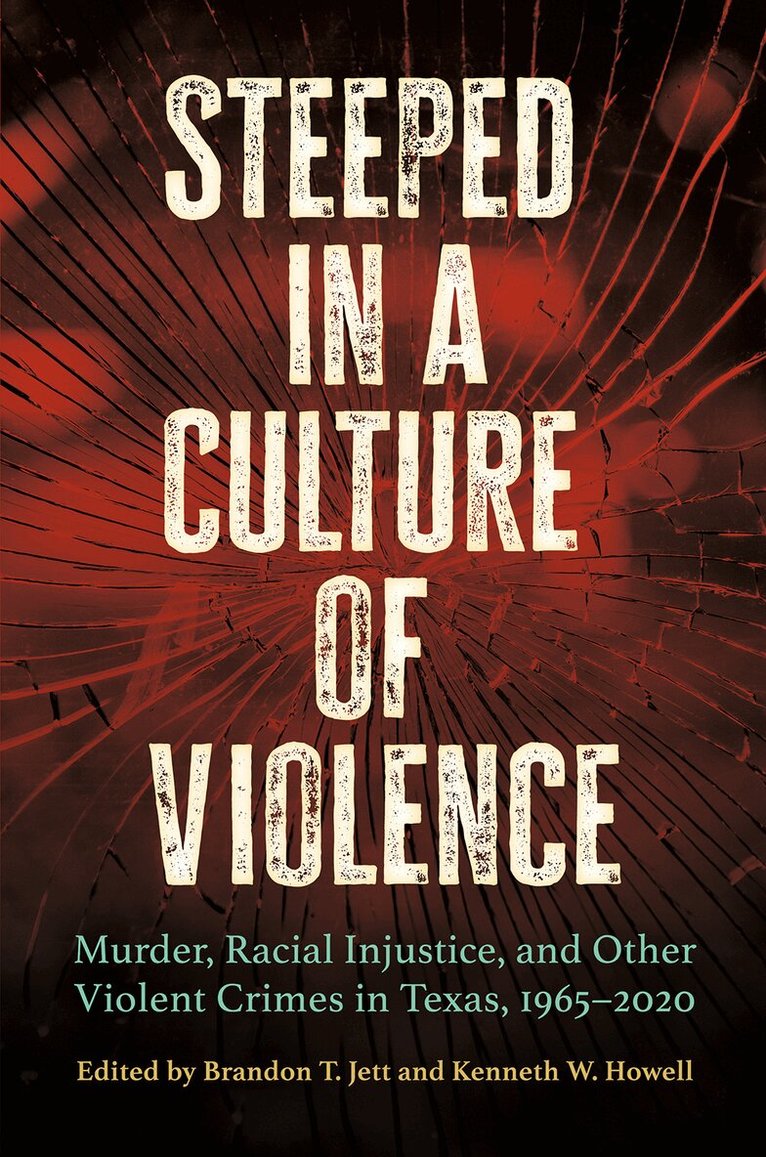
Steeped in a Culture of Violence
Murder, Racial Injustice, and Other Violent Crimes in Texas, 1965–2020
Inbunden, Engelska, 2023
495 kr
Skickas inom 7-10 vardagar
The Texas shooting at Santa Fe High School on May 18, 2018, which killed ten and injured thirteen, prompted public debate over the causes and potential solutions to this type of violent episode. On May 21, 2018, National Rifle Association president Oliver North declared that a culture of violence is largely responsible for these killings. “The problem that we’ve got is we’re trying like the dickens to treat the symptom without treating the disease. . . . The disease is youngsters who are steeped in a culture of violence.” This debate has captivated the American media and general public for decades.Texas history is steeped in brutality and bloodshed, creating a narrative that these conditions are still a vial part of the state’s culture in the twenty-first century. But perceptions of violence are often at odds with realities on the ground. Over several centuries, violence has decreased with the development of modern society, but popular perception seems to be that a culture of violence has emerged, and perhaps persisted despite demographic, economic, cultural, and political shifts in Texas.Starting from the notion that a culture of violence existed historically in the state and asking if such a culture still persists in modern Texas, this collection of essays examines trends associated with various types of violence within the state as well as social and political responses from 1965 to 2020. This important and timely work provides valuable context for discussions on violence in the past and for the future.