David J. Constantine - Böcker
Visar alla böcker från författaren David J. Constantine. Handla med fri frakt och snabb leverans.
11 produkter
11 produkter
155 kr
Tillfälligt slut
155 kr
Skickas inom 11-20 vardagar
155 kr
Tillfälligt slut
141 kr
Skickas inom 7-10 vardagar
Like the work of the European poets who have nourished him, David Constantine's poetry is informed by a profoundly humane vision of the world. Many of the poems in his latest collection spring from particular localities: Scilly, the North of England, Southern France, the Aegean, Wales; others from certain places (loci) in literature and mythology. Inspired by such 'local habitations' and the people who live there, the poems of Elder express gratitude and loyalty, but also grief at every harm and death. Published on his 70th birthday, David Constantine's tenth book of poetry sounds many personal elegiac notes as well as - in the story of Erysichthon, for example - anxiety at the abuse of Earth, but there is also much celebration of love, beauty and the hope and aspiration in human beings to live well in the time allowed.
209 kr
Skickas inom 7-10 vardagar
Centres of Cataclysm celebrates the fifty-year history of Modern Poetry in Translation, one of the world’s most innovative and exciting poetry magazines. Founded in 1965 by Ted Hughes and Daniel Weissbort, MPT has constantly introduced courageous and revolutionary poets of the 20th and 21st century to English-speaking readers. Ted Hughes thought of MPT as an ‘airport for incoming translations’ - from the whole world, across frontiers of space and time. These are poems we cannot do without. The anthology is not arranged chronologically but, from a variety of perspectives, it addresses half a century of war, oppression, revolution, hope and survival. In so doing, it truthfully says and vigorously defends the human. In among the poems are illuminating letters, essays and notes on the poets, on the world in which they lived and on the enterprise of translating them.
181 kr
Skickas
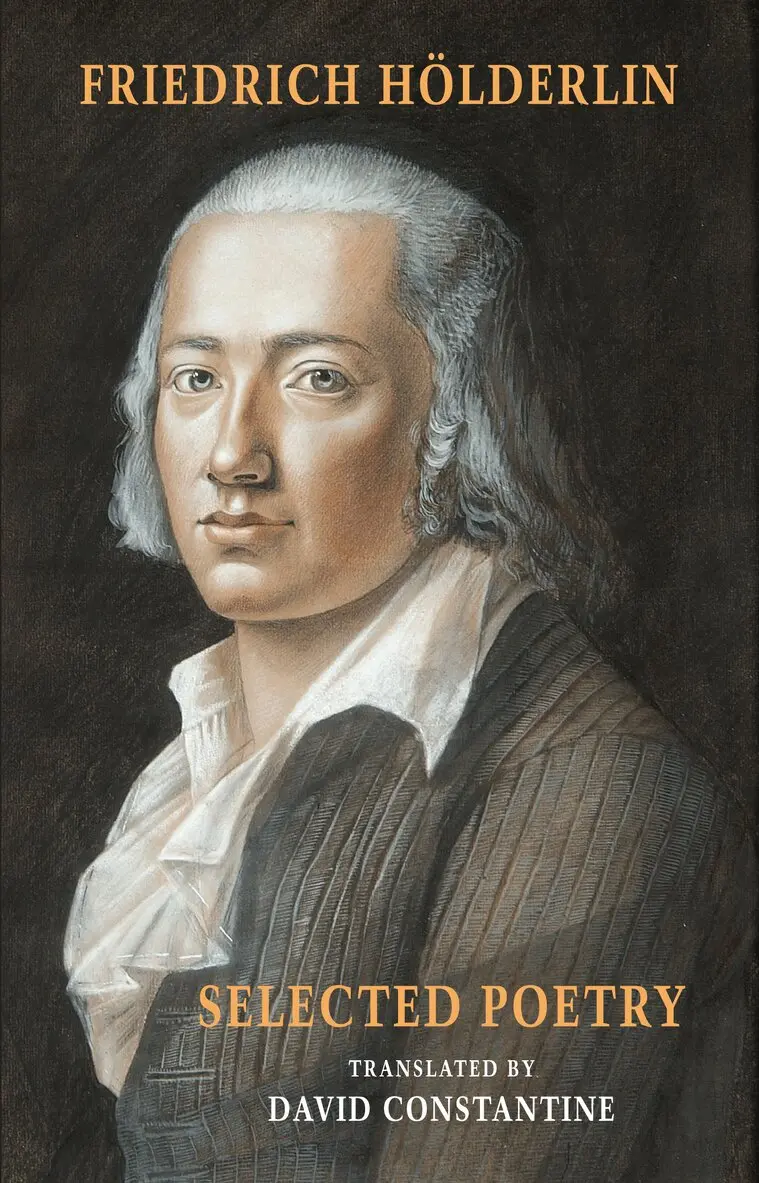
Friedrich Hölderlin was one of Europe’s greatest poets. The strange and beautiful language of his late poems is recreated by David Constantine in these remarkable verse translations. This is a new expanded edition of Constantine’s widely-praised Hölderlin Selected Poems (1990/1996), containing many new translations as well as the whole of Hölderlin's Sophocles (2001), in which he sought to create an equivalent English for Hölderlin's extraordinary German recreations of the classic Greek verse plays. Constantine won the European Poetry Translation Prize in 1997 for his translations of Hölderlin. This new volume presents a substantial selection from the work of a poet who, writing around 1800, addresses us ever more urgently two centuries later. Hölderlin translated all his writing life. Through translation he reached a poetic language of his own, so that much of his best poetry reads like a translation from elsewhere. He was intensely occupied with Sophocles in the winter of 1803-04. His versions of Oedipus Rex and Antigone (he worked at but never finished Oedipus at Colonus and Ajax) came out in the spring of 1804 and were taken, by the learned, as conclusive proof of his insanity. He was by then very near to mental collapse, but no one now would dismiss his work for that. He translated in a radical and idiosyncratic way, cleaving close to the Greek yet at the same time striving to interpret these ancient, foreign and – as he thought – sacred originals, and so bring them home into the modern day and age. Constantine has translated Hölderlin’s translations, carrying as much of their strangeness as possible into his English. The plays themselves need no introduction or apology. These double translations, links in literature from land to land and from age to age, demonstrate the vitality of ancient and modern poetic tradition. Carl Orff used Hölderlin’s texts for his operas Antigonae (1949) and Oedipus der Tyrann (1959), with the producers of recent DVDs of Orff's operas later choosing to use Constantine’s texts for their English subtitles.
145 kr
Skickas inom 5-8 vardagar
Like the work of the European poets who have nourished him, David Constantine’s poetry is informed by a profoundly humane vision of the world. The title of his eleventh collection, Belongings, signals that these are poems concerned both with our possessions and with what possesses us. Among much else in the word belongings, the poems draw on a sense of our ‘co-ordinates’ – something like the eastings and northings that give a map-reference – how you might triangulate a life.The poems ask: Where do you belong? And have in mind also the hostile: You don’t belong here. Go back where you belong. Many, possibly all, the poems in the collection touch more or less closely on such matters. Perhaps all poetry does, showing a life in its good or bad defining circumstances. In the poem ‘Red’, the defining geography is literal, drawn from an old geological map of Manchester in which Constantine finds ‘the locus itself, a railway cutting / Behind the hospital I was born in’, from which the paths of a life led outward. In other poems the particular becomes universal, a territory holding all our belongings, our memories of the people and the places we hold in our hearts. Behind these explorations another kind of belonging is challenged: our relationship with the planet to which we belong, but which does not belong to us.
158 kr
Skickas
Longlisted for the Anglo-Hellenic League Runciman Award 2025The Greek Anthology, marvellous salvage from the vast shipwreck of the Ancient World, is a collection of around 4500 poems composed over more than 1500 years by about 300 authors, a colossal continuity and variety from pre-classical times through Roman into Byzantine.For A Bird Called Elaeus – his small anthology of the vast original – David Constantine has gone particularly not just to the renowned love poems but also to poems that treat man’s dealings with the earth, his work and trades there, the creatures other than himself who inhabit it and the divinities whose care it is.He has quite often taken the liberty of bringing already urgent poems closer to home and our drift towards the Sixth Extinction. Several times he expanded a Greek text; once or twice combined two poems into one; or wrote a poem of his own which he could not have written had he not read and translated the ancient words first. But most often he kept close, doing his level best to bring into his English what was so livingly there in the Greek.The Ancient World was not populated by humans harmless to Mother Earth, not at all: often they, like us, did the worst their means enabled them to do. Still there were laws. These things you must not do. Doing them nevertheless was understood as transgression of laws beyond the human laws. You offended Demeter at your peril. Understand that how we like, it’s the same now. And the peril is infinitely greater, threatens to be final, consuming the innocent with the guilty.A Bird Called Elaeus is David Constantine’s seventh translation from Bloodaxe, following three editions of Friedrich Hölderlin, and collections by Henri Michaux, Philippe Jaccottet and Hans Magnus Enzensberger, including two books for which he received the European Poetry Translation Prize and the Corneliu M. Popescu Prize for European Poetry Translation. His translation of Goethe’s Faust is published in Penguin Classics and his co-translation (with Tom Kuhn) of The Collected Poems of Bertolt Brecht is published by Norton. His own poetry is published by Bloodaxe and his fiction by Comma Press. He was co-editor of Modern Poetry in Translation from 2004 to 2013.
208 kr
Skickas inom 7-10 vardagar
David Constantine is one the finest poets writing in English. His poetry stands outside the current literary climate, and like the work of the European poets who have nourished him, it is informed by a profoundly humane vision of the world. Its mood is often one of unease, elegiac or comically edged, barbed with pain or tinged with pleasure. His poems hold a worried and restless balance between celebration and anxiety, restraint and longing. His Collected Poems spans three decades, including work from seven previous Bloodaxe titles and two limited editions, as well as a whole collection of new poems. He has since published two later collections, Nine Fathom Deep (2009) and Elder (2014).
Del 2 - Newcastle/Bloodaxe Poetry Series
Living Language
Newcastle/Bloodaxe Poetry Lectures
Häftad, Engelska, 2004
169 kr
Skickas inom 5-8 vardagar
In this innovative series of public lectures at Newcastle University, leading contemporary poets speak about the craft and practice of poetry to audiences drawn from both the city and the university. The lectures are then published in book form by Bloodaxe, giving readers everywhere the opportunity to learn what the poets themselves think about their own subject.David Constantine's three lectures have to do with the chief end and means of poetry: a lively and effective language. In the first, Translation Is Good For You, drawing mainly on the life, letters and poems of Keats, he considers translation as a way to a poetic identity and a language of one's own. In the second, Use and Ornament, Constantine looks at the particular case of a poet, Brecht, who wanted his writing to be useful but who understood better than most what the peculiar resources and responsibilities of the lyric poem are Wilfred Owen and Keith Douglas are also considered in this context. The third lecture, Poetry of the Present, largely concerned with Walt Whitman and D.H. Lawrence, discusses the ambition of free verse to convey the abundance and quickness of life in the truest (liveliest) way. The sonnets and other fixed forms used by Rilke are offered as an alternative. In all three lectures there is a continual effort to define the good effects a poem may have when, by whatever means, it achieves its ends.
152 kr
Skickas inom 5-8 vardagar
Like the work of the European poets who have nourished him, David Constantine's poetry is informed by a profoundly humane vision of the world. In the title-poem of his latest collection - which illuminates the themes of the whole book - the lovers are a utopian answering back against the curse (following a crime against Nature) that is carried by the ship passing above them. Throughout these poems, the personal life, with its own joys and suffering, asserts itself against a world whose characteristic forces are dispiriting and destructive. "Nine Fathom Deep" shows how all personal life and all poetry written from it deal with the realities of social and political life in the here and now, assert themselves, fight for survival, and actively seek to make a world in which humane self-realisation would be more and more, not less and less, possible.