David Mahlowe – författare
173 kr
Skickas inom 5-8 vardagar
114 kr
Skickas inom 5-8 vardagar
415 kr
Läs direkt efter köp
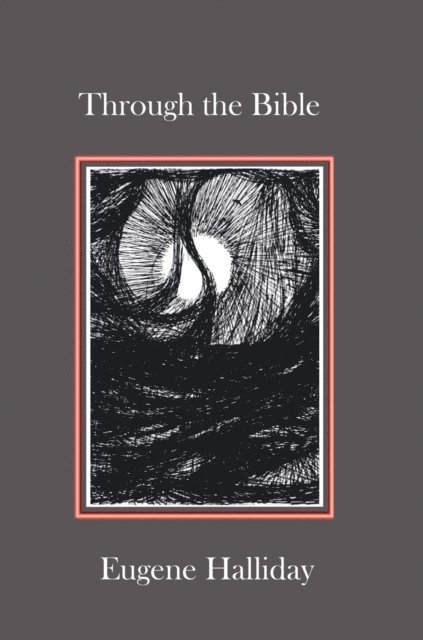
Eugene Halliday, artist, writer and psychotherapist, was a significant interpreter of the Bible. This book began as a monthly series of essays for the Parish Magazine of St Michael and All Angels, Manchester, in the 1980s. The title ''Through the Bible'' can be understood in two ways. The book can be read through in the order it is printed, from beginning to end. Or, taking the word ''through'' as ''by means of'' - which is the sense in which Halliday uses it - important ideas given in the Bible can be followed through and interpreted in relation to problems with which we are presented, in our own lives. Thus the subjects Halliday covers, and the wisdom he imparts, range from the ancient stories of Adam and Eve, the Fall of Lucifer, Noah and his sons, to the significance of good and evil, psychological insights into human nature, the tensions between science and religion, nuclear war, ecology, computers, the mechanisation of human reactions and free will, and the nature of consciousness. Halliday''s purpose, in his presentation of the lessons he draws from these ancient texts, is to enable us - in a continually accelerating world - to adjust and improve our relationships with ourselves internally, with our fellow humans, with other sentient beings and with our environment, in order to understand and fulfil our relationship with the source and ground of our being.
54 kr
Läs direkt efter köp
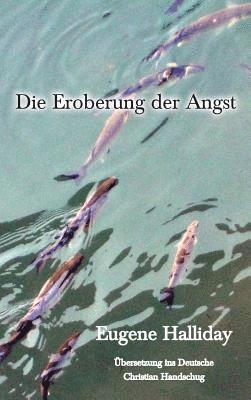
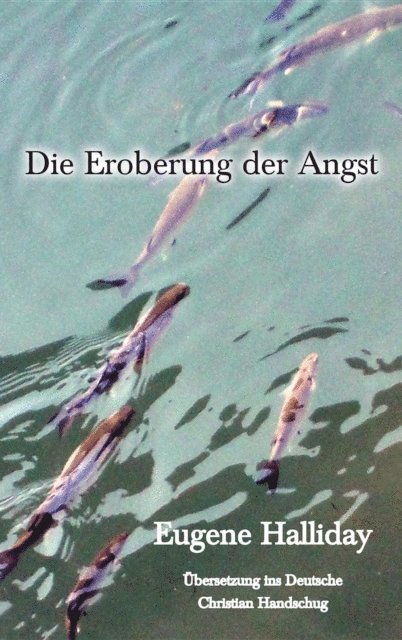
In seinem Buch "Die Eroberung der Angst" behandelt Eugene Halliday die Tatsache, das Angst und Furcht zu einem gewissen Grad in den Gemütern aller Menschen dieser Welt gegenwärtig sind. Hier zeigt er uns einen Weg zur Bewältigung dieses negativen Gemütszustandes, welcher, bewusst oder unbewusst, unsere Beziehung zur Welt und zu unseren Mitmenschen beeinträchtigt. Er legt die grundlegende Logik unseres Problems dar und gibt uns praktische Übungen - einen schrittweisen Prozess - der dem Leser anschaulich erklärt wird. Im heutigen mit allen möglichen Ängsten erfüllten emotionalen, sozialen und politischen Klima ist dies höchst willkommen.
Die "Gesammelten Werke" Eugene Hallidays, eine fünfzehnbändige Buchreihe, beinhaltet einen Komplex von Ideen, die miteinander in einer widerspruchsfreien und logischen Beziehung stehen und den Leser so vom Anfang bis zum Ende der Buchreihe führen. Dieser auf einer Hauptidee, zu der alle anderen Ideen in harmonischer Beziehung stehen, basierende Ideenkomplex formt ein konsistentes Ganzes, gleich einem gesunden menschlichen Körper mit seinen Organen.
In seinem Buch "Die Eroberung der Angst" behandelt Eugene Halliday die Tatsache, das Angst und Furcht zu einem gewissen Grad in den Gemütern aller Menschen dieser Welt gegenwärtig sind. Hier zeigt er uns einen Weg zur Bewältigung dieses negativen Gemütszustandes, welcher, bewusst oder unbewusst, unsere Beziehung zur Welt und zu unseren Mitmenschen beeinträchtigt. Er legt die grundlegende Logik unseres Problems dar und gibt uns praktische Übungen - einen schrittweisen Prozess - der dem Leser anschaulich erklärt wird. Im heutigen mit allen möglichen Ängsten erfüllten emotionalen, sozialen und politischen Klima ist dies höchst willkommen.
Die "Gesammelten Werke" Eugene Hallidays, eine fünfzehnbändige Buchreihe, beinhaltet einen Komplex von Ideen, die miteinander in einer widerspruchsfreien und logischen Beziehung stehen und den Leser so vom Anfang bis zum Ende der Buchreihe führen. Dieser auf einer Hauptidee, zu der alle anderen Ideen in harmonischer Beziehung stehen, basierende Ideenkomplex formt ein konsistentes Ganzes, gleich einem gesunden menschlichen Körper mit seinen Organen.
189 kr
Skickas inom 5-8 vardagar
180 kr
Läs direkt efter köp
How can we deal with the rapidly increasing pace and complexity of life, fear of terrorism and the threatening state of world affairs, climate breakdown, the confusions of personal relationships—without succumbing to stress, depression and illness? Halliday provides a way to assimilate the shocks of life experiences, so that we might live a more balanced life. The way to achieve this is through reconnecting with the centre of our own being, our consciousness. Halliday sets out not only the nature of this consciousness, but also its relation to the world of phenomena, to the nature of being, and in particular, to mankind. He begins by examining the meaning of terms such as sentience, consciousness and awareness. They are to some degree interchangeable and refer to, ‘That in and by which we know what we know, and that we know.’ If we ask ourselves what this statement means, we can only say that, ‘We know what we mean. Consciousness is its own evidence’, and thus we cannot indicate what we mean by one of these consciousness-related words, ‘without appealing to that in us, which corresponds with their significance, that is, to that in us which knows that it knows’. Halliday sees a complex structure such as the brain, as ‘a vehicle for the expression of the complex processes of an [already existing] sentience’. He posits that the ultimate source and origin of our being resides in an absolute field of sentience, and states that the true nature of the self is ‘consciousness itself’. But, as beings with physical bodies, we are tyrannised by the limitations of our sense organs; by the pursuit of pleasure and the avoidance of pain, by emotional charges in the records of our experiences, so that we often behave in a reactive manner—as if we were no more than animals with no free choice. But, if we remember the nature of our true self, and our source in consciousness, we can free ourselves from this enslavement and become human, that is, capable of free choice and action.
199 kr
Skickas inom 5-8 vardagar
79 kr
Läs direkt efter köp
''We must wake up. To dream is to be involved in a vortex of form. To wake up is to see the dream for what it is and to see beyond it, to infinity.'' Meditations on the meaning of death, the nature of mind, feeling, spirit and Love, bring insight into the human condition with a positive message to fortify us in these troubling times. The book was written between the 1950s and the 1980s, formulated from Halliday''s experiences in the Second World War and under the subsequent continuing threat of nuclear war. In his Foreword Halliday writes ''What drives me incessantly to think, to read, to write? The will to love. Nietzsche says "the will to power". But I say that the will to power is perverted love, and that love wills to love, and that love is work for the development of the functional potentialities of being, infinitely.'' The first five chapters of Book 1 are an excellent ''primer'' of his teaching. Subsequent sections of the book are aphoristic, a series of meditations on many topics of profound esoteric interest. Book 2 was written in the mid-1970s and contains many graphic illustrations - Halliday was an artist, and used his pen to sketch as well as to write, his diagrams clearly illuminating his writings. Book 3 opens with "Ecclesia Para Hexon", a favourite concept of the author''s: the body of faithful souls who worship the God of gods. The second part returns to shorter aphoristic writings, the whole illustrated with diagrams. Book 4 continues in aphoristic form covering many and various topics. The four volumes are a manual of self-development for Everyman and Everywoman, a unique treasury of wisdom. Books 1-4 are also available in hardback, and Books 2-4 will be made available as e-books in the near future.
216 kr
Läs direkt efter köp
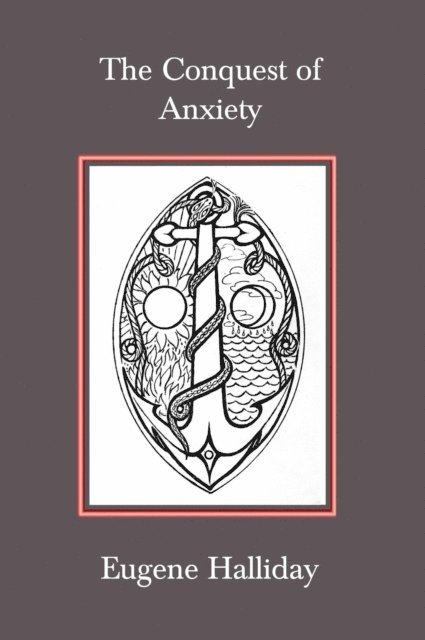
We all suffer, to some extent, from fear and anxiety. Here Eugene Halliday offers a way to overcome this negative state of mind, which, whether consciously or unconsciously, hinders our interaction with the world and our fellow human beings. He shows the underlying logic of our problem and gives practical exercises - a step by step process - which is clearly explained to the reader. This is most welcome in today''s fraught emotional, social and political climate. Eugene Halliday''s "Collected Works", a series of fifteen books, contain a complex of ideas set in relation to each other in such a way that a consistent and logical flow leads the reader from the beginning right through to the end of the series. This complex, based on one main leading idea to which all other ideas relate harmoniously, forms a consistent whole, as one body made of many parts. Halliday''s books are unusual in that they deal not only with more than one idea per book, or per chapter, but even with one or more ideas per sentence. In "The Conquest of Anxiety" he sets out in the first place to define the terms which he uses in the book, thus preventing the usual confusion of undefined terms found so often in general discourse. This is most helpful for those seeking to attain a consistent state of mind, able to reflect the things of this world and of the next in their true form, where all are related to each other. For the reader who loves truth and consistency this book is a very helpful companion on the way to a truly happy life.
214 kr
Läs direkt efter köp
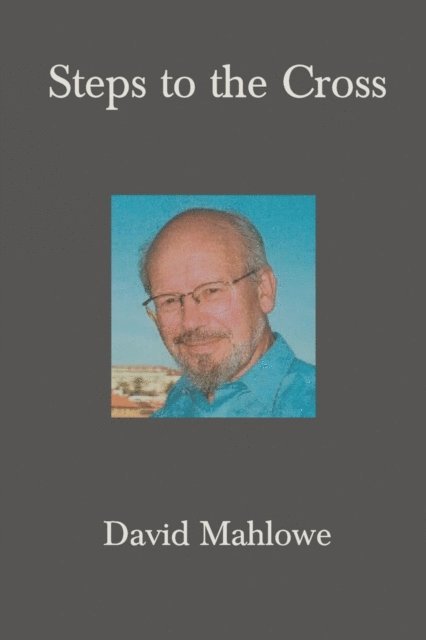
David Mahlowe was an actor, writer, TV presenter and interviewer who, in the late 1960s was compared, for his skills in ‘the delicate art of TV confrontation’, with Malcolm Muggeridge and Bernard Levin. A fine Shakespearean actor, he worked in repertory, film, TV and radio before moving into TV presenting and interviewing. He and his wife Marah Stohl were lead actors for Manchester Library Theatre in the 1950s. In this book he shares the insights which he gained through a lifetime’s study of Shakespeare, art, religion and philosophy, in a series of talks which he gave between 1995-1998. Literary executor of the artist Eugene Halliday, with whom he had written Shakespeare King Educator, he founded the Melchisedec Press to publish Halliday’s writings. A short illness led to his early death in 1998.
232 kr
Läs direkt efter köp
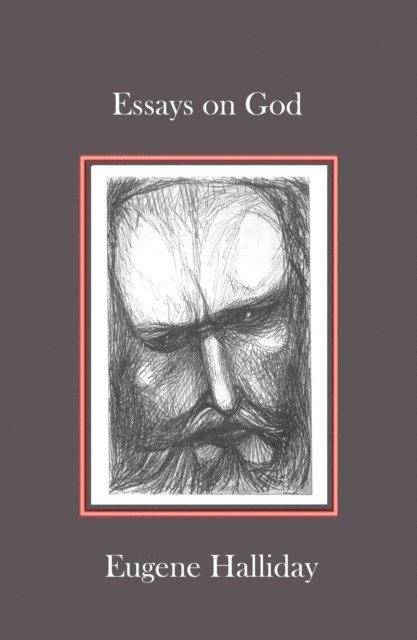
''"Un Dieu defini est un Dieu fini." A God defined is a God annihilated.'' So opens this book of essays giving an insight into a unique perspective on the concept of God. The author does not attempt to define ''God'' but rather, he defines the limits of how we use the word ''God''. In the process he examines the mysteries of God''s nature and our relationship with the Supreme Spirit, ranging from ''What God Cannot Do'' through ''God-Man, Man-God'', ''God''s Body'', ''God and Science'', ''What is God?'' to ''God is Not Dead''. Halliday''s book points us in a direction which is expansive and challenging, while leaving us to decide for ourselves what it is we choose or prefer to believe.