Hephzibah Yohannan – författare
Visar alla böcker från författaren Hephzibah Yohannan. Handla med fri frakt och snabb leverans.
20 produkter
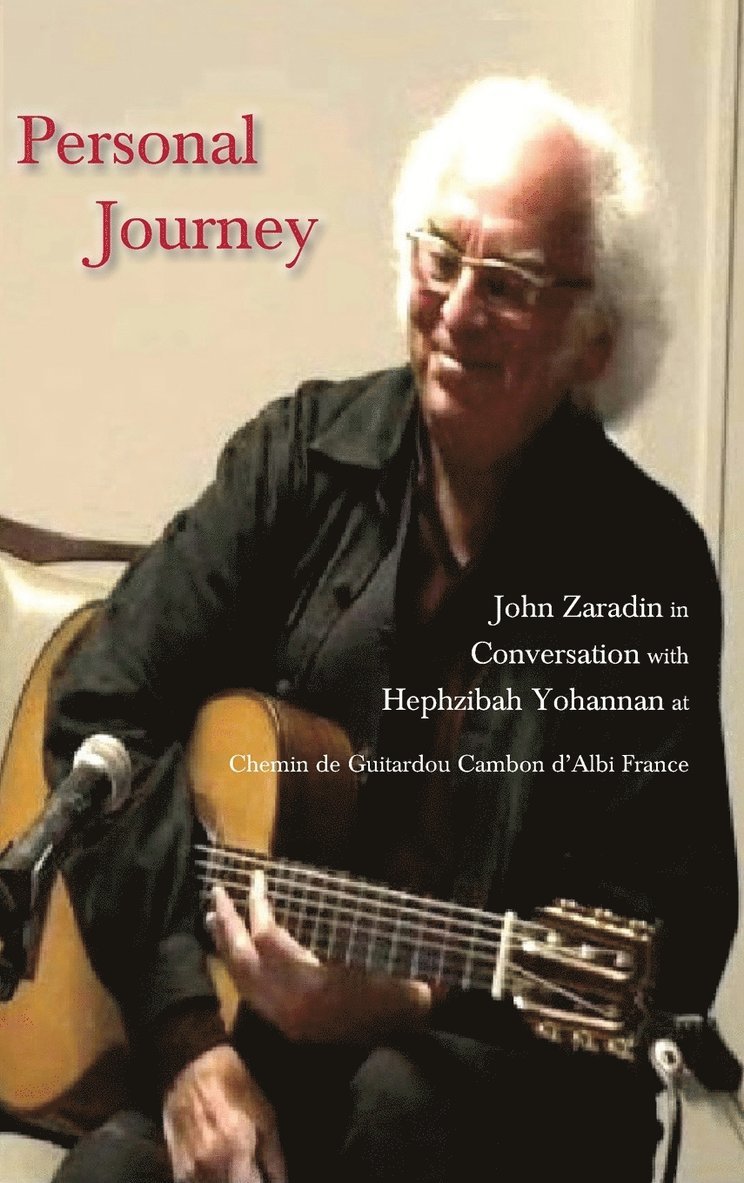
Personal Journey
John Zaradin in Conversation with Hephzibah Yohannan at Chemin de Guitardou Cambon D'albi France
Av John Zaradin, Hephzibah Yohannan m. fl.
Inbunden, 2015
434 kr
Lägg i varukorg
The young John Zaradin felt driven to make his life in music against all 'sensible' career advice offered by his peers and parents. An interest in philosophy led him to a circle of creative people dedicated to self-development. They demonstrated to him that a life in the arts was indeed possible, …
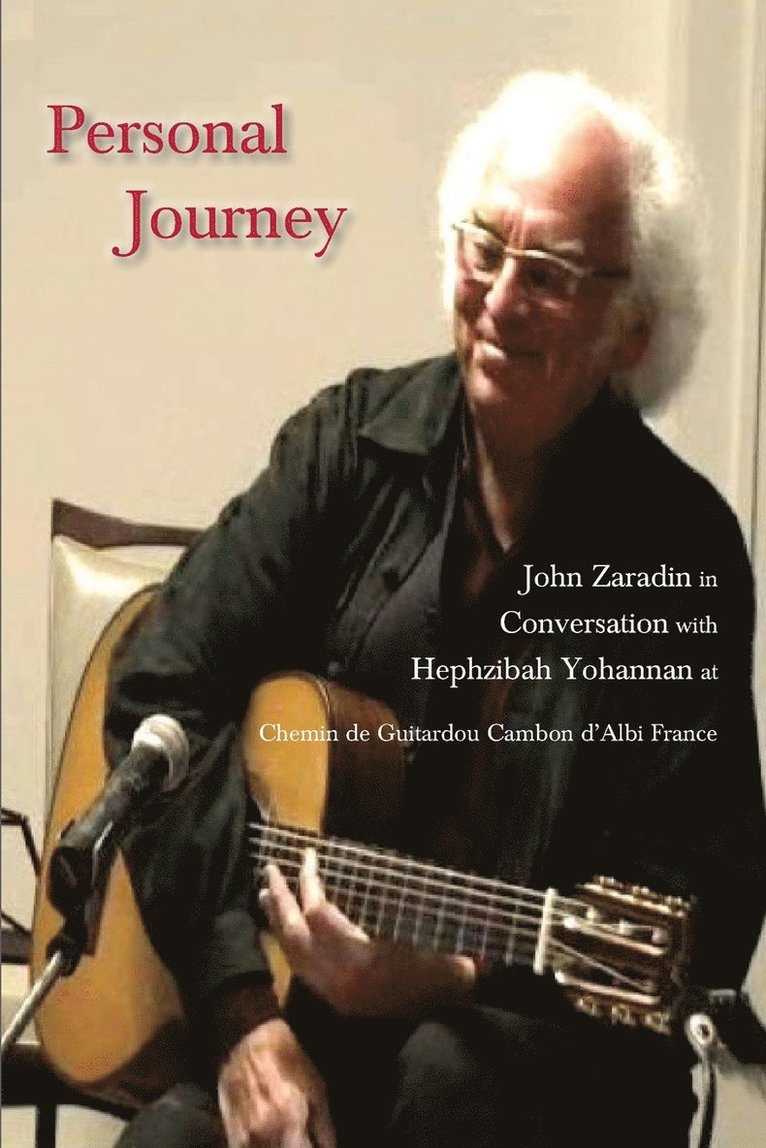
Personal Journey
John Zaradin in Conversation with Hephzibah Yohannan at Chemin De Guitardou Cambon D'albi France
Av John Zaradin, Hephzibah Yohannan m. fl.
Häftad, 2015
189 kr
Lägg i varukorg
A Memoir, in the form of a conversation, which describes the life journey, career, personal and spiritual development of the musician (guitarist and composer) John Zaradin. 99 illustrations including photographs and artwork.
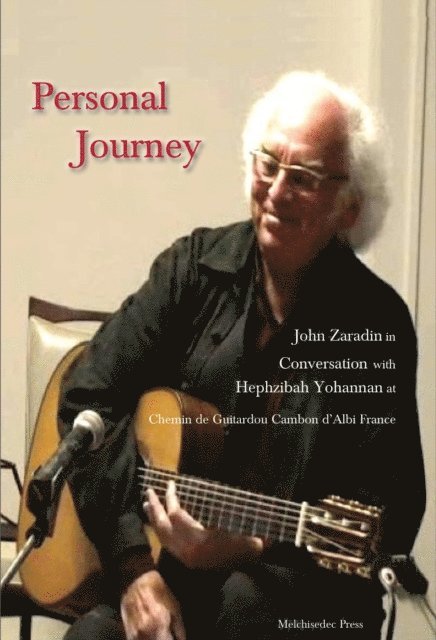
Personal Journey
John Zaradin in Conversation with Hephzibah Yohannan at Chemin de Guitardou, Cambon d''Albi, France
Av Hephzibah Yohannan, John Zaradin
E-bok, 2015
85 kr
Lägg i varukorg
The young John Zaradin felt driven to make his life in music against all 'sensible' career advice offered by his peers and parents. An interest in philosophy led him to a circle of creative people dedicated to self-development. They demonstrated to him that a life in the arts was indeed possible, …
Paradoxical Ego
Av Eugene Halliday, Hephzibah Yohannan
Inbunden, 2017
341 kr
Lägg i varukorg
Three particular themes are basic to this study. First, that the human race and its environment are involved in a slowly progressive process of revelation and understanding of its inherent features. And that we are all participating in this ongoing evolutionary cycle. Second, and closely related to …
Paradoxical Ego
Av Eugene Halliday, Hephzibah Yohannan
Häftad, 2017
178 kr
Lägg i varukorg
Three particular themes are basic to this study. First, that the human race and its environment are involved in a slowly progressive process of revelation and understanding of its inherent features. And that we are all participating in this ongoing evolutionary cycle. Second, and closely related to …
Paradoxical Ego
Av Zhu Kabere, Eugene Halliday m. fl.
E-bok, 2017
55 kr
Lägg i varukorg
Three particular themes are basic to this study. First, that the human race and its environment are involved in a slowly progressive process of revelation and understanding of its inherent features; and that we are all participating in this ongoing evolutionary cycle. Second, and closely related to …
Through the Bible
Books I - IV
Av Eugene Halliday, Hephzibah Yohannan m. fl.
E-bok, 2023
443 kr
Lägg i varukorg
Eugene Halliday, artist, writer and psychotherapist, was a significant interpreter of the Bible. This book began as a monthly series of essays for the Parish Magazine of St Michael and All Angels, Manchester, in the 1980s. The title ''Through the Bible'' can be understood in two ways. The book can …
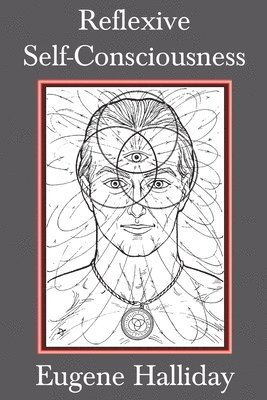
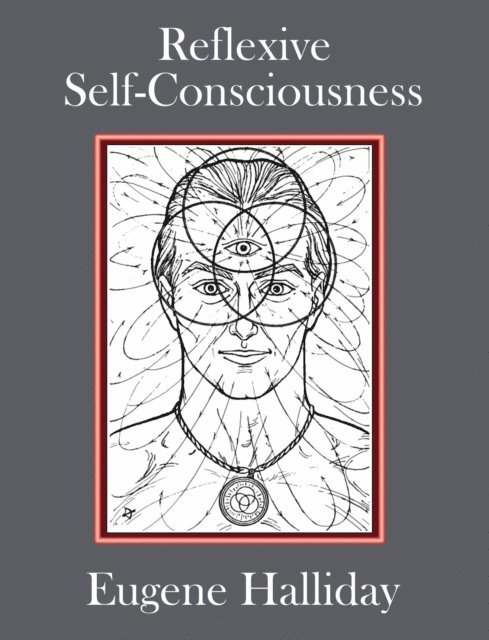
Reflexive Self-Consciousness
Av Eugene Halliday, David Mahlowe m. fl.
Häftad, 2019
188 kr
Lägg i varukorg
How can we deal with the rapidly increasing pace and complexity of life, fear of terrorism and the threatening state of world affairs, climate breakdown, the confusions of personal relationships-without succumbing to stress, depression and illness? Halliday provides a way to assimilate the shocks …
Reflexive Self-Consciousness
Av Eugene Halliday, Hephzibah Yohannan m. fl.
E-bok, 2019
190 kr
Lägg i varukorg
How can we deal with the rapidly increasing pace and complexity of life, fear of terrorism and the threatening state of world affairs, climate breakdown, the confusions of personal relationships—without succumbing to stress, depression and illness? Halliday provides a way to assimilate the shocks …
Way: Spirit from the Well
A way of life for the modern world based on the teachings of the ancient wisdom
Av Philip Rose, Hephzibah Yohannan
Inbunden, 2019
330 kr
Lägg i varukorg
Awaiting description
Way: Spirit from the Well
A way of life for the modern world based on the teachings of the ancient wisdom
Av Philip Rose, Hephzibah Yohannan
Häftad, 2019
178 kr
Lägg i varukorg
Awaiting description
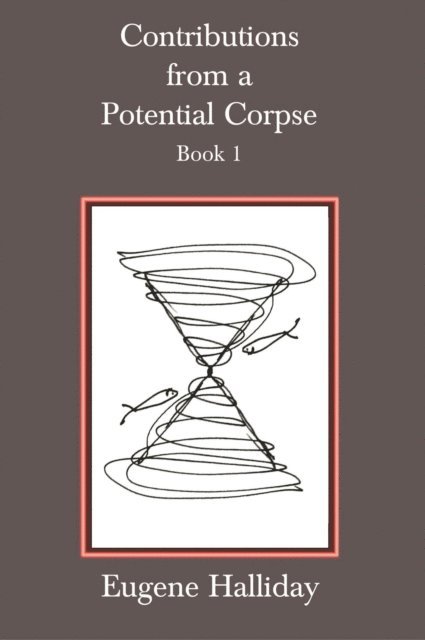
Contributions from a Potential Corpse, Book 1
Av Eugene Halliday, Hephzibah Yohannan m. fl.
E-bok, 2020
80 kr
Lägg i varukorg
''We must wake up. To dream is to be involved in a vortex of form. To wake up is to see the dream for what it is and to see beyond it, to infinity.'' Meditations on the meaning of death, the nature of mind, feeling, spirit and Love, bring insight into the human condition with a positive message to …
Index to The Collected Works of Eugene Halliday
Av Andrew W. Moore, Hephzibah Yohannan m. fl.
Häftad, 2021
173 kr
Lägg i varukorg
This valuable study guide is a comprehensive index to the fifteen books comprising The Collected Works of Eugene Halliday. Born in 1911, he was an artist, writer and psychotherapist who drew on many traditions of human knowledge and experience: the texts of world religions; mystical schools such as …
Index to The Collected Works of Eugene Halliday
Av John Zaradin, Hephzibah Yohannan m. fl.
E-bok, 2021
110 kr
Lägg i varukorg
An Index forming a study guide to "The Collected Works of Eugene Halliday". Eugene Halliday (1911-1987) was an artist, writer and psychotherapist. Drawing on many traditions of human knowledge - the texts of world religions, mystical schools such as Qabalah, poetry, philosophy and theology (Blake, …
Way: More Spirit from the Well
A way of life for the modern world based on the teachings of the ancient wisdom
Av Philip Rose, Hephzibah Yohannan
Inbunden, 2021
341 kr
Lägg i varukorg
This book is a compilation of nine short books written between 2007 and 2021, in the ninth and tenth decades of the author's life. It contains his spiritual philosophy expressed in simple language accessible to all. The book tells of what the author has come to believe after a lifetime of seeking …
Way: More Spirit from the Well
A way of life for the modern world based on the teachings of the ancient wisdom
Av Philip Rose, Hephzibah Yohannan
Häftad, 2021
178 kr
Lägg i varukorg
This book is a compilation of nine short books written between 2007 and 2021, in the ninth and tenth decades of the author's life. It contains his spiritual philosophy expressed in simple language accessible to all. The book tells of what the author has come to believe after a lifetime of seeking …
Way - More Spirit from the Well
A way of life for the modern world based on the teachings of the ancient wisdom
Av Philip Rose, Hephzibah Yohannan
E-bok, 2021
114 kr
Lägg i varukorg
This book is a compilation of nine short books written between 2007 and 2021, in the ninth and tenth decades of the author''s life. It contains his spiritual philosophy expressed in simple language accessible to all. The book tells of what the author has come to believe after a lifetime of seeking …
Way - Spirit from the Well
A way of life for the modern world based on the teachings of the ancient wisdom
Av Philip Rose, Hephzibah Yohannan
E-bok, 2019
228 kr
Lägg i varukorg
This book is a compilation of eight short books written between 2009 and 2017, in the ninth and tenth decades of the author’s life. It contains his spiritual philosophy expressed in simple language accessible to all. The book tells of what the author has come to believe after a lifetime of seeking …
Conquest of Anxiety
Av Eugene Halliday, Hephzibah Yohannan m. fl.
E-bok, 2022
222 kr
Lägg i varukorg
We all suffer, to some extent, from fear and anxiety. Here Eugene Halliday offers a way to overcome this negative state of mind, which, whether consciously or unconsciously, hinders our interaction with the world and our fellow human beings. He shows the underlying logic of our problem and gives …
Essays on God
Av Eugene Halliday, Hephzibah Yohannan m. fl.
E-bok, 2024
239 kr
Lägg i varukorg
''"Un Dieu defini est un Dieu fini." A God defined is a God annihilated.'' So opens this book of essays giving an insight into a unique perspective on the concept of God. The author does not attempt to define ''God'' but rather, he defines the limits of how we use the word ''God''. In the process …