David Mitch - Böcker
Visar alla böcker från författaren David Mitch. Handla med fri frakt och snabb leverans.
4 produkter
4 produkter
579 kr
Skickas inom 7-10 vardagar
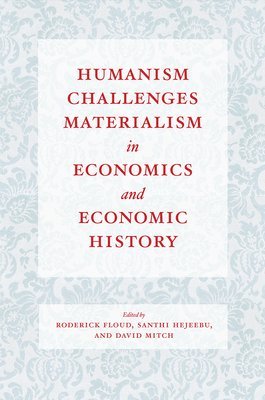
Most of the existing research on economic history relies either solely or ultimately on calculations of material interest to explain the major events of the modern world. However, care must be taken not to rely too heavily on materialism, with its associated confidence in perfectly rational actors that simply do not exist. What is needed for a more cogent understanding of the long history of capitalist growth is a more realistic, human-centered approach that can take account of the role of nonmaterial values and beliefs, an approach convincingly articulated by Deirdre McCloskey in her landmark trilogy of books on the moral and ethical basis of modern economic life. With Humanism Challenges Materialism in Economics and Economic History, Roderick Floud, Santhi Hejeebu, and David Mitch have brought together a distinguished group of scholars in economics, economic history, political science, philosophy, gender studies, and communications who synthesize and build on McCloskey's work.The essays in this volume illustrate the ways in which the humanistic approach to economics that McCloskey pioneered can open up new vistas for the study of economic history and cultivate rich synergies with a wide range of disciplines. The contributors show how values and beliefs become embedded in the language of economics and shape economic outcomes. Chapters on methodology are accompanied by case studies discussing particular episodes in economic history.
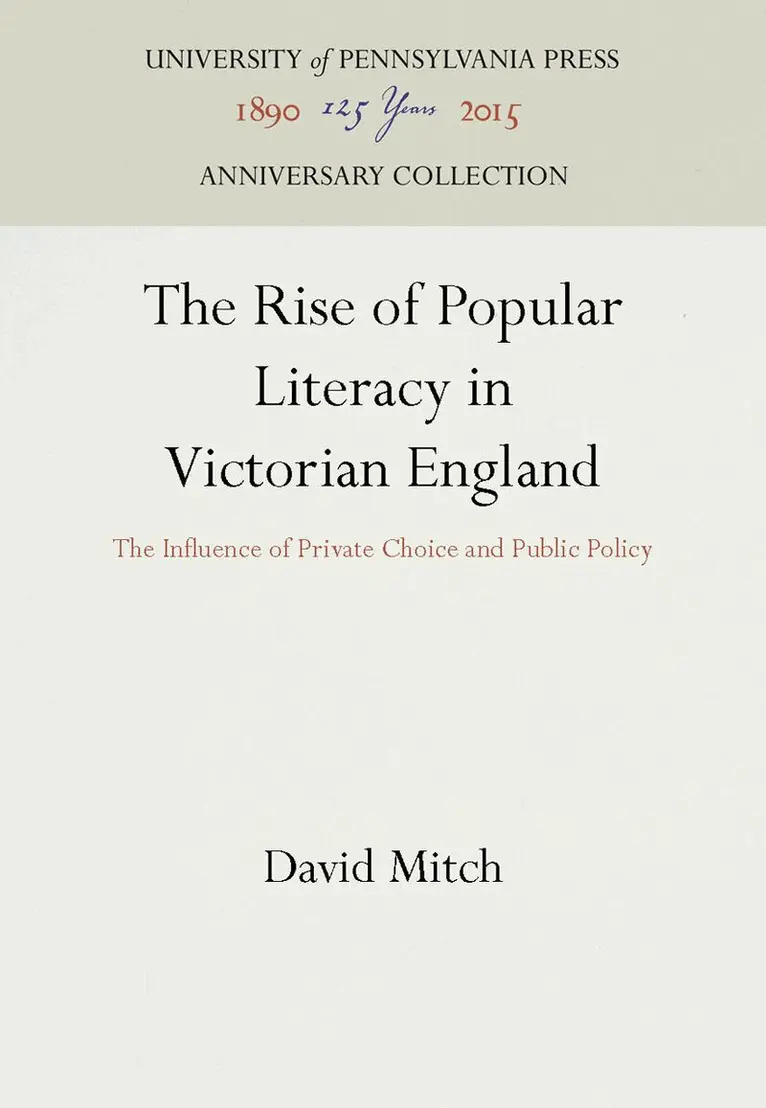
Rise of Popular Literacy in Victorian England
The Influence of Private Choice and Public Policy
Inbunden, Engelska, 1992
943 kr
Skickas inom 10-15 vardagar
In early Victorian England, there was an intense debate about whether government involvement in the provision of popular elementary education was appropriate. Government did in the end become actively involved, first in the administration of schools and in the supervision of instruction, then in establishing and administering compulsory schooling laws. After a century of stagnation, literacy rates rose markedly.While increasing government involvement would seem to provide the most obvious explanation for this rise, David F. Mitch seeks to demonstrate that, in fact, popular demand was also an important force behind the growth in literacy. Although previous studies have looked at public policy in detail, and although a few have considered popular demand. The Rise of Popular Literacy in Victorian England is the first book to bring together a detailed examination of the two sets of factors.Mitch compares the relative importance of the rise of popular demand for literacy and the development of educational policy measures by the church and state as contributing factors that led to the rise of working class literacy during the Victorian period. He uses an economic-historical approach based on an examination of changes in the costs and benefits of acquiring literacy. Mitch considers the initial demand of the working classes for literacy and how much that demand grew. He also examines how literacy rates were influenced by the development of a national system of elementary school provision and by the establishment of compulsory schooling laws.Mitch uses quantitative methods and evidence as well as more traditional historical sources such as government reports, employment ads, and contemporary literature. An important reference is a national sample of over 8,000 marriage certificates from the mid-Victorian period that provides information on the ability of brides and grooms to sign their names.The Rise of Popular Literacy in Victorian England is a valuable text for students and scholars of British, economic, and labor history, history of literacy and education, and popular culture.
1 630 kr
Skickas inom 10-15 vardagar
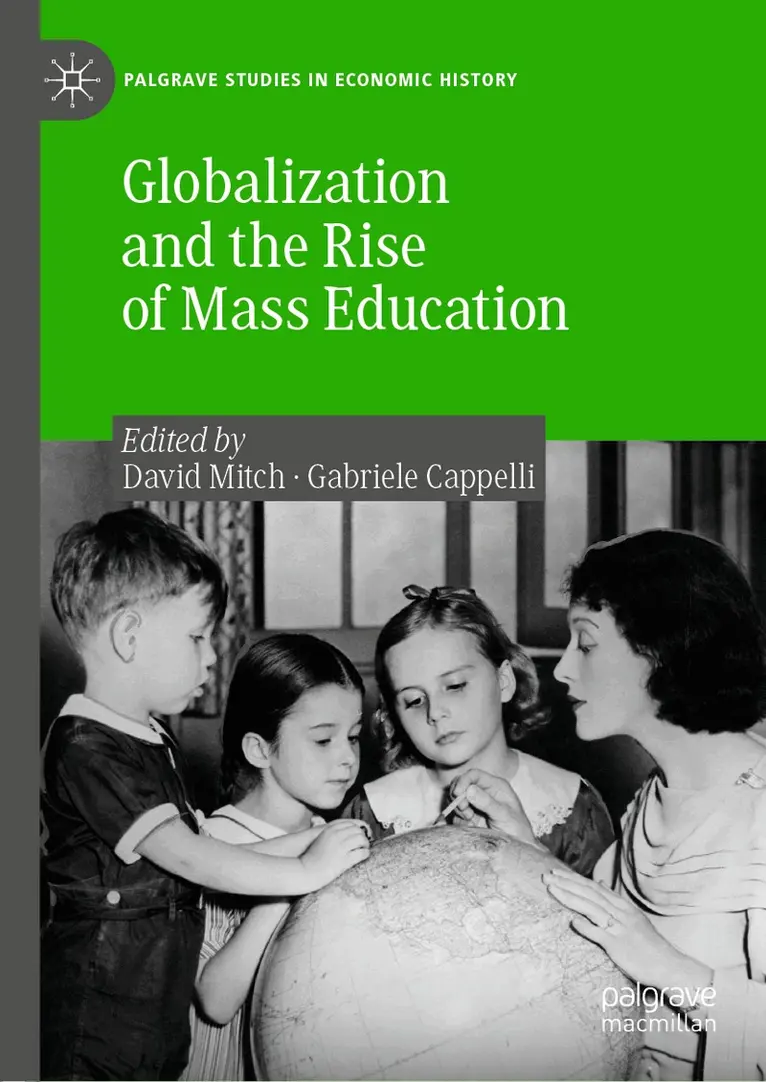
This edited collection explores the historical determinants of the rise of mass schooling and human capital accumulation based on a global, long-run perspective, focusing on a variety of countries in Europe, the Middle East, Asia, Africa and the Americas. The authors analyze the increasing importance attached to globalization as a factor in how social, institutional and economic change shapes national and regional educational trends. Although recent research in economic history has increasingly devoted more attention to global forces in shaping the institutions and fortunes of different world regions, the link and contrast between national education policies and the forces of globalization remains largely under-researched within the field.The globalization of the world economy, starting in the nineteenth century, brought about important changes that affected school policy itself, as well as the process of long-term human capital accumulation. Large migrations prompted brain drain and gain across countries, alongside rapid transformations in the sectoral composition of the economy and demand for skills. Ideas on education and schooling circulated more easily, bringing about relevant changes in public policy, while the changing political voice of winners and losers from globalization determined the path followed by public choice. Similarly, religion and the spread of missions came to play a crucial role for the rise of schooling globally.
1 208 kr
Skickas inom 10-15 vardagar
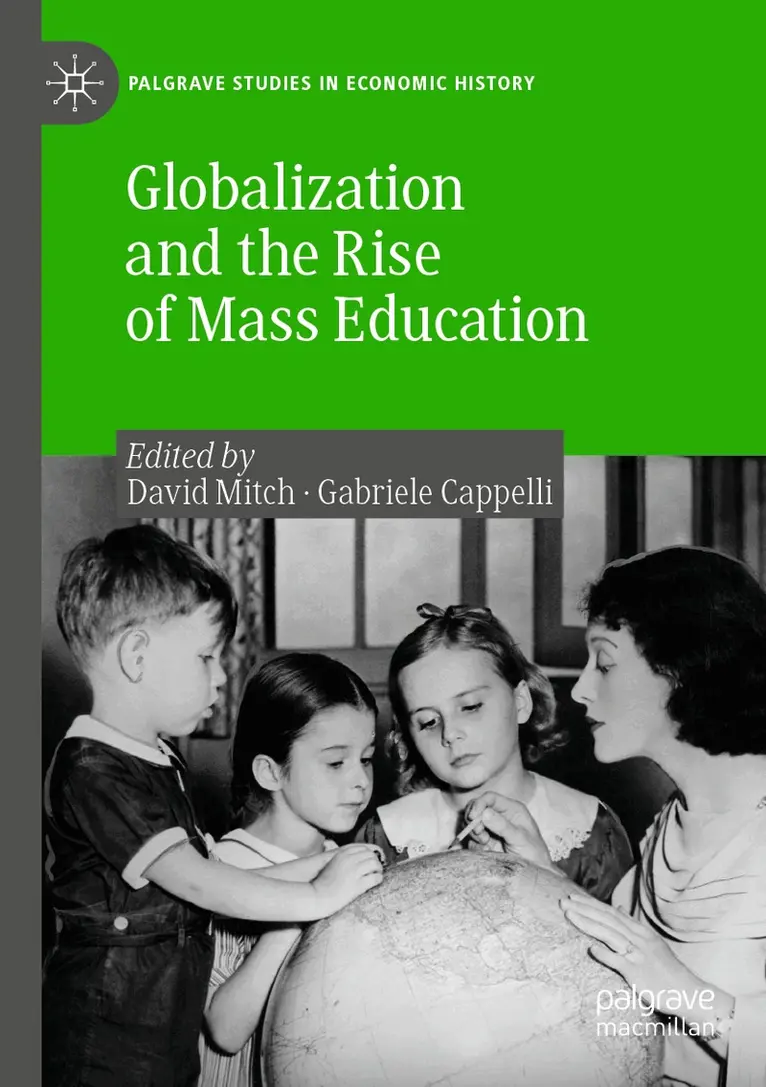
This edited collection explores the historical determinants of the rise of mass schooling and human capital accumulation based on a global, long-run perspective, focusing on a variety of countries in Europe, the Middle East, Asia, Africa and the Americas. The authors analyze the increasing importance attached to globalization as a factor in how social, institutional and economic change shapes national and regional educational trends. Although recent research in economic history has increasingly devoted more attention to global forces in shaping the institutions and fortunes of different world regions, the link and contrast between national education policies and the forces of globalization remains largely under-researched within the field.The globalization of the world economy, starting in the nineteenth century, brought about important changes that affected school policy itself, as well as the process of long-term human capital accumulation. Large migrations prompted brain drain and gain across countries, alongside rapid transformations in the sectoral composition of the economy and demand for skills. Ideas on education and schooling circulated more easily, bringing about relevant changes in public policy, while the changing political voice of winners and losers from globalization determined the path followed by public choice. Similarly, religion and the spread of missions came to play a crucial role for the rise of schooling globally.