David Montero – författare
Visar alla böcker från författaren David Montero. Handla med fri frakt och snabb leverans.
3 produkter
3 produkter
Inbunden, Engelska, 2024
268 kr
Skickas inom 5-8 vardagar
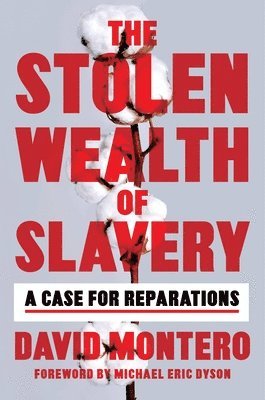
In this timely, powerful, investigative history, The Stolen Wealth of Slavery, Emmy Award-nominated journalist David Montero follows the trail of the massive wealth amassed by Northern corporations throughout America's history of enslavement. It has long been maintained by many that the North wasn't complicit in the horrors of slavery. The truth, however, is that large Northern banks-including well-known institutions like Citibank, Bank of New York, and Bank of America-were critical to the financing of slavery; that they saw their fortunes rise dramatically from their involvement in the business of enslavement; and that white business leaders and their surrounding communities created enormous wealth from the enslavement and abuse of Black bodies.The Stolen Wealth of Slavery grapples with facts that will be a revelation to many: Most white Southern enslavers were not rich-many were barely making ends meet-with Northern businesses benefitting the most from bondage-based profits. And some of the very Northerners who would be considered pro-Union during the Civil War were in fact anti-abolition, seeing the institution of slavery as being in their best financial interests, and only supporting the Union once they realized doing so would be good for business. It is a myth that the wealth generated from slavery vanished after the war. Rather, it helped finance the industrialization of the country, and became part of the bedrock of the growth of modern corporations, helping to transform America into a global economic behemoth. In this remarkable book, Montero elegantly and meticulously details rampant Northern investment in slavery. He showcases exactly what was stolen, who stole it, and to whom it is owed, calling for corporate reparations as he details contemporary movements to hold companies accountable for past atrocities.
E-bok
Engelska, 201873 kr
Läs direkt efter köp
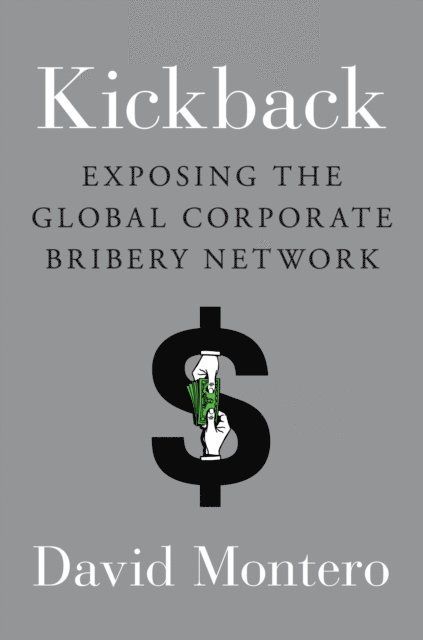
An investigation into corporate bribery around the world and how it undermines democracy and the free market systemThe World Bank estimates that rich multinational corporations pay hundreds of billions of dollars in bribes every year to officials overseas. The perpetrators are not a handful of rogue companies, but many members of the Fortune 500. Kickback is a sweeping, global investigation into corporate bribery around the world and how these back-door financial transactions undermine democracy and the free market system by lining the pockets of some of the world''s worst dictators and criminals. Ultimately this system affects billions of people by creating conditions that lead to poverty, violence, environmental disaster, and political instability in countries like Nigeria, India, the Congo, Vietnam, Mexico, Kazakhstan, and Iraq. Kickback examines the origins of corporate bribery during the reign of the British East India Company, the methods by which it is carried out today, and its effects at both the individual and the national level throughout the globe. From the murder of a young activist in Bangladesh, to a Texas billionaire''s dealings with Sadaam Hussein, to pharmaceutical firms'' payoffs to gain market share in China, to corporations who outsource bribery to "superagents" in the criminal underworld, to how the entrenched culture of bribery helped destroy the Greek economy. Montero also examines the countermeasures that have been introduced to combat these practices, from the Justice Department''s efforts to halt them to identifying and restituting its victims.Given the new era of profound uncertainty we are entering--as Middle Eastern regimes are replaced by leaders whose true character is still unknown, as the strength of the European Union founders and the power of China rises, as the global economy continues on a path of perilous flux--the stakes for eradicating corporate bribery have never been higher.
Del 3 - New Studies in European Cinema
Thinking Images
The Essay Film as a Dialogic Form in European Cinema
Häftad, Engelska, 2012
861 kr
Skickas inom 5-8 vardagar
The essay film – ‘a form that thinks’ – serves to create a self-reflexive space for contemporary society by challenging expectations and demanding the creative involvement of the spectator. Using film to provoke thought has never been more important than now, when non-fiction films are gaining in popularity and playing a growing part in debates about culture and politics. This timely publication argues that the appeal of the essay film lies primarily in the dialogic engagement with the spectator and the richness of the intellectual and artistic debate it stimulates.The book focuses on the work of three key European film directors associated with the essay film: Chris Marker, Harun Farocki and José Luis Guerín. It provides a detailed analysis of several films by each director, exploring the relationship between dialogism and essayism in their work and placing this in the wider context of debates on the cinematic essay as a genre. Central aspects of essayistic filmmaking are explored, including its radical approach to knowledge, its distinctive patterns of subjectivity, its challenging of the formal representation of reality, and its contribution to new understandings of spectatorship. Written with clarity and perception, this volume offers new insights into the rise of the non-fiction film and the essay film, in particular.