David Narrett – författare
Visar alla böcker från författaren David Narrett. Handla med fri frakt och snabb leverans.
5 produkter
5 produkter
292 kr
Skickas inom 7-10 vardagar
A sweeping new history reveals how the Cherokees became a nation as they navigated a century and a half of intertribal conflicts and colonial expansion that threatened their way of life.For more than 150 years between their first encounters with the English in the 1670s and forced removal along the Trail of Tears, the Cherokees negotiated mounting pressures. As their world was convulsed by the spread of European diseases, competition for guns, furs, and deerskins, and imperial powers’ unrelenting pursuit of “savage” allies, Cherokee communities responded by creating new solidarities. At the dawn of the eighteenth century, the idea of unity among the widely dispersed Cherokees would scarcely have occurred to their leaders. A century later, chiefs would declare unequivocally that they stood for the whole Cherokee nation.Steps toward national unity were partially a response to the exigencies of war. But while armed conflict was frequent, David Narrett shows that the bonds of Cherokee peoplehood were forged primarily through efforts to maintain peace and secure their livelihoods. The Cherokees—both men and women—were remarkably skillful diplomats who practiced peacemaking as a distinctive spiritual art in which adversaries would reconcile through a mutual and symbolic forgetting of wrongs inflicted on one another. Pragmatic and purposeful, Cherokees adeptly managed relationships with colonials and Indigenous rivals, seeking to preserve their independence and living space and to maximize advantages from trade.Rich in detail and insight, and told through captivating personal stories, The Cherokees offers a portrait of the perseverance that built a nation. Amid an onslaught of struggle and change, the Cherokees became a people who survived against all odds.
311 kr
Kommande
A sweeping new history reveals how the Cherokees became a nation as they navigated a century and a half of intertribal conflicts and colonial expansion that threatened their way of life.From early colonial encounters in the 1670s to their forced removal along the Trail of Tears in the 1830s, the Cherokees confronted extraordinary pressures. As their world was convulsed by the spread of European diseases, competition for guns, furs, and deerskins, and settlers’ unrelenting pursuit of “savage” allies, Cherokee communities negotiated conflicts with other Indigenous peoples and European imperial powers. In the process, they created new solidarities among themselves. At the dawn of the eighteenth century, the idea of unity among the Cherokees would scarcely have occurred to their leaders. A century later, chiefs declared unequivocally that they stood for the entire Cherokee nation.David Narrett shows that the bonds of Cherokee peoplehood were forged not only by warfare but also by diplomacy and alliance-building that ranged across half a continent. Despite severe losses during the French and Indian War, the American Revolution, and subsequent US expansionism, the Cherokees endured. Cherokee women—not only men—were skillful diplomats who held their people together in crisis. Pragmatic and purposeful, Cherokees adapted under enormous stress in order to preserve their land, independence, and way of life.Rich in detail and insight, The Cherokees is a portrait of the perseverance that built a nation and of a people who survived against all odds.
696 kr
Skickas inom 10-15 vardagar
This book breaks new ground by offering the first detailed and systematic analysis of inheritance practices in New York City from the beginning of Dutch settlement in the 1620s to the onset of the American Revolution. By analyzing a broad range of original sources—including more than 2,300 wills—David E. Narrett shows how the transmission of property at death reflected the distribution of power and authority within the family.The author makes an especially important contribution to early New York history by explaining the Dutch origins of social and family customs, and by tracing the persistence of Dutch ways following the English conquest of New Netherland in 1664. He demonstrates that seventeenth-century Dutch law was particularly favorable to women since it sanctioned community property within marriage, the drafting of mutual wills by spouses, and the equal (or nearly equal) division of property among all children.While the book maintains its comparative focus on the Dutch and English traditions, it also includes material on other ethnic groups (for example, French Huguenots and Jews) living in a pluralistic society. Narrett utilizes both Dutch and English language sources to examine such pertinent topics as the relationship between law and social custom, primogeniture, kinship and communal ties, charitable bequests, the manumission of slaves, and the literacy level of testators. Written in a clear and precise manner, the book includes many tables that will give readers immediate access to supporting data, and a conclusion establishes the relationship of Narrett's findings to relevant scholarship. A valuable addition to the literature on inheritance, this is a book whose conclusions and data will be mined by colonialists, legal historians, and historians of women and the family.
379 kr
Skickas inom 10-15 vardagar
This book breaks new ground by offering the first detailed and systematic analysis of inheritance practices in New York City from the beginning of Dutch settlement in the 1620s to the onset of the American Revolution. By analyzing a broad range of original sources—including more than 2,300 wills—David E. Narrett shows how the transmission of property at death reflected the distribution of power and authority within the family.The author makes an especially important contribution to early New York history by explaining the Dutch origins of social and family customs, and by tracing the persistence of Dutch ways following the English conquest of New Netherland in 1664. He demonstrates that seventeenth-century Dutch law was particularly favorable to women since it sanctioned community property within marriage, the drafting of mutual wills by spouses, and the equal (or nearly equal) division of property among all children.While the book maintains its comparative focus on the Dutch and English traditions, it also includes material on other ethnic groups (for example, French Huguenots and Jews) living in a pluralistic society. Narrett utilizes both Dutch and English language sources to examine such pertinent topics as the relationship between law and social custom, primogeniture, kinship and communal ties, charitable bequests, the manumission of slaves, and the literacy level of testators. Written in a clear and precise manner, the book includes many tables that will give readers immediate access to supporting data, and a conclusion establishes the relationship of Narrett's findings to relevant scholarship. A valuable addition to the literature on inheritance, this is a book whose conclusions and data will be mined by colonialists, legal historians, and historians of women and the family.
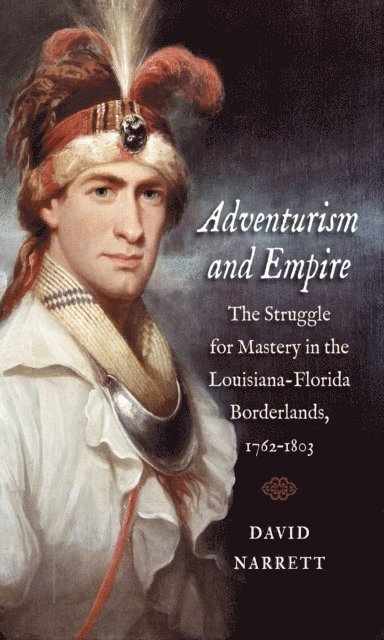
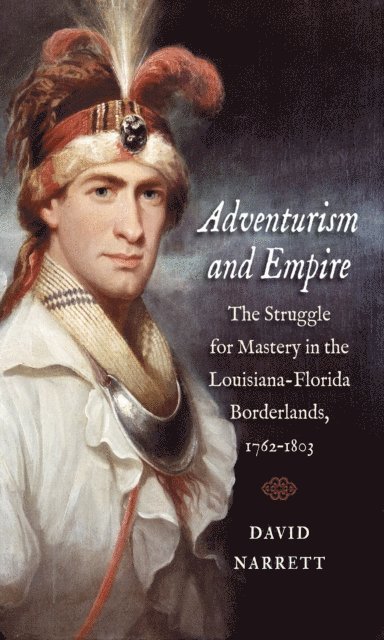
Adventurism and Empire
The Struggle for Mastery in the Louisiana-Florida Borderlands, 1762-1803
Häftad, Engelska, 2017
379 kr
Skickas inom 10-15 vardagar
In this expansive book, David Narrett shows how the United States emerged as a successor empire to Great Britain through rivalry with Spain in the Mississippi Valley and Gulf Coast. As he traces currents of peace and war over four critical decades - from the close of the Seven Years War through the Louisiana Purchase - Narrett sheds new light on individual colonial adventurers and schemers who shaped history through cross-border trade, settlement projects involving slave and free labor, and military incursions aimed at Spanish and Indian territories.Narrett examines the clash of empires and nationalities from diverse perspectives. He weighs the challenges facing Native Americans along with the competition between Spanish, French, British, and U.S. interests. In a turbulent era, the Louisiana and Florida borderlands were shaken by tremors from the American Revolutionary War and the French Revolution. By demonstrating pervasive intrigue and subterfuge in borderland rivalries, Narrett shows that U.S. Manifest Destiny was not a linear or inevitable progression. He offers a fresh interpretation of how events in the Louisiana and Florida borderlands altered the North American balance of power, and affected the history of the Atlantic world.