David R. Gruber - Böcker
Visar alla böcker från författaren David R. Gruber. Handla med fri frakt och snabb leverans.
4 produkter
4 produkter
3 180 kr
Skickas inom 10-15 vardagar
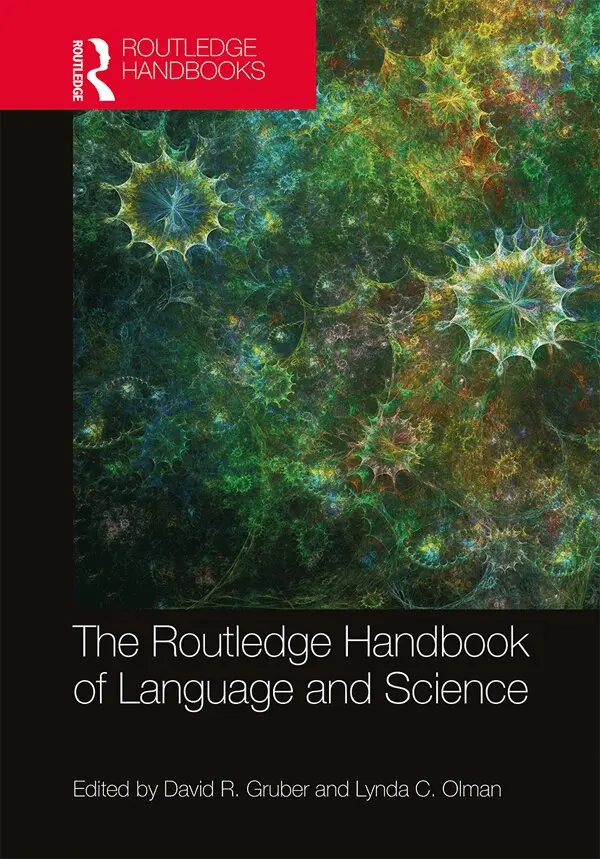
The Routledge Handbook of Language and Science provides a state-of-the-art volume on the language of scientific processes and communications. This book offers comprehensive coverage of socio-cultural approaches to science, as well as analysing new theoretical developments and incorporating discussions about future directions within the field. Featuring original contributions from an international range of renowned scholars, as well as academics at the forefront of innovative research, this handbook:identifies common objects of inquiry across the areas of rhetoric, sociolinguistics, communication studies, science and technology studies, and public understanding of sciencecovers the four key themes of power, pedagogy, public engagement, and materiality in relation to the study of scientific language and its developmentuses qualitative and quantitative approaches to demonstrate how humanities and social science scholars can go about studying sciencedetails the meaning and purpose of socio-cultural approaches to science, including the impact of new media technologiesanalyses the history of the field and how it positions itself in relation to other areas of studyUshering the study of language and science toward a more interdisciplinary, diverse, communal and ecological future, The Routledge Handbook of Language and Science is an essential reference for anyone with an interest in this area.
674 kr
Skickas inom 10-15 vardagar
The Routledge Handbook of Language and Science provides a state-of-the-art volume on the language of scientific processes and communications. This book offers comprehensive coverage of socio-cultural approaches to science, as well as analysing new theoretical developments and incorporating discussions about future directions within the field. Featuring original contributions from an international range of renowned scholars, as well as academics at the forefront of innovative research, this handbook: identifies common objects of inquiry across the areas of rhetoric, sociolinguistics, communication studies, science and technology studies, and public understanding of science; covers the four key themes of power, pedagogy, public engagement, and materiality in relation to the study of scientific language and its development; uses qualitative and quantitative approaches to demonstrate how humanities and social science scholars can go about studying science; details the meaning and purpose of socio-cultural approaches to science, including the impact of new media technologies; analyses the history of the field and how it positions itself in relation to other areas of study. Ushering the study of language and science toward a more interdisciplinary, diverse, communal and ecological future, The Routledge Handbook of Language and Science is an essential reference for anyone with an interest in this area.
Rhetoric After Identification
Essays on Burke, Difference, and Acting Together
Inbunden, Engelska, 2026
1 597 kr
Kommande
How can we act together when identification may no longer bridge the divide? Since the publication of Kenneth Burke's A Rhetoric of Motives (1950), identification has been the central concept of rhetorical theory. Rhetoric After Identification offers new theoretical frameworks for engaging with and letting go of identification—to see difference as dignity and consider how we are never fully understandable to one another yet can work toward making worlds in common. The volume confronts the primacy of identification through a variety of interdisciplinary lenses, drawing on affect and body studies, new materialisms, and decolonial philosophies. Challenging the assumption that identifying with one another is necessary to cooperation, contributors interrogate how the pursuit of "sameness" can perpetuate inequalities. In doing so, they do not abandon the potential for affective and symbolic identification; instead, they multiply the generative force of difference.Contributors: Matthew Brigham, Catherine Chaput, Donovan Conley, Diane Davis, Matthew Halm, Chris Ingraham, J. G. Izaguirre III, Chris Mays, Kaden Milliren, Megan Poole, Krista Ratcliffe
566 kr
Kommande
How can we act together when identification may no longer bridge the divide? Since the publication of Kenneth Burke's A Rhetoric of Motives (1950), identification has been the central concept of rhetorical theory. Rhetoric After Identification offers new theoretical frameworks for engaging with and letting go of identification—to see difference as dignity and consider how we are never fully understandable to one another yet can work toward making worlds in common. The volume confronts the primacy of identification through a variety of interdisciplinary lenses, drawing on affect and body studies, new materialisms, and decolonial philosophies. Challenging the assumption that identifying with one another is necessary to cooperation, contributors interrogate how the pursuit of "sameness" can perpetuate inequalities. In doing so, they do not abandon the potential for affective and symbolic identification; instead, they multiply the generative force of difference.Contributors: Matthew Brigham, Catherine Chaput, Donovan Conley, Diane Davis, Matthew Halm, Chris Ingraham, J. G. Izaguirre III, Chris Mays, Kaden Milliren, Megan Poole, Krista Ratcliffe