David Remley - Böcker
Visar alla böcker från författaren David Remley. Handla med fri frakt och snabb leverans.
2 produkter
2 produkter
214 kr
Skickas inom 5-8 vardagar
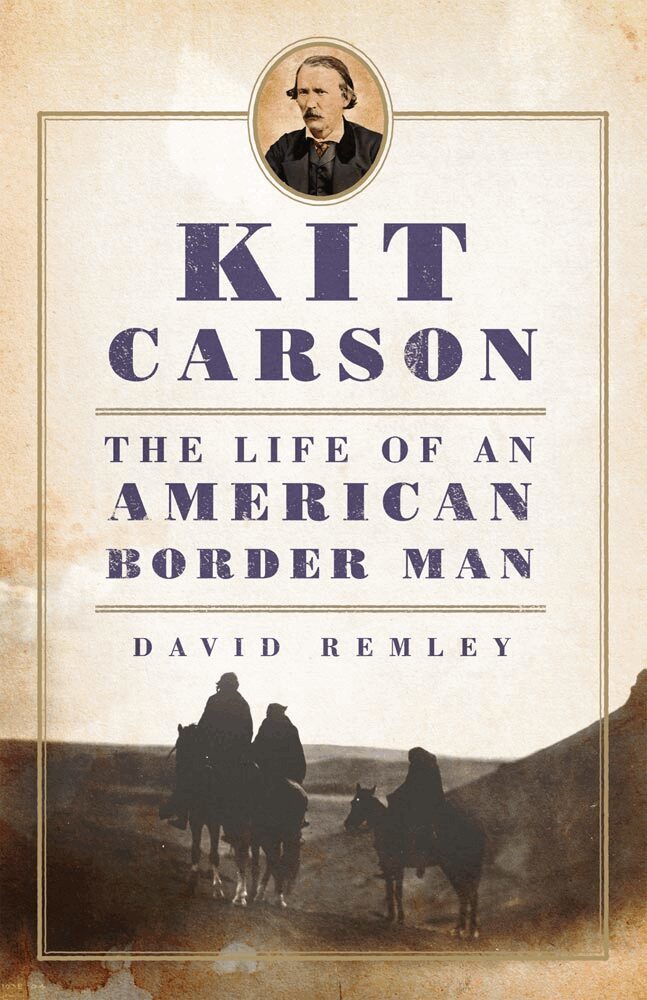
History has portrayed Christopher ""Kit"" Carson in black and white. Best known as a nineteenth-century frontier hero, he has been represented more recently as an Indian killer responsible for the deaths of hundreds of Navajos. Biographer David Remley counters these polarized views, finding Carson to be less than a mythical hero, but more than a simpleminded rascal with a rifle.Kit Carson: The Life of an American Border Man strikes a balance between prevailing notions about this quintessential western figure. Whereas the dime novelists exploited Carson's popular reputation, Remley reveals that the real man was dependable, ethical, and - for his day - relatively open-minded. Sifting through the extensive scholarship about Kit, the author illuminates the key dimensions of Carson's life, including his often neglected Scots-Irish heritage. His people's dire poverty and restlessness, their clannish rural life and sternly Protestant character, committed Carson, like his Scots-Irish ancestors, to loyalty and duty and to following his leader into battle without question.Remley also places Carson in the context of his times by exploring his controversial relations with American Indians. Although despised for the merciless warfare he led on General James H. Carleton's behalf against the Navajos, Carson lived amicably among many Indian people, including the Utes, whom he served as U.S. government agent. Happily married to Waa-Nibe, an Arapaho woman, until her death, he formed a lasting friendship with their daughter, Adaline.Remley sees Carson as a complicated man struggling to master life on America's borders, those highly unstable areas where people of different races, cultures, and languages met, mixed, and fought, sometimes against each other, sometimes together, for the possession of home, hunting rights, and honor.
240 kr
Skickas inom 10-15 vardagar
Teenage John Watts came to territorial Santa Fe in 1858 from Bloomington, Indiana. His father believed the clear air of northern New Mexico would be beneficial to John's health. In Santa Fe, they joined John's older brother, J. Howe Watts.John and Howe are left on their own in Santa Fe much of the time, and John decides to improve his penmanship and foster orderly habits by keeping a daily journal. In a mixture of worldliness and naiveté, maturity and boyish enthusiasm, insightful observations of others, and critical comments on his own behaviour, John captures aspects of daily life in Santa Fe that are not of a kind generally found in public documents. Public officials help in educating the Anglo children living in the capital: Governor Rencher teaches French in his office at the Palace of the Governors, Reverend Gorman of the Baptist Church teaches Spanish. Francis Bauer, the army band director, gives music lessons. John voraciously reads the contemporary literary classics and the major American historians of his day.In a Who’s Who of territorial New Mexico, Adios Nuevo Mexico opens a window into what an American boy in his late teens is reading, thinking, doing, and seeing in Santa Fe.