David S. Clark – författare
Visar alla böcker från författaren David S. Clark. Handla med fri frakt och snabb leverans.
13 produkter
American Comparative Law
A History
Inbunden, 2022
1679 kr
Lägg i varukorg
This book details both the intellectual and social history of American legal rules, institutions, ideology, and culture that had a foreign component, either by import or after 1900 also by export from the United States to other legal systems. Combining legal history and comparative law, the volume …
American Comparative Law
A History
E-bok, 2022
1484 kr
Lägg i varukorg
This book details both the intellectual and social history of American legal rules, institutions, ideology, and culture that had a foreign component, either by import or after 1900 also by export from the United States to other legal systems. Combining legal history and comparative law, the volume …
American Comparative Law
A History
E-bok, 2022
1484 kr
Lägg i varukorg
This book details both the intellectual and social history of American legal rules, institutions, ideology, and culture that had a foreign component, either by import or after 1900 also by export from the United States to other legal systems. Combining legal history and comparative law, the volume …
Oxford Companion to American Law
Av N. E. H. Hull, Joel B. Grossman m. fl.
E-bok, 2002
776 kr
Lägg i varukorg
A landmark in legal publishing, The Oxford Companion to the Supreme Court is a now classic text many of whose entries are regularly cited by scholars as the definitive statement on any particular subject. In the tradition of that work, editor in chief Kermit L. Hall offers up The Oxford Companion …
Encyclopedia of Law and Society
American and Global Perspectives
Inbunden, 2007
6499 kr
Lägg i varukorg
"This work will be very valuable for academic and public libraries supporting prelaw, law, social, and cultural studies. Summing Up: Highly recommended. Upper-level undergraduates through professionals/practitioners; general readers."—CHOICEThere are two aspects of scholarship about the legal …
Microorganisms in Foods: Their Significance and Methods of Enumeration
Av David S. Clark, F. S. Thatcher
Häftad, 1968
463 kr
Lägg i varukorg
Microorganisms in Foods
Their Significance and Methods of Enumeration
Av David S. Clark, F.S. Thatcher
E-bok, 1968
375 kr
Lägg i varukorg
Twenty-two experienced scientists from eleven different countries have contributed four years of study and discussion to this important book, which represents part of the work done by the International Committee on Microbiological Specifications for Foods, a standing committee of the International …
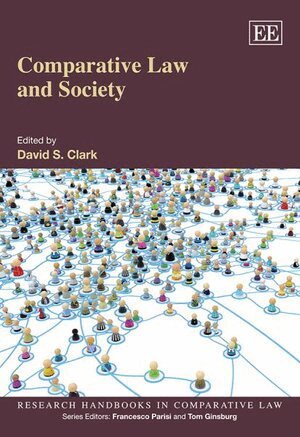
Comparative Law and Society
E-bok, 2012
658 kr
Lägg i varukorg
Comparative Law and Society , part of the Research Handbooks in Comparative Law series, is a pioneering volume that comprises 19 original essays written by expert authors from across the world. This innovative handbook offers both a history of the field of comparative law and society and a thorough …
Comparative Law and Society
Häftad, 2014
738 kr
Lägg i varukorg
Comparative Law and Society, part of the Research Handbooks in Comparative Law series, is a pioneering volume that comprises 19 original essays written by expert authors from across the world. This innovative handbook offers both a history of the field of comparative law and society and a thorough …
Comparative Law and Society
Inbunden, 2012
3071 kr
Lägg i varukorg
Comparative Law and Society, part of the Research Handbooks in Comparative Law series, is a pioneering volume that comprises 19 original essays written by expert authors from across the world. This innovative handbook offers both a history of the field of comparative law and society and a thorough …