David San Narciso - Böcker
Visar alla böcker från författaren David San Narciso. Handla med fri frakt och snabb leverans.
3 produkter
3 produkter
1 818 kr
Skickas inom 10-15 vardagar
Bringing together the work of top specialists and emerging scholars in the field, this volume is the first book-length study of the rapport between liberalism and the Spanish monarchy over the long nineteenth century in any language. It is at once a general overview and a set of original contributions to knowledge. The essays discuss monarchy’s rapport with the pre-liberal, liberal and post-liberal nation-state, from the eve of the French Revolution, when the monarchy regulated a ‘natural’ order, to the unstable reign of Isabel II, fraught by revolutions that ended in her exile, to the brief republican monarchy of Amadeo I, the much-maligned foreign king, to Alfonso XIII’s expulsion from Spain following the failure of the dictatorship of Primo de Rivera. The essays approach the subject through two main thematic-analytical axes. The first, political axis examines the monarchy’s confrontation with, and adaptation to, liberalism as a political force that aimed to nationalize the Spanish people. The second axis is cultural, and studies the Crown’s support of liberalism’s nationalizing aims through various staging strategies that comprised visits, rituals, ceremonies, iconography, religiosity, and familial and military display. The dual approach invites the reader to question the boundaries between the political and the cultural, especially in regard to the ceremonial, and during critical times that witness the transformation of political power and the building of the nation-state.Designed for Hispanists and students of politics, ritual, liberalism and monarchy, this collection should appeal to academics and researchers as well as anyone interested in modern European history.
648 kr
Skickas inom 10-15 vardagar
Bringing together the work of top specialists and emerging scholars in the field, this volume is the first book-length study of the rapport between liberalism and the Spanish monarchy over the long nineteenth century in any language. It is at once a general overview and a set of original contributions to knowledge. The essays discuss monarchy’s rapport with the pre-liberal, liberal and post-liberal nation-state, from the eve of the French Revolution, when the monarchy regulated a ‘natural’ order, to the unstable reign of Isabel II, fraught by revolutions that ended in her exile, to the brief republican monarchy of Amadeo I, the much-maligned foreign king, to Alfonso XIII’s expulsion from Spain following the failure of the dictatorship of Primo de Rivera. The essays approach the subject through two main thematic-analytical axes. The first, political axis examines the monarchy’s confrontation with, and adaptation to, liberalism as a political force that aimed to nationalize the Spanish people. The second axis is cultural, and studies the Crown’s support of liberalism’s nationalizing aims through various staging strategies that comprised visits, rituals, ceremonies, iconography, religiosity, and familial and military display. The dual approach invites the reader to question the boundaries between the political and the cultural, especially in regard to the ceremonial, and during critical times that witness the transformation of political power and the building of the nation-state.Designed for Hispanists and students of politics, ritual, liberalism and monarchy, this collection should appeal to academics and researchers as well as anyone interested in modern European history.
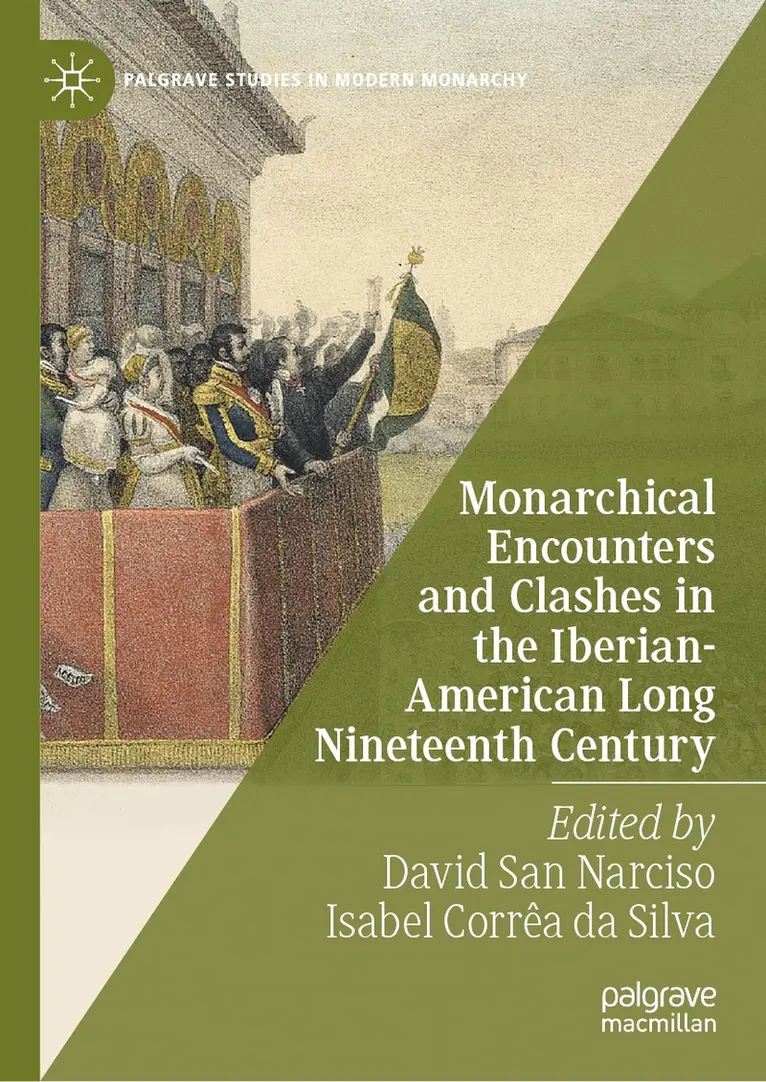
Monarchical Encounters and Clashes in the Iberian-American Long Nineteenth Century
Inbunden, Engelska, 2026
2 251 kr
Kommande
This book demonstrates how monarchy adjusted to the contours of modernity in remarkably diverse kinds of ways and contexts, preserving a central role in the configuration of the post-revolutionary world. It focuses on three geographically and politically connected frameworks: Spain, Portugal, and the new Latin American countries that emerged from the Iberian colonial territories. It analyses the intense and often conflicting processes and negotiations that characterized the monarchy’s adaptation to post-revolutionary modernity and its insertion into a liberal parliamentary and constitutional system. Combining monarchical and post-revolutionary principles was one of the most notable challenges that political regimes faced after 1800. In the Portuguese and Spanish cases, as in others, it was necessary to seek a new place for the crown in constitutional parliamentarism. Liberals managed to do this by uniting king and parliament as elements of national identity and sovereign power respectively. In Latin America, monarchy was seen as a solution to the potential instability of the nascent independent states. In these cases, in addition to crown’s adaptation to a constitutional regime, there was also the need to find monarchs and to legitimize them. The cases of Mexico and Brazil were indicative of these challenges and of the difficulties they brought.