David Stringer - Böcker
Visar alla böcker från författaren David Stringer. Handla med fri frakt och snabb leverans.
5 produkter
5 produkter
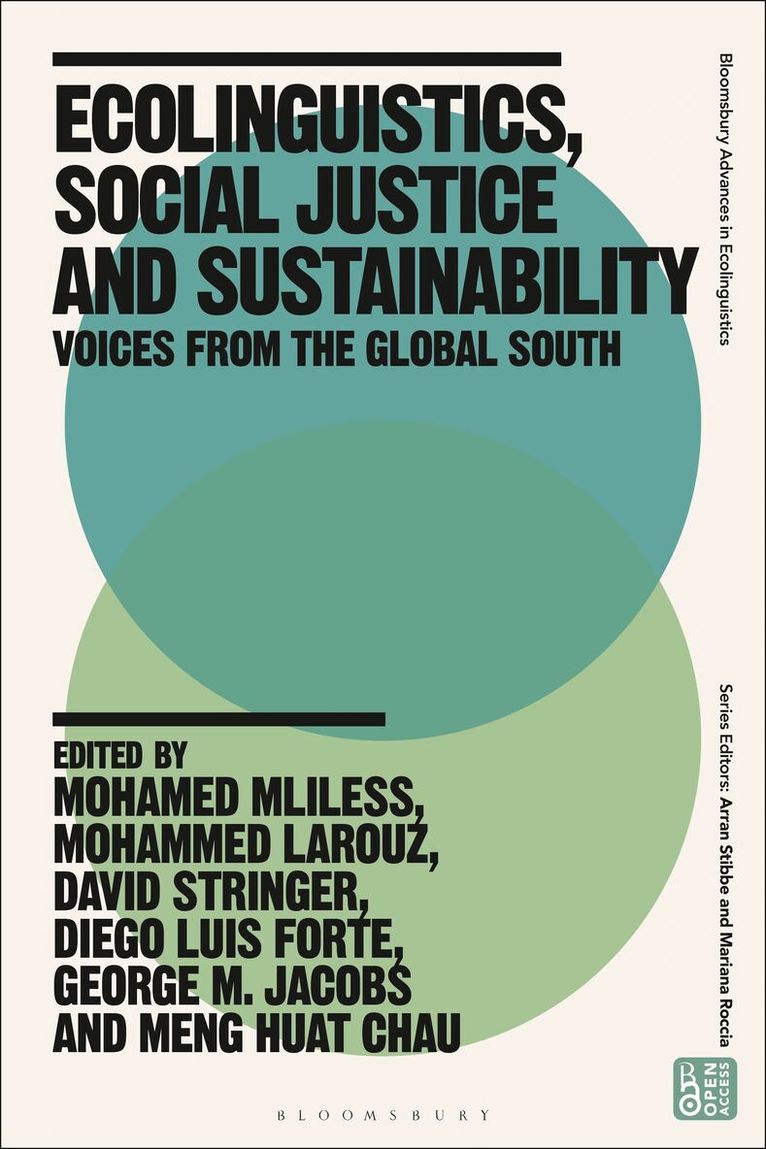
Ecolinguistics, Social Justice and Sustainability
Voices from the Global South
Inbunden, Engelska, 2025
1 276 kr
Skickas inom 10-15 vardagar
Decentring the growing field of ecolinguistics from its historically Western orientation, this open access book offers a comprehensive exploration of the intricate relationship between language and the environment in the Global South.It brings forward new perspectives and voices to broaden our understanding of the role of language in addressing ecological challenges.Through a series of thought-provoking chapters, the book navigates through various dimensions of ecolinguistics, shedding light on critical issues and innovative approaches across diverse contexts. Case studies include the representation of ecotourism in Morocco, the implementation of ecological ideology in Oman, colonial legacies in Argentina’s food production discourse, ecological identity in Kenya, the role of civets in Indonesian coffee production and life stories about Senegalese ecologies.Through a blend of theoretical insights and practical applications, the book advocates for a holistic understanding of ecolinguistics that transcends geographical boundaries and cultural nuances.The ebook editions of this book are available open access under a CC BY-NC-ND 4.0 licence on bloomsburycollections.com. Open access was funded by the Bloomsbury Open Collections Library Collective.
319 kr
Skickas inom 5-8 vardagar
355 kr
Skickas inom 5-8 vardagar
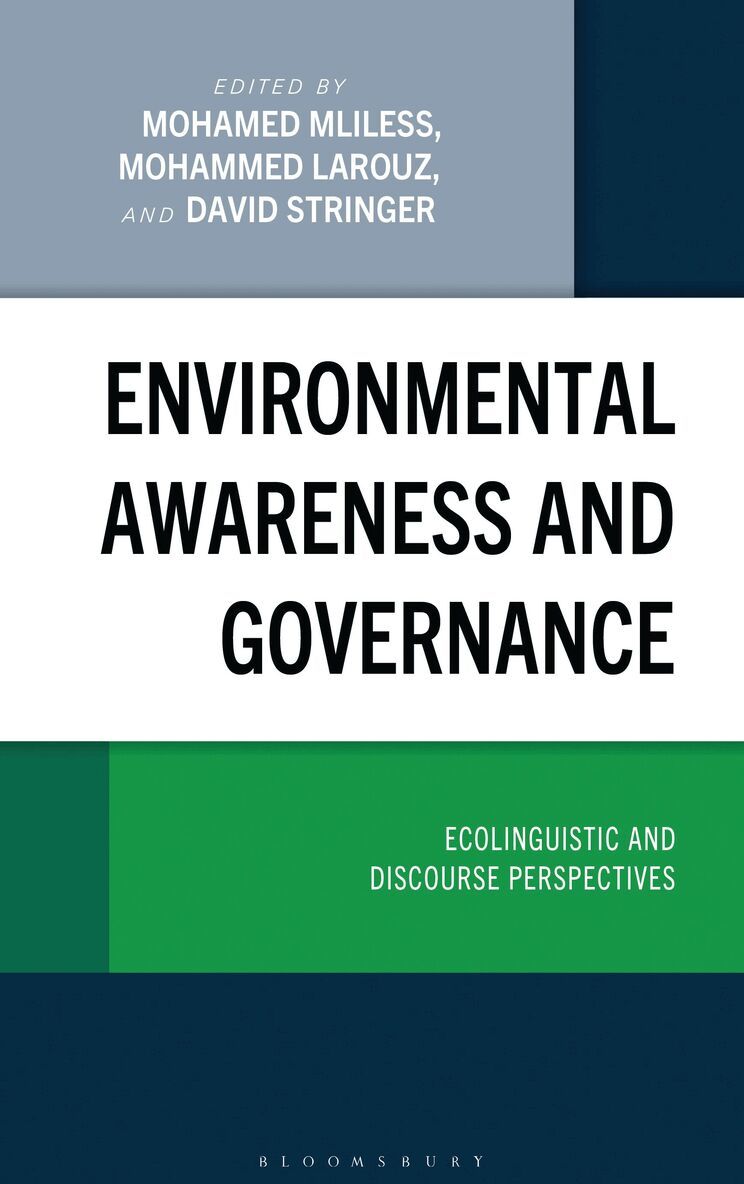
Environmental Awareness and Governance
Ecolinguistic and Discourse Perspectives
Inbunden, Engelska, 2025
1 076 kr
Skickas inom 10-15 vardagar
Environmental Awareness and Governance: Ecolinguistic and Discourse Perspectives is a comprehensive exploration that delves into the intricate relationship between language, discourse, and environmental issues. This book begins by examining the role of environmental governance in Moroccan political parties’ electoral programs, followed by an analysis of how Moroccan online media communicates water stress as a risk issue. It also provides an ecolinguistic analysis of a computer-animated Netflix film, “The Sea Beast”, and discusses the impact of climate change on Moroccan agriculture, particularly focusing on the “Generation Green” strategy.The editors and contributors explore the role of translation in the environmental movement and discusses the shift from the Anthropocene to the Capitalocene in the context of global climate change. They also provide a critical discourse analysis of the environmental discourse of the COP27, highlighting the North-South divide. The latter part of this book focuses on environmental literacy and awareness among students and also examines the environmental awareness of Moroccan university students and its impact on their environmental practices.The book further discusses the role of visual language in environmental representation, using Moroccan cinema as a case study. It explores the intersection of language, translation, and posthumanism, focusing on cross-species interaction in Margaret Atwood’s trilogy.This book concludes with an ecocritical interpretation of solastalgia in Mohsin Hamid’s “Exit West” and a generic, ecocritical reading of climate change in Kim Stanley Robinson’s Science in the Capital Trilogy. Each chapter provides a unique perspective on environmental issues, making it a comprehensive resource for anyone interested in environmental studies.
Environmental Awareness and Governance
Ecolinguistic and Discourse Perspectives
Häftad, Engelska, 2027
635 kr
Kommande
Environmental Awareness and Governance: Ecolinguistic and Discourse Perspectives is a comprehensive exploration that delves into the intricate relationship between language, discourse, and environmental issues. This book begins by examining the role of environmental governance in Moroccan political parties’ electoral programs, followed by an analysis of how Moroccan online media communicates water stress as a risk issue. It also provides an ecolinguistic analysis of a computer-animated Netflix film, “The Sea Beast”, and discusses the impact of climate change on Moroccan agriculture, particularly focusing on the “Generation Green” strategy.The editors and contributors explore the role of translation in the environmental movement and discusses the shift from the Anthropocene to the Capitalocene in the context of global climate change. They also provide a critical discourse analysis of the environmental discourse of the COP27, highlighting the North-South divide. The latter part of this book focuses on environmental literacy and awareness among students and also examines the environmental awareness of Moroccan university students and its impact on their environmental practices.The book further discusses the role of visual language in environmental representation, using Moroccan cinema as a case study. It explores the intersection of language, translation, and posthumanism, focusing on cross-species interaction in Margaret Atwood’s trilogy.This book concludes with an ecocritical interpretation of solastalgia in Mohsin Hamid’s “Exit West” and a generic, ecocritical reading of climate change in Kim Stanley Robinson’s Science in the Capital Trilogy. Each chapter provides a unique perspective on environmental issues, making it a comprehensive resource for anyone interested in environmental studies.