Deborah I. Olszewski - Böcker
Visar alla böcker från författaren Deborah I. Olszewski. Handla med fri frakt och snabb leverans.
5 produkter
5 produkter
1 052 kr
Skickas inom 5-8 vardagar
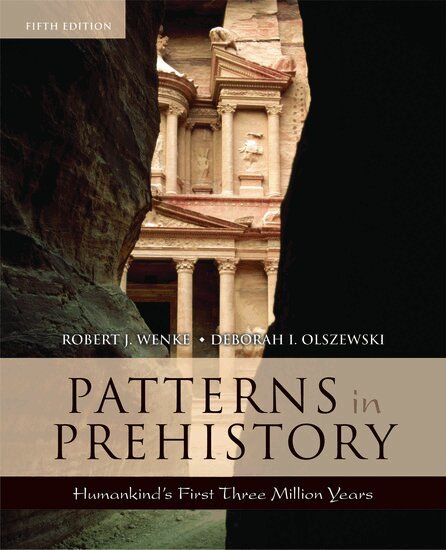
Who are we? How did the world become what it is today? What paths did humanity traverse along the way? Patterns in Prehistory, Fifth Edition, is a comprehensive and engaging survey of humanity's past three million years. It brings together theories and archaeological examples to pose questions about who we are and the means by which humanity evolved into what it is today.Ideal for introductory courses in world prehistory and origins of complex societies, Patterns of Prehistory, Fifth Edition, offers a unified and thematic approach to the four great transformations--or patterns--that characterize humanity's past: the origins and evolution of culture; the origins of modern humans and human behaviors; the origins of agriculture; and the origins of complex societies, civilizations, and pre-industrial states. Integrating theoretical approaches with archaeological data from the Middle East, Mesoamerica, North and South America, Egypt, China, the Indus Valley, and temperate Europe, Patterns of Prehistory, Fifth Edition, reveals how archaeologists decipher the past. It demonstrates how theory and method are combined to derive interpretations and also considers how interpretations evolve as a result of accumulating data, technological advances in recording and analyzing data sets, and newer theoretical perspectives. This new edition of Patterns of Prehistory provides: * Fresh insights with the addition of coauthor Deborah Olszewski, who has carefully reviewed and revamped the material with an eye toward making the text clearly understandable to today's students* Updated discussions throughout, including expanded information on post-processual archaeology, current methodologies, and technological advances* Approximately 250 illustrations and maps, more than half of which are new to this edition* Groundbreaking research on new discoveries of hominin fossils, genetic research, prehistoric migrations, the peopling of the Americas, and theories of the origins of agriculture and the origins of complex societies* Timelines for all relevant chapters as well as an overarching timeline for the entire book to help students place events in context* Extensively updated chapter bibliographies and chapter endnotes
769 kr
Tillfälligt slut
Situated between Europe, Asia, and the Levantine corridor to Africa, the Zagros-Taurus region has enormous potential for the study of human adaptation and population movement during the Pleistocene. While archaeological work was done in this area 40 years ago, much of it remains unpublished. The political situation restricts research by archaeologists. This volume includes new data and major syntheses of the Paleolithic prehistory of the region, with reports of key sites and industries. By filling a major gap in our understanding of this area, it represents an essential reference for Near Eastern and Paleolithic specialists.
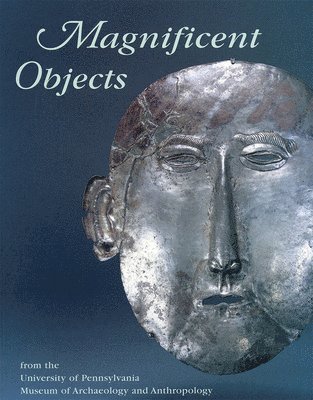
Magnificent Objects from the University of Pennsylvania Museum of Archaeology and Anthropology
Inbunden, Engelska, 2004
876 kr
Tillfälligt slut
Since the late nineteenth century hundreds of people, on behalf of the University of Pennsylvania Museum of Archaeology and Anthropology, have searched for what it means to be human, studying the infinite variety of human cultures. The Museum's extensive collections provide vital clues in this quest. For the first time curators and Museum staff present more than 220 of the most intriguing and beautiful objects from such sites as Nippur, Thebes, the Amazon, Sitio Conte, Ur of the Chaldees, Borneo-all resonating with an eloquence that recalls the curiosity that drove the Museum and its founders and continues to drive its contemporary researchers after more than 350 international expeditions. The objects selected-from African to American to Asian, from Babylonian and Near Eastern to Egyptian, Oceanian, and Mediterranean-are important even beyond their immediate, individual aesthetic. The depth of information recovered when they are examined in their original contexts allows experts and lay readers to reconstruct the many stories, large and small, that constitute the shared lives and heritage of humanity.
2 932 kr
Skickas inom 10-15 vardagar
This handbook showcases an Africa-wide compendium of Stone Age archaeological sites and methodological advances that have improved our understanding of hominin lifeways and biogeography in the continent. The focal time spans the Pleistocene Epoch (c. 2.5 million–11,700 years ago) during which important human traits, such as obligate bipedalism that freed the hands to engage in creative activities, a large brain relative to body size, language, and social complexity, developed in the general forms that they are found today. The handbook is the first of its kind, and it is expected to play a significant role in human evolutionary research by:❖ Collating the African Stone Age record, which exists in a fragmented state along the lines of national boundaries and colonial experiences.❖ Showcasing emerging conceptual and methodological advances in African Pleistocene archaeology.❖ Providing reference datasets for teaching and researching African prehistory.❖ Making Africa’s Stone Age record accessible to researchers and students based in Africa who may not have access to journal publications where most new field discoveries are published.The Handbook features 128 chapters, of which 116 are site entries grouped by the host countries and presented in an alphabetical order. A number of those site-related entries examine multiple archaeological localities lumped under specific projects or study areas. The rest of the contributions deal with methodological topics, such as luminescence and radiocarbon dating, field data recovery, lithic analysis, micromorphology, and hominin fossil and zooarchaeological records of Pleistocene Africa. The introductory chapter provides an historical overview of the development of Stone Age (Paleolithic) archaeology in Africa beginning in the mid-19th century, and paleoenvironmental and chronological frameworks commonly used to structure the continent’s Pleistocene record. By making a good amount of AfricanStone Age literature accessible to researchers and the public, we wish to promote interest in human evolutionary research in the continent and elsewhere.
2 932 kr
Skickas inom 10-15 vardagar
This handbook showcases an Africa-wide compendium of Stone Age archaeological sites and methodological advances that have improved our understanding of hominin lifeways and biogeography in the continent. The focal time spans the Pleistocene Epoch (c. 2.5 million–11,700 years ago) during which important human traits, such as obligate bipedalism that freed the hands to engage in creative activities, a large brain relative to body size, language, and social complexity, developed in the general forms that they are found today. The handbook is the first of its kind, and it is expected to play a significant role in human evolutionary research by:❖ Collating the African Stone Age record, which exists in a fragmented state along the lines of national boundaries and colonial experiences.❖ Showcasing emerging conceptual and methodological advances in African Pleistocene archaeology.❖ Providing reference datasets for teaching and researching African prehistory.❖ Making Africa’s Stone Age record accessible to researchers and students based in Africa who may not have access to journal publications where most new field discoveries are published. The Handbook features 128 chapters, of which 116 are site entries grouped by the host countries and presented in an alphabetical order. A number of those site-related entries examine multiple archaeological localities lumped under specific projects or study areas. The rest of the contributions deal with methodological topics, such as luminescence and radiocarbon dating, field data recovery, lithic analysis, micromorphology, and hominin fossil and zooarchaeological records of Pleistocene Africa. The introductory chapter provides an historical overview of the development of Stone Age (Paleolithic) archaeology in Africa beginning in the mid-19th century, and paleoenvironmental and chronological frameworks commonly used to structure the continent’s Pleistocene record. By making a good amount of AfricanStone Age literature accessible to researchers and the public, we wish to promote interest in human evolutionary research in the continent and elsewhere.Awarded the 2025 ‘The Best Book Award’ by The Society of Africanist Archaeologists.