Dehlia Hannah – författare
Visar alla böcker från författaren Dehlia Hannah. Handla med fri frakt och snabb leverans.
4 produkter
4 produkter
654 kr
Skickas inom 10-15 vardagar
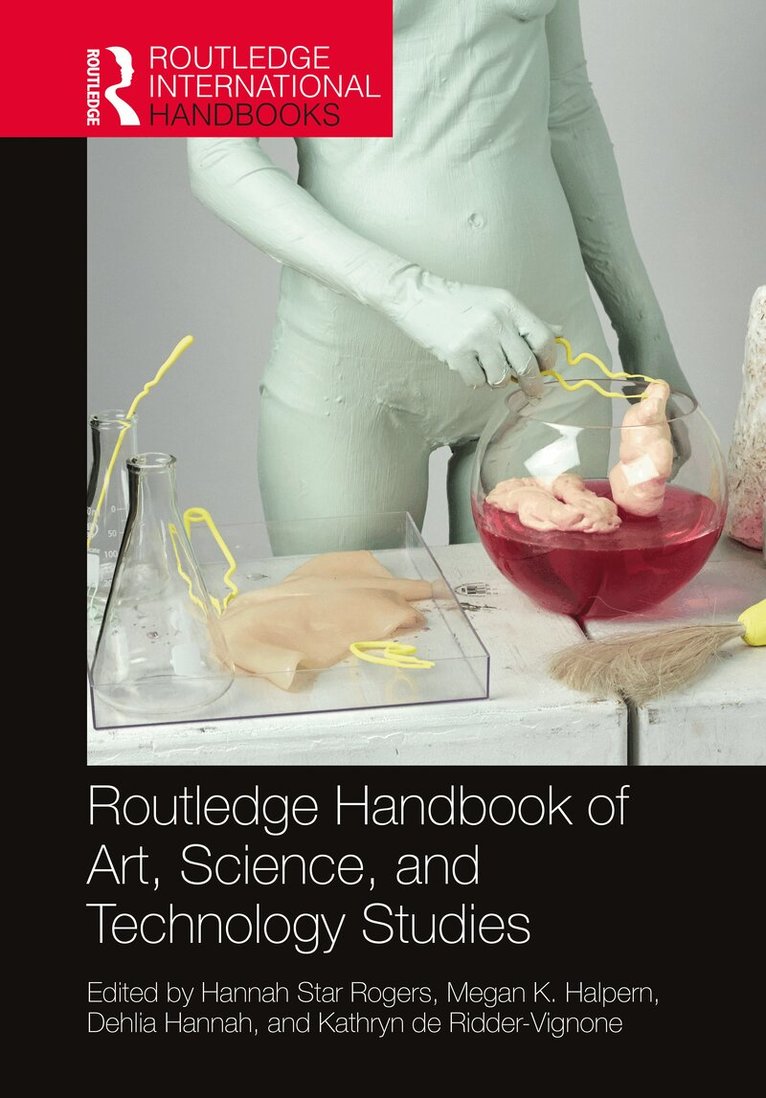
Art and science work is experiencing a dramatic rise coincident with burgeoning Science and Technology Studies (STS) interest in this area. Science has played the role of muse for the arts, inspiring imaginative reconfigurations of scientific themes and exploring their cultural resonance. Conversely, the arts are often deployed in the service of science communication, illustration, and popularization. STS scholars have sought to resist the instrumentalization of the arts by the sciences, emphasizing studies of theories and practices across disciplines and the distinctive and complementary contributions of each. The manifestation of this commonality of creative and epistemic practices is the emergence of Art, Science, and Technology Studies (ASTS) as the interdisciplinary exploration of art–science.This handbook defines the modes, practices, crucial literature, and research interests of this emerging field. It explores the questions, methodologies, and theoretical implications of scholarship and practice that arise at the intersection of art and STS. Further, ASTS demonstrates how the arts are intervening in STS. Drawing on methods and concepts derived from STS and allied fields including visual studies, performance studies, design studies, science communication, and aesthetics and the knowledge of practicing artists and curators, ASTS is predicated on the capacity to see both art and science as constructions of human knowledge- making. Accordingly, it posits a new analytical vernacular, enabling new ways of seeing, understanding, and thinking critically about the world.This handbook provides scholars and practitioners already familiar with the themes and tensions of art–science with a means of connecting across disciplines. It proposes organizing principles for thinking about art–science across the sciences, social sciences, humanities, and arts. Encounters with art and science become meaningful in relation to practices and materials manifest as perceptual habits, background knowledge, and cultural norms. As the chapters in this handbook demonstrate, a variety of STS tools can be brought to bear on art–science so that systematic research can be conducted on this unique set of knowledge-making practices.
3 225 kr
Skickas inom 10-15 vardagar
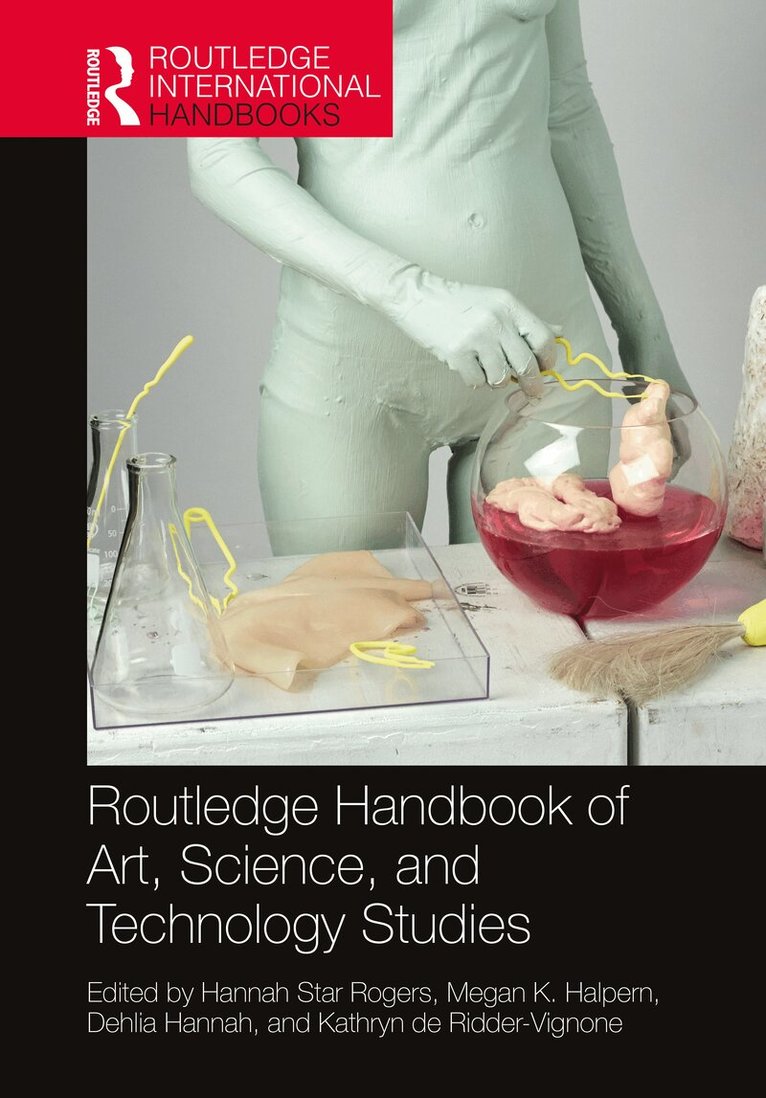
Art and science work is experiencing a dramatic rise coincident with burgeoning Science and Technology Studies (STS) interest in this area. Science has played the role of muse for the arts, inspiring imaginative reconfigurations of scientific themes and exploring their cultural resonance. Conversely, the arts are often deployed in the service of science communication, illustration, and popularization. STS scholars have sought to resist the instrumentalization of the arts by the sciences, emphasizing studies of theories and practices across disciplines and the distinctive and complementary contributions of each. The manifestation of this commonality of creative and epistemic practices is the emergence of Art, Science, and Technology Studies (ASTS) as the interdisciplinary exploration of art–science.This handbook defines the modes, practices, crucial literature, and research interests of this emerging field. It explores the questions, methodologies, and theoretical implications of scholarship and practice that arise at the intersection of art and STS. Further, ASTS demonstrates how the arts are intervening in STS. Drawing on methods and concepts derived from STS and allied fields including visual studies, performance studies, design studies, science communication, and aesthetics and the knowledge of practicing artists and curators, ASTS is predicated on the capacity to see both art and science as constructions of human knowledge- making. Accordingly, it posits a new analytical vernacular, enabling new ways of seeing, understanding, and thinking critically about the world.This handbook provides scholars and practitioners already familiar with the themes and tensions of art–science with a means of connecting across disciplines. It proposes organizing principles for thinking about art–science across the sciences, social sciences, humanities, and arts. Encounters with art and science become meaningful in relation to practices and materials manifest as perceptual habits, background knowledge, and cultural norms. As the chapters in this handbook demonstrate, a variety of STS tools can be brought to bear on art–science so that systematic research can be conducted on this unique set of knowledge-making practices.
246 kr
Skickas
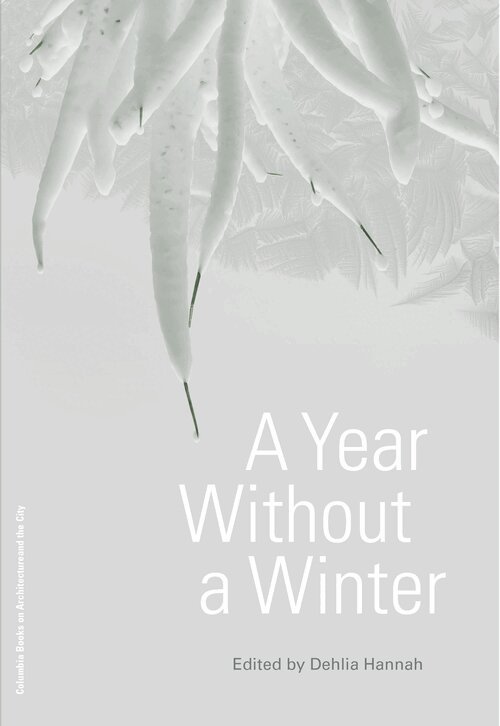
Today, weather extremes brought about by anthropogenic climate change pose relentless cognitive and imaginative challenges. Beyond news media, what are the cultural registers of this phenomenon? How can artistic and literary engagements with destabilizing natural patterns summon new planetary imaginaries—reorienting perspectives on humanity’s position within the environment?A Year Without a Winter brings together science fiction, history, visual art, and exploration. Inspired by the literary ‘dare’ that would give birth to Mary Shelley’s Frankenstein amidst the aftermath of a massive volcanic eruption, and today, by the utopian architecture of Paolo Soleri and the Arizona desert, expeditions to Antarctica and Indonesia, this collection reframes the relationship among climate, crisis, and creation. The 1815 eruption of Mount Tambora, on the Indonesian island of Sumbawa, enveloped the globe in a cloud of ash, causing a climate crisis. By 1816, remembered as the ‘year without a summer,’ the northern hemisphere was plunged into cold and darkness. Amidst unseasonal frosts, violent thunderstorms, and a general atmosphere of horror, Shelley began a work of science fiction that continues to shape attitudes to emerging science, technology, and environmental futures. Two hundred years later, in 2016, the hottest year on historical record, four renowned science fiction authors were invited to the experimental town of Arcosanti, Paolo Soleri’s prototype for arcology, to respond to our present crisis. A Year Without a Winter presents their stories alongside critical essays, extracts from Shelley’s masterpiece, and dispatches from expeditions to extreme geographies. Broad and ambitious in scope, this book is a collective thought experiment retracing an inverted path through narrative extremes.A Year Without a Winter is edited by Dehlia Hannah in collaboration with science fiction editors Brenda Cooper, Joey Eschrich, and Cynthia Selin. The book includes a suite of commissioned stories by Tobias Buckell, Nancy Kress, Nnedi Okorafor, and Vandana Singh; essays by Dehlia Hannah, Gillen D’Arcy Wood, James Graham, Hilairy Hartnett, David Higgins, Nadim Samman, and Pablo Suarez; artwork by Julian Charrière and Karolina Sobecka; and literary excerpts by Mary Shelley and Lord Byron.
256 kr
Kommande
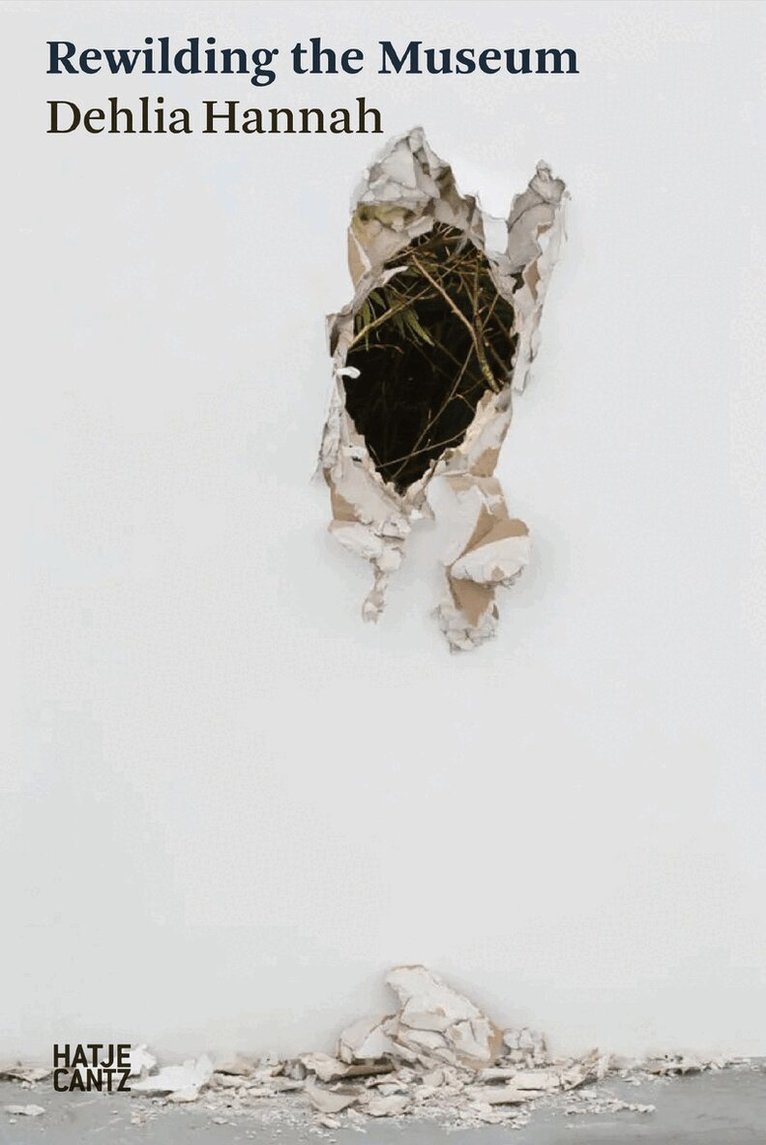
Museums are anything but wild. Historically, museums have functioned as key sites for the production of boundaries between nature and culture. Nature might be presented in form and image, but its processes must not be allowed to take hold within museum architecture. In a warming world, climate-controlled interiors are increasingly vulnerable to floods, fires, and power failures. In an effort to address environmental crises, artists chop through walls, fill them with dirt, and bring in insects, plants, and animals, while others leave the institution altogether to embrace the specificity of site. Audiences are drawn outside and off-screen, into zones that recalibrate norms of aesthetic attention. Rewilding the Museum explores a paradox that also lurks at the heart of restoration ecology: We cannot return to past fantasies of “nature.” Rather, we must foster ecologies that support biodiversity and stable geophysical cycles. This book asks how artists and curators are working with and against exhibition infrastructures to elaborate contemporary ideas of nature.