DEIGH - Böcker
Visar alla böcker från författaren DEIGH. Handla med fri frakt och snabb leverans.
2 produkter
2 produkter
2 541 kr
Skickas inom 5-8 vardagar
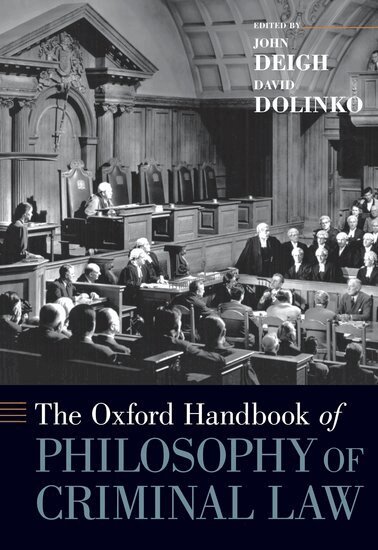
This is the first comprehensive handbook in the philosophy of criminal law. It contains seventeen original essays by leading thinkers in the field and covers the field's major topics including limits to criminalization, obscenity and hate speech, blackmail, the law of rape, attempts, accomplice liability, causation, responsibility, justification and excuse, duress, provocation and self-defense, insanity, punishment, the death penalty, mercy, and preventive detention and other alternatives to punishment. It will be an invaluable resource for scholars and students whose research and studies concern philosophical issues in criminal law and criminal law theory.
433 kr
Skickas inom 5-8 vardagar
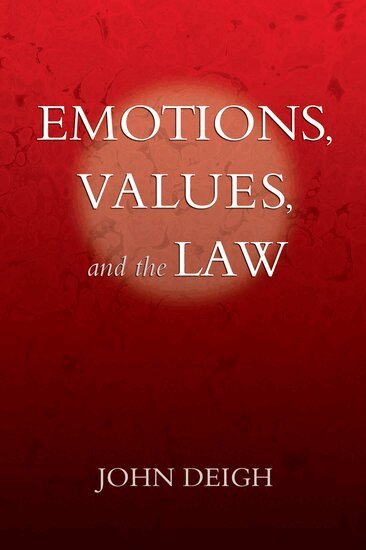
Emotions, Values, and the Law brings together ten of John Deigh's essays written over the past fifteen years. In the first five essays, Deigh ask questions about the nature of emotions and the relation of evaluative judgment to the intentionality of emotions, and critically examines the cognitivist theories of emotion that have dominated philosophy and psychology over the past thirty years. A central criticism of these theories is that they do not satisfactorily account for the emotions of babies or animals other than human beings. Drawing on this criticism, Deigh develops an alternative theory of the intentionality of emotions on which the education of emotions explains how human emotions, which innately contain no evaluative thought, come to have evaluative judgments as their principal cognitive component. The second group of five essays challenge the idea of the voluntary as essential to understanding moral responsibility, moral commitment, political obligation, and other moral and political phenomena that have traditionally been thought to depend on people's will. Each of these studies focuses on a different aspect of our common moral and political life and shows, contrary to conventional opinion, that it does not depend on voluntary action or the exercise of a will constituted solely by rational thought. Together, the essays in this collection represent an effort to shift our understanding of the phenomena traditionally studied in moral and political philosophy from that of their being products of reason and will, operating independently of feeling and sentiment to that of their being manifestations of the work of emotion.