Denis Besnard – författare
Visar alla böcker från författaren Denis Besnard. Handla med fri frakt och snabb leverans.
6 produkter
Oil and Gas, Technology and Humans
Assessing the Human Factors of Technological Change
Av Denis Besnard, Eirik Albrechtsen
Häftad, 2017
938 kr
Lägg i varukorg
The oil and gas industry is going through a major technological shift. This is particularly true of the Norwegian continental shelf where new work processes are being implemented based on digital infrastructure and information technology. The term Integrated Operations (IO) has been applied to this …
Oil and Gas, Technology and Humans
Assessing the Human Factors of Technological Change
Av Eirik Albrechtsen, Denis Besnard
E-bok, 2018
1077 kr
Lägg i varukorg
The oil and gas industry is going through a major technological shift. This is particularly true of the Norwegian continental shelf where new work processes are being implemented based on digital infrastructure and information technology. The term Integrated Operations (IO) has been applied to this …
Oil and Gas, Technology and Humans
Assessing the Human Factors of Technological Change
Av Eirik Albrechtsen, Denis Besnard
E-bok, 2018
1046 kr
Lägg i varukorg
The oil and gas industry is going through a major technological shift. This is particularly true of the Norwegian continental shelf where new work processes are being implemented based on digital infrastructure and information technology. The term Integrated Operations (IO) has been applied to this …
Oil and Gas, Technology and Humans
Assessing the Human Factors of Technological Change
Av Denis Besnard, Eirik Albrechtsen
Inbunden, 2013
2825 kr
Lägg i varukorg
The oil and gas industry is going through a major technological shift. This is particularly true of the Norwegian continental shelf where new work processes are being implemented based on digital infrastructure and information technology. The term Integrated Operations (IO) has been applied to this …
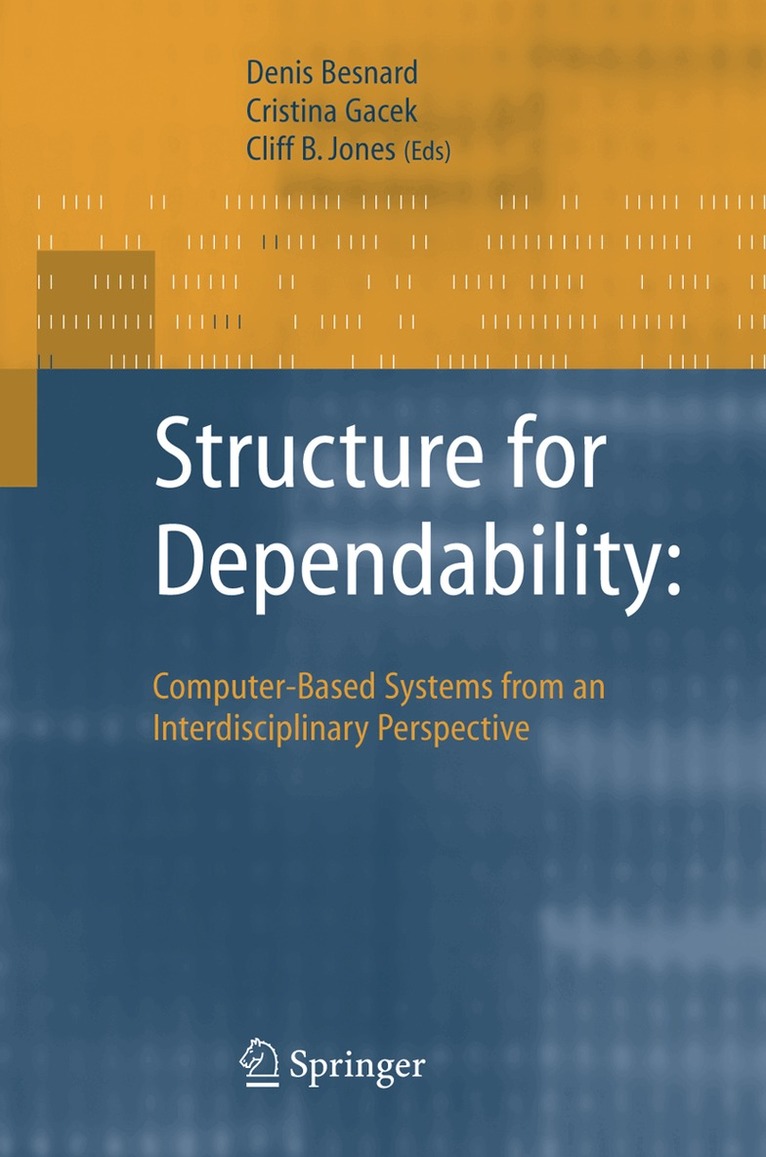
Structure for Dependability: Computer-Based Systems from an Interdisciplinary Perspective
Av Denis Besnard, Cristina Gacek m. fl.
Häftad, 2005
1129 kr
Lägg i varukorg
Computer-based systems are now essential to everyday life. They involve both tech- cal (hardware/software) components and human beings as active participants. Wh- ever we ?y aboard an aircraft or withdraw money from a cash point, a combination of humans, machines and software is supporting the …
Structure for Dependability: Computer-Based Systems from an Interdisciplinary Perspective
Av Cliff Jones, Cristina Gacek m. fl.
E-bok, 2006
1470 kr
Lägg i varukorg
Computer-based systems are now essential to everyday life. They involve both tech- cal (hardware/software) components and human beings as active participants. Wh- ever we ?y aboard an aircraft or withdraw money from a cash point, a combination of humans, machines and software is supporting the …