Denis Feeney - Böcker
Visar alla böcker från författaren Denis Feeney. Handla med fri frakt och snabb leverans.
12 produkter
12 produkter
Del 65 - Sather Classical Lectures
Caesar's Calendar
Ancient Time and the Beginnings of History
Häftad, Engelska, 2008
229 kr
Skickas inom 7-10 vardagar
The ancient Romans changed more than the map of the world when they conquered so much of it; they altered the way historical time itself is marked and understood. In this brilliant, erudite, and exhilarating book Denis Feeney investigates time and its contours as described by the ancient Romans, first as Rome positioned itself in relation to Greece and then as it exerted its influence as a major world power. Feeney welcomes the reader into a world where time was movable and changeable and where simply ascertaining a date required a complex and often contentious cultural narrative. In a style that is lucid, fluent, and graceful, he investigates the pertinent systems, including the Roman calendar (which is still our calendar) and its near perfect method of capturing the progress of natural time; the annual rhythm of consular government; the plotting of sacred time onto sacred space; the forging of chronological links to the past; and, above all, the experience of empire, by which the Romans meshed the city state's concept of time with those of the foreigners they encountered to establish a new worldwide web of time.Because this web of time was Greek before the Romans transformed it, the book is also a remarkable study in the cross-cultural interaction between the Greek and Roman worlds. Feeney's skillful deployment of specialist material is engaging and accessible and ranges from details of the time schemes used by Greeks and Romans to accommodate the Romans' unprecedented rise to world dominance to an edifying discussion of the fixed axis of B.C./A.D., or B.C.E./C.E., and the supposedly objective 'dates' implied. He closely examines the most important of the ancient world's time divisions, that between myth and history, and concludes by demonstrating the impact of the reformed calendar on the way the Romans conceived of time's recurrence. Feeney's achievement is nothing less than the reconstruction of the Roman conception of time, which has the additional effect of transforming the way the way the reader inhabits and experiences time.
614 kr
Skickas inom 7-10 vardagar
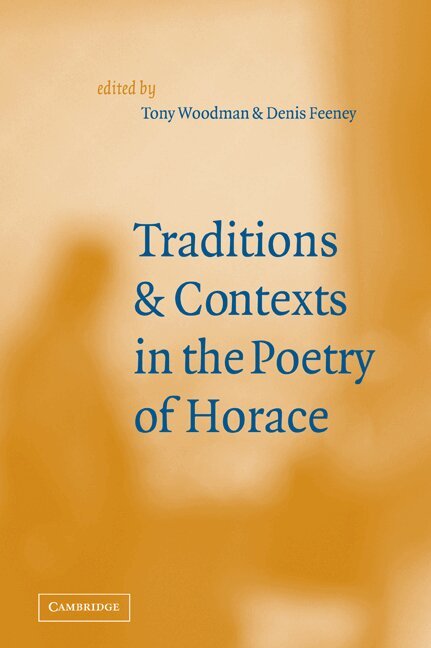
This book explores the whole range of the output of an exceptionally versatile and innovative poet, from the Epodes to the literary-critical Epistles. Distinguished scholars of diverse background and interests introduce readers to a variety of critical approaches to Horace and to Latin poetry. Close attention is paid throughout to the actual text of Horace, with many of the chapters focusing on reading a single poem. These close readings are then situated in a number of different political, philosophical and historical contexts. The book sheds light not only on Horace but on the general problems confronting Latinists in the study of Augustan poetry, and it will be of value to a wide range of upper-level Latin students and scholars.
515 kr
Skickas inom 7-10 vardagar
Recent reevaluations of Roman religion by ancient historians have stressed the vitality and creativity of the Romans' religious system throughout its long history of continual adaptation to new challenges. Capitalising on these insights, Denis Feeney argues that Roman literature was not an artificial or parasitic irrelevance in this context, but an important element of the dynamic religious culture, with its own status as another form of religious knowledge. Since Roman culture, both literary and religious, was so thoroughly Hellenised, the book also makes a case for a reconsideration of the traditional antitheses between Greek and Roman literature and religion, arguing against Hellenocentric prejudices and in favour of a more creative model of cultural interaction.
1 371 kr
Skickas inom 7-10 vardagar
This book explores the whole range of the output of an exceptionally versatile and innovative poet, from the Epodes to the literary-critical Epistles. Distinguished scholars of diverse background and interests introduce readers to a variety of critical approaches to Horace and to Latin poetry. Close attention is paid throughout to the actual text of Horace, with many of the chapters focusing on reading a single poem. These close readings are then situated in a number of different political, philosophical and historical contexts. The book sheds light not only on Horace but on the general problems confronting Latinists in the study of Augustan poetry, and it will be of value to a wide range of upper-level Latin students and scholars.
388 kr
Tillfälligt slut
332 kr
Skickas inom 10-15 vardagar
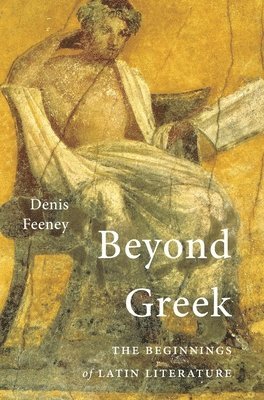
A History Today Best Book of the YearA Choice Outstanding Academic Title of the YearVirgil, Ovid, Cicero, Horace, and other authors of ancient Rome are so firmly established in the Western canon today that the birth of Latin literature seems inevitable. Yet, Denis Feeney boldly argues, the beginnings of Latin literature were anything but inevitable. The cultural flourishing that in time produced the Aeneid, the Metamorphoses, and other Latin classics was one of the strangest events in history.“Feeney is to be congratulated on his willingness to put Roman literary history in a big comparative context…It is a powerful testimony to the importance of Denis Feeney’s work that the old chestnuts of classical literary history—how the Romans got themselves Hellenized, and whether those jack-booted thugs felt anxiously belated or smugly domineering in their appropriation of Greek culture for their own purposes—feel fresh and urgent again.”—Emily Wilson, Times Literary Supplement“[Feeney’s] bold theme and vigorous writing render Beyond Greek of interest to anyone intrigued by the history and literature of the classical world.”—The Economist
385 kr
Skickas inom 7-10 vardagar
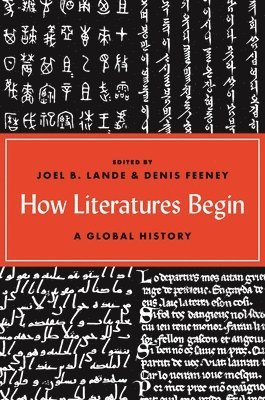
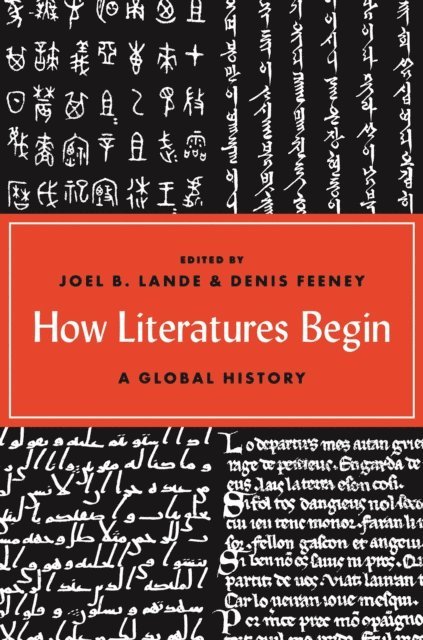
A comparative history of the practices, technologies, institutions, and people that created distinct literary traditions around the world, from ancient to modern timesLiterature is such a familiar and widespread form of imaginative expression today that its existence can seem inevitable. But in fact very few languages ever developed the full-fledged literary cultures we take for granted. Challenging basic assumptions about literatures by uncovering both the distinct and common factors that led to their improbable invention, How Literatures Begin is a global, comparative history of literary origins that spans the ancient and modern world and stretches from Asia and Europe to Africa and the Americas.The book brings together a group of leading literary historians to examine the practices, technologies, institutions, and individuals that created seventeen literary traditions: Chinese, Japanese, Korean, Indian, Greek, Latin, Hebrew, Syriac, Arabic, English, Romance languages, German, Russian, Latin American, African, African American, and world literature. In these accessible accounts, which are framed by general and section introductions and a conclusion by the editors, literatures emerge as complex weaves of phenomena, unique and deeply rooted in particular times and places but also displaying surprising similarities. Again and again, new literatures arise out of old, come into being through interactions across national and linguistic borders, take inspiration from translation and cultural cross-fertilization, and provide new ways for groups to imagine themselves in relation to their moment in history.Renewing our sense of wonder for the unlikely and strange thing we call literature, How Literatures Begin offers fresh opportunities for comparison between the individual traditions that make up the rich mosaic of the world’s literatures.The book is organized in four sections, with seventeen literatures covered by individual contributors: Part I: East and South Asia: Chinese (Martin Kern), Japanese (Wiebke Denecke), Korean (Ksenia Chizhova), and Indian (Sheldon Pollock); Part II: The Mediterranean: Greek (Deborah Steiner), Latin (Joseph Farrell), Hebrew (Jacqueline Vayntrub), Syriac (Alberto Rigolio), and Arabic (Gregor Schoeler); Part III: European Vernaculars: English (Ingrid Nelson), Romance languages (Simon Gaunt), German (Joel Lande), and Russian (Michael Wachtel); Part IV: Modern Geographies: Latin American (Rolena Adorno), African (Simon Gikandi), African American (Douglas Jones), and world literature (Jane O. Newman).
1 066 kr
Skickas inom 7-10 vardagar
A comparative history of the practices, technologies, institutions, and people that created distinct literary traditions around the world, from ancient to modern timesLiterature is such a familiar and widespread form of imaginative expression today that its existence can seem inevitable. But in fact very few languages ever developed the full-fledged literary cultures we take for granted. Challenging basic assumptions about literatures by uncovering both the distinct and common factors that led to their improbable invention, How Literatures Begin is a global, comparative history of literary origins that spans the ancient and modern world and stretches from Asia and Europe to Africa and the Americas.The book brings together a group of leading literary historians to examine the practices, technologies, institutions, and individuals that created seventeen literary traditions: Chinese, Japanese, Korean, Indian, Greek, Latin, Hebrew, Syriac, Arabic, English, Romance languages, German, Russian, Latin American, African, African American, and world literature. In these accessible accounts, which are framed by general and section introductions and a conclusion by the editors, literatures emerge as complex weaves of phenomena, unique and deeply rooted in particular times and places but also displaying surprising similarities. Again and again, new literatures arise out of old, come into being through interactions across national and linguistic borders, take inspiration from translation and cultural cross-fertilization, and provide new ways for groups to imagine themselves in relation to their moment in history.Renewing our sense of wonder for the unlikely and strange thing we call literature, How Literatures Begin offers fresh opportunities for comparison between the individual traditions that make up the rich mosaic of the world’s literatures.The book is organized in four sections, with seventeen literatures covered by individual contributors: Part I: East and South Asia: Chinese (Martin Kern), Japanese (Wiebke Denecke), Korean (Ksenia Chizhova), and Indian (Sheldon Pollock); Part II: The Mediterranean: Greek (Deborah Steiner), Latin (Joseph Farrell), Hebrew (Jacqueline Vayntrub), Syriac (Alberto Rigolio), and Arabic (Gregor Schoeler); Part III: European Vernaculars: English (Ingrid Nelson), Romance languages (Simon Gaunt), German (Joel Lande), and Russian (Michael Wachtel); Part IV: Modern Geographies: Latin American (Rolena Adorno), African (Simon Gikandi), African American (Douglas Jones), and world literature (Jane O. Newman).
1 551 kr
Skickas inom 7-10 vardagar
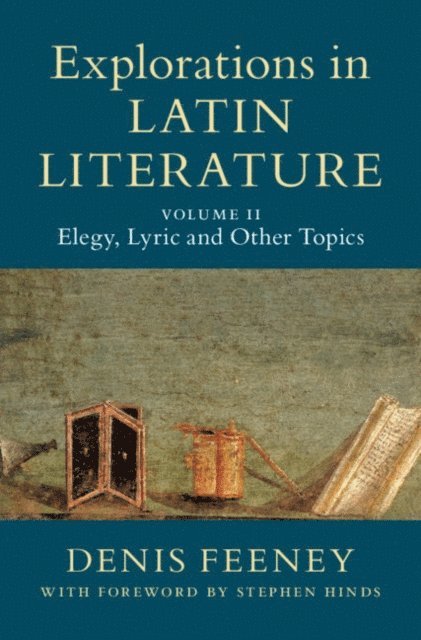
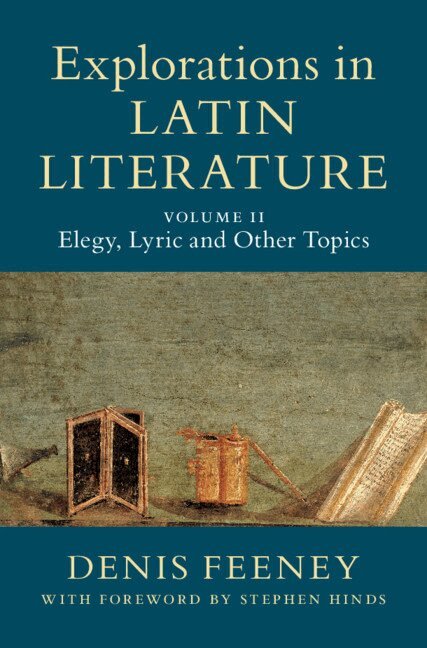
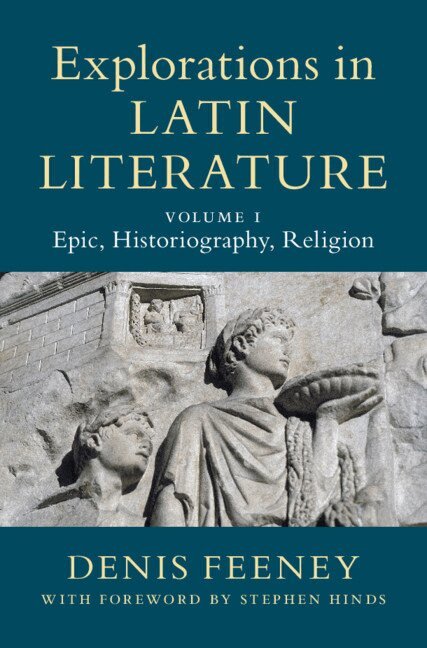
Denis Feeney is one of the most distinguished scholars of Latin literature and Roman culture in the world of the last half-century. These two volumes conveniently collect and present afresh all his major papers, covering a wide range of topics and interests. Ancient epic is a major focus, followed by Latin lyric, historiography and elegy. Ancient literary criticism and the technology of the book are recurrent themes. Many papers address the problems of literary responses to religion and ritual, with an interdisciplinary methodology drawing on comparative anthropology and religion. The transition from Republic to Empire and the emergence of the Augustan principate form the background to the majority of the papers, and the question of how literary texts are to be read in historical context is addressed throughout. All quotations from ancient and modern languages have now been translated and Stephen Hinds has contributed a foreword.
1 551 kr
Skickas inom 7-10 vardagar
Denis Feeney is one of the most distinguished scholars of Latin literature and Roman culture in the world of the last half-century. These two volumes conveniently collect and present afresh all his major papers, covering a wide range of topics and interests. Ancient epic is a major focus, followed by Latin lyric, historiography and elegy. Ancient literary criticism and the technology of the book are recurrent themes. Many papers address the problems of literary responses to religion and ritual, with an interdisciplinary methodology drawing on comparative anthropology and religion. The transition from Republic to Empire and the emergence of the Augustan principate form the background to the majority of the papers, and the question of how literary texts are to be read in historical context is addressed throughout. All quotations from ancient and modern languages have now been translated and Stephen Hinds has contributed a foreword.
412 kr
Skickas inom 7-10 vardagar
Denis Feeney is one of the most distinguished scholars of Latin literature and Roman culture in the world of the last half-century. These two volumes conveniently collect and present afresh all his major papers, covering a wide range of topics and interests. Ancient epic is a major focus, followed by Latin lyric, historiography and elegy. Ancient literary criticism and the technology of the book are recurrent themes. Many papers address the problems of literary responses to religion and ritual, with an interdisciplinary methodology drawing on comparative anthropology and religion. The transition from Republic to Empire and the emergence of the Augustan principate form the background to the majority of the papers, and the question of how literary texts are to be read in historical context is addressed throughout. All quotations from ancient and modern languages have now been translated and Stephen Hinds has contributed a foreword.
460 kr
Skickas inom 7-10 vardagar
Denis Feeney is one of the most distinguished scholars of Latin literature and Roman culture in the world of the last half-century. These two volumes conveniently collect and present afresh all his major papers, covering a wide range of topics and interests. Ancient epic is a major focus, followed by Latin lyric, historiography and elegy. Ancient literary criticism and the technology of the book are recurrent themes. Many papers address the problems of literary responses to religion and ritual, with an interdisciplinary methodology drawing on comparative anthropology and religion. The transition from Republic to Empire and the emergence of the Augustan principate form the background to the majority of the papers, and the question of how literary texts are to be read in historical context is addressed throughout. All quotations from ancient and modern languages have now been translated and Stephen Hinds has contributed a foreword.