Denyse Baillargeon - Böcker
Visar alla böcker från författaren Denyse Baillargeon. Handla med fri frakt och snabb leverans.
5 produkter
5 produkter
335 kr
Skickas inom 7-10 vardagar
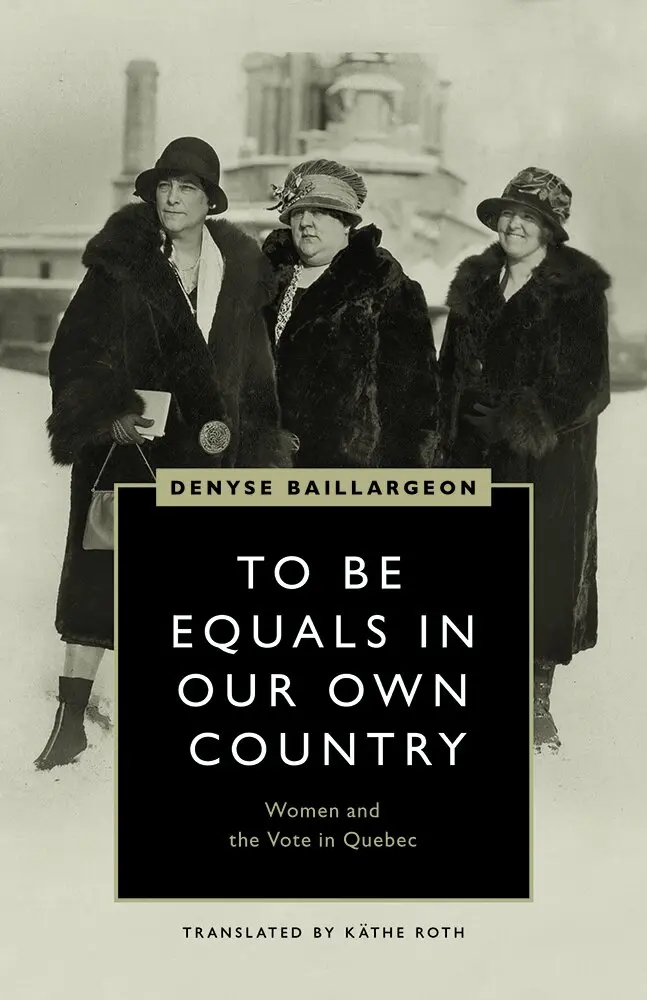
"When the history of suffrage is written, the role played by our politicians will cut a sad figure beside that of the women they insulted." Speaking in 1935, feminist Idola Saint-Jean captured the bitter nature of Quebec women's fight for enfranchisement, as religious authorities weighed what they stood to gain or lose and politicians showed open disdain during Legislative Assembly debates. Quebec women had to wait until 1940 or longer to cast a ballot. This passionate yet even-handed account is filled with vivid characters and pivotal events on the road to suffrage in the province. It examines Quebec women's participation in provincial and municipal politics since winning the vote and compares women's struggle to that in other countries.An astute exploration of suffrage, To Be Equals in Our Own Country treats enfranchisement – and the legal, social, and economic rights that stem from it – as a fundamental question of human rights.
256 kr
Skickas inom 7-10 vardagar
To Be Equals in Our Own Country chronicles the bitter struggle for women's suffrage in Quebec, the last province to grant Canadian women this fundamental human right.
440 kr
Skickas inom 11-20 vardagar
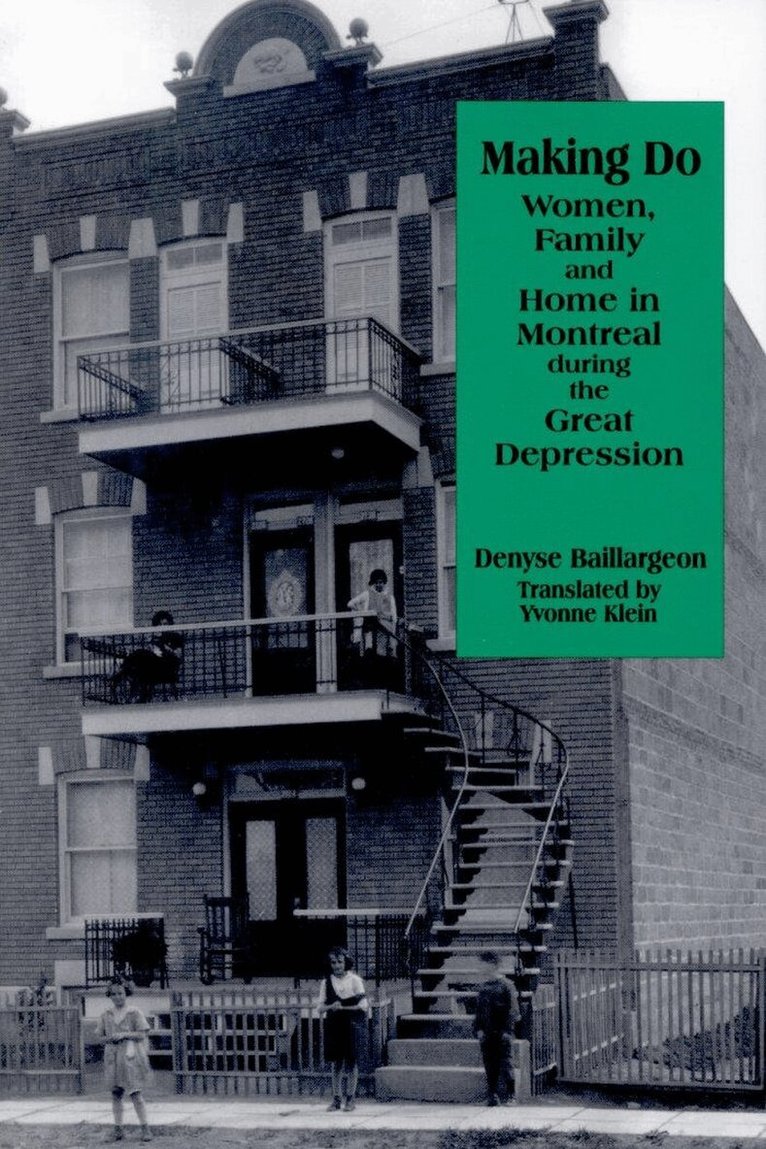
Life in the Great Depression - long lines of unemployed, soup kitchens, men riding the rails, public works projects - these are the graphic images of the Great Depression of the 1930s, popularized by the press and seared into our memories. But outside of a few distinctive stories gathered from the oral and anecdotal writings on strategies used to survive, we know next to nothing about the daily life of the working class during those long and hungry years. How did the families survive when the principal breadwinner was unemployed? How did they feed, shelter and clothe themselves when relief payments covered barely half of their essential needs? To answer these questions Denyse Baillargeon looks at the contribution of the housewives. By interviewing Montreal francophone women who were already married at the beginning of the 1930s, and by examining their principal responsibilities, she uncovers the alternative strategies these housewives used to counter poverty. Their recollections made it possible to shed light not only on the impact of the economic crisis on their household duties during the Depression but also on their lives from childhood to World War II, and on the living conditions of the working class from which most of them came. This material is all the more valuable because it proceeds from a generation of women that will soon disappear and who have left very little in the way of written evidence behind. This study, which draws us into the intricate lives of individuals, reveals a previously unexplored dimension of the Depression and shows the importance of considering the domestic sphere for understanding the complete history of the working class.
487 kr
Skickas inom 10-15 vardagar
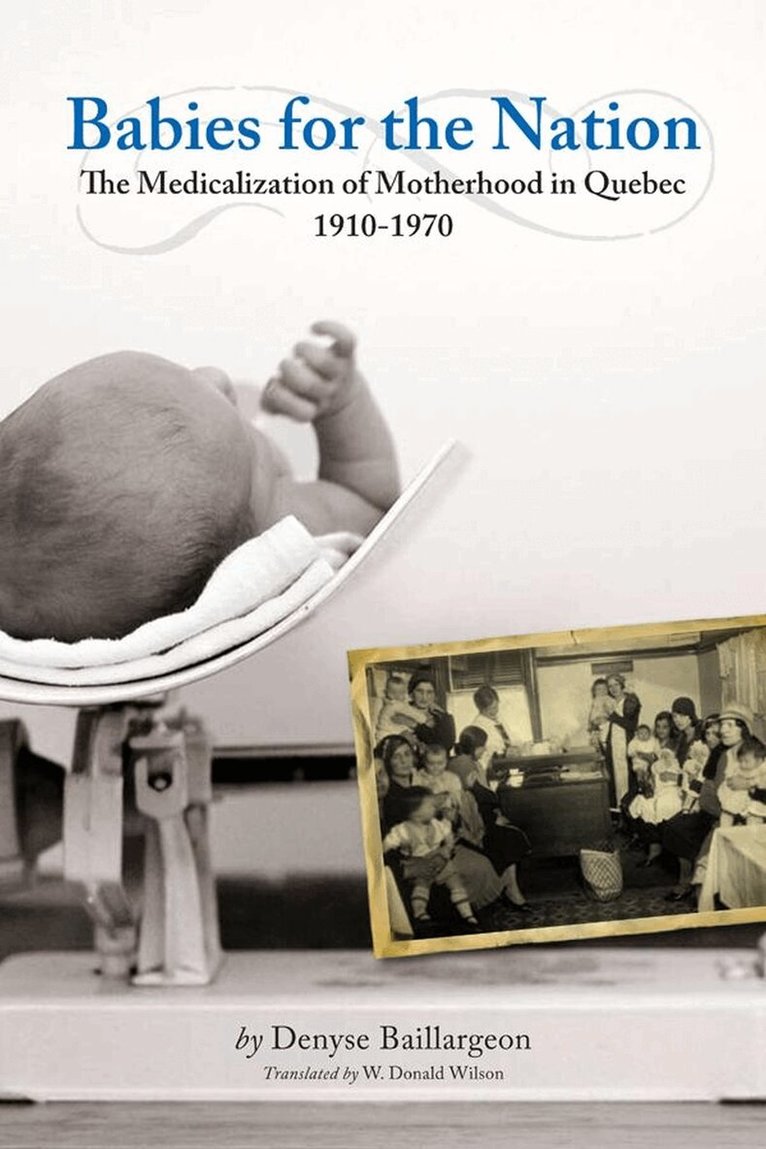
Described by some as a ""necropolis for babies,"" the province of Quebec in the early twentieth century recorded infant mortality rates, particularly among French-speaking Catholics, that were among the highest in the Western world. This ""bleeding of the nation"" gave birth to a vast movement for child welfare that paved the way for a medicalization of childbearing. In Babies for the Nation, basing her analysis on extensive documentary research and more than fifty interviews with mothers, Denyse Baillargeon sets out to understand how doctors were able to convince women to consult them, and why mothers chose to follow their advice. Her analysis considers the medical discourse of the time, the development of free services made available to mothers between 1910 and 1970, and how mothers used these services. Showing the variety of social actors involved in this process (doctors, nurses, women's groups, members of the clergy, private enterprise, the state, and the mothers themselves), this study delineates the alliances and the conflicts that arose between them in a complex phenomenon that profoundly changed the nature of childbearing in Quebec. Un Québec en mal d'enfants: La médicalisation de la maternité 1910 - 1970 was awarded the Clio-Québec Prize, the Lionel Groulx-Yves-Saint-Germain Prize, and the Jean-Charles-Falardeau Prize. This translation by W. Donald Wilson brings this important book to a new readership.
336 kr
Skickas inom 10-15 vardagar
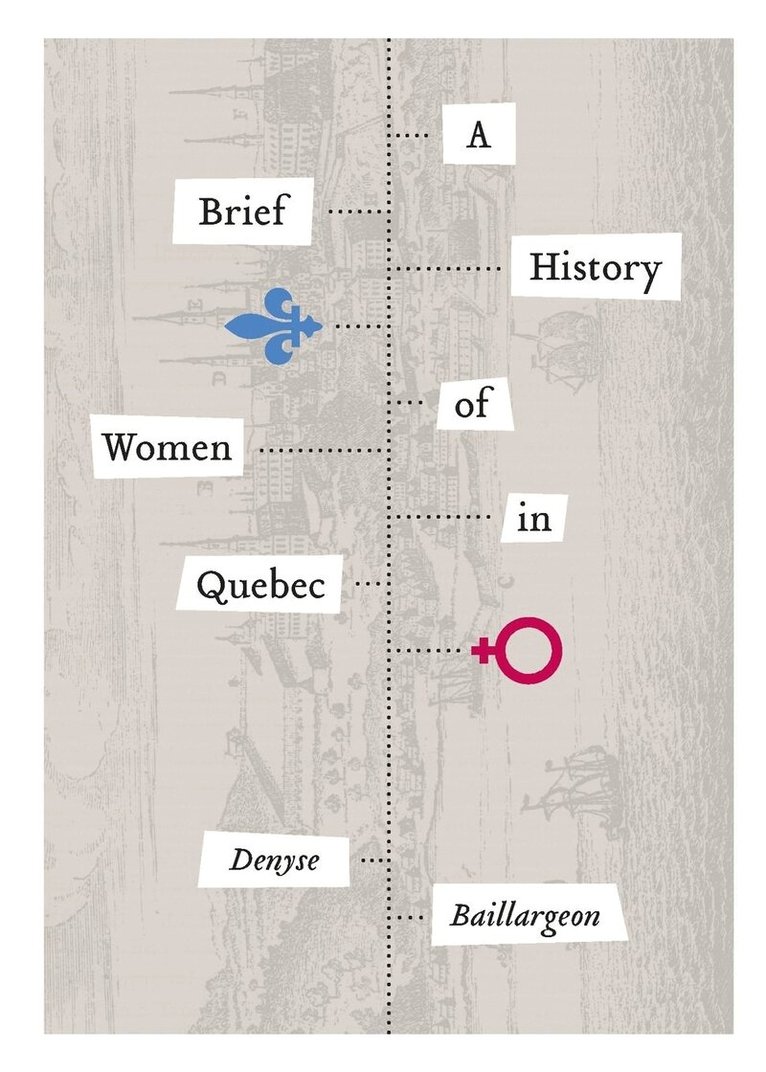
A Brief History of Women in Quebec examines the historical experience of women of different social classes and origins (geographic, ethnic, and racial) from the period of contact between Europeans and Aboriginals to the twenty-first century to give a nuanced and complex account of the main transformations in their lives.Themes explored include demography, such as marriage, fecundity, and immigration; women's work outside and inside the home, including motherhood; education, from elementary school to post-secondary and access to the professions; the impact of religion and government policies; and social and political activism, including feminism and struggles to attain equality with men. Early chapters deal with New France and the first part of the nineteenth century, and the remaining are devoted to the period since 1880, an era in which women's lives changed rapidly and dramatically.The book concludes that transformation in the means of production, women's social and political activism (including feminism), and Quebec nationalism are three main keys to understanding the history of Quebec women. Together, the three show that women's history, far from being an adjunct to ""general history,"" is essential to a full understanding of the past. Originally published in French with the title Brève histoire des femmes au Québec.