Desmond Conacher - Böcker
Visar alla böcker från författaren Desmond Conacher. Handla med fri frakt och snabb leverans.
3 produkter
3 produkter
376 kr
Skickas inom 10-15 vardagar
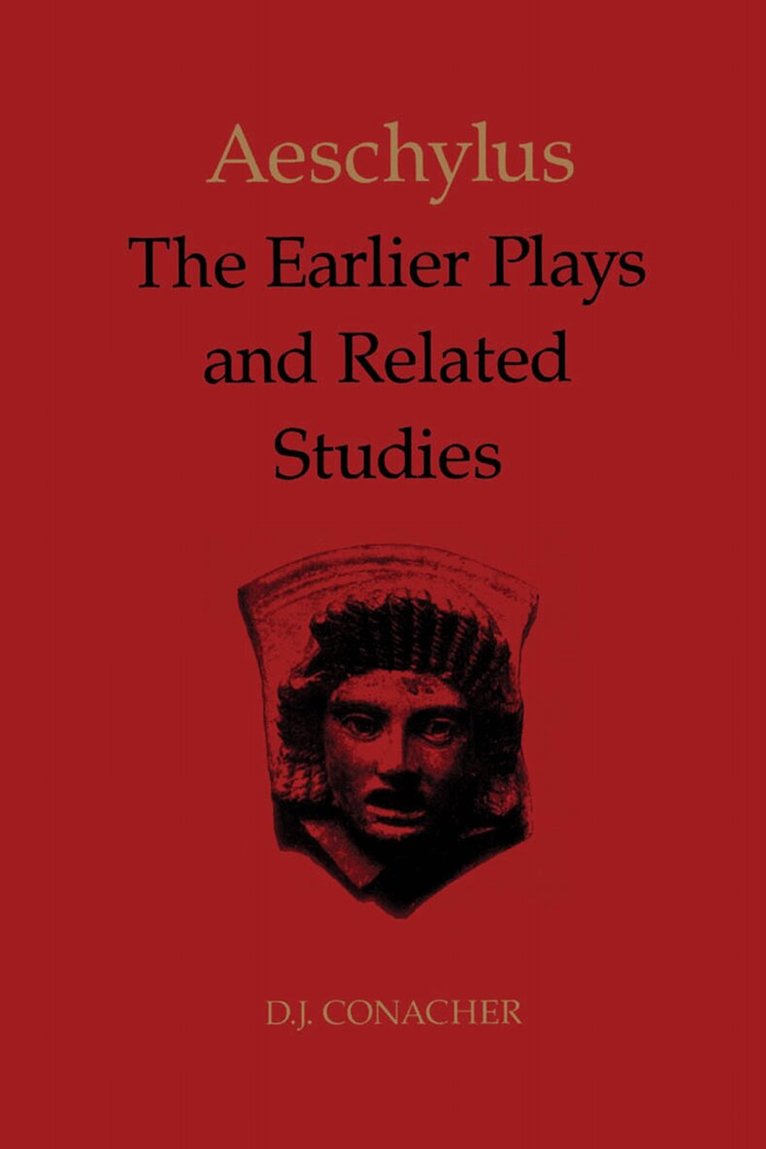
This volume complements D.J. Conacher's two earlier studies of Aeschylus, Aeschylus' 'Prometheus Bound' (1980) and Aeschylus' 'Oresteia' (1987), and completes his literary commentary on the extant plays of Aeschylus.In this volume Conacher provides a detailed running commentary on the three earlier plays (The Persians, The Seven against Thebes, and The Suppliants), as well as an analysis of their themes, structure and dramatic techniques and devices. In two more general studies he reviews Aeschylus' dramatic uses of the chorus and of imagery.Conacher's close readings of the text and sensitive analysis of the main problems in the plays will be of benefit to students, especially those encountering these plays for the first time, either in Greek or in translation. He also provides a thorough overview of the various interpretative and philological problems and opinions encountered in Aeschylean scholarship, which will be of interest to senior scholars as well as students.
504 kr
Skickas inom 7-10 vardagar
The theme of Euripides’ Alcestis blends the primitive folk-tale of the self-sacrificing bride, Alcestis, and of Heracles’ heroic struggles with the ogre Death, with a morality tale of “virtue rewarded”, in this case twice rewarded. The Alcestis is the only tragedy which we know to have been produced in the position usually allotted (at the Athenian tragic festivals) to the semi-comic “satyr-play”. Like a satyr-play, it has a happy ending but does the poet intend his audience to interpret the play in quite such simple terms? Opinions differ widely but the ironic, slightly mocking tone of the play suggests, at least to some critics, that more sombre meanings may lie beneath the surface of this beautifully constructed little masterpiece. Greek text with facing-page English translation, introduction and commentary. For this second edition, the General Bibliography has been updated, with major revision and expansion.
507 kr
Skickas inom 7-10 vardagar
It is a commonly held view among historians of Greek literature that with the advent of Euripides the tragic structure, even the tragic outlook of Greek drama suffered a breakdown from which it never recovered. While there is much truth in this opinion, it has tended to put too much emphasis on "Euripides the destroyer" rather than "Euripides the creator." In this study the author's main purpose is to redress the balance and to discuss the structure and techniques of Euripidean drama in relation to its new and richly varied themes.The consistent dramatic form evolved by Aeschylus and Sophocles had grown out of their conception of tragedy as the resultant of the tension between the individual will and the universal order suggested in myth. For Euripides, who never fully accepted myth as the real basis of tragedy, alternate ways of using the traditional material became necessary, and the playwright continually changed his dramatic structure to suit the particular tragic idea he was seeking to express. Viewed in this way, Euripides' dramatic technique may be seen in positive as well as negative terms-as something other than the breakdown of structural technique and mythological insight under the overwhelming force of his ideas. Professor Conacher offers here a new view of Euripides as the first Greek dramatist properly to understand the world of myth, and so, in a sense, to stand a bit outside it. He shows how Euripides, far from being an impatient or incompetent craftsman, used traditional mth as a basis for inventing new forms in which to cast his perceptions of the sources of human tragedy. All the extant Euripidean drama is examined in this book; the result is an intelligent guide to the plays for all students of dramatic literature, as well as a convincing defence of Euripides the creator.