Dharamvir Bharati - Böcker
Visar alla böcker från författaren Dharamvir Bharati. Handla med fri frakt och snabb leverans.
3 produkter
3 produkter
234 kr
Skickas inom 7-10 vardagar
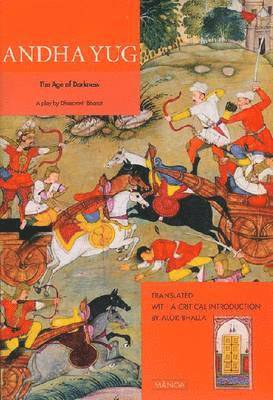
One of the most significant plays of post-Independence India, Dharamvir Bharati’s Andha Yug takes place on the last day of the Great Mahabharata War. The once-beautiful city of Hastinapur is burning, the battlefield beyond the walls is piled with corpses, and the few survivors huddle together in grief and rage, blaming the destruction on their adversaries, divine capriciousness—anyone or anything except their own moral choices. Andha Yug explores our capacity for moral action, reconciliation, and goodness in times of atrocity and reveals what happens when individuals succumb to the cruelty and cynicism of a blind, dispirited age. Andha Yug is illustrated with paintings from a rare, single manuscript of the Razmnama (Book of War), dated to 1598–1599. Created during the reign (1556–1605) of the great Mughal emperor Akbar, the Razmnama is written in Persian, yet it is a translation of the Mahabharata, one of the great Indian epics of Hinduism. An essay by Yael Rice reveals the Indian, Persian, and European elements within the translations, as well as the diverse cultural character of the Mughal court of Akbar.
461 kr
Skickas inom 7-10 vardagar
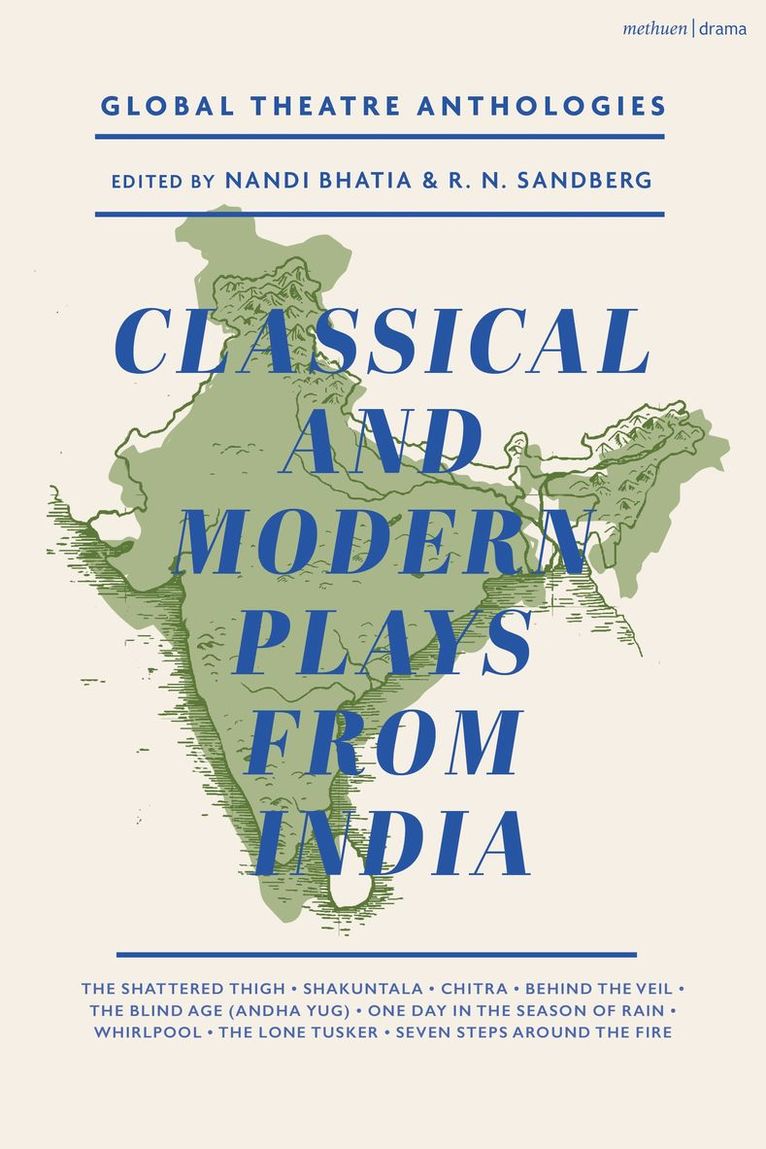
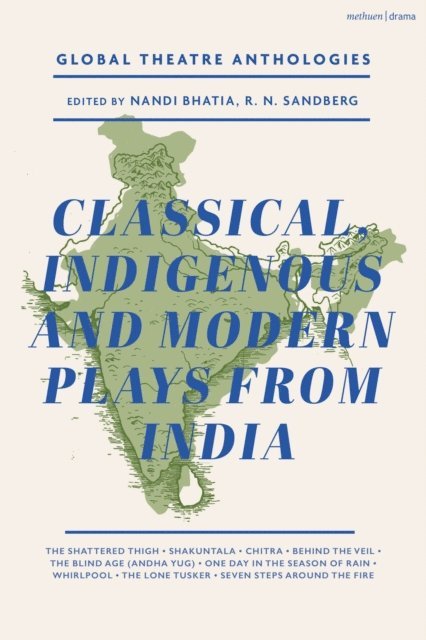
The power of theatrical performance is universal, but the style and concerns of theatre are specific to individual cultures.India's dramatic literature demonstrates extraordinary range, depth, and sophistication. Thousands of years ago the theory and practice of how to make theatre was detailed in the Natyashastra. As a result, powerful plays were written; and, over time, a multiplicity of theatrical cultures have developed.Examining recurring themes such as the misuse of authority, the oppressive caste practices, the expression and legitimacy of romantic love, societal gender expectations, and the search for meaning in seemingly empty or destructive human endeavours, this anthology threads together diverse cultures, drawing connections across space and time. Though each play is its own unique entity, exploring them together allows readers to consider what theatrical techniques and cultural concerns may be significant aspects of Indian drama.Featuring work by the first Asian Nobel Laureate, acclaimed political writers, and a female gynaecologist who created startling drama from the women she had encountered, the range of playwrights speaks to the cultural diversity of the drama: with plays ranging from classical Sanskrit drama through major works from the beginning to the end of the 20th Century.Through taking an international perspective, Global Theatre Anthologies draws together work from ancient, indigenous, and modern times, encouraging thinking across boundaries and questioning what theatrical and societal values are part of India drama,, and what the relationships are between the old and new world.
1 467 kr
Skickas inom 10-15 vardagar
The power of theatrical performance is universal, but the style and concerns of theatre are specific to individual cultures.India's dramatic literature demonstrates extraordinary range, depth, and sophistication. Thousands of years ago the theory and practice of how to make theatre was detailed in the Natyashastra. As a result, powerful plays were written; and, over time, a multiplicity of theatrical cultures have developed.Examining recurring themes such as the misuse of authority, the oppressive caste practices, the expression and legitimacy of romantic love, societal gender expectations, and the search for meaning in seemingly empty or destructive human endeavours, this anthology threads together diverse cultures, drawing connections across space and time. Though each play is its own unique entity, exploring them together allows readers to consider what theatrical techniques and cultural concerns may be significant aspects of Indian drama.Featuring work by the first Asian Nobel Laureate, acclaimed political writers, and a female gynaecologist who created startling drama from the women she had encountered, the range of playwrights speaks to the cultural diversity of the drama: with plays ranging from classical Sanskrit drama through major works from the beginning to the end of the 20th Century.Through taking an international perspective, Global Theatre Anthologies draws together work from ancient, indigenous, and modern times, encouraging thinking across boundaries and questioning what theatrical and societal values are part of India drama,, and what the relationships are between the old and new world.