Diane Austin-Broos - Böcker
Visar alla böcker från författaren Diane Austin-Broos. Handla med fri frakt och snabb leverans.
7 produkter
7 produkter
296 kr
Skickas inom 10-15 vardagar
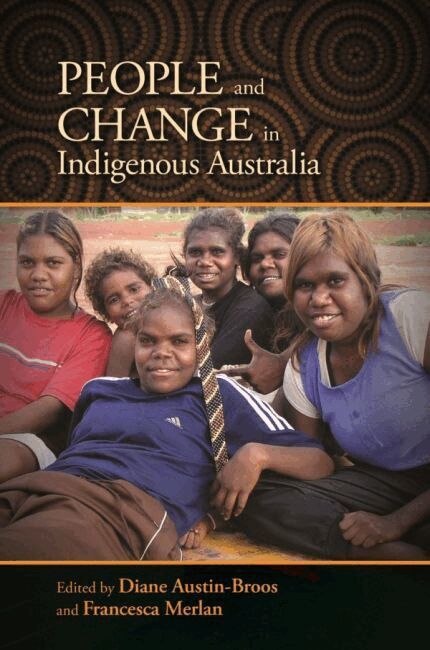
People and Change in Indigenous Australia arose from a conviction that more needs to be done in anthropology to give a fuller sense of the changing lives and circumstances of Australian indigenous communities and people. Much anthropological and public discussion remains embedded in traditionalizing views of indigenous people, and in accounts that seem to underline essential and apparently timeless difference. In this volume the editors and contributors assume that "the person" is socially defined and reconfigured as contexts change, both immediate and historical.Essays in this collection are grounded in Australian locales commonly termed "remote". These indigenous communities were largely established as residential concentrations by Australian governments, some first as missions, most in areas that many of the indigenous people involved consider their homelands. A number of these settlements were located in proximity to settler industries - pastoralism, market-gardening, and mining - locales that many non-indigenous Australians think of as the homes of the most traditional indigenous communities and people. The contributors discuss the changing circumstances of indigenous people who originate from such places, revealing a diversity of experiences and histories that involve major dynamics of disembedding from country and home locales, re-embedding in new contexts, and reconfigurations of relatedness.The essays explore dimensions of change and continuity in childhood experience and socialization in a desert community; the influence of Christianity in fostering both individuation and relatedness in northeast Arnhem Land; the diaspora of Central Australian Warlpiri people to cities and the forms of life and livelihood they make there; adolescent experiences of schooling away from home communities; youth in kin-based heavy metal gangs configuring new identities, and indigenous people of southeast Australia reflecting on whether an "Aboriginal way" can be sustained.By taking a step toward understanding the relation between changing circumstances and changing lives of indigenous Australians, the volume provides a sense of the quality and feel of those lives.
927 kr
Skickas inom 10-15 vardagar
People and Change in Australia arose from a conviction that more needs to be done in anthropology to give a fuller sense of the changing lives and circumstances of Australian indigenous communities and people. Much anthropological and public discussion remains embedded in traditionalizing views of indigenous people, and in accounts that seem to underline essential and apparently timeless difference. In this volume the editors and contributors assume that “the person” is socially defined and reconfigured as contexts change, both immediate and historical.Essays in this collection are grounded in Australian locales commonly termed “remote.” These indigenous communities were largely established as residential concentrations by Australian governments, some first as missions, most in areas that many of the indigenous people involved consider their homelands. A number of these settlements were located in proximity to settler industries including pastoralism, market-gardening, and mining.These are the locales that many non-indigenous Australians think of as the homes of the most traditional indigenous communities and people. The contributors discuss the changing circumstances of indigenous people who originate from such places. Some remain, while others travel far afield. The accounts reveal a diversity of experiences and histories that involve major dynamics of disembedding from country and home locales, and re-embedding in new contexts, and reconfigurations of relatedness. The essays explore dimensions of change and continuity in childhood experience and socialization in a desert community; the influence of Christianity in fostering both individuation and relatedness in northeast Arnhem Land; the diaspora of Central Australian Warlpiri people to cities and the forms of life and livelihood they make there; adolescent experiences of schooling away from home communities; youth in kin-based heavy metal gangs configuring new identities, and indigenous people of southeast Australia reflecting on whether an “Aboriginal way” can be sustained. The volume takes a step toward understanding the relation between changing circumstances and changing lives of indigenous Australians today and provides a sense of the quality and the feel of those lives.
Urban Life in Kingston Jamaica
The Culture and Class Ideology of Two Neighborhoods
Inbunden, Engelska, 2017
1 886 kr
Skickas inom 10-15 vardagar
This book, first published in 1984, recounts the daily life, the politics, religion and leisure pursuits of Jamaicans in working- and middle-class Kingston. The study is based upon the author’s observations of life in Selton Town and Vermount, two neighborhoods of Kingston, between 1971 and 1982. The author analyses the local social conflicts and ideologies, thereby, demonstrating how larger issues of class domination and cultural hegemony pervade neighbourhood life. The study provides a detailed contextual account of the significance of belonging to different classes. It provides a different perspective of Caribbean anthropology combining the techniques of ethnography and political economy.
Urban Life in Kingston Jamaica
The Culture and Class Ideology of Two Neighborhoods
Häftad, Engelska, 2019
549 kr
Skickas inom 10-15 vardagar
This book, first published in 1984, recounts the daily life, the politics, religion and leisure pursuits of Jamaicans in working- and middle-class Kingston. The study is based upon the author’s observations of life in Selton Town and Vermount, two neighborhoods of Kingston, between 1971 and 1982. The author analyses the local social conflicts and ideologies, thereby, demonstrating how larger issues of class domination and cultural hegemony pervade neighbourhood life. The study provides a detailed contextual account of the significance of belonging to different classes. It provides a different perspective of Caribbean anthropology combining the techniques of ethnography and political economy.
Culture, Economy and Governance in Aboriginal Australia: Proceedings of a Workshop Held at the University of Sydney, 30 November - 1 December 2004
Häftad, Engelska, 2005
325 kr
Skickas inom 5-8 vardagar
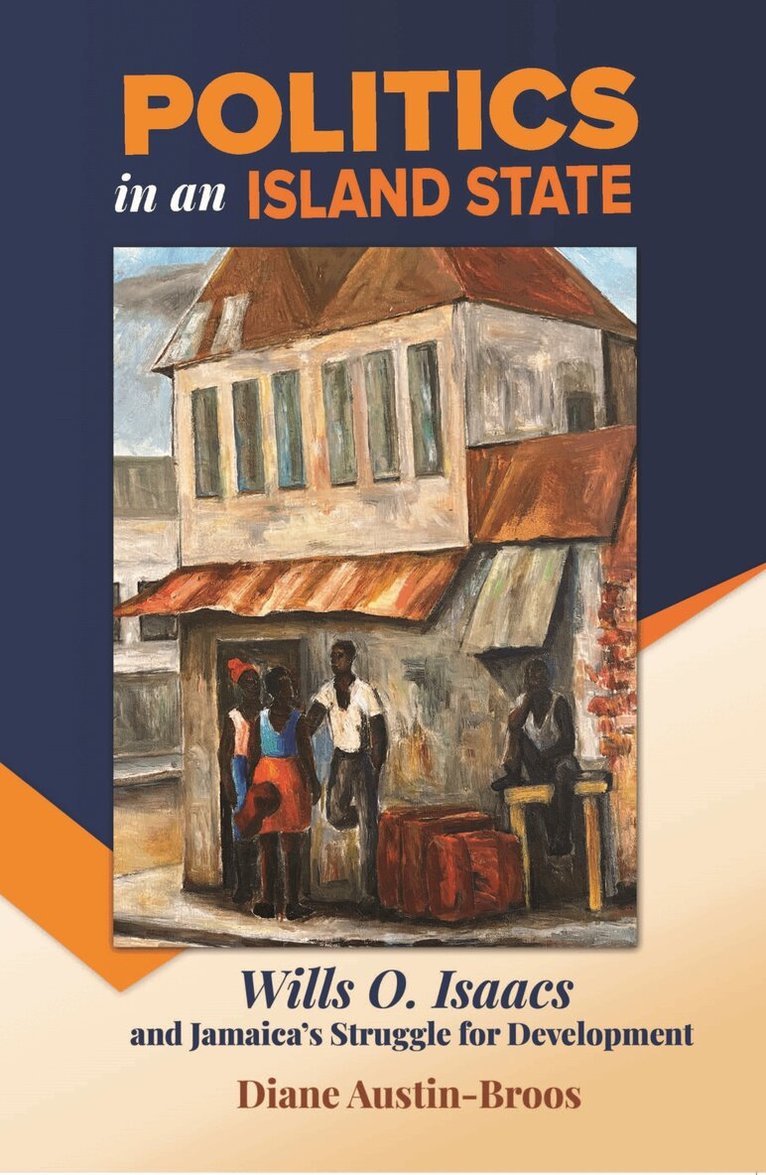
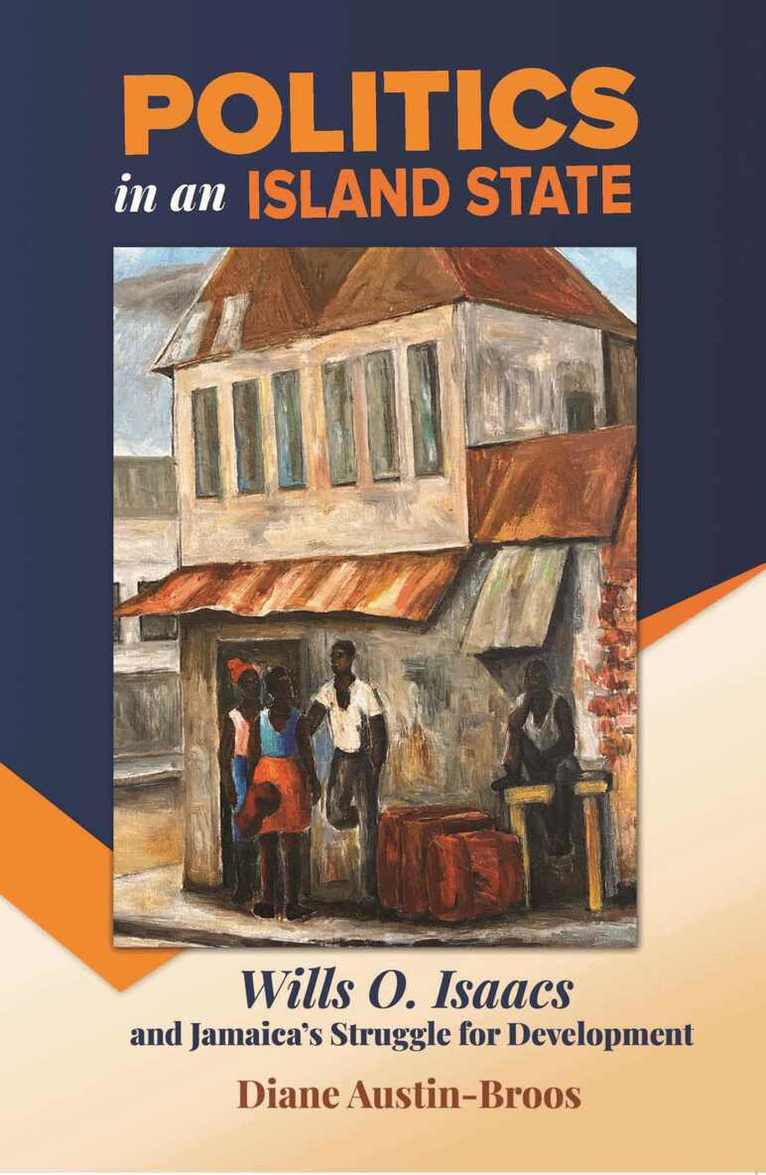
Politics in an Island State
Wills O. Isaacs and Jamaica's Struggle for Development
Häftad, Engelska, 2024
647 kr
Skickas inom 10-15 vardagar
Jamaica is most well-known for its popular culture, crime and violence. Government, the state, is viewed as a malign force. In Politics in an Island State noted anthropologist Diane Austin-Broos brings an alternative view of Jamaica, its culture and governance. This history of Jamaica, and more pointedly, the history of politics in Jamaica, is brilliantly told through the biography of Wills O. Isaacs. Never the leader of his party – the People’s National Party – Wills was active in politics from the 1930s and was nonetheless a prominent and notorious figure.Informative and entertaining, this biography of a “second-tier” political leader departs from the usual heroic style and addresses the challenges of a fledgling social democracy in the mid-twentieth century. Decolonization and the decline of sugar, the Great Depression and two world wars frame the challenges of the time. Flanked by rural-to-urban migration, unemployment and industrialization, Jamaica’s struggles into the twenty-first century and the conduct of government – the successes, failures and foibles – are presented and viewed through a more nuanced lens.Leaders shape history, though they seldom dictate its direction. Viewing history through their eyes affords a dynamic account of the structures and events that underpin a society’s development. Politics in an Island State will find a ready audience with readers generally interested in the Caribbean, but even more so with sages – both academic and unconventional – of anthropology, history, foreign affairs, sociology, political science, development studies and political economy.
Politics in an Island State
Wills O. Isaacs and Jamaica's Struggle for Development
Häftad, Engelska, 2024
474 kr
Skickas inom 10-15 vardagar
During the decades of the mid-twentieth century, Wills O. Isaacs was a prominent member of the People’s National Party. He was then, and remains, one of Jamaica’s most controversial figures; beloved by many and reviled by some both within and beyond his party. Isaacs joined the People’s National Party soon after its official launch in 1938. Quickly he became a leading nationalist, and a strategist within the PNP. Isaacs’ early work was in union organization and in building local constituency groups, including one intended to attract the commercial class. Another, formed in downtown Mathews Lane, brought him notoriety. In later years, Group 69 was sometimes seen as a precursor to Kingston’s garrisons and the wars between constituencies allied to one or the other major party. Isaacs’ first elected position was on the KSAC council where he served from 1943 to 1954. Elected to parliament in 1949, he held a Central Kingston seat until 1967. In that year, he was elected to the rural constituency of St Ann North East and re-elected in 1972. Throughout his career, Isaacs was a nationalist and a social democrat who identified as a socialist. As a champion of the unemployed and the racially vilified, he condemned capitalism’s social failures. He also condemned the market failures involved in cartels and private monopolies. Consequently, he supported some nationalization, especially of Jamaica’s central services. Yet, he did not foreclose on capitalism and looked for a détente between classes. His main target was totalitarianism, both of the right and the left, and of the various nineteenth and twentieth century imperialisms. Isaacs’ nationalist ire was raised equally by British treatment of African peoples of the trans-Atlantic, and by the fate of Europeans overwhelmed in turn by Nazi Germany and Stalin’s Russia. He described the path of the PNP as one between “the red shirts” and “the black shirts”.