Dieter Roelstraete - Böcker
Visar alla böcker från författaren Dieter Roelstraete. Handla med fri frakt och snabb leverans.
12 produkter
12 produkter
379 kr
Skickas inom 7-10 vardagar
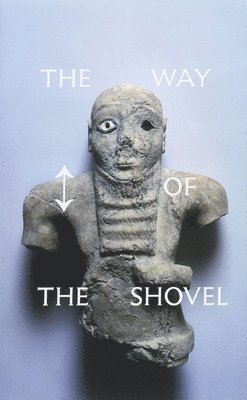
Contemporary art is often obsessed with the new, but it has recently begun to turn to projects centering on research and delving into archives, all in the name of seeking and questioning historical truth. From filmmakers to sculptors to conceptualists, artists of all stripes are digging into the rubble of the past. In this catalog that accompanies an exhibition at the Museum of Contemporary Art Chicago in the fall of 2013, Dieter Roelstraete gathers a diverse range of international artists to explore the theme of melding archival and experiential modes of storytelling - what he calls "the archaeological imaginary" - particularly in the wake of 9/11. The Way of the Shovel offers a well-constructed balance among excursions into the situation of contemporary art, broad philosophical arguments around the subjects of history and the archive, and cultural analysis.Roelstraete's opening essay maps the critical terrain, while Ian Alden Russell explores the roots of archaeology and its manifestations in twentieth-century art, Bill Brown examines artistic practices that involve historical artifacts and archival material, Sophie Berrebi offers a critique of the "document" as seen in art after the 1960s, and Diedrich Diederichsen writes on the monumentalization of history in European art. The book features work by both established and young artists, and thoughtful entries by Roelstraete accompany the exhibition catalog, along with statements from artists Moyra Davey, Rebecca Keller, Joachim Koester, Hito Steyerl, and Zin Taylor. The first exhibition to showcase this innovative approach to some of the most intriguing art of the past decade, The Way of the Shovel is indispensable for anyone seeking to understand the forces driving contemporary art.
634 kr
Skickas inom 7-10 vardagar
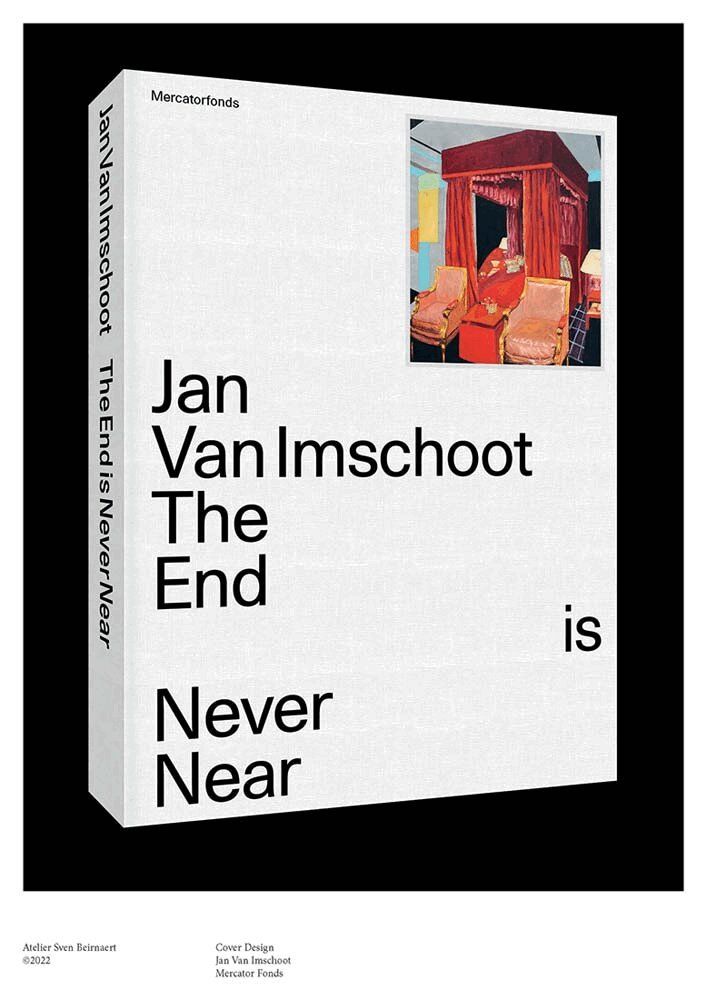
A comprehensive overview of the oeuvre of Belgian painter Jan Van ImschootA comprehensive overview of the oeuvre of Belgian painter Jan Van Imschoot (b. 1963), whose contemporary work builds bridges to predecessors such as Caravaggio, Tintoretto, Goya, and Manet.Van Imschoot’s painting consciously opts for a clear, sometimes contradictory and ironic style. The directness of his decisive brushwork and his balanced yet audacious use of color is strikingly contemporary, while his work draws on historical themes from literature and art history. In this way, Van Imschoot engages in a continuous dialogue with the past, in which he, with a dose of cynicism, often targets phenomena or figures that find themselves on the fringes of (contemporary) society.Bringing together more than 220 works by Van Imschoot with five accompanying texts, this book gives fresh insight into the painting practice of this Belgian master.Distributed for Mercatorfonds
169 kr
Skickas inom 7-10 vardagar
372 kr
Skickas inom 7-10 vardagar
366 kr
Skickas
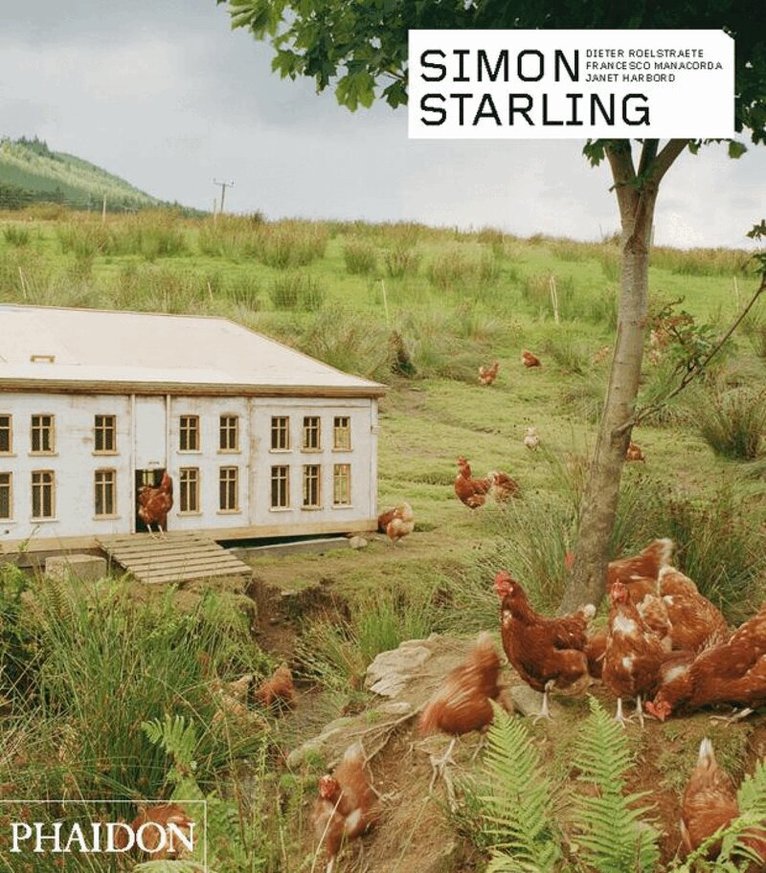
When Marcel Duchamp shipped Constantin Brancusi's sculpture Bird in Space to Edward Steichen in 1926, New York customs officials refused to accept that it was a work of art, instead levying the standard import tariff for a manufactured object. A legal battle ensued, with the courts eventually declaring Bird in Space an artwork and therefore exempt from the tariff. Seventy-eight years later, visitors to Simon Starling's exhibition at New York's Casey Kaplan Gallery were confronted with Staling's own Bird in Space (2004): a two-ton slab of steel from Romania (Brancusi's country of origin) leaning against the gallery wall and propped up on three inflatable cushions. The United States had recently introduced a new import tax of twenty per cent on foreign metals, which Starling circumvented by labelling this unaltered chunk of European steel a work of art. Its plinth of cushioned air not only introduced a second, more representational valance to the work but also brought to bear the traditional sculptural parameters of weight, gravity and balance. Starling's art frequently traffics in deception. It also traffics in traffic, meaning the circulation of goods, knowledge and people (usually the artist himself). Many of his works circle back on themselves, taking an idea on a journey that ends at its point of origin. Wilhelm Noack oHG (2006), for example, is an elaborate helical steel structure designed to loop a thirty-five-millimetre film of the workshop in which it was fabricated. The circuitous path that the film takes through the towering metal structure is the perfect visual metaphor for the work's own circular logic, a self-regulating system that adds up to much more than the sum of its parts. Starling is a key figure in one of contemporary art's most significant recent developments: the linking of artistic practice and knowledge production. Although this tendency flourished with Conceptual art in the 1960s and 1970s, in recent years it has taken on a new intensity. Unlike the Conceptual artists, however, many of whom strove for a language-based dematerialized art, for Starling the object is always at the work's heart. Economies, ecologies, coincidences and convergences are all simply means to an end - although 'simply' may be the wrong word to describe the transformation of thousands of miles of travel and hundreds of years of history into a single sculpture, film or photograph. Starling's other predecessors are the Land artists, such as Robert Smithson, with whom he shares a fascination with entropy and other natural forces. But he is truly an artist of the current age, setting out to understand and illustrate the complex processes through which the natural and human-made realms interact. The five platinum/palladium prints that constitute One Ton (2005) show a single view of a South African platinum mine. Together the five prints contain the precise amount of platinum salts that can be derived from one ton of ore, succinctly illustrating the enormous amount of energy required in the extraction of precious metals. Born in England in 1967 and now living in Denmark, Starling has been the subject of solo exhibitions at museums around the world, including the Hiroshima City Museum of Art (2011), Kunstmuseum Basel (2005) and the Museum of Contemporary Art in Sydney (2002), and his work has been featured in major international group shows, such as the Venice Biennale (2009), the Moscow Biennial (2007) and the São Paulo Biennial (2005). Awards include the Turner Prize (2005), the Blinky Palermo Prize (1999) and the Paul Hamlyn Foundation Award for Artists (1999). In the Survey, Dieter Roelstraete presents a comprehensive overview of Starling's work, examining circularity and serendipity and the their relationship to historical research. For the Interview, Francesco Manacorda and the artist discuss the central role of time in his work. Janet Harbord's Focus scrutinizes Wilhelm Noack oHG (2006) as an example of material cinema. Artist's Choice is a extract from Flann O'Brien's 1996 novel The Third Policeman, a fantastical conversation about bicycles swapping atoms with their riders. Artists Writings include five project statements, all of which consist, in varying proportions, of history, science and speculative fiction.
456 kr
Skickas inom 7-10 vardagar
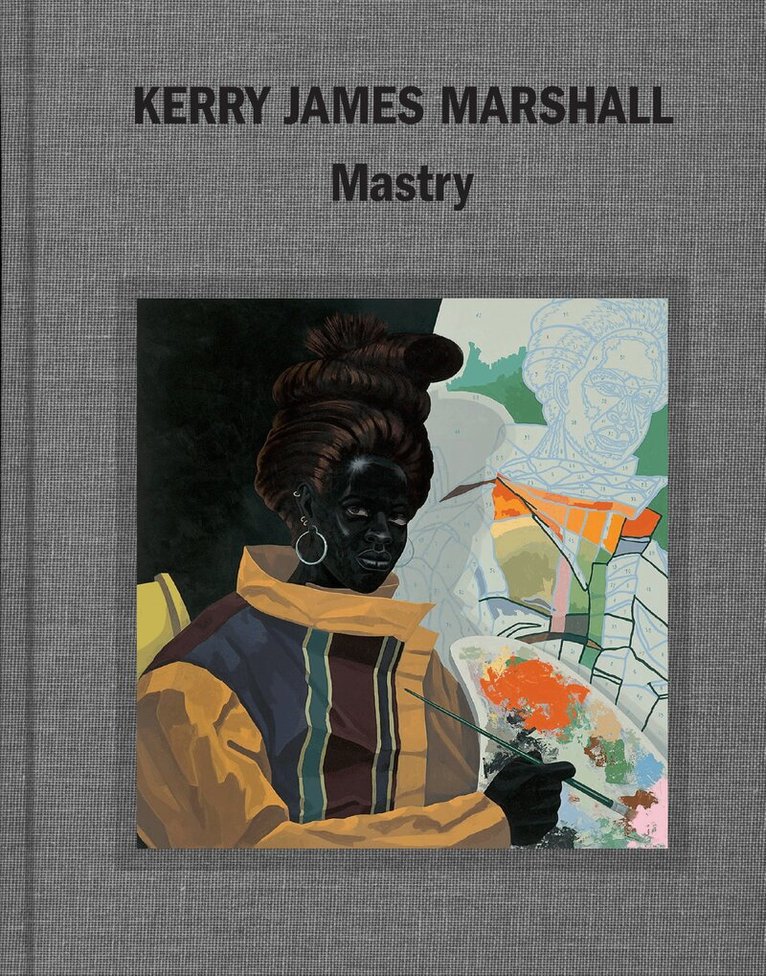
This long-awaited volume celebrates the work of Kerry James Marshall, one of America's greatest living painters. Born before the passage of the Civil Rights Act, in Birmingham, Alabama, and witness to the Watts riots in 1965, Marshall has long been an inspired and imaginative chronicler of the African American experience. Best known for large-scale interiors, landscapes, and portraits featuring powerful black figures, Marshall explores narratives of African American history from slave ships to the present and draws upon his deep knowledge of art history from the Renaissance to twentieth-century abstraction, as well as other sources such as the comic book and the muralist tradition. With luscious color and brushstrokes and highly detailed patterning, his direct and intimate scenes of black middle-class life conjure a wide range of emotions, resulting in powerful paintings that confront the position of African Americans throughout American history.Richly illustrated, this monumental book features essays by noted curators as well as the artist, and more than 100 paintings from throughout the artist's career arranged thematically by subject: history painting; beauty, as expressed through the nude, portraiture, and self-portraiture; landscape; religion; and the politics of black nationalism.
817 kr
Skickas inom 7-10 vardagar
667 kr
Skickas inom 3-6 vardagar
248 kr
Skickas inom 7-10 vardagar
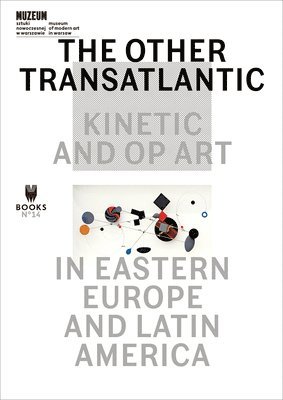
The Other Transatlantic is attuned to the brief but historically significant moment in the postwar period between 1950 and 1970 when the trajectories of the Central and Eastern European art scenes on the one hand, and their Latin American counterparts on the other, converged in a shared enthusiasm for Kinetic and Op Art. As the axis connecting the established power centers of Paris, London, and New York became increasingly dominated by monolithic trends including Pop, minimalism, and conceptualism another web of ideas was being spun linking the hubs of Warsaw, Budapest, Zagreb, Buenos Aires, Caracas, and Sao Paulo. These artistic practices were dedicated to what appeared to be an entirely different set of aesthetic concerns: philosophies of art and culture dominated by notions of progress and science, the machine and engineering, construction and perception. This book presents a highly illustrated introduction to this significant transnational phenomenon in the visual arts.
596 kr
Skickas
306 kr
Kommande
295 kr
Kommande