Dil B. Rahut – författare
Visar alla böcker från författaren Dil B. Rahut. Handla med fri frakt och snabb leverans.
4 produkter
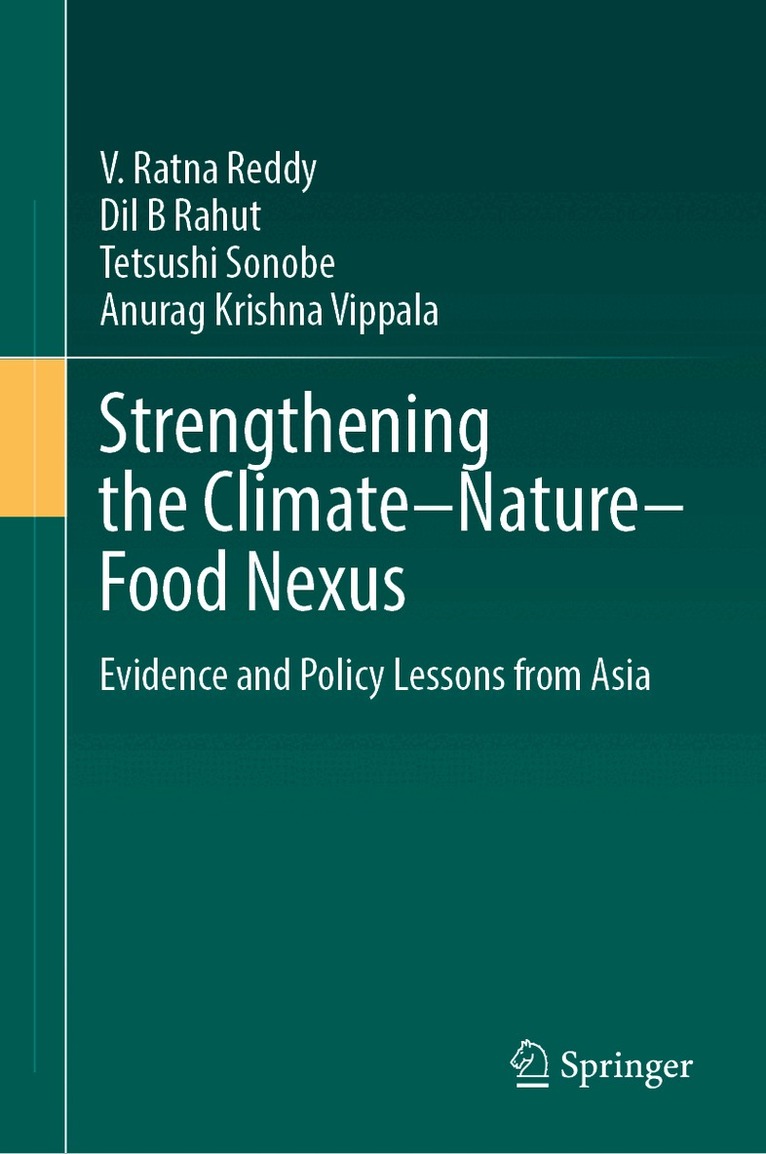
Strengthening the Climate–Nature–Food Nexus
Evidence and Policy Lessons from Asia
Av V. Ratna Reddy, Dil B. Rahut m. fl.
Inbunden, 2026
1641 kr
Lägg i varukorg
This book highlights the interdependencies, trade-offs, and competing demands of climate, nature, and food (C-N-F) constitute a nexus. Managing this nexus ensures the integrity of ecosystem services and sustains natural capital. Before elaborating on the process of nexus, it would come in handy to …
Emerging Challenges in Banking in Asia and the Pacific
Crises, Innovation, Inclusion, and Resilience for a Sustainable Future
Av Rachita Gulati, Dil B. Rahut m. fl.
Inbunden, 2026
568 kr
Lägg i varukorg
This open access book examines how banking systems in Asia and the Pacific can remain resilient in the face of future shocks, drawing lessons from past crises and current policy challenges. As climate change, technological disruption, increasing global interconnectedness reshape the banking …
Beyond Income
Subjective Well-Being and Rural Transformation in Asia
Av Wanglin Ma, Dil B. Rahut m. fl.
Inbunden, 2026
552 kr
Lägg i varukorg
This Open Access book offers a new perspective for understanding rural transformation by moving beyond traditional income-based measures of development. It demonstrates that improvements in income alone do not necessarily lead to better lives in rural Asia and that subjective well-being—reflected …
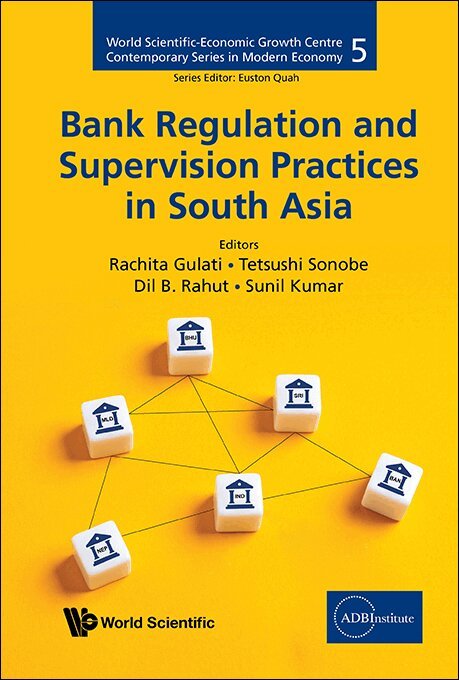
BANK REGULATION AND SUPERVISION PRACTICES IN SOUTH ASIA
Av Gulati Rachita, Rachita Gulati m. fl.
Inbunden, 2026
2102 kr
Lägg i varukorg
Bank Regulation and Supervision Practices in South Asia presents a comprehensive analysis of bank regulation and supervision practices in South Asia, offering in-depth country-specific and cross-country insights into regulatory frameworks and their harmonization within the region. Focusing on six …