Rachita Gulati – författare
Visar alla böcker från författaren Rachita Gulati. Handla med fri frakt och snabb leverans.
5 produkter
5 produkter
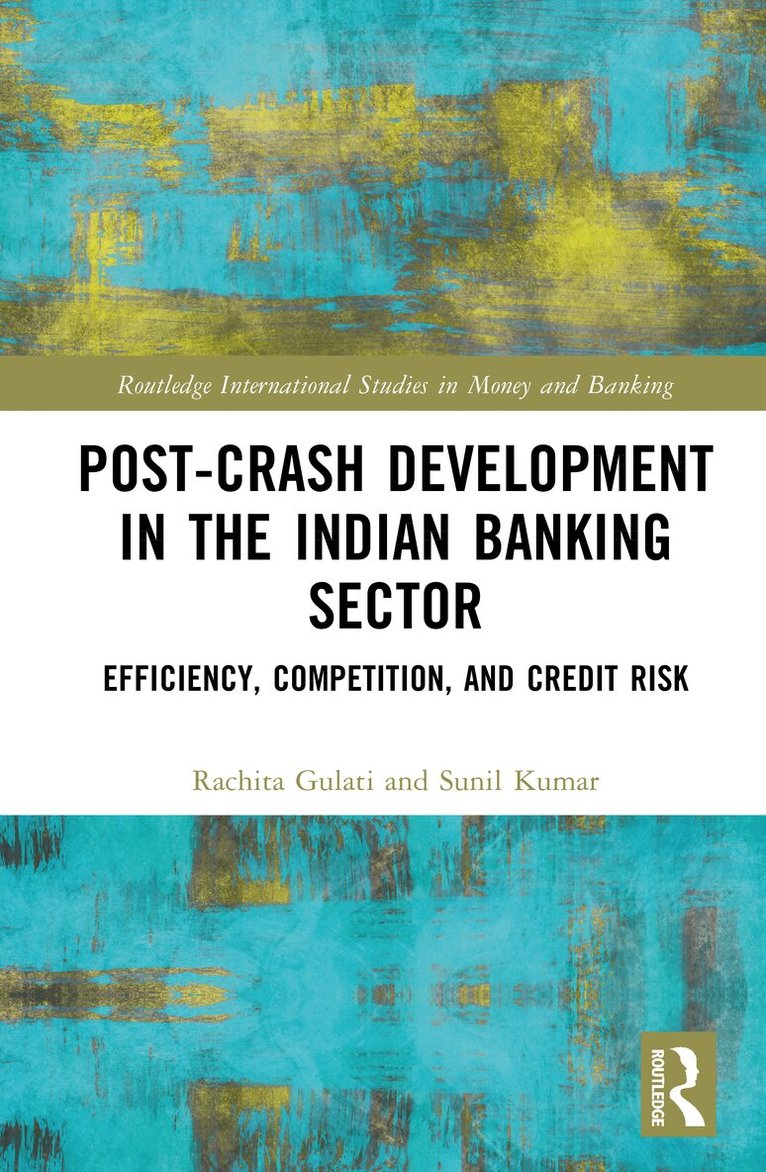
Post-Crash Development in the Indian Banking Sector
Efficiency, Competition, and Credit Risk
Inbunden, Engelska, 2026
2 725 kr
Kommande
The Indian banking sector has undergone a profound transformation in the wake of successive economic disruptions - the global financial crisis of 2007-09, the local banking crisis of 2013-17, the currency notes ban crisis of 2016-17, and the COVID-19 pandemic. Each episode has exposed latent vulnerabilities in the financial system: inefficiencies in intermediation, the build-up of credit risk, and structural imbalances in competition.This book offers the comprehensive empirical assessment of how the Indian banking industry has evolved in the post-crash era, using bank-level data from 2001 to 2022. Bringing together advanced econometric and frontier methodologies, including a two-stage network DEA metafrontier framework, the Panzar–Rosse approach with dynamic panel estimation, and system GMM techniques, the authors’ examine three core dimensions of banking performance. The book analyses how successive crises have shaped operational efficiency, competitive conduct, and asset quality across bank ownership categories; evaluate the effectiveness of regulatory reforms including Basel III implementation, the Prompt Corrective Action framework, mergers and recapitalisation of public-sector banks, the Insolvency and Bankruptcy Code, and the integration of FinTech innovations; and the drivers of credit risk.Post-Crash Development in the Indian Banking Sector will be a valuable reference for those studying comparative banking in emerging-market economies and looking to reform their banking sector.
1 093 kr
Skickas inom 10-15 vardagar
? The goal of this book is to assess the efficacy of India’s financial deregulation programme by analyzing the developments in cost efficiency and total factor productivity growth across different ownership types and size classes in the banking sector over the post-deregulation years.
1 093 kr
Skickas inom 10-15 vardagar
? The goal of this book is to assess the efficacy of India’s financial deregulation programme by analyzing the developments in cost efficiency and total factor productivity growth across different ownership types and size classes in the banking sector over the post-deregulation years.
1 451 kr
Kommande
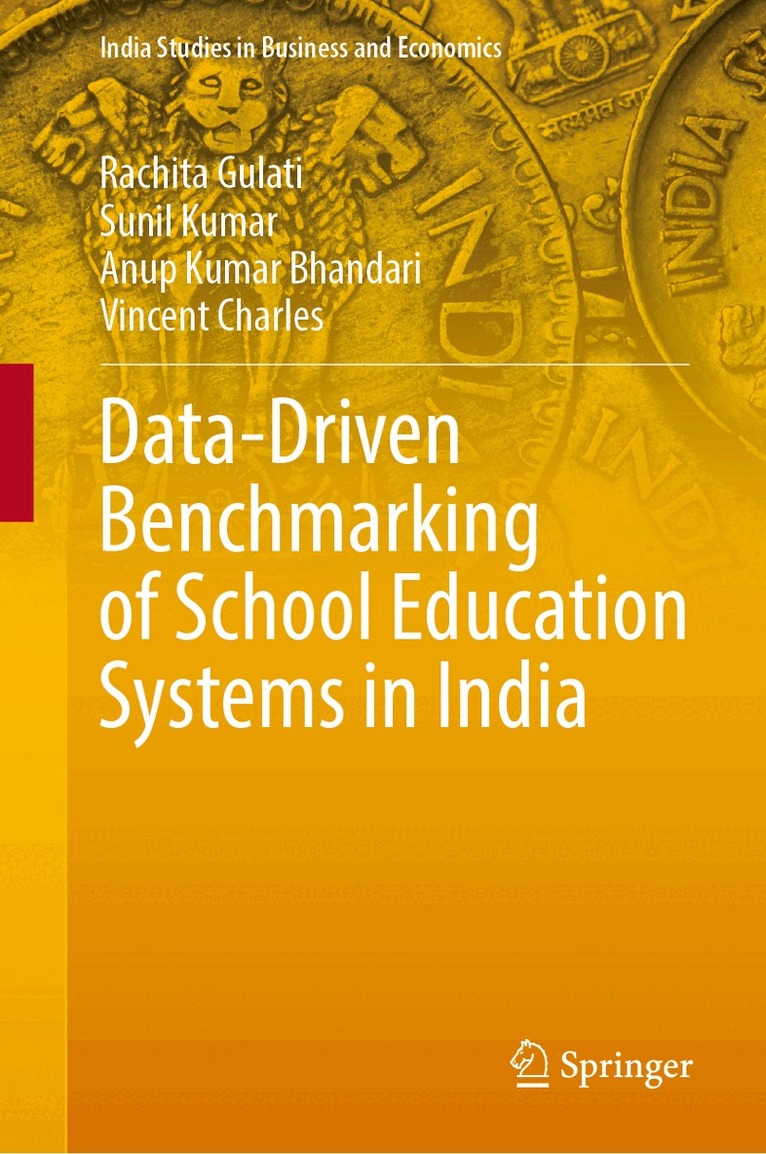
This book presents a comprehensive study that conducts a data-driven performance benchmarking exercise for regional school education systems in India, with a clear focus on highlighting disparities and challenges within these systems, as well as providing targeted policy recommendations for potential improvements. The book conducts an in-depth examination of the educational environment, current status, policies, and interventions across schools. It explores why, despite various national initiatives aimed at improving access to and quality of school education, significant gaps persist across Indian states, particularly in the two most populous states, Uttar Pradesh and Bihar, which face a range of economic challenges.The book evaluates rankings and efficiency variations in school education development and develops a novel nonparametric efficiency-effectiveness framework to analyze the performance of the school education system. In addition to employing a state-of-the-art meta-BoD-RDM framework for constructing a school education development index, the empirical analysis employs a two-stage network Data Envelopment Analysis (NDEA) model using survey-based data from schools in India to compute school-wise efficiency and effectiveness scores. These scores are then integrated with a machine learning-based Random Forest algorithm to identify the key factors behind the observed inter-school variations in school efficiency and school effectiveness. The book also discusses progress in school education development during the COVID-19 pandemic. It identifies several key areas that require policy intervention and urgent attention from educationists and governments. This data-enabled benchmarking and analytical study not only contributes to understanding the current landscape but also supports the formulation of future educational policies aimed at effectively addressing the evolving needs of the school education system in India.
Del 5 - World Scientific-economic Growth Centre Contemporary Series In Modern Economy
Bank Regulation And Supervision Practices In South Asia
Inbunden, Engelska, 2026
2 089 kr
Skickas inom 3-6 vardagar
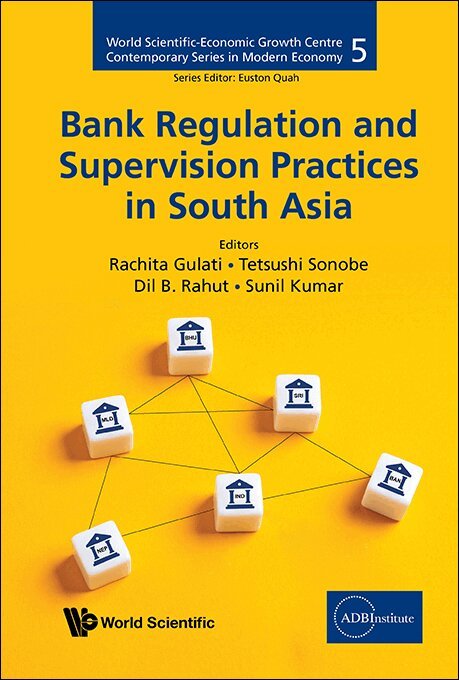
Bank Regulation and Supervision Practices in South Asia presents a comprehensive analysis of bank regulation and supervision practices in South Asia, offering in-depth country-specific and cross-country insights into regulatory frameworks and their harmonization within the region. Focusing on six South Asian countries — Bangladesh, Bhutan, India, Nepal, Maldives, and Sri Lanka — the book systematically evaluates progression of key regulatory and supervisory practices to assess their effectiveness in promoting financial stability, resilience, and inclusive growth. It employs a co-created, comparative approach based on a common analytical framework, supported by survey-based data from the World Bank's Bank Regulation and Supervision Surveys (BRSS) and the latest ADBI-conducted survey during 2018-2024.The country studies covered in the book provide discussion on a wide range of core and emerging regulatory frameworks, including deposit insurance, capital adequacy, liquidity regulations, FinTech-enabling and digital payments regulations, consumer protection, and environmental and social compliance norms. A unique analytical framework is adopted for assessment of macro-financial diagnostics, financial policy evaluations and identifying regulatory gaps in South Asia. Further, it presents the econometric assessment of the impact of regulatory reforms on bank performance in South Asia.The book fills an important knowledge gap by offering both theoretical and practical insights, combining expert analysis with first-hand perspectives from central bank officials. It serves as a useful policy-relevant reference for regulators, researchers, and development partners, delivering actionable recommendations to strengthen regulatory norms and address emerging risks emanating from digitalization and climate change in the region.