Dimitrios G. Oreopoulos – författare
Visar alla böcker från författaren Dimitrios G. Oreopoulos. Handla med fri frakt och snabb leverans.
14 produkter
14 produkter
Inbunden, Engelska, 2007
2 238 kr
Skickas inom 10-15 vardagar
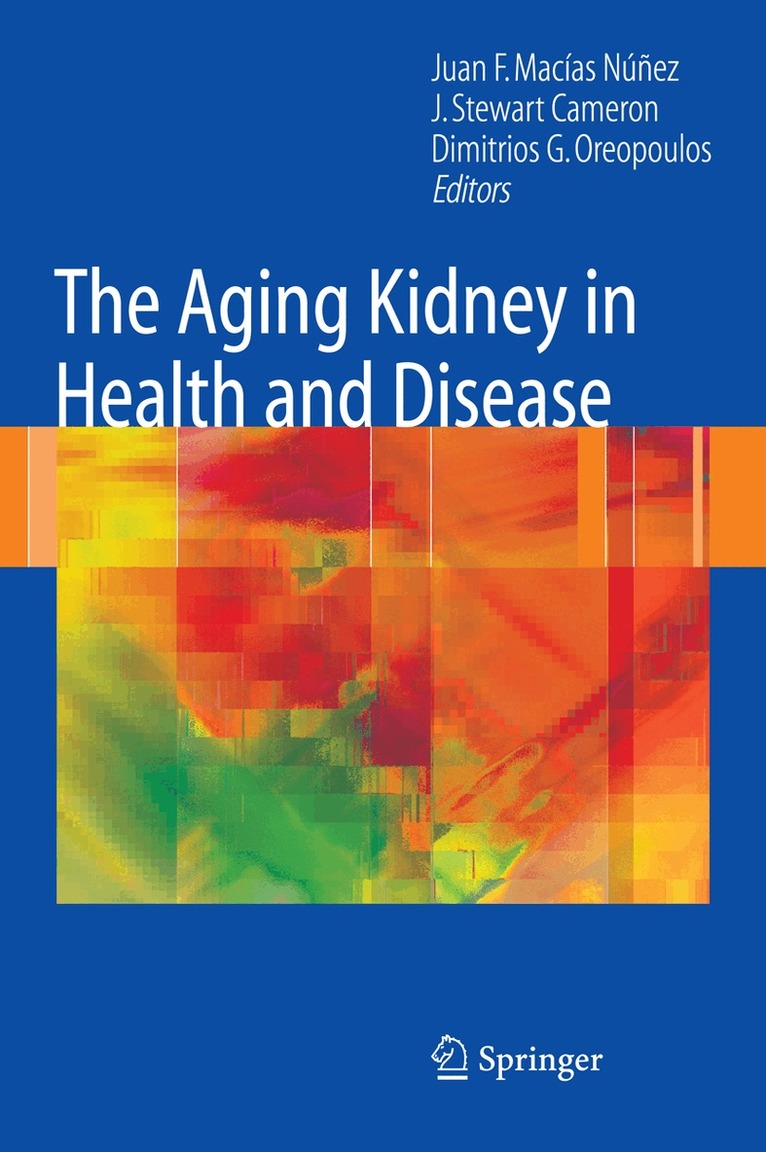
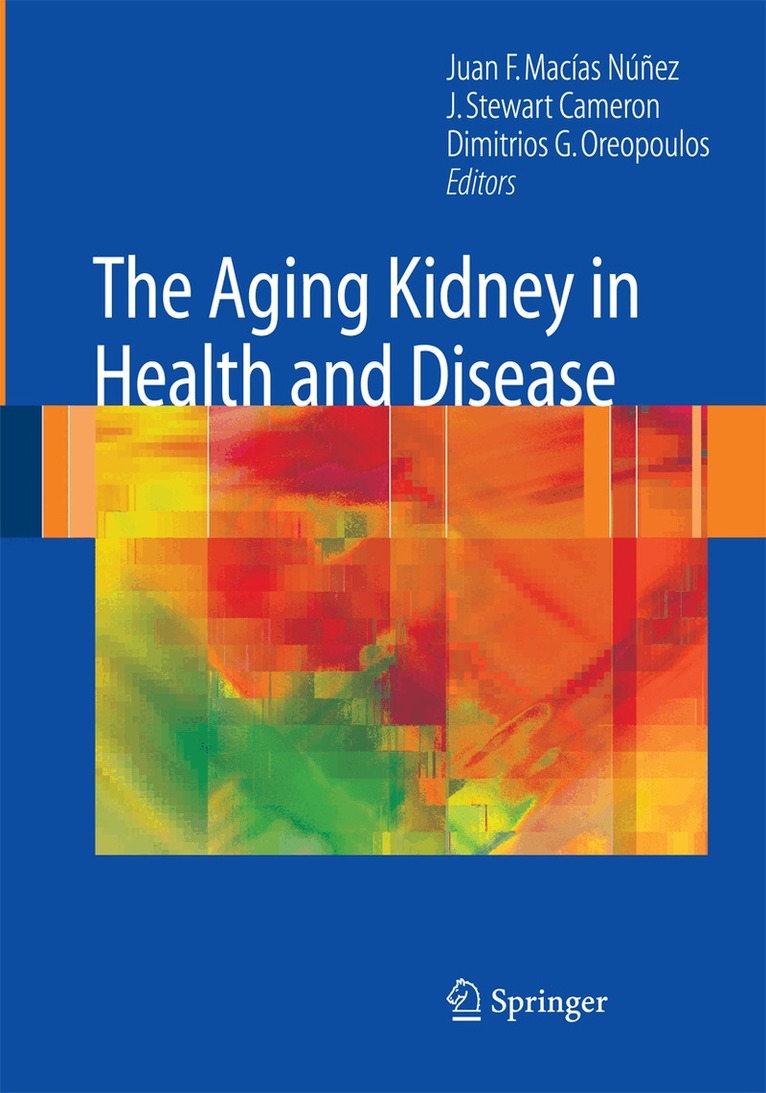
It is a great pleasure to respond to the invitation to write a foreword for this book. With a worldwide increase in an aging population, the practice of medicine is increasingly focused on elderly patients with chronic diseases and episodic acute exacerbations rather than the previous model of acute disease management only. As nephrologists around the world deal with millions of elderly individuals, many of whom are classified as suffering from chronic kidney disease in stages 2–5, they are, of necessity, practicing geriatrics without specific training or previous exposure in this field. Therefore, most nephrologists, as well as dealing with new types of clinical presentations, and geriatric evaluation tools, will face the difficulties of reaching the treatment targets specific to geriatric patients. These geriatric targets include, in addition to the usual diagnosis and medical or surgical treatment for young adults, the recuperation of the ability to perform activities of daily living, which are often partially or totally lost in renal disease. Apart from these clinical difficulties, physicians will also face enormous ethical challenges. These issues are clearly dealt with by geriatricians and nephrologists. Improvements in care and advancing clinical knowledge will enable us to delineate more clearly those changes that are due to aging as opposed to those changes due to disease. This book provides an important step in further clarifying and quantifying the differences between an aging and a diseased kidney.
E-bok
PDF, Engelska, 20072 822 kr
Läs direkt efter köp
It is a great pleasure to respond to the invitation to write a foreword for this book. With a worldwide increase in an aging population, the practice of medicine is increasingly focused on elderly patients with chronic diseases and episodic acute exacerbations rather than the previous model of acute disease management only. As nephrologists around the world deal with millions of elderly individuals, many of whom are classified as suffering from chronic kidney disease in stages 2–5, they are, of necessity, practicing geriatrics without specific training or previous exposure in this field. Therefore, most nephrologists, as well as dealing with new types of clinical presentations, and geriatric evaluation tools, will face the difficulties of reaching the treatment targets specific to geriatric patients. These geriatric targets include, in addition to the usual diagnosis and medical or surgical treatment for young adults, the recuperation of the ability to perform activities of daily living, which are often partially or totally lost in renal disease. Apart from these clinical difficulties, physicians will also face enormous ethical challenges. These issues are clearly dealt with by geriatricians and nephrologists. Improvements in care and advancing clinical knowledge will enable us to delineate more clearly those changes that are due to aging as opposed to those changes due to disease. This book provides an important step in further clarifying and quantifying the differences between an aging and a diseased kidney.
Inbunden, Engelska, 2000
1 122 kr
Skickas inom 10-15 vardagar
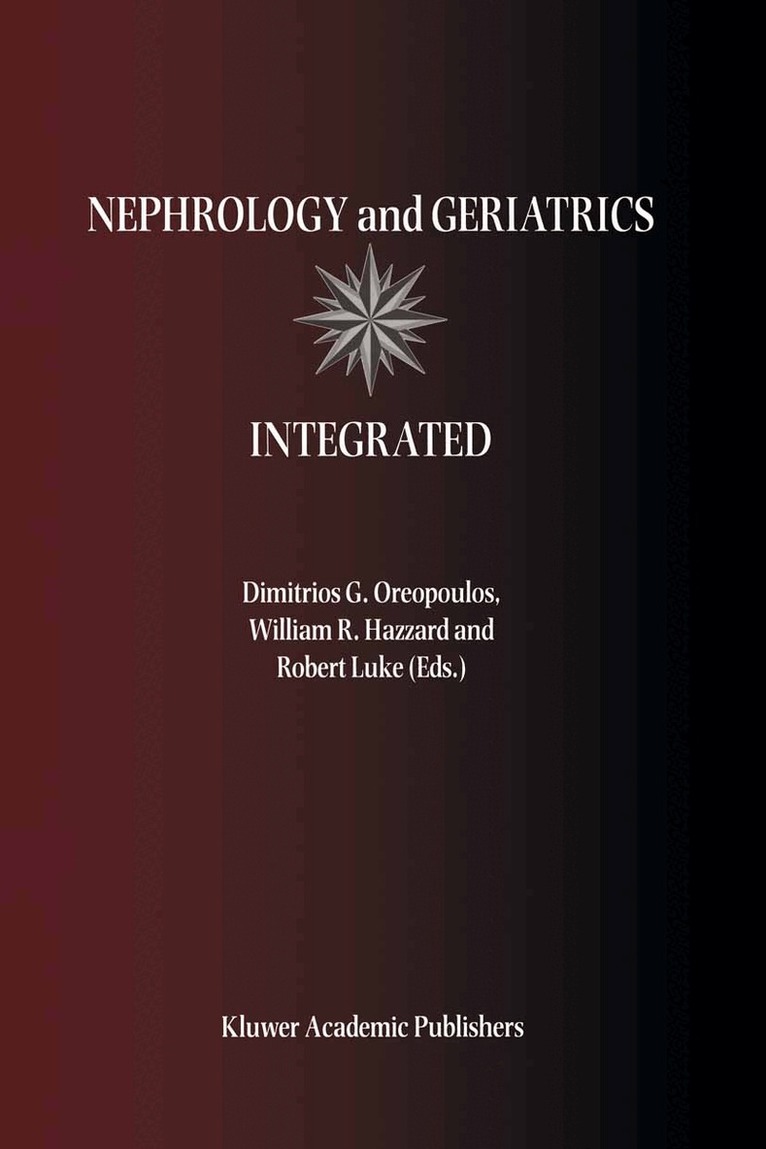
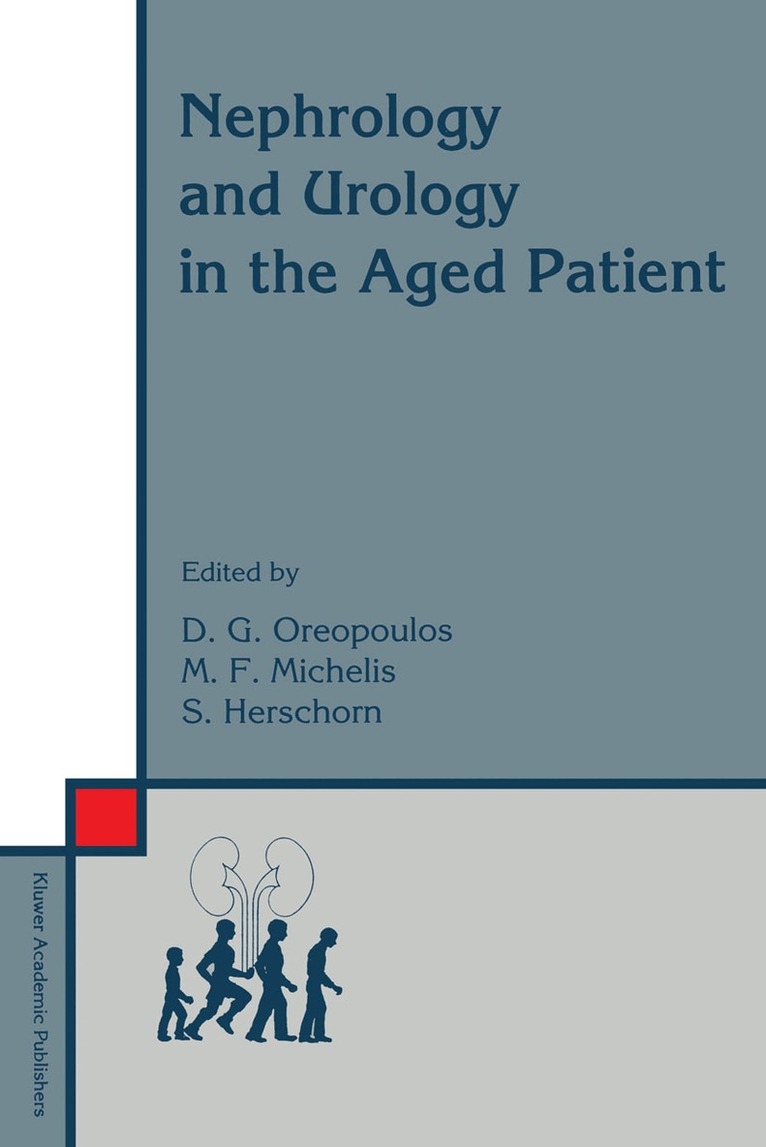
Because of many advances in medicine and biotechnology, an increasing number of individuals are surviving into old age, and we are now challenged to apply sophisticated medical knowledge to the care of the elderly citizen. In nephrology, individuals older than 65 are the fastest-growing group of patients requiring dialysis. Similarly, in increasing numbers, elderly persons present themselves with renal complaints to their family doctor, the geriatrician or the nephrologist. In August 1998, with the financial support of the John A. Hartford Foundation, leaders in geriatrics, nephrology and urology met in Jasper, Alberta, for one week to discuss their areas of special knowledge and to learn from each other. Geriatricians learned from nephrologists, nephrologists learned from geriatricians, and both came to see that they had much in common. All participants discovered a common interest, challenge and commitment, namely, to provide the best renal care to a progressively ageing population and to teach their fellows the principles of the other collaborating specialties.This book contains all the papers presented at this meeting and also the text of group discussions on Training and Education, Special Clinical Problems in Geriatric Patients, and Recommendations in Basic and Clinical Research.
Del 12 - Developments in Nephrology
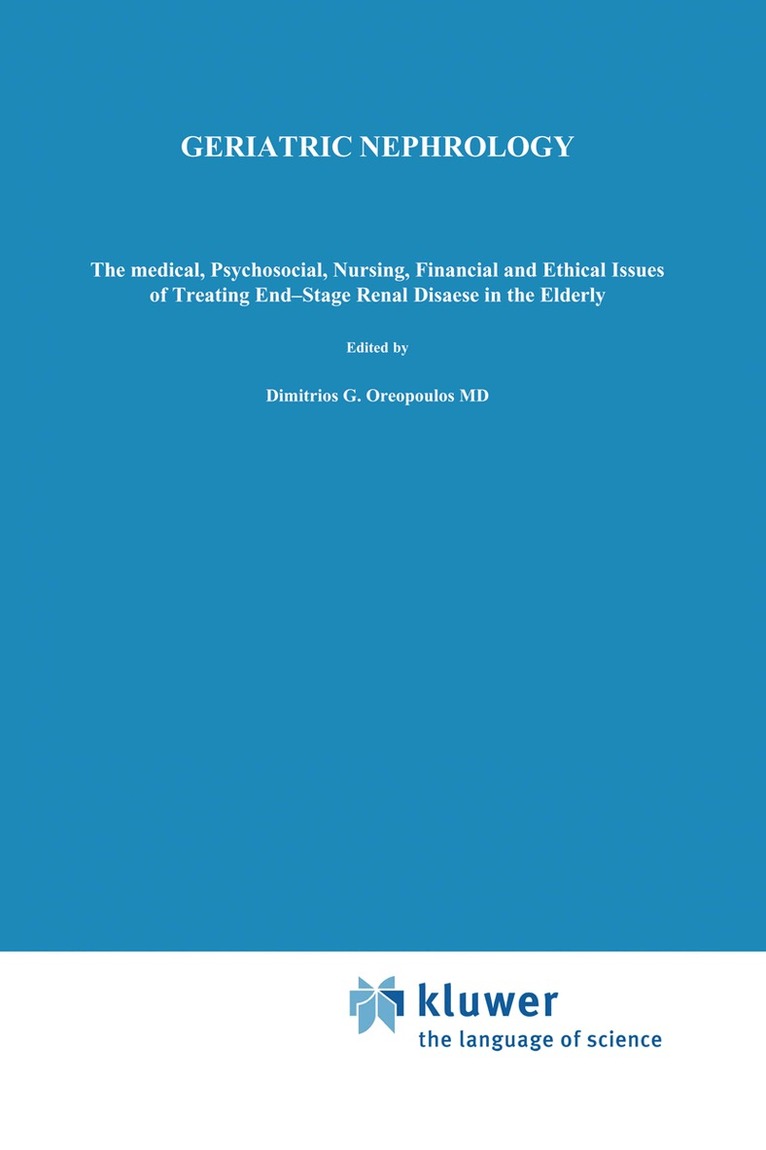
Geriatric Nephrology
The medical, psychosocial, nursing, financial and ethical issues of treating end-stage renal disease in the elderly
Inbunden, Engelska, 1986
2 238 kr
Skickas inom 10-15 vardagar
The year was 1943. As a third-year medical student at Stanford, I was about to witness the beginning of a medical miracle. Dr. Arthur Bloomfield, Professor of Medicine, had selected my patient, a middle aged man, who was dying of acute pneumococcal pneumonia, as one of the first patients to receive miniscule doses (by today's standards) of his meagre supply of a new drug - penicillin. The patient's response amazed everyone especially this impressionable medical student. The rest of the story is history. With one stroke, the introduction of penicillin removed from the medical scene the 'friend of the aged' - lobar pneumonia. The consequences, which no one could have imagined at the time, are still becoming manifest as other 'miracles' such as respirators, artificial kidneys and many potent new antibiotics have come upon the scene. All of us are aware that these miracles have created a variety of new challenges around the states of dying and near dying. We have no easy answers for these problems. Nevertheless as dialysis techniques, especially CAPD, are applied more widely to the treatment of the elderly, the task of helping the patient meet death with dignity becomes increasingly important and vexing because once begun, dialysis is difficult to terminate.
Häftad, Engelska, 2014
2 795 kr
Skickas inom 10-15 vardagar
It is a great pleasure to respond to the invitation to write a foreword for this book. With a worldwide increase in an aging population, the practice of medicine is increasingly focused on elderly patients with chronic diseases and episodic acute exacerbations rather than the previous model of acute disease management only. As nephrologists around the world deal with millions of elderly individuals, many of whom are classified as suffering from chronic kidney disease in stages 2–5, they are, of necessity, practicing geriatrics without specific training or previous exposure in this field. Therefore, most nephrologists, as well as dealing with new types of clinical presentations, and geriatric evaluation tools, will face the difficulties of reaching the treatment targets specific to geriatric patients. These geriatric targets include, in addition to the usual diagnosis and medical or surgical treatment for young adults, the recuperation of the ability to perform activities of daily living, which are often partially or totally lost in renal disease. Apart from these clinical difficulties, physicians will also face enormous ethical challenges. These issues are clearly dealt with by geriatricians and nephrologists. Improvements in care and advancing clinical knowledge will enable us to delineate more clearly those changes that are due to aging as opposed to those changes due to disease. This book provides an important step in further clarifying and quantifying the differences between an aging and a diseased kidney.
E-bok
PDF, Engelska, 20122 822 kr
Läs direkt efter köp
The year was 1943. As a third-year medical student at Stanford, I was about to witness the beginning of a medical miracle. Dr. Arthur Bloomfield, Professor of Medicine, had selected my patient, a middle aged man, who was dying of acute pneumococcal pneumonia, as one of the first patients to receive miniscule doses (by today''s standards) of his meagre supply of a new drug - penicillin. The patient''s response amazed everyone especially this impressionable medical student. The rest of the story is history. With one stroke, the introduction of penicillin removed from the medical scene the ''friend of the aged'' - lobar pneumonia. The consequences, which no one could have imagined at the time, are still becoming manifest as other ''miracles'' such as respirators, artificial kidneys and many potent new antibiotics have come upon the scene. All of us are aware that these miracles have created a variety of new challenges around the states of dying and near dying. We have no easy answers for these problems. Nevertheless as dialysis techniques, especially CAPD, are applied more widely to the treatment of the elderly, the task of helping the patient meet death with dignity becomes increasingly important and vexing because once begun, dialysis is difficult to terminate.
Häftad, Engelska, 2012
565 kr
Skickas inom 10-15 vardagar
The master tool of logic is the syllogism. If A> Band B> C, then it must follow as the night the day that A > C. If the major and minor premises are true or scientifically correct by current knowledge, the conclusion is true or at least scientifically correct by current knowledge. The demographer of today beams a clear message, which if not true is at least scientifically correct by current knowledge. In the first 80 years of the Twentieth Century, the 'over-65' population of Americans increased eight fold. By century's end it will have increased 12-fold and shortly thereafter will include one in five Americans. While initially a fact of the developed world, the pace of similar graying is accelerating even more rapidly in the Second and Third Worlds. This gray delta constitutes about 35 million living Americans, who may use one-half or more of the health care resources. A would have to be a lot more foolish than B if they failed to recognize that in the coming decade the causation, case-mix, and area of the gray delta demands a change from early, mid-or even later-century medicine. If Homer Smith was right in saying, "We are what we are because we have the kind of kidneys we have" and "The kidneys make the stuff of philosophy", then the who, what, where, when, and why the gray delta will be cared for must focus on the stuff of geriatric nephrology.
Häftad, Engelska, 2012
565 kr
Skickas inom 10-15 vardagar
Dealing concisely with all aspects of PD, it is written in such a style that even beginners with elementary knowledge of the subject could benefit from its use, and thus it is the perfect text for trainees or new and junior staff members.
Häftad, Engelska, 2012
1 122 kr
Skickas inom 10-15 vardagar
Because of many advances in medicine and biotechnology, an increasing number of individuals are surviving into old age, and we are now challenged to apply sophisticated medical knowledge to the care of the elderly citizen. In nephrology, individuals older than 65 are the fastest-growing group of patients requiring dialysis. Similarly, in increasing numbers, elderly persons present themselves with renal complaints to their family doctor, the geriatrician or the nephrologist. In August 1998, with the financial support of the John A. Hartford Foundation, leaders in geriatrics, nephrology and urology met in Jasper, Alberta, for one week to discuss their areas of special knowledge and to learn from each other. Geriatricians learned from nephrologists, nephrologists learned from geriatricians, and both came to see that they had much in common. All participants discovered a common interest, challenge and commitment, namely, to provide the best renal care to a progressively aging population and to teach their fellows the principles of the other collaborating specialties. This book contains all the papers presented at this meeting and also the text of group discussions on Training and Education, Special Clinical Problems in Geriatric Patients, and Recommendations in Basic and Clinical Research. Nephrology and Geriatrics Integrated will prove useful to both nephrologists and geriatricians in their efforts to manage the renal complaints of the elderly, who come to them in increasing numbers.
Häftad, Engelska, 2011
2 238 kr
Skickas inom 10-15 vardagar
The year was 1943. As a third-year medical student at Stanford, I was about to witness the beginning of a medical miracle. Dr. Arthur Bloomfield, Professor of Medicine, had selected my patient, a middle aged man, who was dying of acute pneumococcal pneumonia, as one of the first patients to receive miniscule doses (by today's standards) of his meagre supply of a new drug - penicillin. The patient's response amazed everyone especially this impressionable medical student. The rest of the story is history. With one stroke, the introduction of penicillin removed from the medical scene the 'friend of the aged' - lobar pneumonia. The consequences, which no one could have imagined at the time, are still becoming manifest as other 'miracles' such as respirators, artificial kidneys and many potent new antibiotics have come upon the scene. All of us are aware that these miracles have created a variety of new challenges around the states of dying and near dying. We have no easy answers for these problems. Nevertheless as dialysis techniques, especially CAPD, are applied more widely to the treatment of the elderly, the task of helping the patient meet death with dignity becomes increasingly important and vexing because once begun, dialysis is difficult to terminate.
E-bok
PDF, Engelska, 2012708 kr
Läs direkt efter köp
The master tool of logic is the syllogism. If A> Band B> C, then it must follow as the night the day that A > C. If the major and minor premises are true or scientifically correct by current knowledge, the conclusion is true or at least scientifically correct by current knowledge. The demographer of today beams a clear message, which if not true is at least scientifically correct by current knowledge. In the first 80 years of the Twentieth Century, the ''over-65'' population of Americans increased eight fold. By century''s end it will have increased 12-fold and shortly thereafter will include one in five Americans. While initially a fact of the developed world, the pace of similar graying is accelerating even more rapidly in the Second and Third Worlds. This gray delta constitutes about 35 million living Americans, who may use one-half or more of the health care resources. A would have to be a lot more foolish than B if they failed to recognize that in the coming decade the causation, case-mix, and area of the gray delta demands a change from early, mid-or even later-century medicine. If Homer Smith was right in saying, "We are what we are because we have the kind of kidneys we have" and "The kidneys make the stuff of philosophy", then the who, what, where, when, and why the gray delta will be cared for must focus on the stuff of geriatric nephrology.
E-bok
PDF, Engelska, 2012708 kr
Läs direkt efter köp
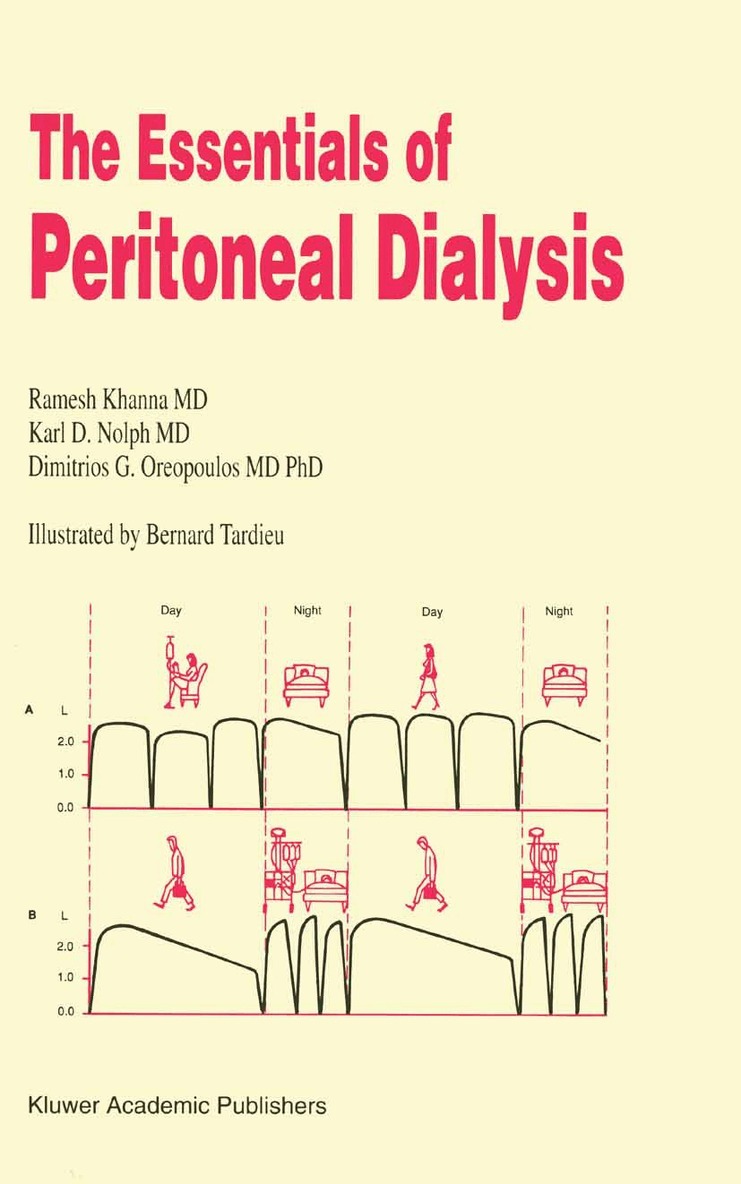
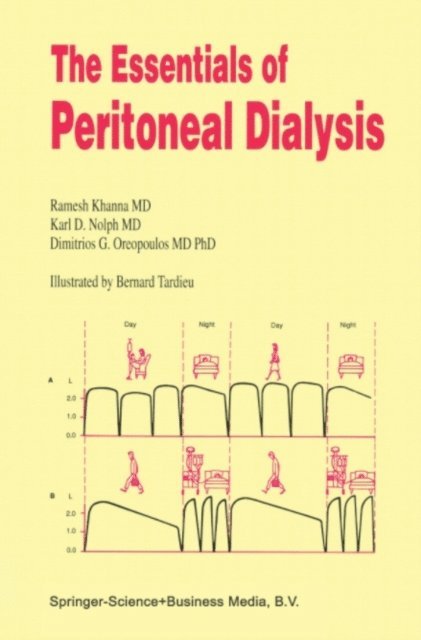
Designed for daily use by professionals responsible for caring for patients with renal disease, this long-awaited primer provides a simplified, up-to-date review of peritoneal dialysis. Dealing concisely with all aspects of PD, it is written in such a style that even beginners with elementary knowledge of the subject could benefit from its use, and thus it is the perfect text for trainees or new and junior staff members. It is also an ideal text for nurses, a virtual how-to guide on PD. A book like this one, crafted specifically as a bench text and a learning tool, is hard to find. Emphasis is placed on the plentiful illustrations and tables that immediately clarify and expand upon the text. The illustrations, many in full color, are deftly drawn by one of the foremost medical artists in the world, Bernard Tardieu. Few texts can boast such a cast of distinguished authors. Ramesh Khanna, Karl Nolph, and Dimitrios Oreopoulos are among the most respected practitioners of dialysis.
E-bok
PDF, Engelska, 20121 408 kr
Läs direkt efter köp
Because of many advances in medicine and biotechnology, an increasing number of individuals are surviving into old age, and we are now challenged to apply sophisticated medical knowledge to the care of the elderly citizen. In nephrology, individuals older than 65 are the fastest-growing group of patients requiring dialysis. Similarly, in increasing numbers, elderly persons present themselves with renal complaints to their family doctor, the geriatrician or the nephrologist. In August 1998, with the financial support of the John A. Hartford Foundation, leaders in geriatrics, nephrology and urology met in Jasper, Alberta, for one week to discuss their areas of special knowledge and to learn from each other. Geriatricians learned from nephrologists, nephrologists learned from geriatricians, and both came to see that they had much in common. All participants discovered a common interest, challenge and commitment, namely, to provide the best renal care to a progressively aging population and to teach their fellows the principles of the other collaborating specialties. This book contains all the papers presented at this meeting and also the text of group discussions on Training and Education, Special Clinical Problems in Geriatric Patients, and Recommendations in Basic and Clinical Research. Nephrology and Geriatrics Integrated will prove useful to both nephrologists and geriatricians in their efforts to manage the renal complaints of the elderly, who come to them in increasing numbers.
Inbunden, Engelska, 1993
1 410 kr
Tillfälligt slut
Designed for daily use by professionals responsible for caring for patients with renal disease, this long-awaited primer provides a simplified, up-to-date review of peritoneal dialysis. Dealing concisely with all aspects of PD, it is written in such a style that even beginners with elementary knowledge of the subject could benefit from its use, and thus it is the perfect text for trainees or new and junior staff members. It is also an ideal text for nurses, a virtual how-to guide on PD. A book like this one, crafted specifically as a bench text and a learning tool, is hard to find. Emphasis is placed on the plentiful illustrations and tables that immediately clarify and expand upon the text. The illustrations, many in full colour, are deftly drawn by one of the foremost medical artists in the world, Bernard Tardieu. Few texts can boast such a cast of distinguished authors. Ramesh Khanna, Karl Nolph, and Dimitrios Oreopoulos are among the most respected practitioners of dialysis.