Dimitrios Giannoulopoulos - Böcker
Visar alla böcker från författaren Dimitrios Giannoulopoulos. Handla med fri frakt och snabb leverans.
3 produkter
3 produkter
Del 250 - Proceedings of the British Academy
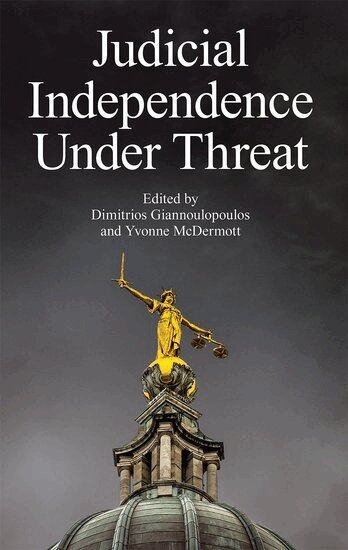
Judicial Independence Under Threat
Inbunden, Engelska, 2022
1 285 kr
Skickas inom 3-6 vardagar
Judicial independence is increasingly under threat. The rise of populism risks undermining the separation of powers, with some politicians, media outlets and members of the public taking aim at judges, labelling them as part of the establishment and the elite, the 'enemies of the people'. Judicial Independence Under Threat seeks to situate these contemporary challenges to judicial independence in their proper legal, philosophical, political and historical contexts. It brings academic scholars from a variety of disciplines together with judges, politicians and legal professionals and asks what core shared values of our legal and political systems judicial independence seeks to protect, and how threats to that independence can be protected against. What can we learn from comparative, historical, political, philosophical, and legal insights on the separation of powers, and what means can we discover to prevent against challenges to the independence of judges in times of crisis?
473 kr
Skickas inom 10-15 vardagar
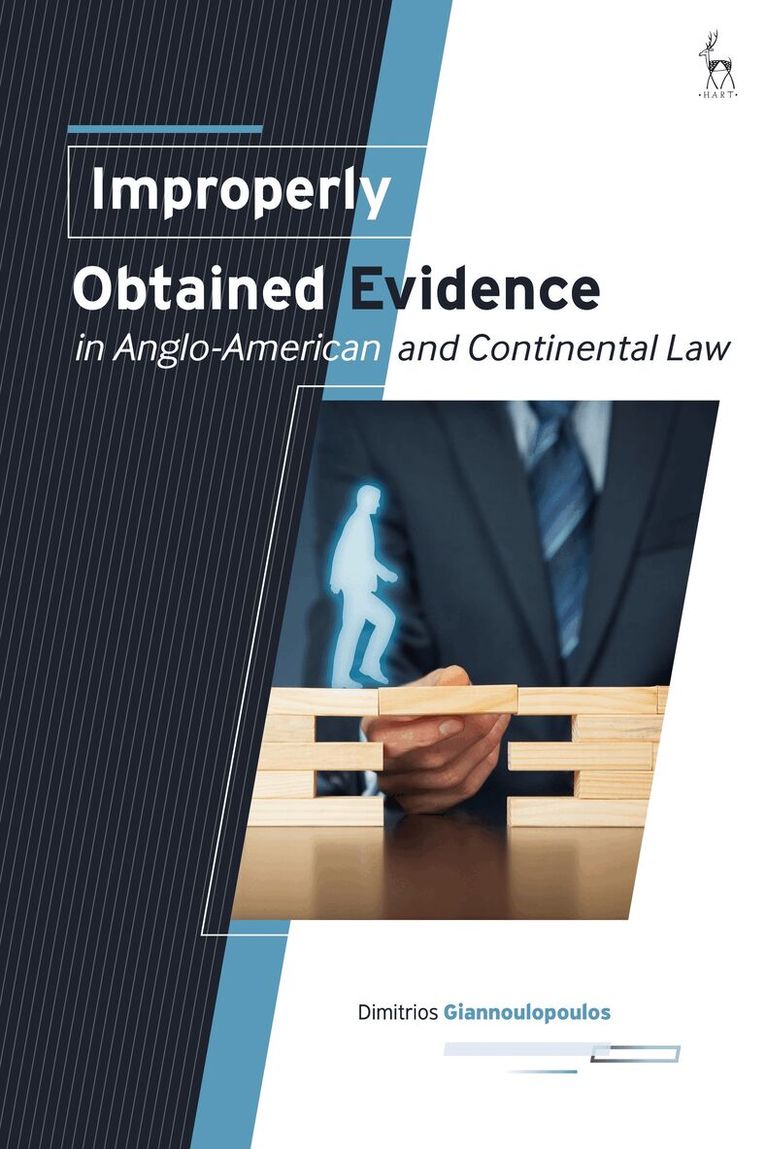
This is the first book to offer an extensive cosmopolitan, cross-cultural insight into the perennial controversy over the use of improperly obtained evidence in criminal trials. It challenges the conventional view that exclusionary rules are idiosyncratic of Anglo-American law, and highlights the ‘constitutionalisation’ and ‘internationalisation’ of criminal evidence and procedure as a cause of rapprochement (or divergence) beyond the Anglo-American and Continental law divide.Analysis focuses on confessional evidence and evidence obtained by search and seizure, telephone interceptions and other means of electronic surveillance. The laws of England and Wales, France, Greece and the United States are systematically compared and contrasted throughout this study, but, where appropriate, analysis extends to other Anglo-American and Continental legal systems. The book reviews exclusionary rules vis-à-vis the operation of judicial discretion, and explores the normative justifications that underpin them. It attempts to reinvigorate the idea of excluding evidence to protect constitutional or human rights (the rights thesis), arguing that there is significant scope for Anglo-American and Continental legal systems to place a renewed emphasis on it, particularly in relation to confessional evidence obtained in violation of custodial interrogation rights; we can locate an emerging rapprochement, and unique potential for European Court of Human Rights jurisprudence to build consensus in this respect. In marked contrast, remaining divergence with regard to evidence obtained by privacy violations means there is little momentum to adopt a reinvigorated rights thesis more widely.Longlisted for the Inner Temple Book Prize 2022.
1 113 kr
Skickas inom 10-15 vardagar
This is the first book to offer an extensive cosmopolitan, cross-cultural insight into the perennial controversy over the use of improperly obtained evidence in criminal trials. It challenges the conventional view that exclusionary rules are idiosyncratic of Anglo-American law, and highlights the ‘constitutionalisation’ and ‘internationalisation’ of criminal evidence and procedure as a cause of rapprochement (or divergence) beyond the Anglo-American and Continental law divide.Analysis focuses on confessional evidence and evidence obtained by search and seizure, telephone interceptions and other means of electronic surveillance. The laws of England and Wales, France, Greece and the United States are systematically compared and contrasted throughout this study, but, where appropriate, analysis extends to other Anglo-American and Continental legal systems. The book reviews exclusionary rules vis-à-vis the operation of judicial discretion, and explores the normative justifications that underpin them. It attempts to reinvigorate the idea of excluding evidence to protect constitutional or human rights (the rights thesis), arguing that there is significant scope for Anglo-American and Continental legal systems to place a renewed emphasis on it, particularly in relation to confessional evidence obtained in violation of custodial interrogation rights; we can locate an emerging rapprochement, and unique potential for European Court of Human Rights jurisprudence to build consensus in this respect. In marked contrast, remaining divergence with regard to evidence obtained by privacy violations means there is little momentum to adopt a reinvigorated rights thesis more widely.Longlisted for the Inner Temple Book Prize 2022.