
Dirk-Henner Lankenau – författare
Genome Integrity
Facets and Perspectives
3 224 kr
Skickas inom 10-15 vardagar
4 066 kr
Läs direkt efter köp
Cells and viruses maintain a genome capable of multiplication, variation and heredity. A genome consists of chromosomes, each being built up of two complementary strands of nucleic acid known as DNA. Its chemical integrity, however, is under constant assault from metabolic mutagens, such as hydroxy-radicals, endonucleases, radiation, replication errors, and environmental mutagens. From microorganisms to humans, this volume provides an interdisciplinary overview of how genome integrity is maintained. The volume begins with DNA replication and continues with replicative DNA repair and pleiotropic protein interactions. Examples of human diseases are included and the cellular responses to radiation and genotoxic stress affecting whole genomes are reviewed.
Recombination and Meiosis
Models, Means, and Evolution
2 152 kr
Skickas inom 10-15 vardagar
2 925 kr
Läs direkt efter köp
Once per life cycle, mitotic nuclear divisions are replaced by meiosis I and II – reducing chromosome number from the diploid level to a haploid genome and recombining chromosome arms by crossing-over. In animals, all this happens during formation of eggs and sperm – in yeasts before spore formation. The mechanisms of reciprocal exchange at crossover/chiasma sites are central to mainstream meiosis. To initiate the meiotic exchange of DNA, surgical cuts are made as a form of calculated damage that subsequently is repaired by homologous recombination. These key events are accompanied by ancillary provisions at the level of chromatin organization, sister chromatid cohesion and differential centromere connectivity. Great progress has been made in recent years in our understanding of these mechanisms. Questions still open primarily concern the placement of and mutual coordination between neighboring crossover events. Of overlapping significance, this book features two comprehensive treatises of enzymes involved in meiotic recombination, as well as the historical conceptualization of meiotic phenomena from genetical experiments. More specifically, these mechanisms are addressed in yeasts as unicellular model eukaryotes. Furthermore, evolutionary subjects related to meiosis are treated.
Recombination and Meiosis
Crossing-Over and Disjunction
3 224 kr
Skickas inom 10-15 vardagar
4 066 kr
Läs direkt efter köp
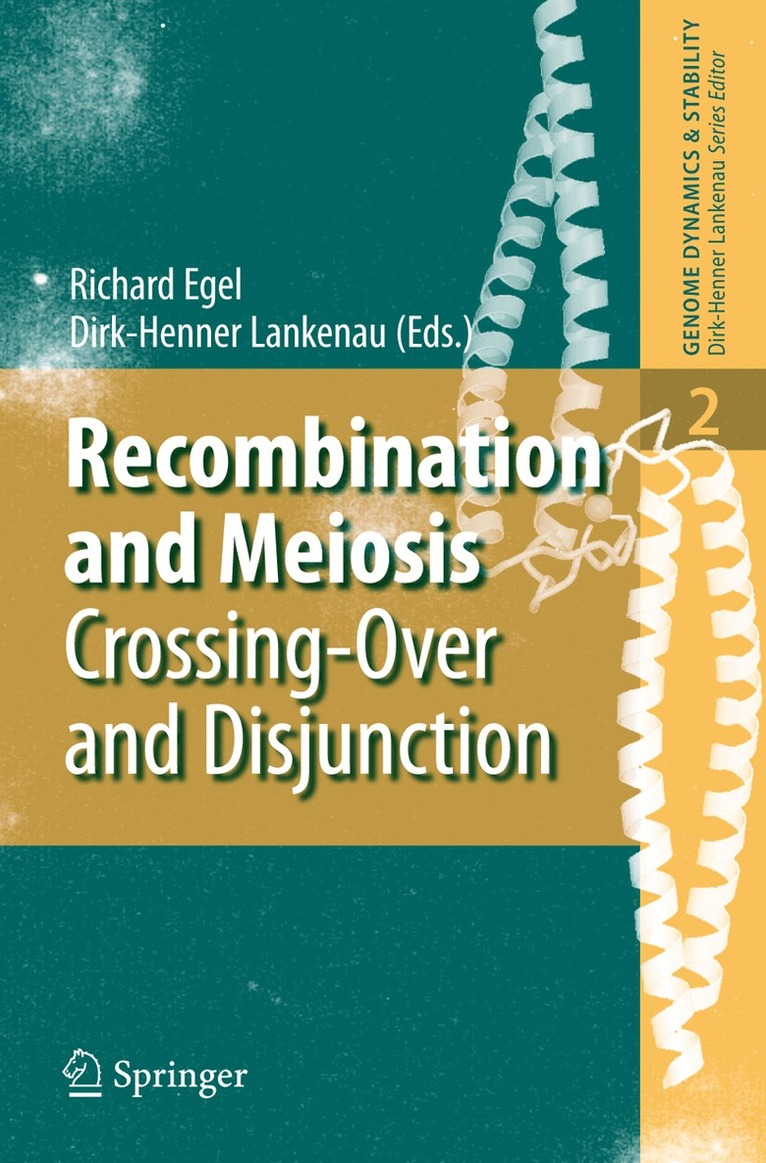
Once per life cycle, mitotic nuclear divisions are replaced by meiosis I and II – reducing chromosome number from the diploid level to a haploid genome, reshuffling the homologous chromosomes by their centromeres, and recombining chromosome arms by crossing-over. In animals, including humans, all this happens during the germ cell formation of eggs and sperm. Due to the reign of meiosis, no child is a true genetic copy of either parent. Central to mainstream meiosis, the mechanisms of reciprocal exchange at crossover/chiasma sites stand out as a controlled program of biologically significant molecular changes. To initiate the meiotic exchange of DNA, surgical cuts are made as a form of calculated damage that is subsequently repaired by homologous recombination. These key events are accompanied by ancillary provisions at the level of chromosome core organization, sister chromatid cohesion, and differential centromere connectivity. Great progress has been made in recent years to further our understanding of these mechanisms. Questions still open primarily concern the placement of and mutual coordination between neighboring crossover events. The current book addresses these processes and mechanisms in multicellular eukaryotes, such as Drosophila, Arabidopsis, mice and humans. The pioneering model systems of yeasts, as well as evolutionary aspects, will be addressed in a forthcoming volume.
Transposons and the Dynamic Genome
1 664 kr
Skickas inom 10-15 vardagar
2 110 kr
Läs direkt efter köp
Genome Integrity
Facets and Perspectives
3 321 kr
Skickas inom 10-15 vardagar
Recombination and Meiosis
Models, Means, and Evolution
2 216 kr
Skickas inom 10-15 vardagar
Recombination and Meiosis
Crossing-Over and Disjunction
3 321 kr
Skickas inom 10-15 vardagar
2 688 kr
Skickas inom 10-15 vardagar
3 351 kr
Läs direkt efter köp
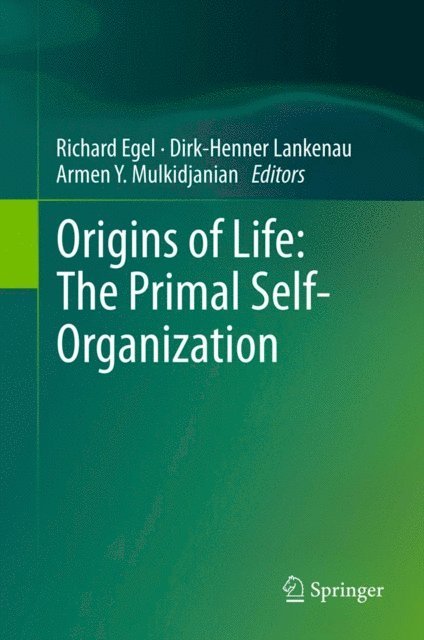
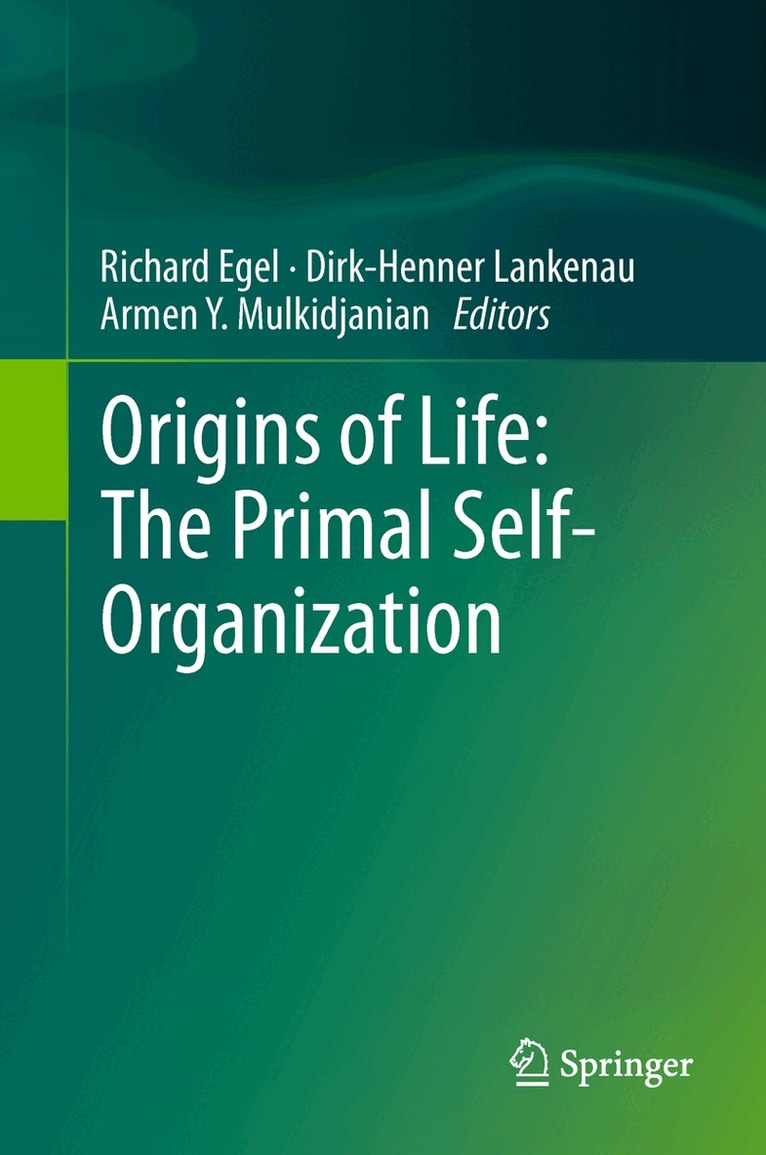
If theoretical physicists can seriously entertain canonical “standard models” even for the big-bang generation of the entire universe, why cannot life scientists reach a consensus on how life has emerged and settled on this planet? Scientists are hindered by conceptual gaps between bottom-up inferences (from early Earth geological conditions) and top-down extrapolations (from modern life forms to common ancestral states). This book challenges several widely held assumptions and argues for alternative approaches instead. Primal syntheses (literally or figuratively speaking) are called for in at least five major areas. (1) The first RNA-like molecules may have been selected by solar light as being exceptionally photostable. (2) Photosynthetically active minerals and reduced phosphorus compounds could have efficiently coupled the persistent natural energy flows to the primordial metabolism. (3) Stochastic, uncoded peptides may have kick-started an ever-tightening co-evolution of proteins and nucleic acids. (4) The living fossils from the primeval RNA World thrive within modern cells. (5) From the inherently complex protocellular associations preceding the consolidation of integral genomes, eukaryotic cell organization may have evolved more naturally than simple prokaryote-like life forms. – If this book can motivate dedicated researchers to further explore the alternative mechanisms presented, it will have served its purpose well.
Transposons and the Dynamic Genome
1 664 kr
Skickas inom 10-15 vardagar
2 688 kr
Skickas inom 10-15 vardagar