D.M. Alloin – författare
Visar alla böcker från författaren D.M. Alloin. Handla med fri frakt och snabb leverans.
8 produkter
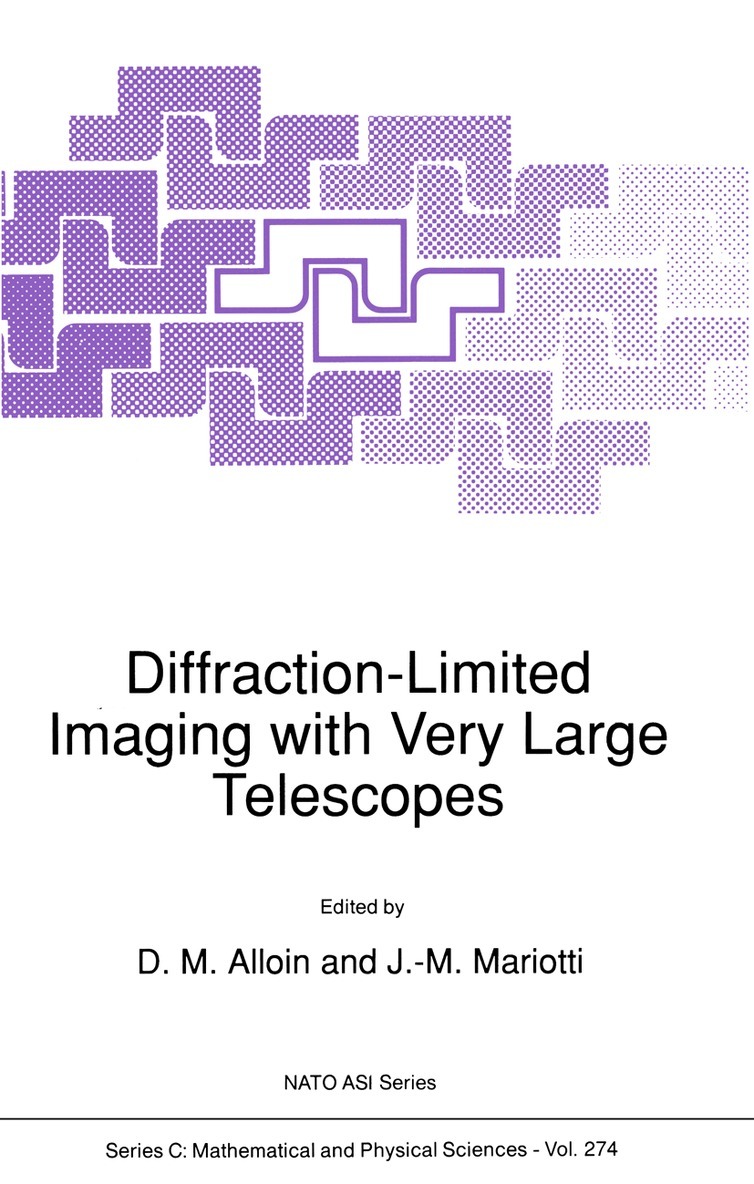
Diffraction-Limited Imaging with Very Large Telescopes
Av D.M. Alloin, Jean-Marie Mariotti
Inbunden, 1989
1643 kr
Lägg i varukorg
A few years ago, a real break-through happened in observational astronomy: the un derstanding of the effect of atmospheric turbulence on the structure of stellar images, and of ways to overcome this dramatic degradation. This opened a route to diffraction-limited observations with large telescopes …
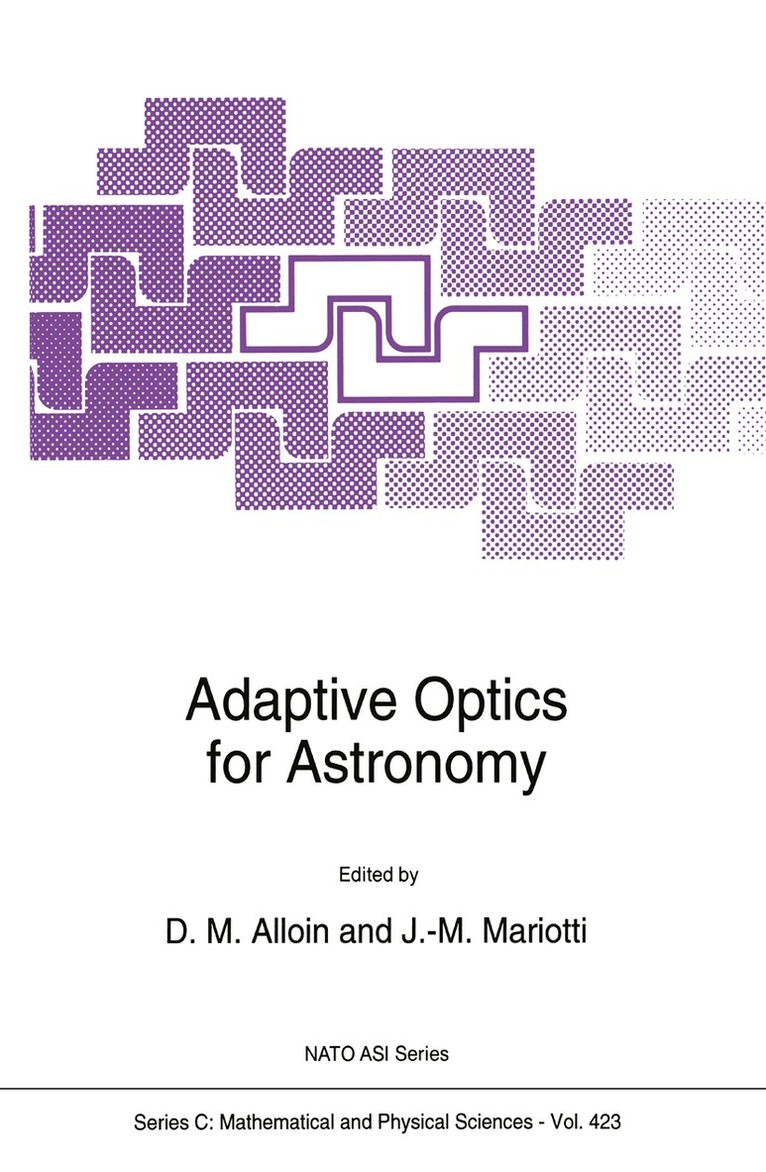
Adaptive Optics for Astronomy
Av D.M. Alloin, Jean-Marie Mariotti
Inbunden, 1994
2189 kr
Lägg i varukorg
For many astronomers, Adaptive Optics is something like a dream coming true. Sinee 1609 and the first observations of celestial bodies performed with the help of an optieal teleseope, astronomers have always fighted to improve the 'resolving power' of their instruments. For a long time, engineers …
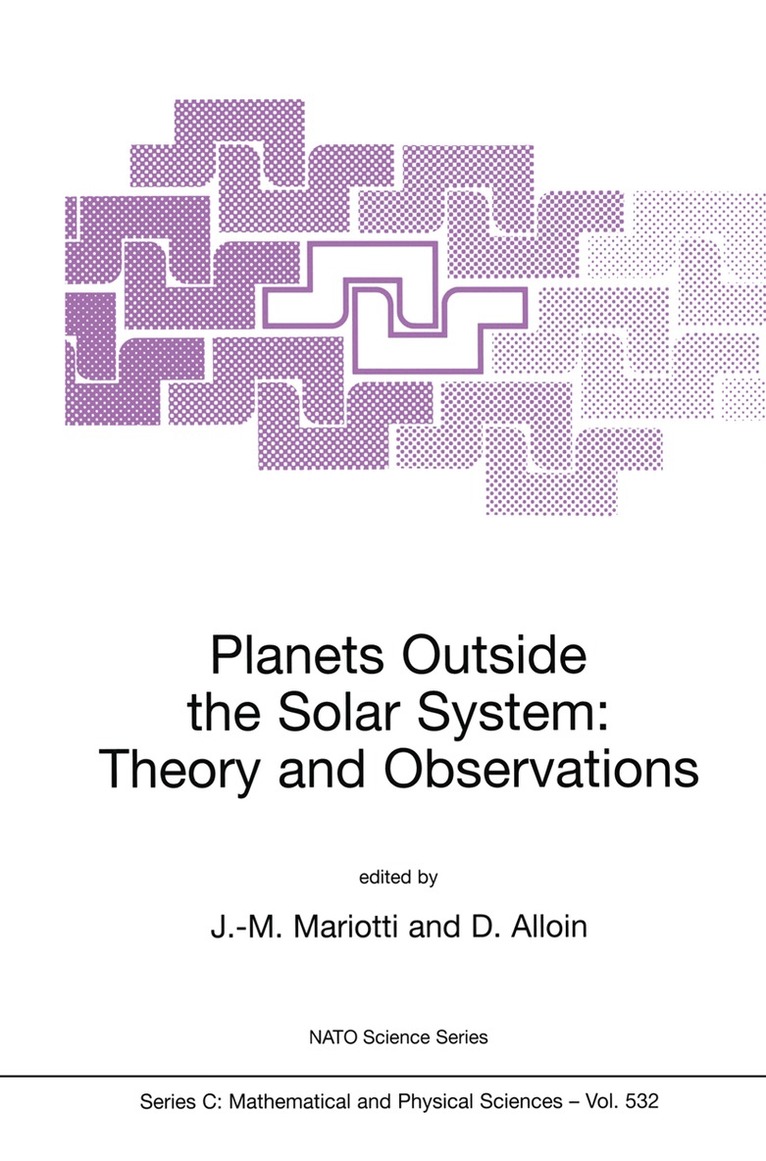
Planets Outside the Solar System: Theory and Observations
Av Jean-Marie Mariotti, D.M. Alloin
Inbunden, 1999
2189 kr
Lägg i varukorg
The question of the existence of other worlds and other living beings has been present in the human quest for knowledge since as far as Epicurus. For centuries this question belonged to the fields of philosophy and theology. The theoretical problem of the formation of the Solar System, and hence of …
Planets Outside the Solar System: Theory and Observations
Av Jean-Marie Mariotti, D.M. Alloin
Häftad, 1999
2189 kr
Lägg i varukorg
The question of the existence of other worlds and other living beings has been present in the human quest for knowledge since as far as Epicurus. For centuries this question belonged to the fields of philosophy and theology. The theoretical problem of the formation of the Solar System, and hence of …
Adaptive Optics for Astronomy
Av D.M. Alloin, Jean-Marie Mariotti
Häftad, 2010
2189 kr
Lägg i varukorg
For many astronomers, Adaptive Optics is something like a dream coming true. Sinee 1609 and the first observations of celestial bodies performed with the help of an optieal teleseope, astronomers have always fighted to improve the 'resolving power' of their instruments. For a long time, engineers …
Diffraction-Limited Imaging with Very Large Telescopes
Av Jean-Marie Mariotti, D.M. Alloin
E-bok, 2012
2111 kr
Lägg i varukorg
A few years ago, a real break-through happened in observational astronomy: the un derstanding of the effect of atmospheric turbulence on the structure of stellar images, and of ways to overcome this dramatic degradation. This opened a route to diffraction-limited observations with large telescopes …
Diffraction-Limited Imaging with Very Large Telescopes
Av D.M. Alloin, Jean-Marie Mariotti
Häftad, 2011
1643 kr
Lägg i varukorg
A few years ago, a real break-through happened in observational astronomy: the un derstanding of the effect of atmospheric turbulence on the structure of stellar images, and of ways to overcome this dramatic degradation. This opened a route to diffraction-limited observations with large telescopes …
Planets Outside the Solar System: Theory and Observations
Av D.M. Alloin, Jean-Marie Mariotti
E-bok, 2012
2925 kr
Lägg i varukorg
The question of the existence of other worlds and other living beings has been present in the human quest for knowledge since as far as Epicurus. For centuries this question belonged to the fields of philosophy and theology. The theoretical problem of the formation of the Solar System, and hence of …