Dominique Bourg – författare
746 kr
Läs direkt efter köp
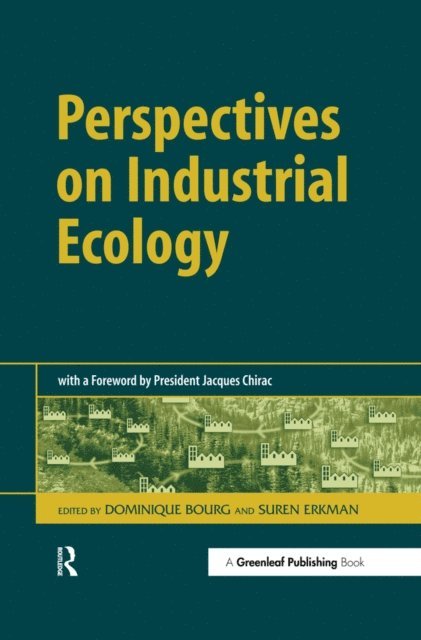
Business-as-usual in terms of industrial and technological development – even if based on a growing fear of pollution and shortages of natural resources – will never deliver sustainable development. However, the growing interest in recent years in the new science of industrial ecology (IE), and the idea that industrial systems should mimic the quasi-cyclical functions of natural ecosystems in an ''industrial food chain'', holds promise in addressing not only short-term environmental problems but also the long-term holistic evolution of industrial systems.
This possibility requires a number of key conditions to be met, not least the restructuring of our manufacturing and consumer society to reduce the effects of material and energy flows at the very point in history when globalisation is rapidly increasing them. This book sets out to address the theoretical considerations that should be made implicit in future research as well as practical implementation options for industry. The systematic recovery of industrial wastes, the minimisation of losses caused by dispersion, the dematerialisation of the economy, the requirement to decrease our reliance on fuels derived from hydrocarbons and the need for management systems that help foster inter-industry collaboration and networks are among the topics covered.
The book is split into four sections. First, the various definitions of IE are outlined. Here, important distinctions are made between industrial metabolism and IE. Second, a number of different industrial sectors, including glass, petroleum and electric power, are assessed with regard to the operationalisation of industrial ecology. Eco-industrial Parks and Networks are also analysed. Third, the options for overcoming obstacles that stand in the way of the closing of cycles such as the separation and screening of materials are considered and, finally, a number of implications for the future are assessed. The contributions to Perspectives on Industrial Ecology come from the leading thinkers working in this field at the crossroads between a number of different disciplines: engineering, ecology, bio-economics, geography, the social sciences and law.
746 kr
Läs direkt efter köp
Business-as-usual in terms of industrial and technological development – even if based on a growing fear of pollution and shortages of natural resources – will never deliver sustainable development. However, the growing interest in recent years in the new science of industrial ecology (IE), and the idea that industrial systems should mimic the quasi-cyclical functions of natural ecosystems in an ''industrial food chain'', holds promise in addressing not only short-term environmental problems but also the long-term holistic evolution of industrial systems.
This possibility requires a number of key conditions to be met, not least the restructuring of our manufacturing and consumer society to reduce the effects of material and energy flows at the very point in history when globalisation is rapidly increasing them. This book sets out to address the theoretical considerations that should be made implicit in future research as well as practical implementation options for industry. The systematic recovery of industrial wastes, the minimisation of losses caused by dispersion, the dematerialisation of the economy, the requirement to decrease our reliance on fuels derived from hydrocarbons and the need for management systems that help foster inter-industry collaboration and networks are among the topics covered.
The book is split into four sections. First, the various definitions of IE are outlined. Here, important distinctions are made between industrial metabolism and IE. Second, a number of different industrial sectors, including glass, petroleum and electric power, are assessed with regard to the operationalisation of industrial ecology. Eco-industrial Parks and Networks are also analysed. Third, the options for overcoming obstacles that stand in the way of the closing of cycles such as the separation and screening of materials are considered and, finally, a number of implications for the future are assessed. The contributions to Perspectives on Industrial Ecology come from the leading thinkers working in this field at the crossroads between a number of different disciplines: engineering, ecology, bio-economics, geography, the social sciences and law.
2 460 kr
Skickas inom 10-15 vardagar
451 kr
Skickas inom 3-6 vardagar
149 kr
Läs direkt efter köp
288 kr
Läs direkt efter köp
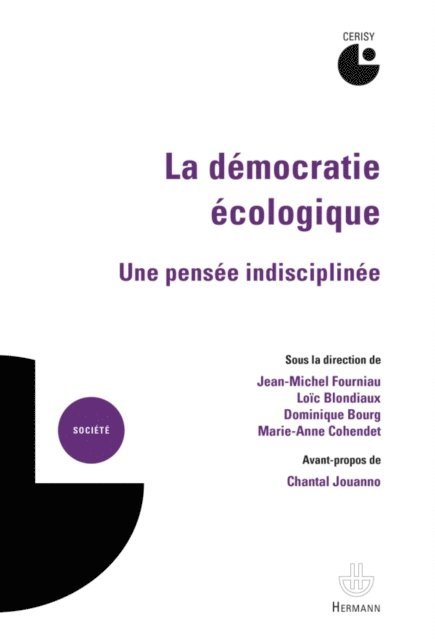
Face à l’urgence climatique et écologique, à ses conséquences sociales dont témoignaient les Gilets jaunes ou les citoyens de la Convention pour le climat, peut-on envisager l’avenir de la démocratie autre qu’écologique ? Alors que différentes pathologies de la démocratie, montée des populismes, tentations d’un retour à la décision autoritaire, rejettent la participation et la délibération, le colloque de Cerisy de mai 2019 s’est attaché à établir la chance que l’écologie offre à la liberté et la démocratie de se réinventer.À l’initiative de la Commission nationale du débat public, cette réflexion ne pouvait qu’être indisciplinée : la démocratie écologique se définit à partir de conflits, de ruptures, d’expérimentations et de débats. La constitution de publics démocratiques, les institutions délibératives, les expériences locales, les nouvelles formes de vie plus respectueuse de l’écologie et de la justice environnementale sont explorées dans cet ouvrage croisant éclairages philosophiques, approches juridiques, travaux de sciences sociales et études d’acteurs engagés.
276 kr
Läs direkt efter köp
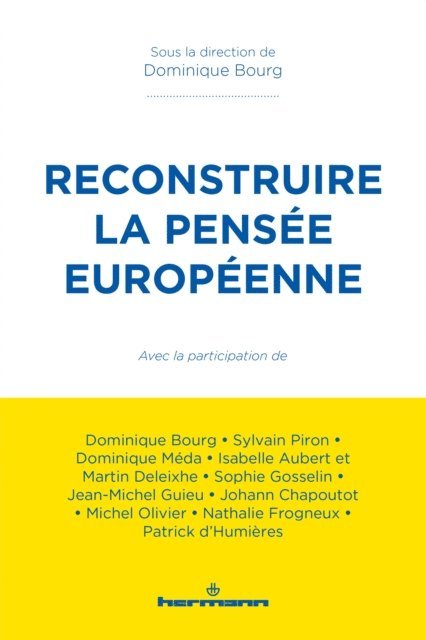
L’Europe a longtemps incarné l’idéal démocratique. Dans un contexte international où les régimes autoritaires ont le vent en poupe, elle est désormais gagnée par les tendances illibérales et populistes. Il en découle une vulnérabilité accrue des démocraties.Partant de ce constat, ce livre propose d''interroger à nouveaux frais le rôle de l''Europe et des penseurs européens dans la réinvention nécessaire de nos idéaux démocratiques. Quel nouveau modèle démocratique l''Europe peut-elle proposer ? Pour éviter les dérives totalitaires et faire prévaloir l''intérêt général, ce régime doit respecter certains principes essentiels : pluralité spontanée des opinions, limitation des mandats politiques, réduction des écarts de richesse, soumission de tous les rapports sociaux à la règle de droit, primauté absolue des libertés fondamentales (même au détriment de la volonté majoritaire), préservation de la nature.Autant d''enjeux pour le monde de demain, pour lesquels la voix européenne peut devenir exemplaire.