Don E Wilson - Böcker
Visar alla böcker från författaren Don E Wilson. Handla med fri frakt och snabb leverans.
13 produkter
13 produkter
2 176 kr
Skickas
297 kr
Tillfälligt slut
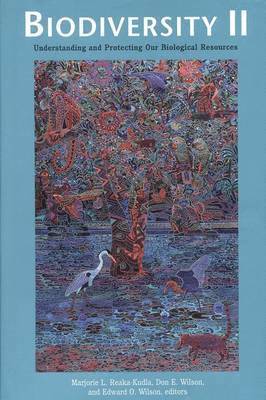
"The book before you...carries the urgent warning that we are rapidly altering and destroying the environments that have fostered the diversity of life forms for more than a billion years."With those words, Edward O. Wilson opened the landmark volume Biodiversity (National Academy Press, 1988). Despite this and other such alarms, species continue to vanish at a rapid rate, taking with them their genetic legacy and potential benefits. Many disappear before they can even be identified.Biodiversity II is a renewed call for urgency. This volume updates readers on how much we already know and how much remains to be identified scientifically. It explores new strategies for quantifying, understanding, and protecting biodiversity, including:New approaches to the integration of electronic data, including a proposal for a U.S. National Biodiversity Information Center.Application of techniques developed in the human genome project to species identification and classification.The Gap Analysis Program of the National Biological Survey, which uses layered satellite, climatic, and biological data to assess distribution and better manage biodiversity.The significant contribution of museum collections to identifying and categorizing species, which is essential for understanding ecological function and for targeting organisms and regions at risk.The book describes our growing understanding of how megacenters of diversity (e.g., rainforest insects, coral reefs) are formed, maintained, and lost; what can be learned from mounting bird extinctions; and how conservation efforts for neotropical primates have fared. It also explores ecosystem restoration, sustainable development, and agricultural impact.Biodiversity II reinforces the idea that the conservation of our biological resources is within reach as long as we pool resources; better coordinate the efforts of existing institutions—museums, universities, and government agencies—already dedicated to this goal; and enhance support for research, collections, and training. This volume will be important to environmentalists, biologists, ecologists, educators, students, and concerned individuals.Table of ContentsFront Matter1 IntroductionPart I The Meaning and Value of Biodiversity: 2 Biodiversity: What Is It?3 Biodiversity: Why Is It Important?Part II Patterns of the Biosphere: How Much Biodiversity Is There?: 4 Biodiversity at Its Utmost: Tropical Forest Beetles5 Measuring Global Biodiversity and Its Decline6 Butterfly Diversity and a Preliminary Comparison with Bird and Mammal Diversity7 The Global Biodiversity of Coral Reefs: A Comparison with Rain Forests8 Common Measures for Studies of Biodiversity: Molecular Phylogeny in the Eukaryotic Microbial WorldPart III Threats to Biodiversity: What Have We Lost and What Might We Lose?: 9 The Rich Diversity of Biodiversity Issues10 Human-Caused Extinction of Birds11 Global Warming and Plant Species Richness: A Case Study of the Paleocene/Eocene Boundary12 Plant Response to Multiple Environmental Stresses: Implications for Climatic Change and BiodiversityPart IV Understanding and Using Biodiversity: 13 Names: The Key to Biodiversity14 Systematics: A Keystone to Understanding Biodiversity15 Biodiversity and Systematics: Their Applications to Agriculture16 Snout Moths: Unraveling the Taxonomic Diversity of a Speciose Group in the Neotropics17 Phylogeny and Historical Reconstruction: Host-Parasite Systems as Keystones in Biogeography and Ecology18 Comparative Behavioral and Biochemical Studies of Bowerbirds and the Evolution of Bower-BuildingPart V Building Toward a Solution: New Directions and Applications: 19 Microbial Biodiversity and Biotechnology20 The Impact of Rapid Gene Discovery Technology on Studies of Evolution and Biodiversity21 Initial Assessment of Character Sets from Five Nuclear Gene Sequences in Animals22 Gap Analysis for Biodiversity Survey and Maintenance23 Conservation of Biodiversity in Neotropical Primates24 Using Marine Invertebrates to Establish Research and Conservation Priorities25 Ecological Restoration and the Conservation of Biodiversity26 Tropical Sustainable Development and Biodiversity27 Wildland Biodiversity Management in the TropicsPart VI Getting the Job Done: Institutional, Human, and Informational Infrastructure: 28 Taxonomic Preparedness: Are We Ready to Meet the Biodiversity Challenge?29 Museums, Research Collections and the Biodiversity Challenge30 Resources for Biodiversity in Living Collections and the Challenges of Assessing Microbial Biodiversity31 Integration of Data for Biodiversity Initiatives32 Information Management for Biodiversity: A Proposed U.S. National Biodiversity Information CenterPart VII Conclusions: 33 Santa Rosalia, the Turning of the Century, and a New Age of ExplorationPhoto CreditsIndex
2 397 kr
Tillfälligt slut
Wilson and Reeder's Mammal Species of the World is the classic reference book on the taxonomic classification and distribution of the more than 5400 species of mammals that exist today. The third edition includes detailed information on nomenclature and, for the first time, common names. Each concise entry covers type locality, distribution, synonyms, and major reference sources. The systematic arrangement of information indicates evolutionary relationships at both the ordinal and the family level. This indispensable reference work belongs in public and academic libraries throughout the world and on the shelf of every biologist who works with mammals.
365 kr
Skickas inom 11-20 vardagar
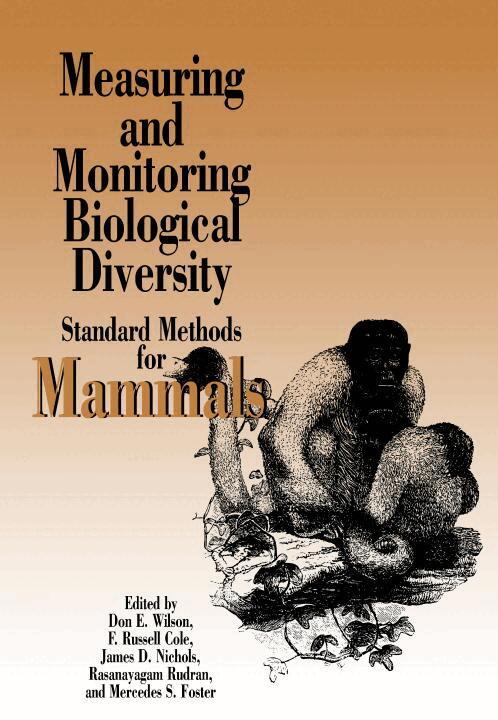
Measuring and Monitoring Biological Diversity: Standard Methods for Mammals provides a comprehensive manual for designing and implementing inventories of mammalian biodiversity anywhere in the world and for any group, from rodents to open-country grazers. The book emphasizes formal estimation approaches, which supply data that can be compared across habitats and over time. Beginning with brief natural histories of the twenty-six orders of living mammals, the book details the field techniques, observation, capture and sign interpretation, appropriate to different species. The contributors provide guidelines for study design, discuss survey planning, describe statistical techniques and outline methods of translating field data into electronic formats. Extensive appendixes address such issues as the ethical treatment of animals in research, human health concerns, preserving voucher specimens and assessing age, sex and reproductive condition in mammals. Useful in both developed and developing countries, this volume and the Biological Diversity Handbook Series as a whole establish essential standards for a key aspect of conservation biology and resource management.
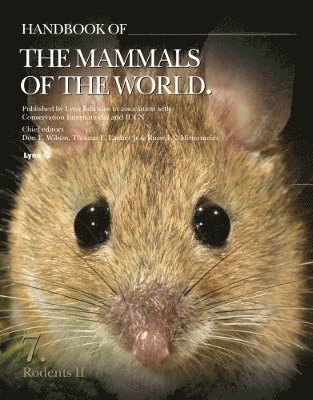
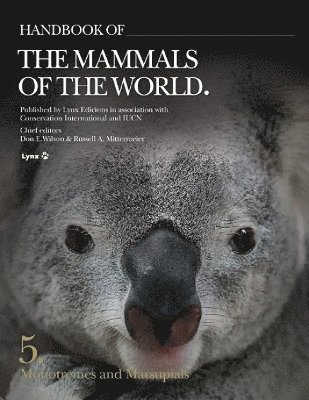
Del 7 - Handbook of the Mammals of the World
Handbook of the Mammals of the World. Rodents II
Inbunden, Engelska, 2017
1 970 kr
Skickas
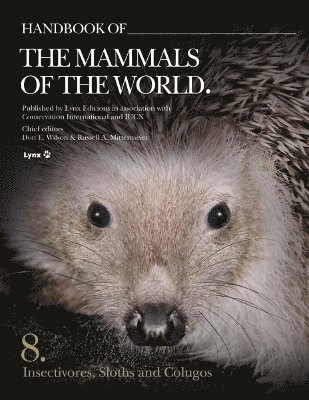
Del 8 - Handbook of the Mammals of the World
Handbook of the Mammals of the World - Volume 8
Insectivores, Sloths and Colugos
Inbunden, Engelska, 2018
1 970 kr
Skickas
2 040 kr
Skickas
332 kr
Skickas
1 970 kr
Skickas
2 040 kr
Skickas
1 970 kr
Skickas
1 970 kr
Skickas
1 970 kr
Skickas