Donald M. Nonini - Böcker
Visar alla böcker från författaren Donald M. Nonini. Handla med fri frakt och snabb leverans.
10 produkter
10 produkter
549 kr
Skickas inom 10-15 vardagar
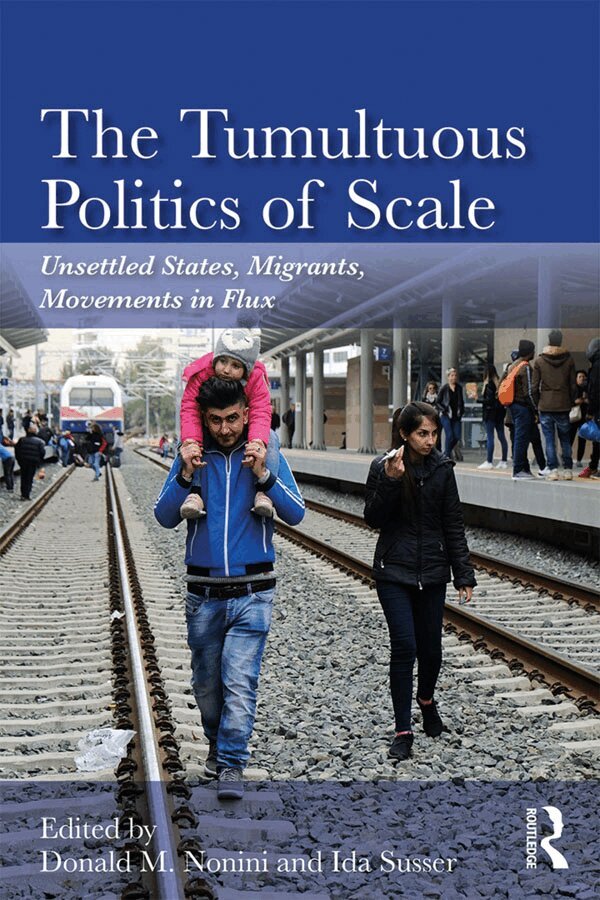
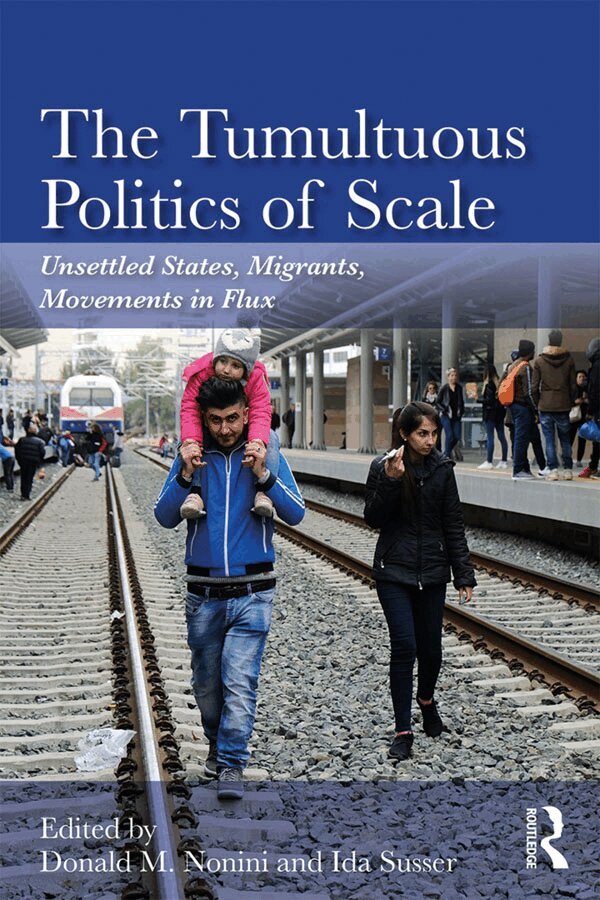
Contemporary politics, this book contends, depend upon the turbulentstruggles and strategies around scale. Confl icts over scale can be seenas opaque class struggles. Political projects, whether from the ground upor representing corporate or state interests, continually contest the scale atwhich authority is vested. This volume looks at the way global corporationsredefi ne the scale of power and how working- class and other movementsbuild alliances and cross scales to develop political blocs. What injusticesare perpetrated or, more hopefully, redressed in this process? The book,consisting of contributions from anthropologists, geographers, and culturalstudies scholars, explores theoretical issues around contested temporal andspatial scales, and around variations in scale from the body to the global.Part I focuses on bodies in motion, entangled in battles over new boundariesand political coalitions, and the ways in which migrants and refugeesare disrupted by intersecting time scales. Part II on the nation- state addressesthe shifting responsibilities assigned by law at diff erent historical momentsand the impact of global energy trade on national austerity policies. PartIII, on rescaling sovereignty, discusses the misleading media discourse on“Brexit” and reconstructs the class bases of the move to the Right in EasternEurope that threaten the EU. Part IV on the histories of changing scales ofmovements revisits historical debates on uneven and combined development,and sets out the transnational labor movements of the eighteenthandnineteenth- century Atlantic, which prefi gure contemporary struggles oflabor in a world which is still one of uneven and combined capitalist development.Finally, Part V considers ways in which some social movements areconstrained by scale while others reshape parties and traverse nations in theireff orts to build class alliances and political blocs.
2 356 kr
Skickas inom 10-15 vardagar
Contemporary politics, this book contends, depend upon the turbulentstruggles and strategies around scale. Confl icts over scale can be seenas opaque class struggles. Political projects, whether from the ground upor representing corporate or state interests, continually contest the scale atwhich authority is vested. This volume looks at the way global corporationsredefi ne the scale of power and how working- class and other movementsbuild alliances and cross scales to develop political blocs. What injusticesare perpetrated or, more hopefully, redressed in this process? The book,consisting of contributions from anthropologists, geographers, and culturalstudies scholars, explores theoretical issues around contested temporal andspatial scales, and around variations in scale from the body to the global.Part I focuses on bodies in motion, entangled in battles over new boundariesand political coalitions, and the ways in which migrants and refugeesare disrupted by intersecting time scales. Part II on the nation- state addressesthe shifting responsibilities assigned by law at diff erent historical momentsand the impact of global energy trade on national austerity policies. PartIII, on rescaling sovereignty, discusses the misleading media discourse on“Brexit” and reconstructs the class bases of the move to the Right in EasternEurope that threaten the EU. Part IV on the histories of changing scales ofmovements revisits historical debates on uneven and combined development,and sets out the transnational labor movements of the eighteenthandnineteenth- century Atlantic, which prefi gure contemporary struggles oflabor in a world which is still one of uneven and combined capitalist development.Finally, Part V considers ways in which some social movements areconstrained by scale while others reshape parties and traverse nations in theireff orts to build class alliances and political blocs.
954 kr
Skickas inom 10-15 vardagar
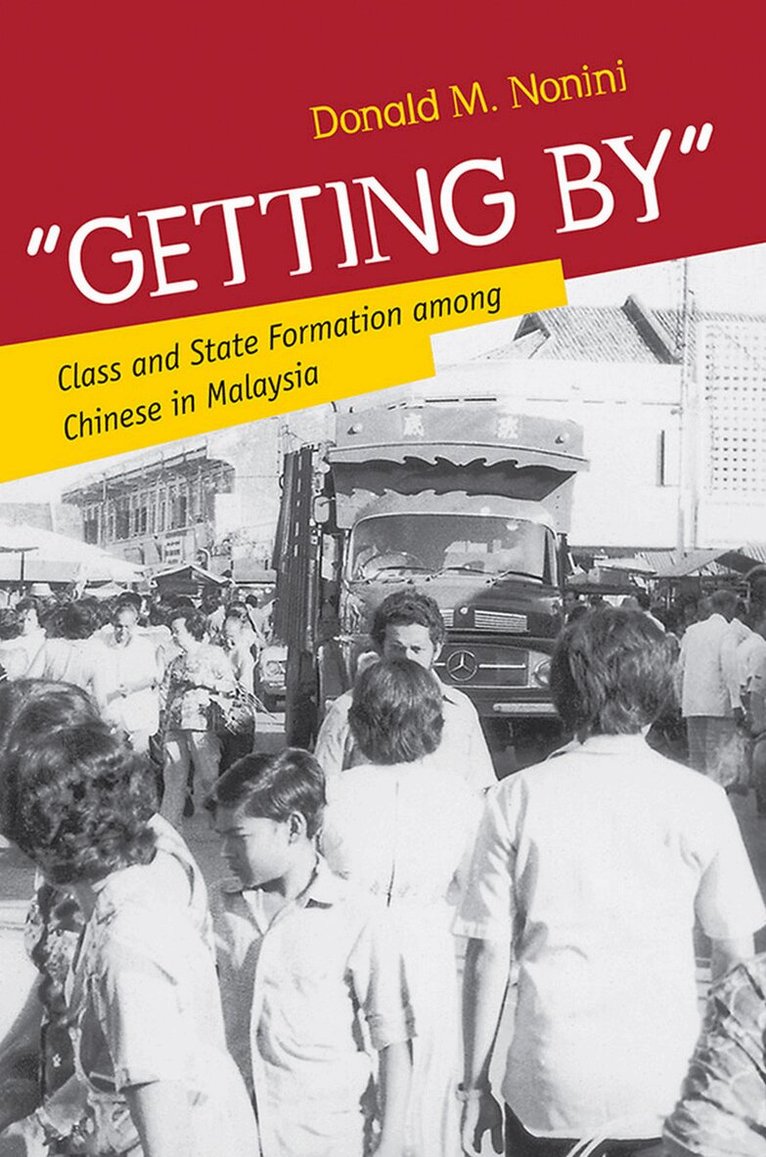
How do class, ethnicity, gender, and politics interact? In what ways do they constitute everyday life among ethnic minorities? In "Getting By," Donald M. Nonini draws on three decades of research in the region of Penang state in northern West Malaysia, mainly in the city of Bukit Mertajam, to provide an ethnographic and historical account of the cultural politics of class conflict and state formation among Malaysians of Chinese descent. Countering triumphalist accounts of the capitalist Chinese diaspora in Southeast Asia, Nonini shows that the Chinese of Penang (as elsewhere) are riven by deep class divisions and that class issues and identities are omnipresent in everyday life. Nor are the common features of "Chinese culture" in Malaysia manifestations of some unchanging cultural essence. Rather, his long immersion in the city shows, they are the results of an interaction between Chinese-Malaysian practices in daily life and the processes of state formation—in particular, the ways in which Kuala Lumpur has defined different categories of citizens. Nonini's ethnography is based on semistructured interviews; participant observation of events, informal gatherings, and meetings; a commercial census; intensive reading of Chinese-language and English-language newspapers; the study of local Chinese-language sources; contemporary government archives; and numerous exchanges with residents.
434 kr
Skickas inom 10-15 vardagar
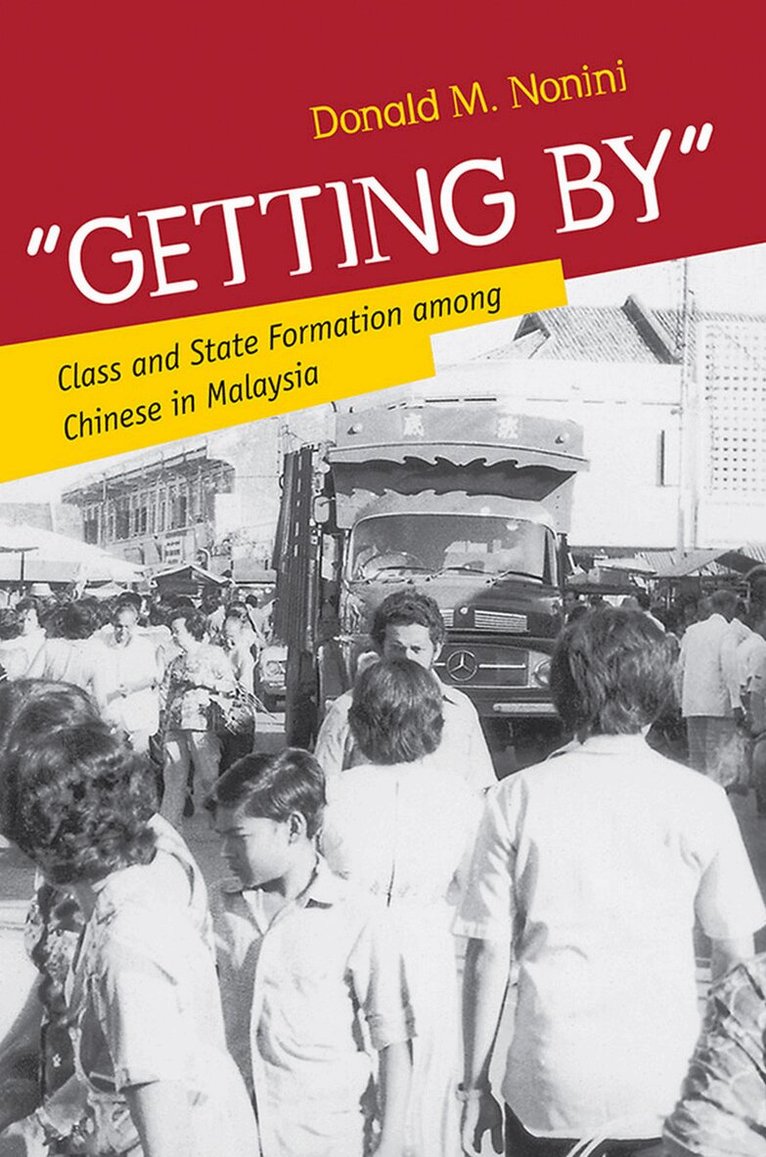
How do class, ethnicity, gender, and politics interact? In what ways do they constitute everyday life among ethnic minorities? In "Getting By," Donald M. Nonini draws on three decades of research in the region of Penang state in northern West Malaysia, mainly in the city of Bukit Mertajam, to provide an ethnographic and historical account of the cultural politics of class conflict and state formation among Malaysians of Chinese descent. Countering triumphalist accounts of the capitalist Chinese diaspora in Southeast Asia, Nonini shows that the Chinese of Penang (as elsewhere) are riven by deep class divisions and that class issues and identities are omnipresent in everyday life. Nor are the common features of "Chinese culture" in Malaysia manifestations of some unchanging cultural essence. Rather, his long immersion in the city shows, they are the results of an interaction between Chinese-Malaysian practices in daily life and the processes of state formation—in particular, the ways in which Kuala Lumpur has defined different categories of citizens. Nonini's ethnography is based on semistructured interviews; participant observation of events, informal gatherings, and meetings; a commercial census; intensive reading of Chinese-language and English-language newspapers; the study of local Chinese-language sources; contemporary government archives; and numerous exchanges with residents.
914 kr
Skickas inom 10-15 vardagar
2007 Society for the Anthropology of North America (SANA) Book AwardComplete List of Authors:Dorothy Holland, Donald M. Nonini, Catherine Lutz, Lesley Bartlett, Marla Frederick-McGlathery, Thaddeus C. Guldbrandsen, and Enrique G. Murillo, Jr.What is the state of democracy at the turn of the twenty-first century? To answer this question, seven scholars lived for a year in five North Carolina communities. They observed public meetings of all sorts, had informal and formal interviews with people, and listened as people conversed with each other at bus stops and barbershops, soccer games and workplaces. Their collaborative ethnography allows us to understand how diverse members of a community not just the elite think about and experience "politics" in ways that include much more than merely voting.This book illustrates how the social and economic changes of the last three decades have made some new routes to active democratic participation possible while making others more difficult. Local Democracy Under Siege suggests how we can account for the current limitations of U.S. democracy and how remedies can be created that ensure more meaningful participation by a greater range of people. Complete List of Authors (pictured)From Left to Right, bottom row: Enrique Murillo, Jr., Thaddeus Guldbrandsen, Marla Frederick-McGlathery.Top row: Dorothy Holland, Catherine Lutz, Lesley Bartlett, and Don Nonini.
401 kr
Skickas inom 7-10 vardagar
2007 Society for the Anthropology of North America (SANA) Book AwardComplete List of Authors:Dorothy Holland, Donald M. Nonini, Catherine Lutz, Lesley Bartlett, Marla Frederick-McGlathery, Thaddeus C. Guldbrandsen, and Enrique G. Murillo, Jr.What is the state of democracy at the turn of the twenty-first century? To answer this question, seven scholars lived for a year in five North Carolina communities. They observed public meetings of all sorts, had informal and formal interviews with people, and listened as people conversed with each other at bus stops and barbershops, soccer games and workplaces. Their collaborative ethnography allows us to understand how diverse members of a community not just the elite think about and experience "politics" in ways that include much more than merely voting.This book illustrates how the social and economic changes of the last three decades have made some new routes to active democratic participation possible while making others more difficult. Local Democracy Under Siege suggests how we can account for the current limitations of U.S. democracy and how remedies can be created that ensure more meaningful participation by a greater range of people. Complete List of Authors (pictured)From Left to Right, bottom row: Enrique Murillo, Jr., Thaddeus Guldbrandsen, Marla Frederick-McGlathery.Top row: Dorothy Holland, Catherine Lutz, Lesley Bartlett, and Don Nonini.
Del 12 - Wiley Blackwell Companions to Anthropology
Companion to Urban Anthropology
Inbunden, Engelska, 2014
1 869 kr
Skickas inom 7-10 vardagar
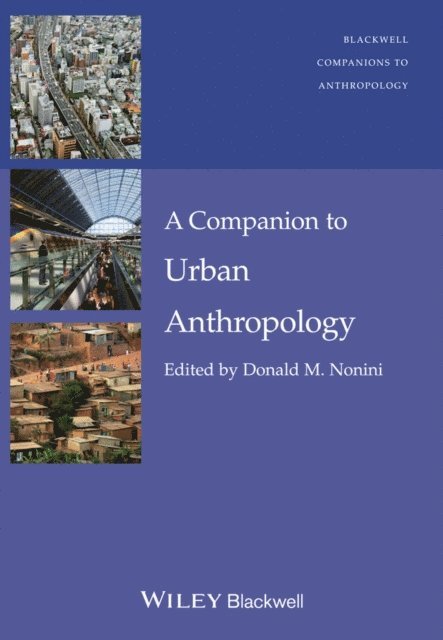
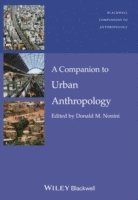
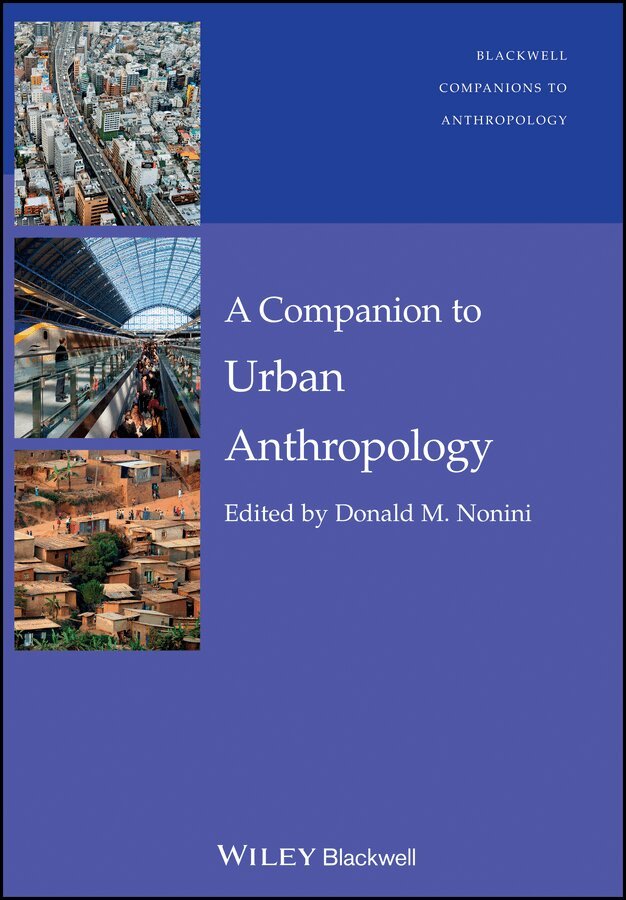
A Companion to Urban Anthropology BLACKWELL COMPANIONS TO ANTHROPOLOGY A Companion to Urban Anthropology “The city is becoming the basic currency of human – and non-human – life: a pile of interconnections which makes a series of difficult wholes. This volume navigates the anthropology of this medium with the greatest aplomb.” Nigel Thrift, University of Warwick A Companion to Urban Anthropology presents original essays on central concepts in urban anthropology and ethnography. Featuring contributions from more than 25 leading international scholars in urban studies, the readings cover a wide variety of topics. Each essay explores a key phenomenon and is grounded in the author’s original research along with findings of other urbanists. Classic issues such as built structures and urban planning, community, markets, and race lead to emergent areas of study including borders, sexualities, nature, extralegality, and resilience and sustainability. A Companion to Urban Anthropology offers revealing insights into the complex forces that continue to shape the urban experience.
1 061 kr
Skickas inom 10-15 vardagar
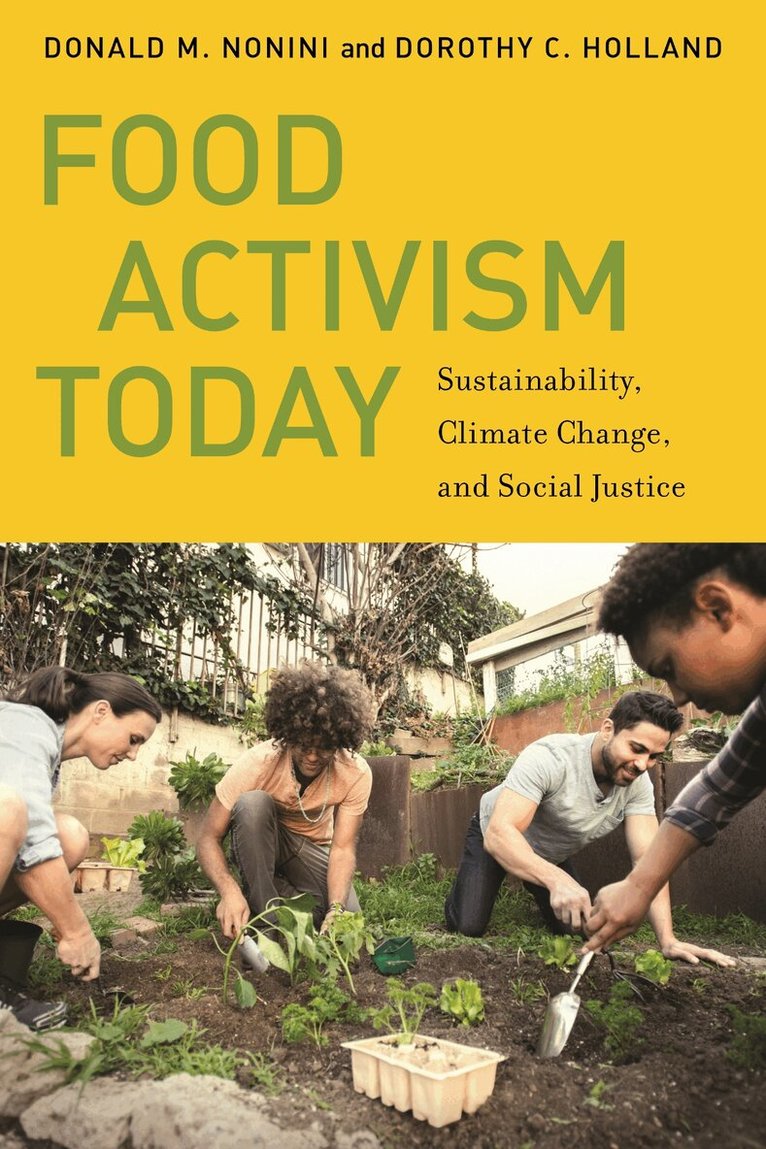
Illuminates how food activism has been taking shape and where it is headedAs climate change, childhood obesity, and food insecurity accelerate at an alarming pace, activists around the country are working to address the pressing need for healthy and sustainable solutions to feed the population. Food Activism Today investigates the new approaches food activists are taking as they formulate alternatives to the current unsustainable agro-industrial food system.Drawing on ethnographic research conducted over an eleven-month period in both urban and rural North Carolina, the volume addresses questions about the moral visions of food activists, how class and racial hierarchies infuse some food activism movements, and how food activism relates to climate change and imminent ecological collapse. Exploring food activism around both local and sustainable food production and food security for lower-income people, the volume finds surprisingly little overlap, with the two movements seemingly remaining distinct approaches (at least for now) to issues around the food system, climate change, and access to healthy food choices.As the US moves into an era in which climate change and neoliberal tensions are conjoined in a looming political crisis, Food Activism Today looks at where food activism is headed, the ethics and issues surrounding alternative approaches to food production, and how food production is related to broader issues of climate change.
367 kr
Skickas inom 10-15 vardagar
Illuminates how food activism has been taking shape and where it is headedAs climate change, childhood obesity, and food insecurity accelerate at an alarming pace, activists around the country are working to address the pressing need for healthy and sustainable solutions to feed the population. Food Activism Today investigates the new approaches food activists are taking as they formulate alternatives to the current unsustainable agro-industrial food system.Drawing on ethnographic research conducted over an eleven-month period in both urban and rural North Carolina, the volume addresses questions about the moral visions of food activists, how class and racial hierarchies infuse some food activism movements, and how food activism relates to climate change and imminent ecological collapse. Exploring food activism around both local and sustainable food production and food security for lower-income people, the volume finds surprisingly little overlap, with the two movements seemingly remaining distinct approaches (at least for now) to issues around the food system, climate change, and access to healthy food choices.As the US moves into an era in which climate change and neoliberal tensions are conjoined in a looming political crisis, Food Activism Today looks at where food activism is headed, the ethics and issues surrounding alternative approaches to food production, and how food production is related to broader issues of climate change.
288 kr
Skickas inom 3-6 vardagar
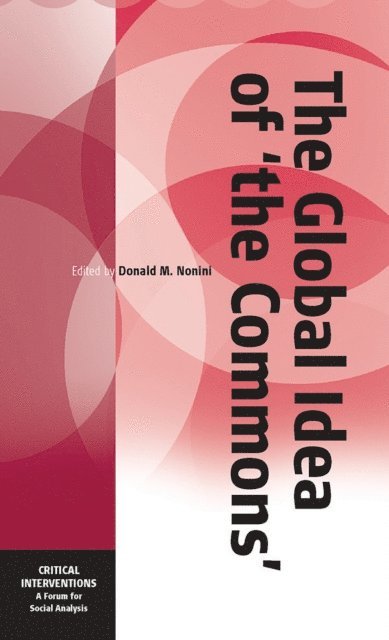
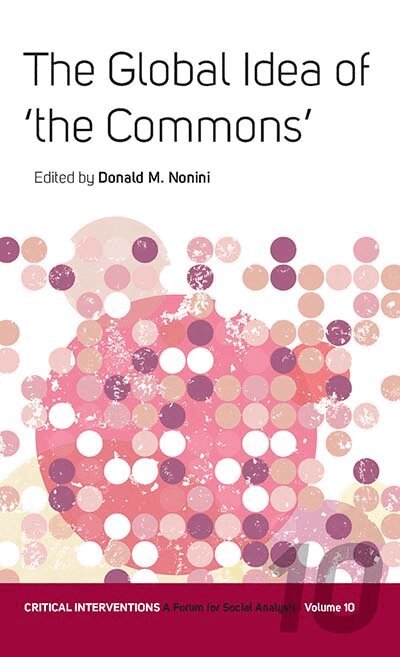
During the last three decades, corporations allied with scientists and universities, national and regional governments, and international financial institutions have, through a variety of mechanisms associated with neo-liberal globalization, acted to dispossess large proportions of the world’s population of their commons’ resources and enclose them for profit making. In response, throughout the global South and in the cities of the global North, large numbers of people have formed movements to defend the commons in all their variety. The idea of the commons has thus emerged as a global idea, and commons have emerged as sites of conflict around the world. The essays in this forum assess strategically the situations of selected commons in a variety of diagnostic sites where they exist, the ways in which they are being transformed by the incursions of capital and state, and the ways in which they are becoming the locus of struggle for those who depend on them to survive.