Donald S. Sutton - Böcker
Visar alla böcker från författaren Donald S. Sutton. Handla med fri frakt och snabb leverans.
5 produkter
5 produkter
Del 28 - Studies on China
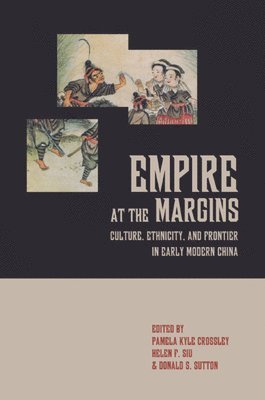
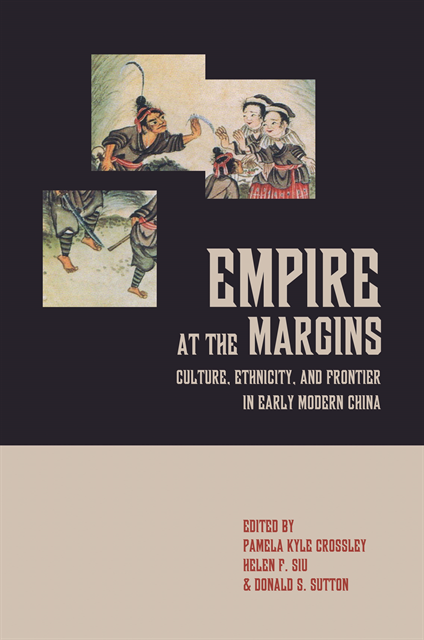
Empire at the Margins
Culture, Ethnicity, and Frontier in Early Modern China
Inbunden, Engelska, 2006
695 kr
Skickas inom 7-10 vardagar
Focusing on the Ming (1368-1644) and (especially) the Qing (1364-1912) eras, this book analyzes crucial moments in the formation of cultural, regional, and religious identities. The contributors examine the role of the state in a variety of environments on China's "peripheries," paying attention to shifts in law, trade, social stratification, and cultural dialogue. They find that local communities were critical participants in the shaping of their own identities and consciousness as well as the character and behavior of the state. At certain times the state was institutionally definitive, but it could also be symbolic and contingent. They demonstrate how the imperial discourse is many-faceted, rather than a monolithic agent of cultural assimilation.
Del 218 - Harvard East Asian Monographs
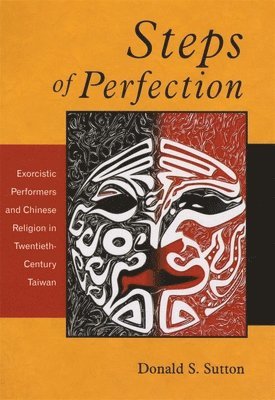
Steps of Perfection
Exorcistic Performers and Chinese Religion in Twentieth-Century Taiwan
Inbunden, Engelska, 2003
361 kr
Skickas inom 7-10 vardagar
Despite Taiwan's rise as an economic force in the world, modernity has not led to a Weberian process of disenchantment or curbed religiosity. To the contrary, other factors—social, economic, political—have stimulated religion. How and why this has happened are central issues in this book. One part of Taiwan's flourishing religious culture is the elaborate and colorful procession of local gods accompanied by troupes of musicians and dancers. Among them are performers with outlandishly painted faces portraying underworld generals who serve the gods and punish the living. Through their performances, these troupes claim to exorcise harmful forces from the community. In conducting fieldwork among these troupes, Donald Sutton confronted their claims to a long history—when all evidence indicated that the troupes had been insignificant until the 1970s—and their assertions of devotion to tradition given the diversity of performances. Concentrating on the stylistic variations in performances, the author describes the troupes as organizations shaped by the "market forces" of supply and demand in the culture of religious festivals. By focusing on performances as the nexus of market and art, he shows how bodily performance is the site where religious statements are made and the power of the gods made visible.
1 572 kr
Skickas inom 10-15 vardagar
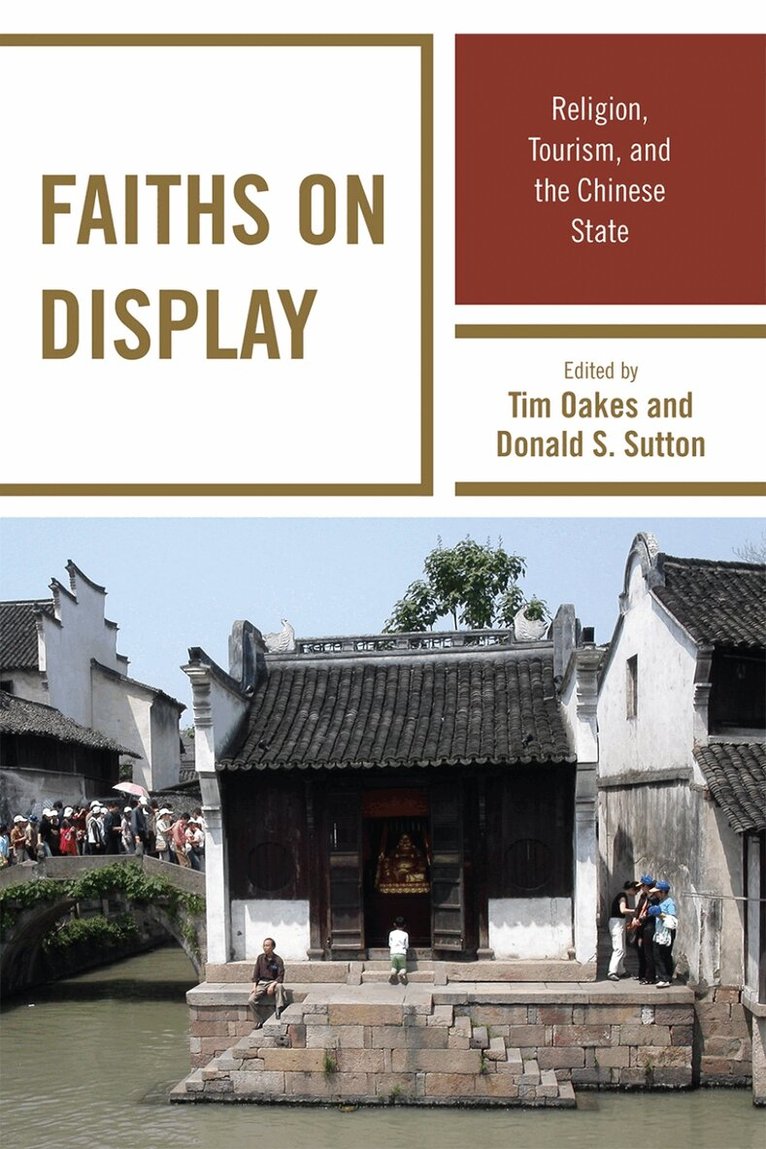
By providing a unique perspective on China's changing relationship with religion, this groundbreaking book explores the role the Chinese state continues to play in religious revival today. Over the past several decades, China has experienced a rapid expansion of religious spaces and activities. More recently, a growing middle-class urban society has fueled an upsurge in Chinese domestic tourism. Faiths on Display challenges the common separation of religious and tourist activities, showing how these practices overlap and blend together. A group of leading scholars explores the unlikely interaction between these exuberant phenomena, finding a surprisingly clear lens through which to view a rapidly transforming society. Even the most casual observer is struck by the Chinese rediscovery of traditional culture, particularly at revived religious festivals and pilgrimages in suburbs, rural areas, and at China's margins where religious practices of ethnic minorities attract particular tourist attention. A set of fascinating case studies shows how state organizations are helping revive "sacred spaces" as exploitable sites for tourism development and revenue generation. While this may appear to be a straightforward collision of Chinese tradition with modernization, the contributors argue that the results of combining religion and tourism offer important insights not only into the practice of religion and the rise of "leisure culture" in contemporary China, but also into the changing and contested nature of state governance. The policies of an authoritarian, modernizing state obviously influence both religion and tourism, but religious practices, the book clearly illustrates, tend to slip out of state control, and tourist tastes push development into directions not anticipated or welcomed by the state.Contributions by: Kenneth Dean, Brian R. Dott, Xiaofei Kang, Charlene Makley, Susan K. McCarthy, Charles F. McKhann, Tim Oakes, Yu Luo Rioux, Donald S. Sutton, Marina Svensson, and Rubie Watson.
Del 10 - Religion in Chinese Societies
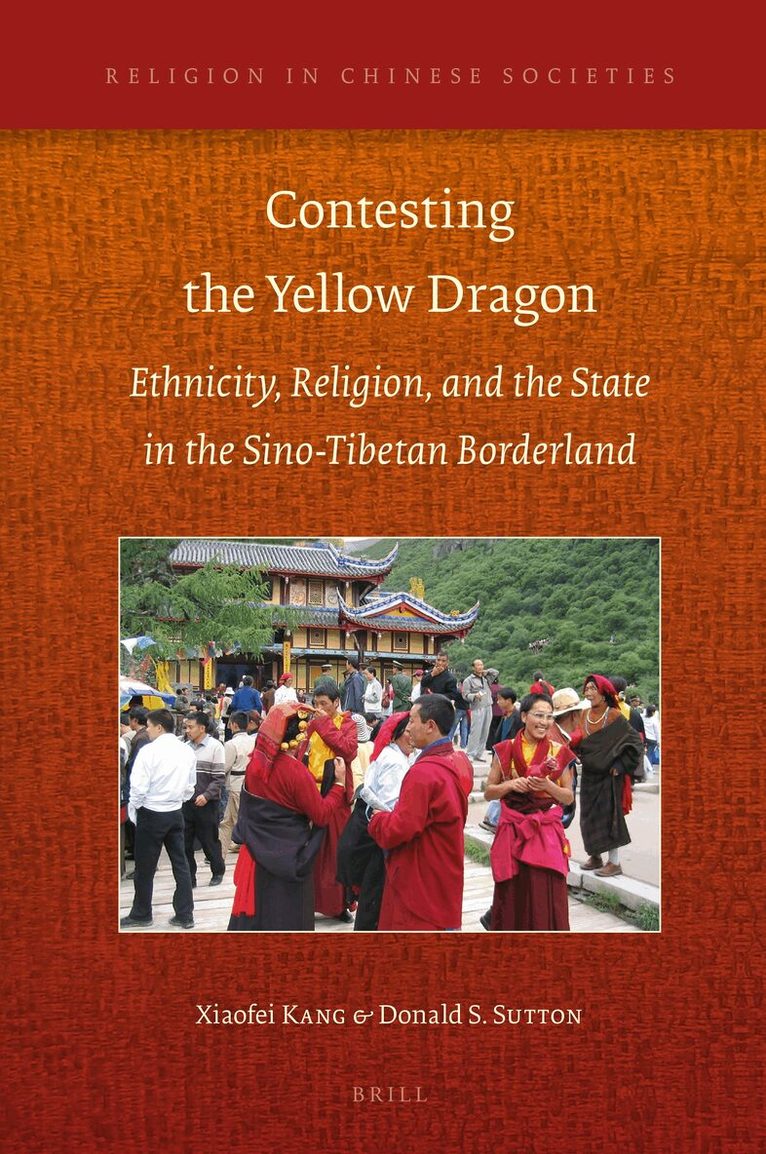
Contesting the Yellow Dragon
Ethnicity, Religion, and the State in the Sino-Tibetan Borderland, 1379-2009
Inbunden, Engelska, 2016
3 157 kr
Skickas inom 5-8 vardagar
Winner of the 2016 Choice Outstanding Academic Title AwardThis book is the first long-term study of the Sino-Tibetan borderland. It traces relationships and mutual influence among Tibetans, Chinese, Hui Muslims, Qiang and others over some 600 years, focusing on the old Chinese garrison city of Songpan and the nearby religious center of Huanglong, or Yellow Dragon. Combining historical research and fieldwork, Xiaofei Kang and Donald Sutton examine the cultural politics of northern Sichuan from early Ming through Communist revolution to the age of global tourism, bringing to light creative local adaptations in culture, ethnicity and religion as successive regimes in Beijing struggle to control and transform this distant frontier.
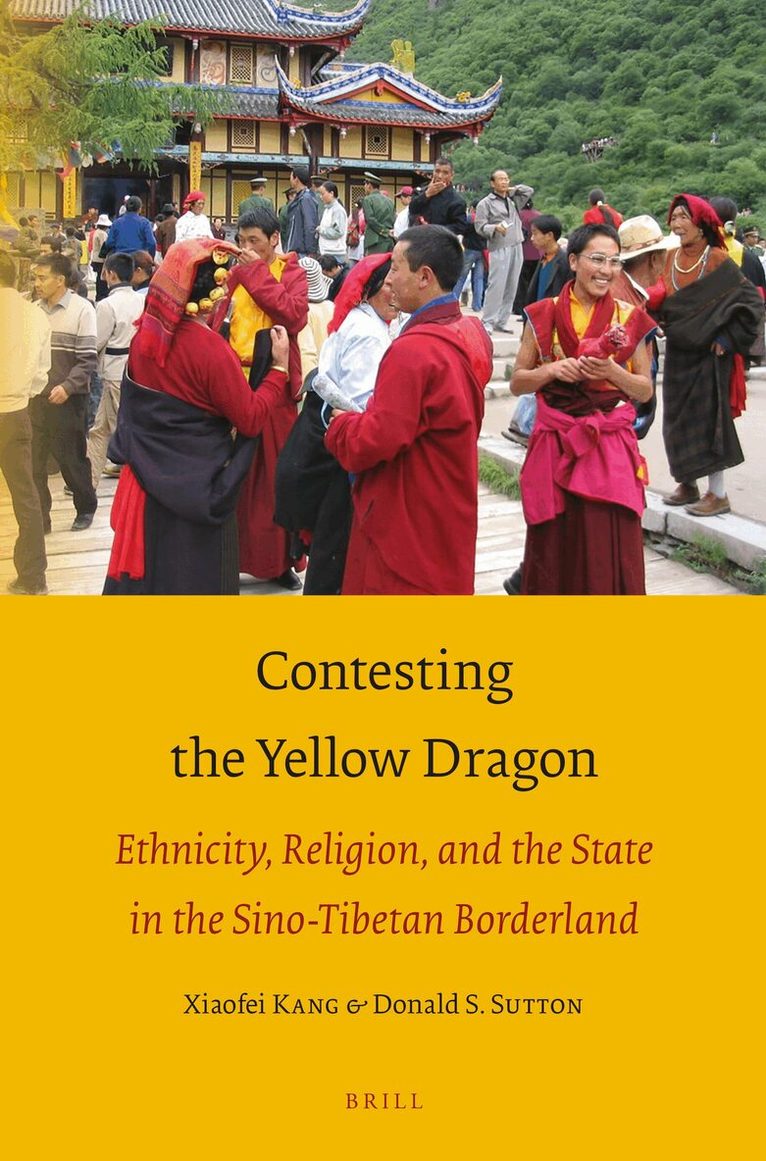
Contesting the Yellow Dragon
Ethnicity, Religion, and the State in the Sino-Tibetan Borderland
Häftad, Engelska, 2018
768 kr
Skickas inom 5-8 vardagar
This book is the first long-term study of the cultural politics of the Sino-Tibetan frontier. Combining historical research and fieldwork, Xiaofei Kang and Donald Sutton examine northern Sichuan from early Ming through Communist revolution to the age of global tourism, tracing relationships and mutual influence among Tibetans, Chinese, Hui Muslims, Qiang and others over some 600 years. Their focus is on the old Chinese garrison city of Songpan and the nearby pilgrimage center of Huanglong, or Yellow Dragon. Declining to isolate religious from other social and political expressions, they demonstrate that in its many forms—popular and official, scriptural and unwritten, monastic, priestly and shamanic, personal and informal—religion has long been crucial in imagining, constructing and manipulating local social relations on this frontier. Bon and Buddhist sects sustained communities among Tibetan or proto-Tibetan populations; and Daoism and Chinese Buddhism (and for some, Islam) helped to establish frontier identities in a diverse population of migrants and soldiers. The Chinese state has contended with, exploited and at times tried to extinguish the soft power of religion in its long effort to dominate this region and (more recently) push it towards modernity. A Choice Outstanding Academic Title Winner for 2016 in the anthropology category