Donatella Campus – författare
Visar alla böcker från författaren Donatella Campus. Handla med fri frakt och snabb leverans.
8 produkter
8 produkter
Häftad, Engelska, 2009
679 kr
Skickas inom 5-8 vardagar
Inbunden, Engelska, 2010
532 kr
Skickas inom 10-15 vardagar
At its core, the language of antipolitics consists of the criticism and the attack to the establishment and the ruling elites because they are incompetent, manipulative self-interested. This book analyses the case of some leaders, quite different in terms of character, personal history, cultural references, ideology and national context, who have in common the use of language of antipolitics in power.
Häftad, Engelska, 2010
256 kr
Skickas inom 10-15 vardagar
Häftad, Engelska, 2011
656 kr
Skickas inom 5-8 vardagar
Inbunden, Engelska, 2021
1 524 kr
Skickas inom 10-15 vardagar
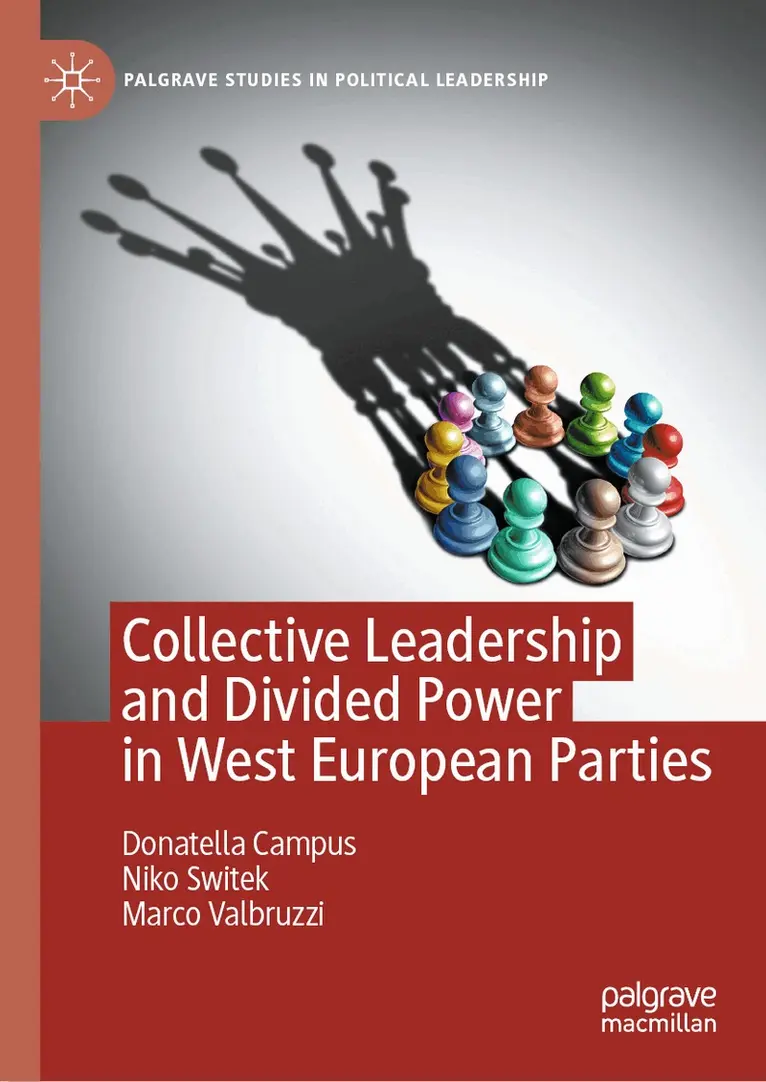
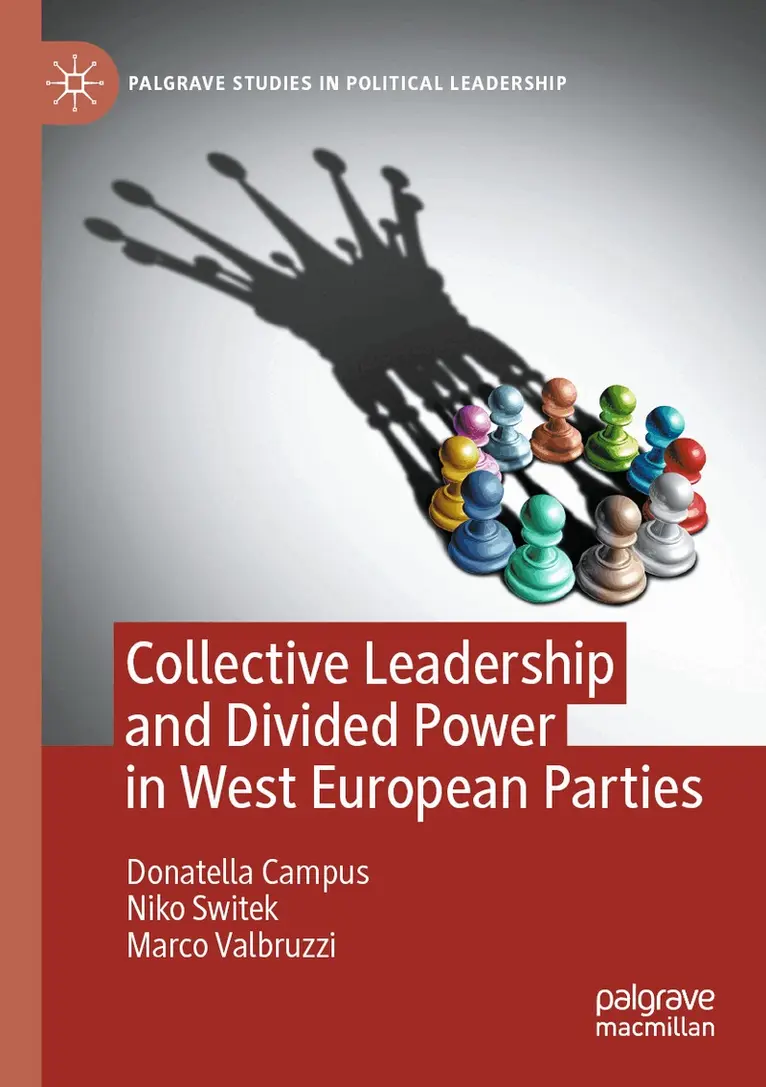
Political science research, especially in recent times, has recognized the centrality of party and executive leaders and their individual characteristics. The attention has been mostly directed towards individual leadership. However, one-chief leadership is not the only existing model of party governance, and some recent developments seem to have put forms of collective leadership into the spotlight. Two parties that have recently achieved remarkable electoral results, the Italian Five Star Movement and the German Alliance 90/The Greens, can be considered examples of alternative models of leadership. This book calls for a deep and systematic analysis of cases of parties in which powers and responsibilities appear to be shared among different individuals rather than being concentrated in the hands of just one leader. Drawing on the literature of organization and management theory, the book fills a gap in the literature of political science by developing a theoretical framework that may provide researchers with the tools for proceeding with the analysis of cases of party collective leadership. To illustrate their approach, the authors have selected three cases – the German Greens, Alternative for Germany, and the Five Star Movement in Italy – that show significant variation across types of collective leadership. The outcome of the empirical analysis contributes to a better knowledge of the nature and functioning of party leadership as well as raises questions that could be further addressed in future research.
E-bok
Engelska, 20211 825 kr
Läs direkt efter köp
Political science research, especially in recent times, has recognized the centrality of party and executive leaders and their individual characteristics. The attention has been mostly directed towards individual leadership. However, one-chief leadership is not the only existing model of party governance, and some recent developments seem to have put forms of collective leadership into the spotlight. Two parties that have recently achieved remarkable electoral results, the Italian Five Star Movement and the German Alliance 90/The Greens, can be considered examples of alternative models of leadership. This book calls for a deep and systematic analysis of cases of parties in which powers and responsibilities appear to be shared among different individuals rather than being concentrated in the hands of just one leader. Drawing on the literature of organization and management theory, the book fills a gap in the literature of political science by developing a theoretical framework that may provide researchers with the tools for proceeding with the analysis of cases of party collective leadership. To illustrate their approach, the authors have selected three cases – the German Greens, Alternative for Germany, and the Five Star Movement in Italy – that show significant variation across types of collective leadership. The outcome of the empirical analysis contributes to a better knowledge of the nature and functioning of party leadership as well as raises questions that could be further addressed in future research.
Häftad, Engelska, 2022
1 524 kr
Skickas inom 10-15 vardagar
Political science research, especially in recent times, has recognized the centrality of party and executive leaders and their individual characteristics. The attention has been mostly directed towards individual leadership. However, one-chief leadership is not the only existing model of party governance, and some recent developments seem to have put forms of collective leadership into the spotlight. Two parties that have recently achieved remarkable electoral results, the Italian Five Star Movement and the German Alliance 90/The Greens, can be considered examples of alternative models of leadership. This book calls for a deep and systematic analysis of cases of parties in which powers and responsibilities appear to be shared among different individuals rather than being concentrated in the hands of just one leader. Drawing on the literature of organization and management theory, the book fills a gap in the literature of political science by developing a theoretical framework that may provide researchers with the tools for proceeding with the analysis of cases of party collective leadership. To illustrate their approach, the authors have selected three cases – the German Greens, Alternative for Germany, and the Five Star Movement in Italy – that show significant variation across types of collective leadership. The outcome of the empirical analysis contributes to a better knowledge of the nature and functioning of party leadership as well as raises questions that could be further addressed in future research.
Inbunden, Engelska, 2026
603 kr
Kommande
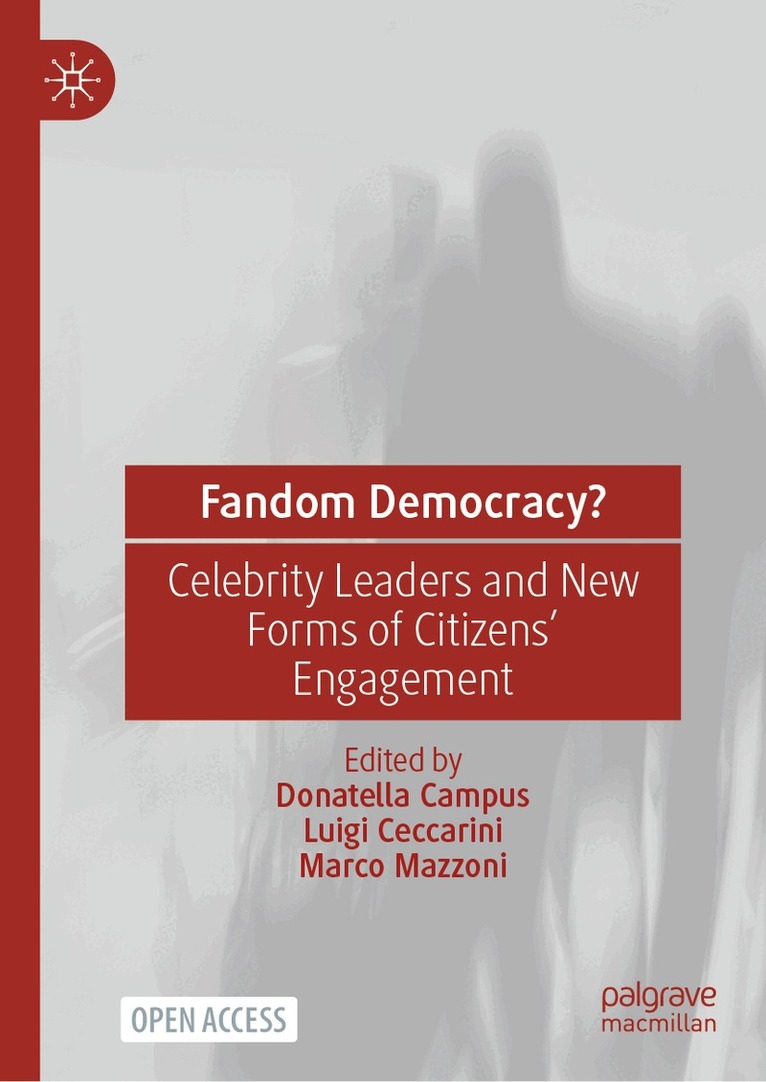
This Open Access book starts with a thought-provoking question: are citizens in modern democracies becoming more like fans? With the growing fluidity of political identities and the rise of non-ideological political leaders presented as celebrities, it is worth exploring whether political allegiance and participation are increasingly shaped by forms of fandom—and what this shift means for contemporary democracies. Ultimately, the book provides an innovative perspective that deepens our understanding of the intersection between political communication and entertainment. While the phenomenon of celebrity politics has been widely examined, the perspective of followers and fans remains less thoroughly explored. In the digital media era, there is still much to uncover about how citizens engage with leaders’ celebrity strategies by adopting the role of fans. Moreover, toxic practices and forms of anti-fandom also shape the intersection of fan culture and politics. The research featured in this book adopts a mixed-methods approach, comprising a survey conducted across seven European countries (Bulgaria, France, Germany, Italy, Poland, Spain, and the UK) and the analysis of social media content from three countries (France, Italy, and Spain) to explore the nature of fan-like practices surrounding political leaders in online spaces. The book aims to consider whether citizens primarily function as an audience, observing political leaders’ performances and consuming information about their public and private lives, or whether they also actively contribute as content creators, particularly on social media. By analysing the activities and practices of political celebrities’ followers, as well as the emotional connections they form with their political idols, the book examines whether citizens can be regarded as genuine fans, for whom the experience of fandom influences the shaping of their political identities.