Niko Switek – författare
Visar alla böcker från författaren Niko Switek. Handla med fri frakt och snabb leverans.
8 produkter
8 produkter
Inbunden, Engelska, 2021
1 510 kr
Skickas inom 10-15 vardagar
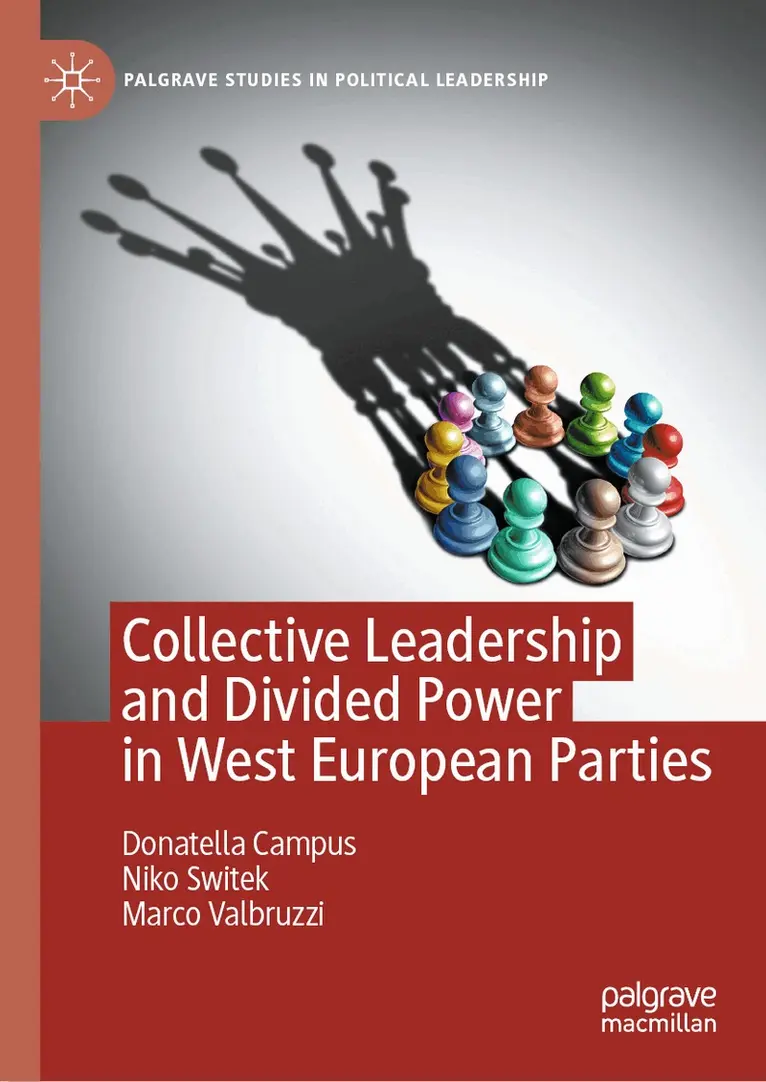
Political science research, especially in recent times, has recognized the centrality of party and executive leaders and their individual characteristics. The attention has been mostly directed towards individual leadership. However, one-chief leadership is not the only existing model of party governance, and some recent developments seem to have put forms of collective leadership into the spotlight. Two parties that have recently achieved remarkable electoral results, the Italian Five Star Movement and the German Alliance 90/The Greens, can be considered examples of alternative models of leadership. This book calls for a deep and systematic analysis of cases of parties in which powers and responsibilities appear to be shared among different individuals rather than being concentrated in the hands of just one leader. Drawing on the literature of organization and management theory, the book fills a gap in the literature of political science by developing a theoretical framework that may provide researchers with the tools for proceeding with the analysis of cases of party collective leadership. To illustrate their approach, the authors have selected three cases – the German Greens, Alternative for Germany, and the Five Star Movement in Italy – that show significant variation across types of collective leadership. The outcome of the empirical analysis contributes to a better knowledge of the nature and functioning of party leadership as well as raises questions that could be further addressed in future research.
E-bok
Engelska, 20211 891 kr
Läs direkt efter köp
Political science research, especially in recent times, has recognized the centrality of party and executive leaders and their individual characteristics. The attention has been mostly directed towards individual leadership. However, one-chief leadership is not the only existing model of party governance, and some recent developments seem to have put forms of collective leadership into the spotlight. Two parties that have recently achieved remarkable electoral results, the Italian Five Star Movement and the German Alliance 90/The Greens, can be considered examples of alternative models of leadership. This book calls for a deep and systematic analysis of cases of parties in which powers and responsibilities appear to be shared among different individuals rather than being concentrated in the hands of just one leader. Drawing on the literature of organization and management theory, the book fills a gap in the literature of political science by developing a theoretical framework that may provide researchers with the tools for proceeding with the analysis of cases of party collective leadership. To illustrate their approach, the authors have selected three cases – the German Greens, Alternative for Germany, and the Five Star Movement in Italy – that show significant variation across types of collective leadership. The outcome of the empirical analysis contributes to a better knowledge of the nature and functioning of party leadership as well as raises questions that could be further addressed in future research.
Häftad, Engelska, 2022
1 510 kr
Skickas inom 10-15 vardagar
Political science research, especially in recent times, has recognized the centrality of party and executive leaders and their individual characteristics. The attention has been mostly directed towards individual leadership. However, one-chief leadership is not the only existing model of party governance, and some recent developments seem to have put forms of collective leadership into the spotlight. Two parties that have recently achieved remarkable electoral results, the Italian Five Star Movement and the German Alliance 90/The Greens, can be considered examples of alternative models of leadership. This book calls for a deep and systematic analysis of cases of parties in which powers and responsibilities appear to be shared among different individuals rather than being concentrated in the hands of just one leader. Drawing on the literature of organization and management theory, the book fills a gap in the literature of political science by developing a theoretical framework that may provide researchers with the tools for proceeding with the analysis of cases of party collective leadership. To illustrate their approach, the authors have selected three cases – the German Greens, Alternative for Germany, and the Five Star Movement in Italy – that show significant variation across types of collective leadership. The outcome of the empirical analysis contributes to a better knowledge of the nature and functioning of party leadership as well as raises questions that could be further addressed in future research.
Häftad, Tyska, 2015
509 kr
Skickas inom 10-15 vardagar
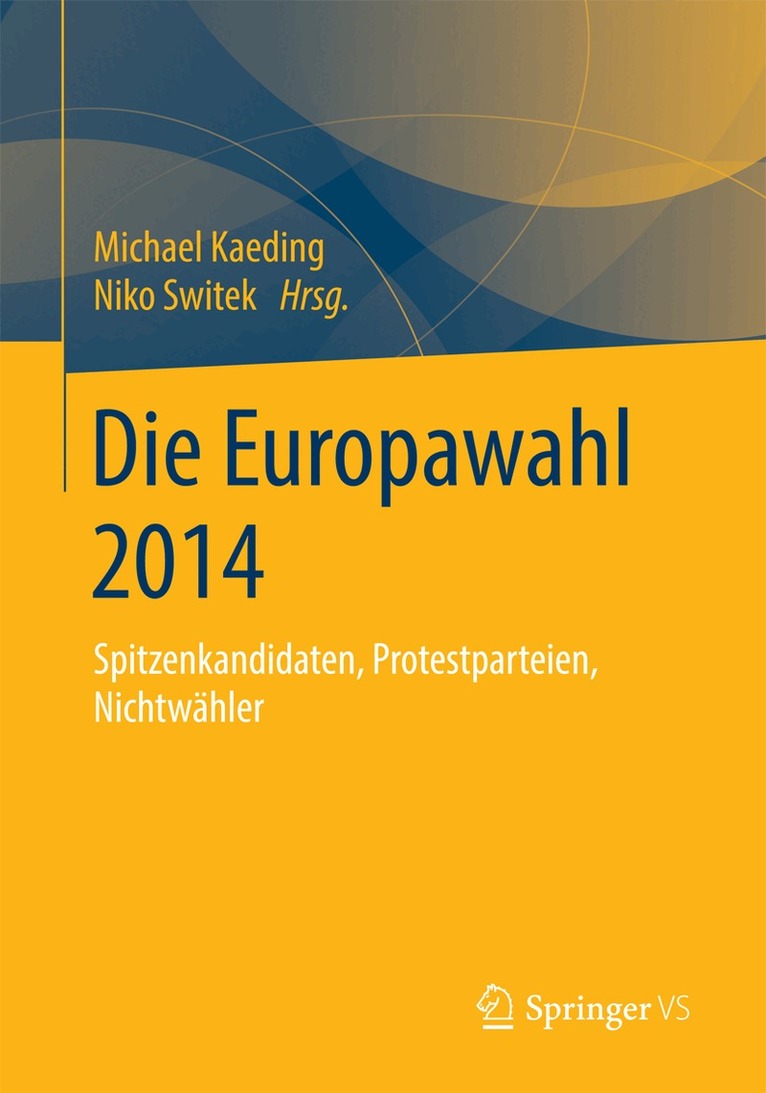
Welche Neuerungen brachte die Europawahl 2014? Wie prägten die Spitzenkandidaten Wahl und Wahlkampf? Was bedeuten die Gewinne der Protestparteien und die hohe Zahl an Nichtwählern? Die Beiträge in diesem Band diskutieren diese und weitere zentrale Aspekte der Europawahl 2014. Im Besonderen stehen einzelne Mitgliedsstaaten, die Auswirkungen von Finanz- und Schuldenkrise, die Rolle europäischer Parteien und die Konsequenzen der Wahl für das Regieren auf europäischer Ebene im Fokus. Zudem umfasst der Band seltene außereuropäische Perspektiven auf den Wahl(aus)gang und die Beiträge zweier Präsidenten des Europäischen Parlaments (Martin Schulz und Klaus Hänsch).
E-bok
PDF, Tyska, 2015255 kr
Läs direkt efter köp
Welche Neuerungen brachte die Europawahl 2014? Wie prägten die Spitzenkandidaten Wahl und Wahlkampf? Was bedeuten die Gewinne der Protestparteien und die hohe Zahl an Nichtwählern? Die Beiträge in diesem Band diskutieren diese und weitere zentrale Aspekte der Europawahl 2014. Im Besonderen stehen einzelne Mitgliedsstaaten, die Auswirkungen von Finanz- und Schuldenkrise, die Rolle europäischer Parteien und die Konsequenzen der Wahl für das Regieren auf europäischer Ebene im Fokus. Zudem umfasst der Band seltene außereuropäische Perspektiven auf den Wahl(aus)gang und die Beiträge zweier Präsidenten des Europäischen Parlaments (Martin Schulz und Klaus Hänsch).
Häftad, Tyska, 2016
509 kr
Skickas inom 10-15 vardagar
Dieses Buch thematisiert die Herausforderung, mit der sich die Politik in Deutschland nach der Aufnahme einer historisch hohen Zahl von Flüchtlingen und in der Folge mit der Frage der Integration dieser Menschen in die Gesellschaft konfrontiert sieht. Die Rahmenbedingungen und Charakteristika des Regierens in der Einwanderungsgesellschaft werden entlang der fünf Themenfelder Politikmanagement, Parteien und Willensbildung, Wahlen und Wählen, wissenschaftliche Politikberatung und politische Bildung sowie Sprache und politische Kommunikation mit verschiedenen disziplinären Ansätzen diskutiert. Die Impulse mit ihren unterschiedlichen Blickwinkeln schärfen das Verständnis für die anstehenden Herausforderung und skizzieren mögliche Lösungsansätze.
E-bok
PDF, Tyska, 2016493 kr
Läs direkt efter köp
Dieses Buch thematisiert die Herausforderung, mit der sich die Politik in Deutschland nach der Aufnahme einer historisch hohen Zahl von Flüchtlingen und in der Folge mit der Frage der Integration dieser Menschen in die Gesellschaft konfrontiert sieht. Die Rahmenbedingungen und Charakteristika des Regierens in der Einwanderungsgesellschaft werden entlang der fünf Themenfelder Politikmanagement, Parteien und Willensbildung, Wahlen und Wählen, wissenschaftliche Politikberatung und politische Bildung sowie Sprache und politische Kommunikation mit verschiedenen disziplinären Ansätzen diskutiert. Die Impulse mit ihren unterschiedlichen Blickwinkeln schärfen das Verständnis für die anstehenden Herausforderung und skizzieren mögliche Lösungsansätze.
E-bok
PDF, Tyska, 2018276 kr
Läs direkt efter köp
Kennzeichen der Reihe war die Frage nach internen Willensbildungs- und Entscheidungsprozessen der deutschen Parteien. Die Bände decken anhand unterschiedlicher Fallbeispiele parteispezifische wie parteiübergreifende Muster der Entscheidungsfindung zwischen Hierarchie und Konsens auf, die im Abschlussband systematisch zusammengeführt werden. Wie demokratisch entscheiden die deutschen Parteien und welchen Einfluss hat ihre Organisationsform? Wie legen sie ihre inhaltlichen Ziele fest, wie wählen sie ihr politisches Personal aus und wer trifft strategische Entscheidungen? Die prozessuale Perspektive leuchtet dabei die informelle Dimension des Parteiinnenlebens aus, benennt Machtzentren zwischen Parteiführung und Basis und verdeutlicht die Bedeutung von Strömungen, Flügeln und Netzwerken. Vor dem Hintergrund von innerparteilichen Organisationsreformen sowie der Ergebnisse der Bundestagswahl 2017 wagt der Band einen Ausblick auf mögliche Entwicklungslinien der deutschen Parteiendemokratie.