Doreen Atkinson – författare
Visar alla böcker från författaren Doreen Atkinson. Handla med fri frakt och snabb leverans.
5 produkter
5 produkter
E-bok
PDF, Engelska, 2018430 kr
Läs direkt efter köp
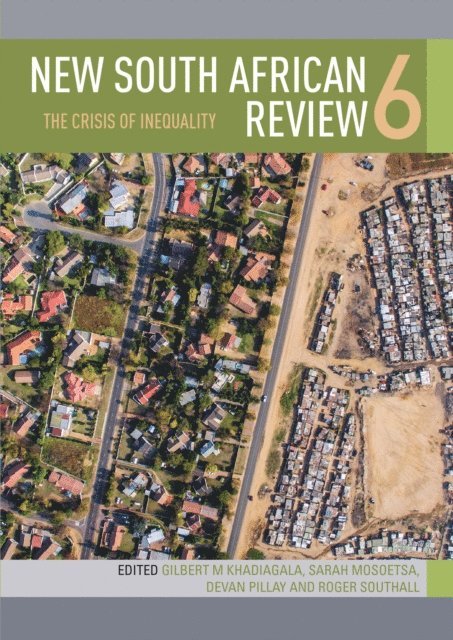
Despite the transition from apartheid to democracy, South Africa is the most unequal country in the world. Its extremes of wealth and poverty undermine intensifying struggles for a better life for all. The wide-ranging essays in this sixth volume of the New South African Review demonstrate how the consequences of inequality extend throughout society and the political economy, crippling the quest for social justice, polarising the politics, skewing economic outcomes and bringing devastating environmental consequences in their wake. Contributors survey the extent and consequences of inequality across fields as diverse as education, disability, agrarian reform, nuclear geography and small towns, and tackle some of the most difficult social, political and economic issues. How has the quest for greater equality affected progressive political discourse? How has inequality reproduced itself, despite best intentions in social policy, to the detriment of the poor and the historically disadvantaged? How have shifts in mining and the financialisation of the economy reshaped the contours of inequality? How does inequality reach into the daily social life of South Africans, and shape the way in which they interact? How does the extent and shape of inequality in South Africa compare with that of other major countries of the global South which themselves are notorious for their extremes of wealth and poverty? South African extremes of inequality reflect increasing inequality globally, and The Crisis of Inequality will speak to all those – general readers, policy makers, researchers and students – who are demanding a more equal world.
E-bok
Engelska, 2018430 kr
Läs direkt efter köp
Despite the transition from apartheid to democracy, South Africa is the most unequal country in the world. Its extremes of wealth and poverty undermine intensifying struggles for a better life for all. The wide-ranging essays in this sixth volume of the New South African Review demonstrate how the consequences of inequality extend throughout society and the political economy, crippling the quest for social justice, polarising the politics, skewing economic outcomes and bringing devastating environmental consequences in their wake. Contributors survey the extent and consequences of inequality across fields as diverse as education, disability, agrarian reform, nuclear geography and small towns, and tackle some of the most difficult social, political and economic issues. How has the quest for greater equality affected progressive political discourse? How has inequality reproduced itself, despite best intentions in social policy, to the detriment of the poor and the historically disadvantaged? How have shifts in mining and the financialisation of the economy reshaped the contours of inequality? How does inequality reach into the daily social life of South Africans, and shape the way in which they interact? How does the extent and shape of inequality in South Africa compare with that of other major countries of the global South which themselves are notorious for their extremes of wealth and poverty? South African extremes of inequality reflect increasing inequality globally, and The Crisis of Inequality will speak to all those – general readers, policy makers, researchers and students – who are demanding a more equal world.
Häftad, Engelska, 2010
517 kr
Skickas inom 5-8 vardagar
Is South Africa on a long-term decline? The New South African Review revives the tradition of critical, analytical scholarship developed by the South African Review in the 1970s and 1980s. Accessible to a wide readership and drawing upon authors from well beyond academia, its objective is to be informative, discursive and, at times, downright provocative. It seeks to provide contemporary comment and engage with current controversies. The first volume in the series, 2010: Development or Decline? ranges widely across the implications of the international crisis for the economy, the threats to our fragile ecology of present economic strategies, through to the state of the ANC and the public service, issues around service delivery, migration, HIV-Aids, land reform, crime, the sexual behaviour of our youth, and much more. Posing the provocative question of whether South Africa is embarking upon a long-term decline, the volume simultaneously argues the potential for a society premised upon social equality, social coherence and sustainability. This collection will appeal to both national and international audiences interested in engaging with the multiple dilemmas and challenges facing contemporary South Africa
E-bok
PDF, Engelska, 2010542 kr
Läs direkt efter köp
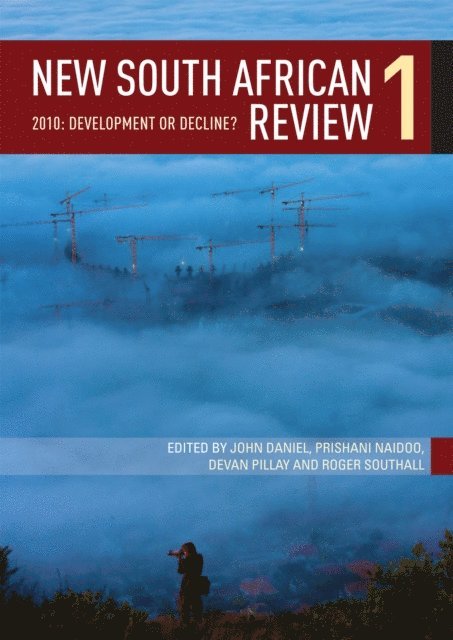
The New South African Review revives the tradition of critical, analytical scholarship developed by the South African Review in the 1970s and 1980s. Accessible to a wide readership and drawing upon authors from well beyond academia, its objective is to be informative, discursive and, at times, downright provocative. It seeks to provide contemporary comment and engage with current controversies. The first volume in the series, 2010: Development or Decline? ranges widely across the implications of the international crisis for the economy, the threats to our fragile ecology of present economic strategies, through to the state of the ANC and the public service, issues around service delivery, migration, HIV-Aids, land reform, crime, the sexual behaviour of our youth, and much more. Posing the provocative question of whether South Africa is embarking upon a long-term decline, the volume simultaneously argues the potential for a society premised upon social equality, social coherence and sustainability. This collection will appeal to both national and international audiences interested in engaging with the multiple dilemmas and challenges facing contemporary South Africa
E-bok
Engelska, 2010537 kr
Läs direkt efter köp
The New South African Review revives the tradition of critical, analytical scholarship developed by the South African Review in the 1970s and 1980s. Accessible to a wide readership and drawing upon authors from well beyond academia, its objective is to be informative, discursive and, at times, downright provocative. It seeks to provide contemporary comment and engage with current controversies. The first volume in the series, 2010: Development or Decline? ranges widely across the implications of the international crisis for the economy, the threats to our fragile ecology of present economic strategies, through to the state of the ANC and the public service, issues around service delivery, migration, HIV-Aids, land reform, crime, the sexual behaviour of our youth, and much more. Posing the provocative question of whether South Africa is embarking upon a long-term decline, the volume simultaneously argues the potential for a society premised upon social equality, social coherence and sustainability. This collection will appeal to both national and international audiences interested in engaging with the multiple dilemmas and challenges facing contemporary South Africa