Jo-Ansie van Wyk – författare
Visar alla böcker från författaren Jo-Ansie van Wyk. Handla med fri frakt och snabb leverans.
4 produkter
4 produkter
E-bok
PDF, Engelska, 2012530 kr
Läs direkt efter köp
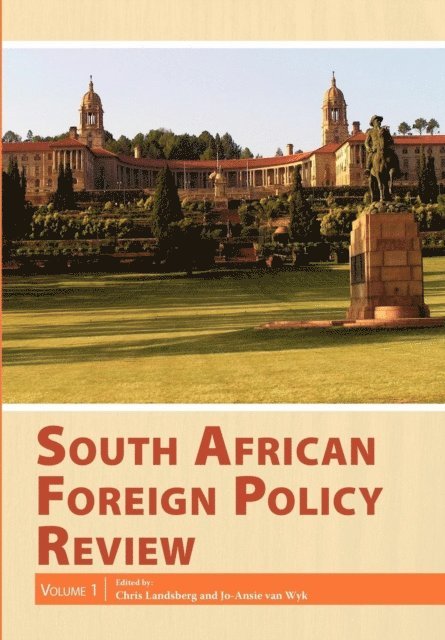
The richness of public and academic discourses on the past, present and future direction of South Africa,s role in Africa and the world suggests that as a sub-discipline of politics, South African foreign policy is ready for a systematic and regular appraisal in the form of a series of publications that the Institute for Global Dialogue will call South African Foreign Policy Review. This is also because constant changes in international and domestic circumstances impinge on the management and analysis of South Africa,s foreign policy. This, the first review provides an important opportunity to build on existing foreign policy works in order to take stock of the road already travelled in the past decade or so. This is crucial in laying some basis for anticipating the country,s future role, and considering the opportunities and challenges, which future volumes of the review will consider. This volume provides a wide-ranging appraisal of the relationship between stated foreign policy goals and actual outputs and outcomes, an assessment of how foreign policy has actually been operationalized and implemented. To this end, common themes in South African foreign policy provide the framework for the first review. These include foreign policy decision-making; soft power dynamics in the foreign policy,s strategic calculus; diplomatic tools used , economic diplomacy, peace diplomacy and paradiplomacy; South Africa,s relations with key states in Africa, in the global south and in the global north; South Africa,s approach to Africa multilateral, global multilateralism/governance. The review hopes to stimulate further discussion and thinking on the challenges confronted, and the future shape and direction of South Africa,s foreign policy.
Inbunden, Engelska, 2024
1 148 kr
Skickas
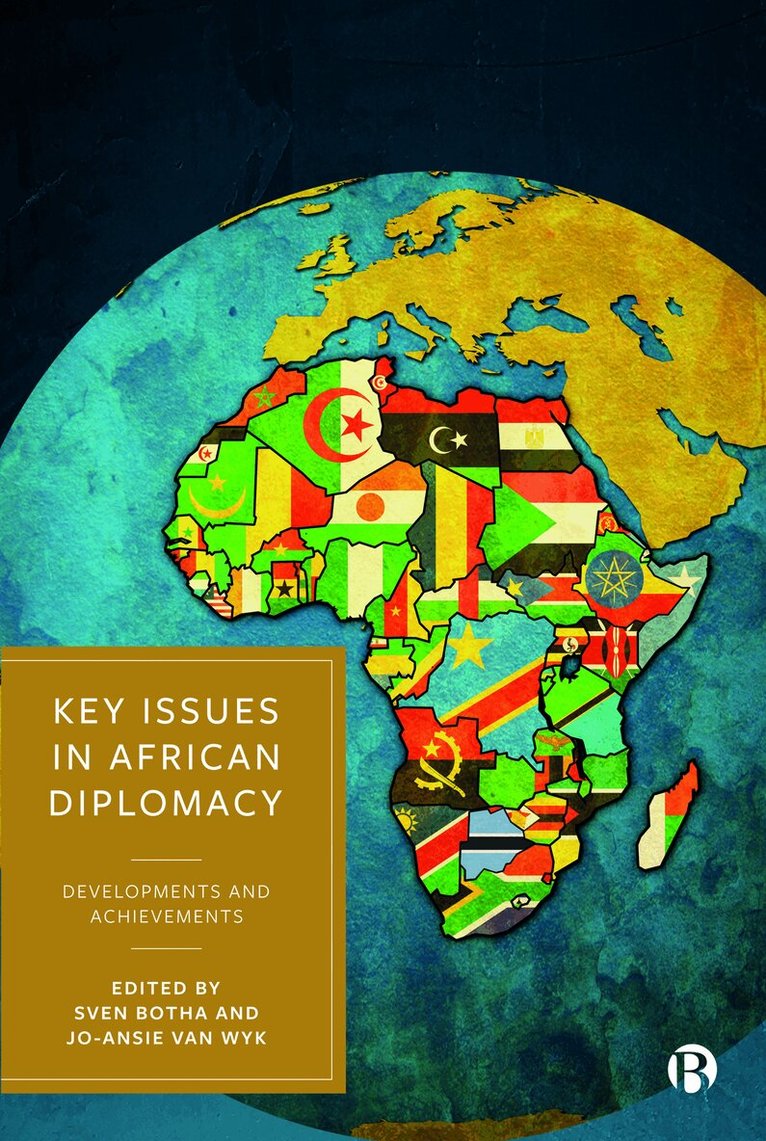
Africa’s unique position as an international diplomatic actor has not always been given the attention it deserves. This volume bridges this gap by offering a fresh, comprehensive and realistic overview of African diplomacy. The book examines African diplomatic practice. Chapters explore how different types of diplomacy have developed over time, including energy diplomacy, economic diplomacy and quiet diplomacy. Crucially, the book assesses how certain events have allowed Africa to use certain types of diplomacy to yield better outcomes for itself. Including contributions from an international team of scholars, policy makers and experts from the diplomatic world, the book provides a comprehensive guide to African diplomacy and challenges the current dominant usage of Northern perspectives on diplomacy studies.
E-bok
PDF, Engelska, 2018430 kr
Läs direkt efter köp
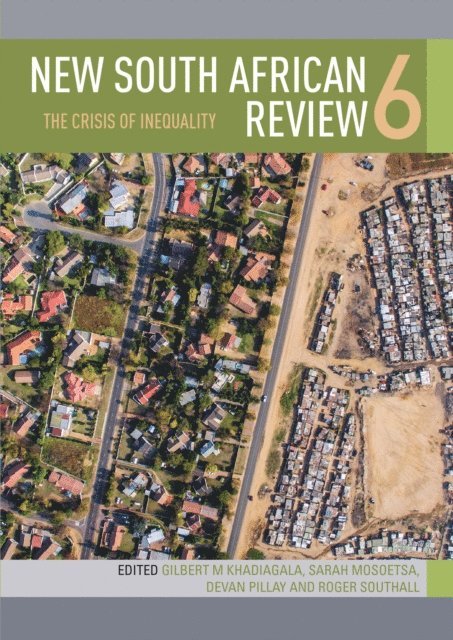
Despite the transition from apartheid to democracy, South Africa is the most unequal country in the world. Its extremes of wealth and poverty undermine intensifying struggles for a better life for all. The wide-ranging essays in this sixth volume of the New South African Review demonstrate how the consequences of inequality extend throughout society and the political economy, crippling the quest for social justice, polarising the politics, skewing economic outcomes and bringing devastating environmental consequences in their wake. Contributors survey the extent and consequences of inequality across fields as diverse as education, disability, agrarian reform, nuclear geography and small towns, and tackle some of the most difficult social, political and economic issues. How has the quest for greater equality affected progressive political discourse? How has inequality reproduced itself, despite best intentions in social policy, to the detriment of the poor and the historically disadvantaged? How have shifts in mining and the financialisation of the economy reshaped the contours of inequality? How does inequality reach into the daily social life of South Africans, and shape the way in which they interact? How does the extent and shape of inequality in South Africa compare with that of other major countries of the global South which themselves are notorious for their extremes of wealth and poverty? South African extremes of inequality reflect increasing inequality globally, and The Crisis of Inequality will speak to all those – general readers, policy makers, researchers and students – who are demanding a more equal world.
E-bok
Engelska, 2018430 kr
Läs direkt efter köp
Despite the transition from apartheid to democracy, South Africa is the most unequal country in the world. Its extremes of wealth and poverty undermine intensifying struggles for a better life for all. The wide-ranging essays in this sixth volume of the New South African Review demonstrate how the consequences of inequality extend throughout society and the political economy, crippling the quest for social justice, polarising the politics, skewing economic outcomes and bringing devastating environmental consequences in their wake. Contributors survey the extent and consequences of inequality across fields as diverse as education, disability, agrarian reform, nuclear geography and small towns, and tackle some of the most difficult social, political and economic issues. How has the quest for greater equality affected progressive political discourse? How has inequality reproduced itself, despite best intentions in social policy, to the detriment of the poor and the historically disadvantaged? How have shifts in mining and the financialisation of the economy reshaped the contours of inequality? How does inequality reach into the daily social life of South Africans, and shape the way in which they interact? How does the extent and shape of inequality in South Africa compare with that of other major countries of the global South which themselves are notorious for their extremes of wealth and poverty? South African extremes of inequality reflect increasing inequality globally, and The Crisis of Inequality will speak to all those – general readers, policy makers, researchers and students – who are demanding a more equal world.