Chris Landsberg – författare
Visar alla böcker från författaren Chris Landsberg. Handla med fri frakt och snabb leverans.
4 produkter
4 produkter
E-bok
PDF, Engelska, 2012530 kr
Läs direkt efter köp
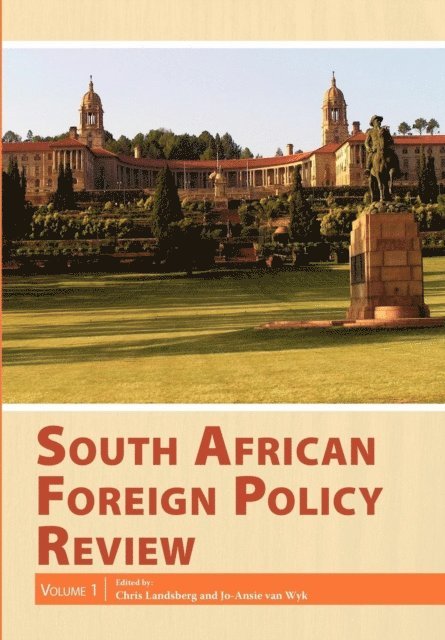
The richness of public and academic discourses on the past, present and future direction of South Africa,s role in Africa and the world suggests that as a sub-discipline of politics, South African foreign policy is ready for a systematic and regular appraisal in the form of a series of publications that the Institute for Global Dialogue will call South African Foreign Policy Review. This is also because constant changes in international and domestic circumstances impinge on the management and analysis of South Africa,s foreign policy. This, the first review provides an important opportunity to build on existing foreign policy works in order to take stock of the road already travelled in the past decade or so. This is crucial in laying some basis for anticipating the country,s future role, and considering the opportunities and challenges, which future volumes of the review will consider. This volume provides a wide-ranging appraisal of the relationship between stated foreign policy goals and actual outputs and outcomes, an assessment of how foreign policy has actually been operationalized and implemented. To this end, common themes in South African foreign policy provide the framework for the first review. These include foreign policy decision-making; soft power dynamics in the foreign policy,s strategic calculus; diplomatic tools used , economic diplomacy, peace diplomacy and paradiplomacy; South Africa,s relations with key states in Africa, in the global south and in the global north; South Africa,s approach to Africa multilateral, global multilateralism/governance. The review hopes to stimulate further discussion and thinking on the challenges confronted, and the future shape and direction of South Africa,s foreign policy.
E-bok
Engelska, 2010384 kr
Läs direkt efter köp
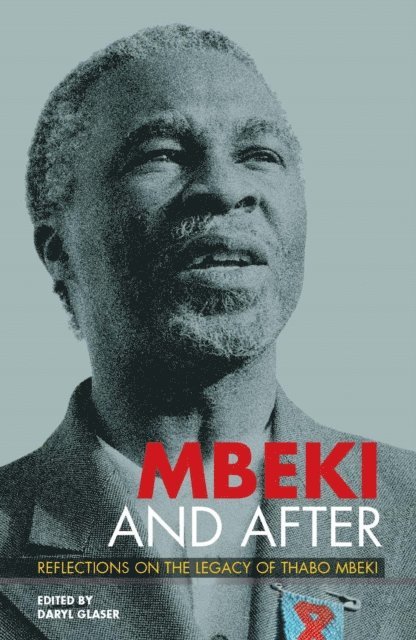
For nearly ten years – indeed more if we include his period of influence under Mandela’s presidency – Thabo Mbeki bestrode South Africa’s political stage. Despite attempts by some in the new ANC leadership to airbrush out his role, there can be little doubt that Mbeki was a seminal figure in South Africa’s new democracy, one who left a huge mark in many fields, perhaps most controversially in state and party management, economic policy, public health intervention, foreign affairs and race relations. If we wish to understand the character and fate of post-1994 South Africa, we must therefore ask: What kind of political system, economy and society has the former President bequeathed to the government of Jacob Zuma and to the citizens of South Africa generally? This question is addressed head-on here by a diverse range of analysts, commentators and participants in the political process. Amongst the specific questions they seek to answer: What is Mbeki’s legacy for patterns of inclusion and exclusion based on race, class and gender? How, if at all, did his presidency reshape relations within the state, between the state and the ruling party and between the state and society? How did he reposition South Africa on the continent and in the world? This book will be of interest to anyone wishing to understand the current political landscape in South Africa, and Mbeki’s role in shaping it.
E-bok
PDF, Engelska, 2010384 kr
Läs direkt efter köp
For nearly ten years – indeed more if we include his period of influence under Mandela’s presidency – Thabo Mbeki bestrode South Africa’s political stage. Despite attempts by some in the new ANC leadership to airbrush out his role, there can be little doubt that Mbeki was a seminal figure in South Africa’s new democracy, one who left a huge mark in many fields, perhaps most controversially in state and party management, economic policy, public health intervention, foreign affairs and race relations. If we wish to understand the character and fate of post-1994 South Africa, we must therefore ask: What kind of political system, economy and society has the former President bequeathed to the government of Jacob Zuma and to the citizens of South Africa generally? This question is addressed head-on here by a diverse range of analysts, commentators and participants in the political process. Amongst the specific questions they seek to answer: What is Mbeki’s legacy for patterns of inclusion and exclusion based on race, class and gender? How, if at all, did his presidency reshape relations within the state, between the state and the ruling party and between the state and society? How did he reposition South Africa on the continent and in the world? This book will be of interest to anyone wishing to understand the current political landscape in South Africa, and Mbeki’s role in shaping it.
Häftad, Engelska, 2017
236 kr
Skickas inom 11-20 vardagar
What is South Africa’s foreign policy, who makes it and why does it matter? These are the varied questions that scholarship has grappled with following South Africa’s triumphant return to the global stage in 1994. In this edited volume, the authors assess the position and input of actors beyond the traditional structures of the Presidency and the department of international relations and cooperation, most notably civil society actors in foreign policy decision-making. In an environment where domestic actors are argued to be found increasingly on the outside of policy decision-making circles, this book brings back into the fold the discussion of the value of participation.In looking at foreign policy through the different standpoints of other government departments, parliament, labour, business, the African National Congress (ANC), civil society and the role of gender, the chapters offer insights into how South Africa’s foreign policy is understood and how these actors seek an input in its direction. It is this engagement that ultimately makes foreign policy matter to all South Africans as the country moves forward in a turbid international environment.