Dorit Aram - Böcker
Visar alla böcker från författaren Dorit Aram. Handla med fri frakt och snabb leverans.
4 produkter
4 produkter
1 101 kr
Skickas inom 10-15 vardagar
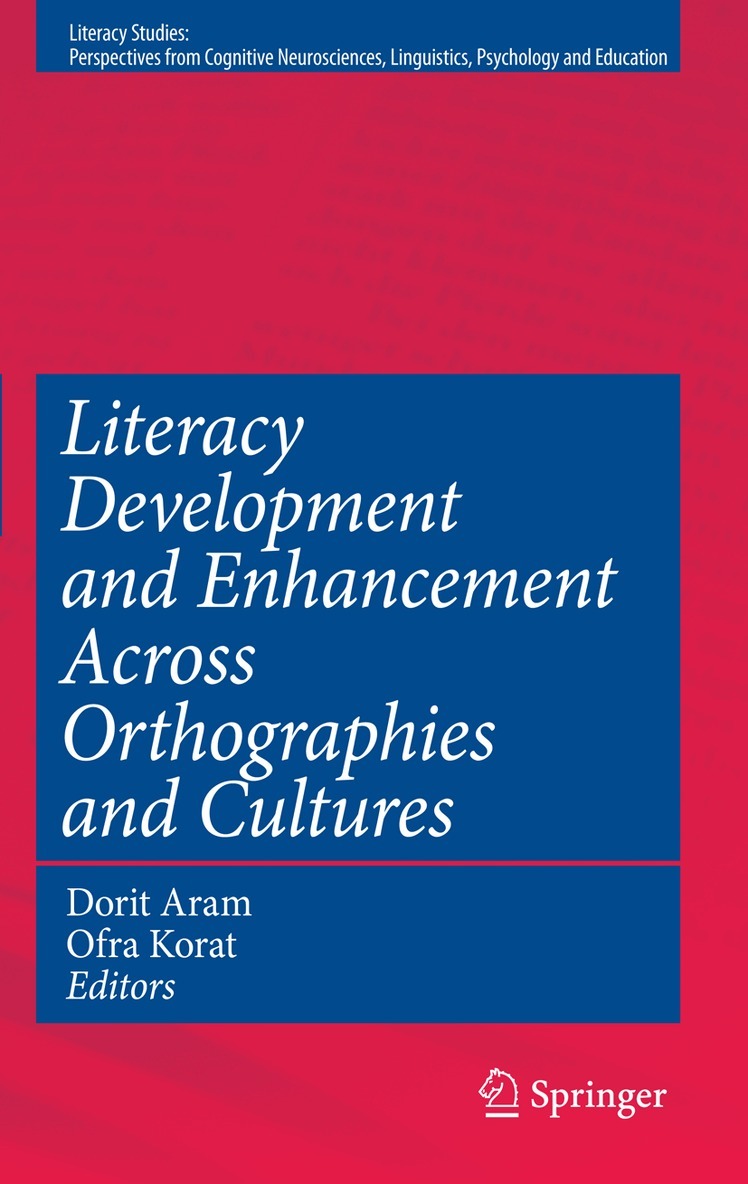
One key measure of a country’s status in the world is the literacy of its people; at the same time, global migration has led to increased interest in bilingualism and foreign language learning as topics of research. Literacy Development and Enhancement Across Orthographies and Cultures reviews international studies of the role of literacy in child development, particularly how children learn their first written language and acquire a second written and spoken one. Comparisons and contrasts are analyzed across eight countries and 11 languages, including English, Spanish, Mandarin, Hebrew, Dutch, and Catalan.Using qualitative and quantitative, established and experimental methods, contributors trace toddlers’ development of print awareness, clear up common myths regarding parental involvement and non-involvement in their children’s literacy, and suggest how the spelling of words can aid in the gaining of vocabulary. For added relevance to educators, the book includes chapters on early intervention for reading problems and the impact of pedagogical science on teaching literacy. Highlights of the coverage:Letter name knowledge in early spelling developmentEarly informal literacy experiencesEnvironmental factors promoting literacy at homeReading books to young children: what it does—and doesn’t doThe role of orthography in literacy acquisition among monolingual and bilingual childrenGaining literacy in a foreign languageInstructional influences on literacy growthLiteracy Development and Enhancement Across Orthographies and Cultures adds significant depth and interest to the knowledge base and should inspire contributions from additional languages and orthographies. It belongs in the libraries ofresearchers and educators involved in cognitive psychology, language education, early childhood education and linguistics.
1 101 kr
Skickas inom 10-15 vardagar
One key measure of a country’s status in the world is the literacy of its people; at the same time, global migration has led to increased interest in bilingualism and foreign language learning as topics of research. Literacy Development and Enhancement Across Orthographies and Cultures reviews international studies of the role of literacy in child development, particularly how children learn their first written language and acquire a second written and spoken one. Comparisons and contrasts are analyzed across eight countries and 11 languages, including English, Spanish, Mandarin, Hebrew, Dutch, and Catalan.Using qualitative and quantitative, established and experimental methods, contributors trace toddlers’ development of print awareness, clear up common myths regarding parental involvement and non-involvement in their children’s literacy, and suggest how the spelling of words can aid in the gaining of vocabulary. For added relevance to educators, the book includes chapters on early intervention for reading problems and the impact of pedagogical science on teaching literacy. Highlights of the coverage:Letter name knowledge in early spelling developmentEarly informal literacy experiencesEnvironmental factors promoting literacy at homeReading books to young children: what it does—and doesn’t doThe role of orthography in literacy acquisition among monolingual and bilingual childrenGaining literacy in a foreign languageInstructional influences on literacy growthLiteracy Development and Enhancement Across Orthographies and Cultures adds significant depth and interest to the knowledge base and should inspire contributions from additional languages and orthographies. It belongs in the libraries ofresearchers and educators involved in cognitive psychology, language education, early childhood education and linguistics.
771 kr
Skickas inom 7-10 vardagar
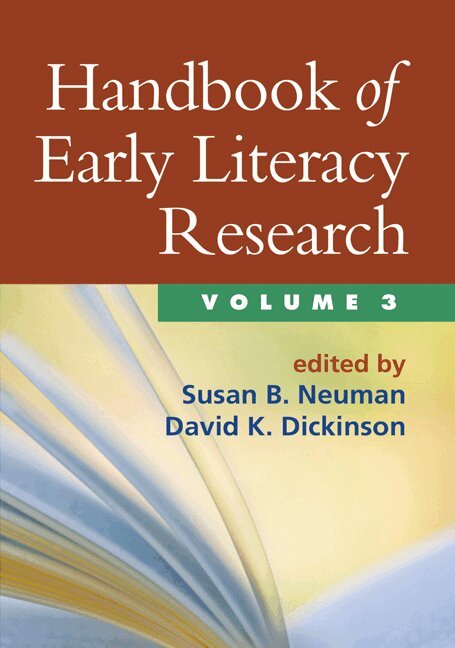
Building crucial bridges between theory, research, and practice, this volume brings together leading authorities on the literacy development of young children. The Handbook examines the full range of factors that shape learning in and out of the classroom, from basic developmental processes to family and sociocultural contexts, pedagogical strategies, curricula, and policy issues. Highlights of Volume 3 include cutting-edge perspectives on English language learning; innovative ways to support print knowledge, phonological awareness, and other code-related skills; and exemplary approaches to early intervention and teacher professional development.
1 646 kr
Kommande
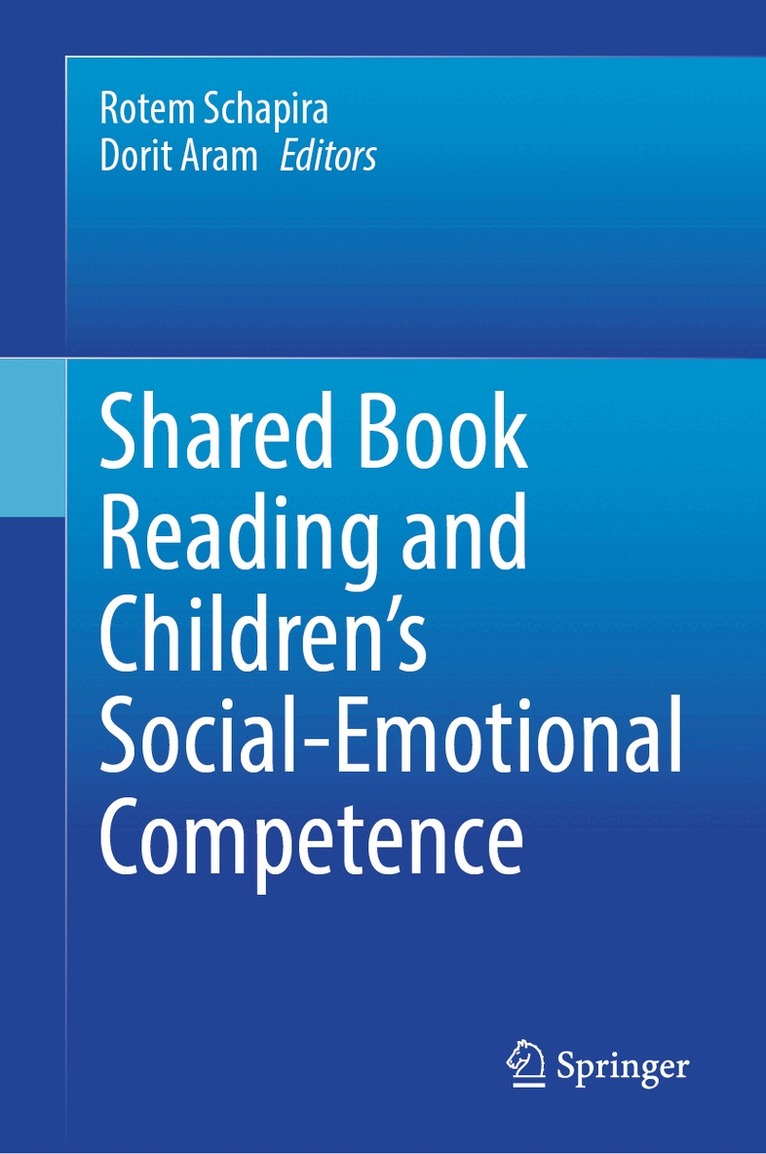
This book examines the contribution of shared book reading to various aspects of children's social-emotional development across a broad range of environments and with different reading agents, including home (parents), educational settings (teachers), and clinics (bibliotherapists). It demonstrates how shared book reading creates a safe and nurturing environment in which children can express themselves and learn about social relationships by discussing the characters' intentions, feelings, thoughts, desires, beliefs, and actions. The book explores the ways in which adults engage with young children in interactive reading, fostering aspects of social-emotional competence, including emotional knowledge, empathy, self-awareness, prosocial behavior, morality, values, and effective communication skills. This volume explores shared book reading interventions aiming to promote social-emotional competence from toddlerhood to childhood. It addresses shared book reading with at-risk children from different socio-economic backgrounds. The book concludes with recommendations for how parents and preschool teachers can promote social-emotional competence through shared-book reading.Key areas of coverage include:Emotion and mental-state discourse during shared book reading: How parents, teachers, and children talk about emotions, thoughts, and social situations while reading together, and why shared reading is a uniquely rich context for mental-state dialogue.Cultural and contextual differences in shared-reading interactions: Cross-cultural patterns in emotion discourse, parental practices, and adult–child meaning-making across diverse sociocultural settings.Story features that shape emotion discourse: How elements such as human vs. animal protagonists, narrative structure, and story themes influence emotion talk and social–emotional understanding.Shared book-reading interventions at home and in educational settings: Evidence-based programs that strengthen children’s empathy, emotional competence, and prosocial behavior through guided reading practices.Shared reading and children’s social–emotional development: Correlational and meta-analytic findings linking shared book reading with gains in emotion understanding, empathy, prosocial conduct, and broader socio-emotional skills. Shared Book Reading and Children's Social-Emotional Competence is an essential resource for researchers, professors, and graduate students as well as educators, bibiotherapists, and other practitioners in developmental, clinical child, and school psychology, social psychology, educational psychology, educational policy and practice, clinical social work, public health, and all related disciplines.