Douglas Leblanc - Böcker
Visar alla böcker från författaren Douglas Leblanc. Handla med fri frakt och snabb leverans.
2 produkter
2 produkter
150 kr
Skickas inom 5-8 vardagar
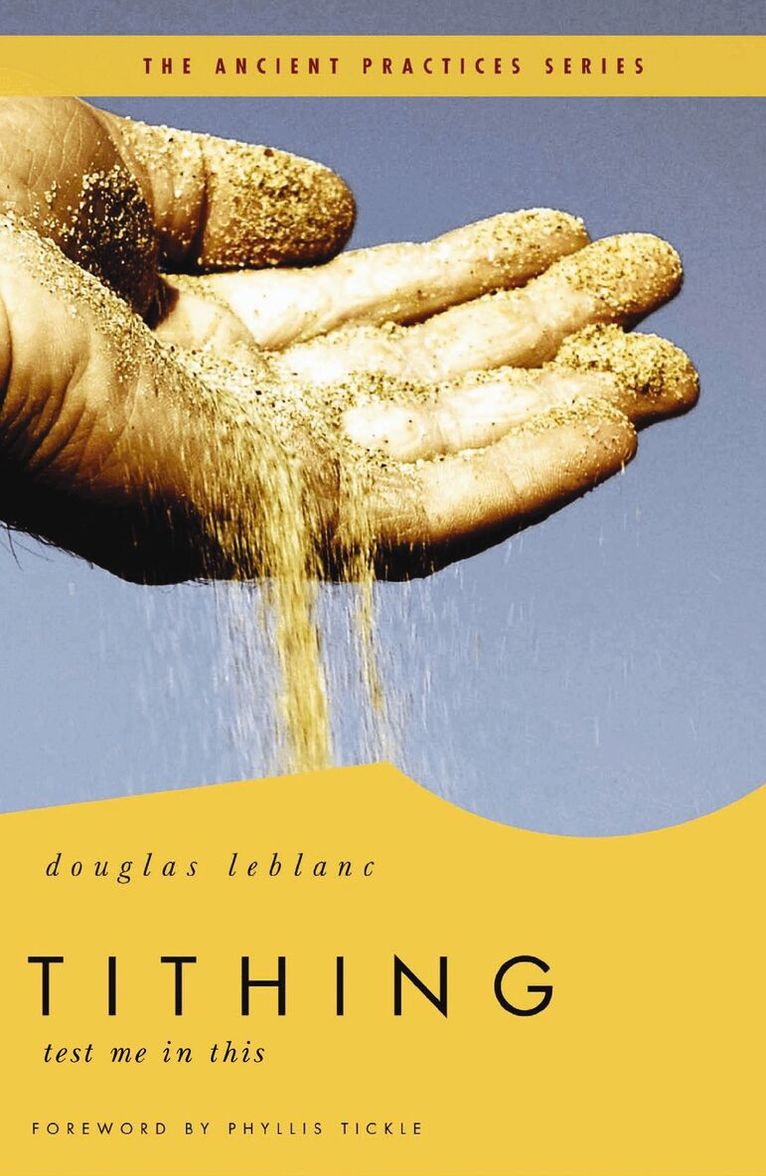
“‘Bring the whole tithe into the storehouse, that there may be food in my house. Test me in this,’ says the Lord Almighty, ‘and see if I will not throw open the floodgates of heaven and pour out so much blessing that you will not have room enough for it.’” — Malachi 3:1 0In these uncertain economic times, does it really make sense to tithe?Douglas LeBlanc thinks the answer is clear enough in Malachi 3:10, where God goes so far as to tell us, “Test me in this.” The people profiled in this book have done exactly that—and the effect on their lives has been dramatic.In these intimate journalistic portraits, LeBlanc shows us true tithing in action. From members of the clergy, to best-selling authors, to social activists both conservative and liberal, these are the lives of real people who tithe in joy and plenty, in the face of poverty and natural disaster, in community and missionally, and as a spiritual practice commanded by God. They come from different backgrounds and live in varying degrees of financial comfort; but they all tithe—and wouldn’t have it any other way. Through their eyes, we come to understand this ancient practice as God’s call to a life of generosity, compassion, and joy.THE ANCIENT PRACTICESThere is a hunger in every human heart for connection, primitive and raw, to God. To satisfy it, many are beginning to explore traditional spiritual disciplines used for centuries. . .everything from fixed-hour prayer to fasting to sincere observance of the Sabbath. Compelling and readable, the Ancient Practices series is for every spiritual sojourner, for every Christian seeker who wants more.
Cultivating the Good Student
Fostering the Moral Virtues of the Intellectual Life
Häftad, Engelska, 2026
347 kr
Kommande
What exactly is a "good student," and how do educators foster this individual? As Douglas LeBlanc argues, the good student is the individual who—more than being intelligent—is morally virtuous in the realm of study. The classical and Christian traditions divide the moral virtues under the cardinal virtues of temperance, fortitude, justice, and prudence. In order to foster good students, then, teachers must foster the sub-virtue of each of the cardinal virtues that is most related to learning. LeBlanc identifies these virtues as studiosity (temperance), magnanimity (fortitude), docility (justice), and self-knowledge (prudence). Each of these four is given a historical and philosophical analysis in its own chapter; therein, it is demonstrated that each virtue is needed in order for young adults to have a moral intellectual life. Additionally, for each of these four virtues, another chapter is dedicated to the practical means whereby teachers and administrators can foster these virtues. LeBlanc shows educators how they can guide students in the practice of the virtue in question. Additionally, he describes the ways educators must practice these four virtues themselves, insisting that teachers and administrators must serve as models of what it means to be one who possesses a moral intellectual life. In the conclusion, he argues that these four virtues are not just needed by young adults and their teachers. They are ultimately needed by everyone, for all adults are called to have moral intellectual lives. By fostering studiosity, magnanimity, docility, and self-knowledge, teachers empower their students to be life-long learners—life-long "good students."