Douglas Mao – författare
300 kr
Skickas inom 5-8 vardagar
1 420 kr
Skickas inom 5-8 vardagar
237 kr
Läs direkt efter köp
229 kr
Läs direkt efter köp
549 kr
Skickas inom 7-10 vardagar
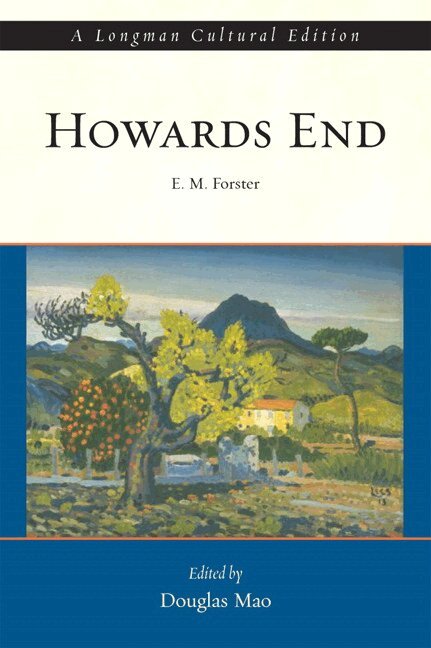
Art and commerce, nature and industry, idealism and pragmatism, women and men: the struggles, partings, and reconciliations between these pairs drive the narrative of one of the great English novels of the twentieth century. One of the newest additions to The Longman Cultural Editions series, Howards End presents the complete text headed by an inviting introduction, and supplemented by helpful annotations; a table of dates to track its composition, publication, and public reception in relation to biographical, cultural and historical events; and a guide for further inquiry and study.
484 kr
Skickas inom 5-8 vardagar
379 kr
Skickas inom 5-8 vardagar
478 kr
Läs direkt efter köp
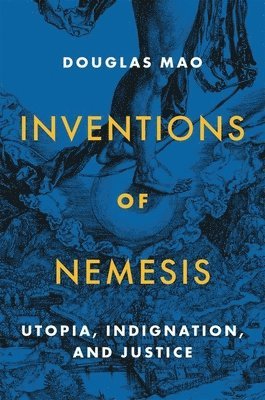
A wide-ranging reevaluation of utopian literature and philosophy, from Plato to Chang-Rae LeeExamining literary and philosophical writing about ideal societies from Greek antiquity to the present, Inventions of Nemesis offers a striking new take on utopia’s fundamental project.Noting that utopian imagining has often been propelled by an angry conviction that society is badly arranged, Douglas Mao argues that utopia’s essential aim has not been to secure happiness, order, or material goods, but rather to establish a condition of justice in which all have what they ought to have. He also makes the case that hostility to utopias has frequently been associated with a fear that they will transform humanity beyond recognition, doing away with the very subjects who should receive justice in a transformed world. Further, he shows how utopian writing speaks to contemporary debates about immigration, labor, and other global justice issues. Along the way, Inventions of Nemesis connects utopia to the Greek concept of nemesis, or indignation at a wrong ordering of things, and advances fresh readings of dozens of writers and thinkers—from Plato, Thomas More, Nathaniel Hawthorne, Edward Bellamy, Charlotte Perkins Gilman, and H. G. Wells to John Rawls, Robert Nozick, Fredric Jameson, Ursula Le Guin, Octavia Butler, and Chang-Rae Lee.Ambitious and timely, Inventions of Nemesis offers a vital reconsideration of what it really means to imagine an ideal society.
1 359 kr
Skickas inom 5-8 vardagar
1 481 kr
Skickas inom 5-8 vardagar
494 kr
Skickas inom 5-8 vardagar
702 kr
Läs direkt efter köp
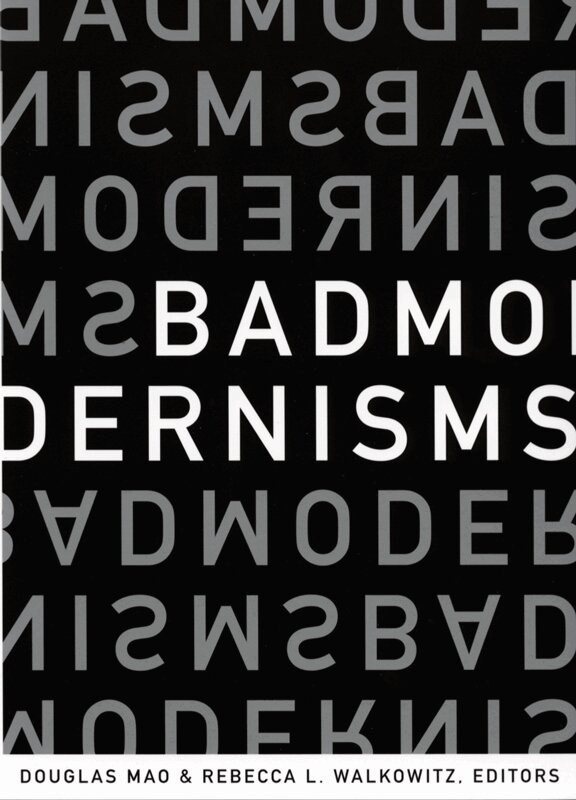
Bad Modernisms thus builds on and extends the “new modernist studies,” recent work marked by the application of diverse methods and attention to texts and artists not usually labeled as modernist. In this collection, these developments are exemplified by essays ranging from a reading of dandyism in 1920s Harlem as a performance of a “bad” black modernist imaginary to a consideration of Filipino American modernism in the context of anticolonialism. The contributors reconsider familiar figures—such as Virginia Woolf, D. H. Lawrence, Josef von Sternberg, Ludwig Wittgenstein, W. H. Auden, and Wyndham Lewis—and bring to light the work of lesser-known artists, including the writer Carlos Bulosan and the experimental filmmaker Len Lye. Examining cultural artifacts ranging from novels to manifestos, from philosophical treatises to movie musicals, and from anthropological essays to advertising campaigns, these essays signal the capaciousness and energy galvanizing the new modernist studies.
Contributors. Lisa Fluet, Laura Frost, Michael LeMahieu, Heather K. Love, Douglas Mao, Jesse Matz, Joshua L. Miller, Monica L. Miller, Sianne Ngai, Martin Puchner, Rebecca L. Walkowitz
1 485 kr
Skickas inom 7-10 vardagar
511 kr
Skickas inom 7-10 vardagar
619 kr
Läs direkt efter köp
619 kr
Läs direkt efter köp
953 kr
Läs direkt efter köp
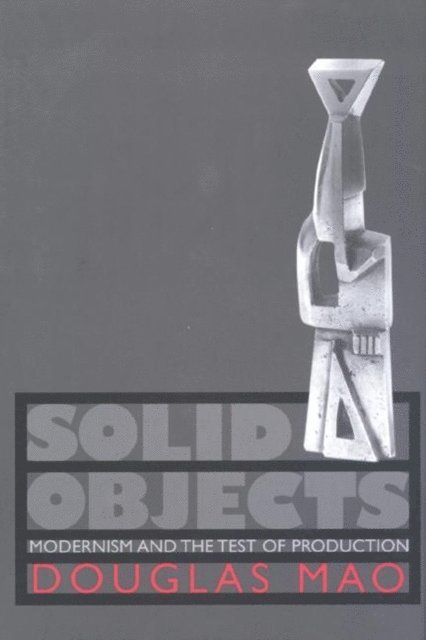
In this provocative and wide-ranging study, Douglas Mao argues that a profound tension between veneration of human production and anxiety about production''s dangers lay at the heart of literary modernism. Focusing on the work of Virginia Woolf, Wyndham Lewis, Ezra Pound, and Wallace Stevens, Mao shows that modernists were captivated by physical objects, which, regarded as objects, seemed to partake of a utopian serenity beyond the reach of human ideological conflicts. Under a variety of historical pressures, Mao observes, these writers came to revere the making of such things, and especially the crafting of the work of art, as the surest guarantee of meaning for an individual life. Yet they also found troubling contradictions here, since any kind of making, be it handicraft or mass production, could also be understood as a violation of the nonhuman world by an increasingly predatory and imperialistic subjectivity. If modernists began by embracing production as a test of meaning, then they frequently ended by testing production itself and finding it wanting.To make this case, Mao interweaves social and political history with readings in literature, the visual arts, philosophy, and economics. He explores modernism''s relation to aestheticism, existentialism, and the culture of consumption, joining current debates on the politics of engagement and the social meanings of art. And he shows conclusively, in this elegantly written and consistently surprising work, that we cannot understand the theories and practices of modernism without addressing the question of the object and production''s ambivalent allure.
669 kr
Läs direkt efter köp
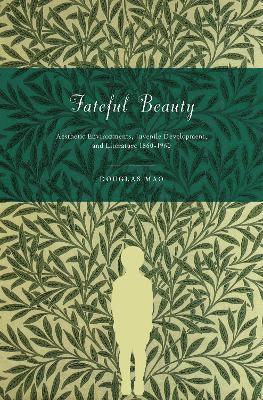
When Oscar Wilde said he had "seen wallpaper which must lead a boy brought up under its influence to a life of crime," his joke played on an idea that has often been taken quite seriously--both in Wilde''s day and in our own. In Fateful Beauty, Douglas Mao recovers the lost intellectual, social, and literary history of the belief that the beauty--or ugliness--of the environment in which one is raised influences or even determines one''s fate. Weaving together readings in literature, psychology, biology, philosophy, education, child-rearing advice, and interior design, he shows how this idea abetted a dramatic rise in attention to environment in many discourses and in many practices affecting the lives of the young between the late nineteenth century and the middle of the twentieth. Through original and detailed analyses of Wilde, Walter Pater, James Joyce, Theodore Dreiser, Rebecca West, and W. H. Auden, Mao shows that English-language writing of the period was informed in crucial but previously unrecognized ways by the possibility that beautiful environments might produce better people. He also reveals how these writers shared concerns about environment, evolution, determinism, freedom, and beauty with scientists and social theorists such as Herbert Spencer, Hermann von Helmholtz, Ivan Petrovich Pavlov, and W.H.R. Rivers. In so doing, Mao challenges conventional views of the roles of beauty and the aesthetic in art and life during this time.