Douglas W. Maynard - Böcker
Visar alla böcker från författaren Douglas W. Maynard. Handla med fri frakt och snabb leverans.
8 produkter
8 produkter
1 335 kr
Skickas inom 7-10 vardagar
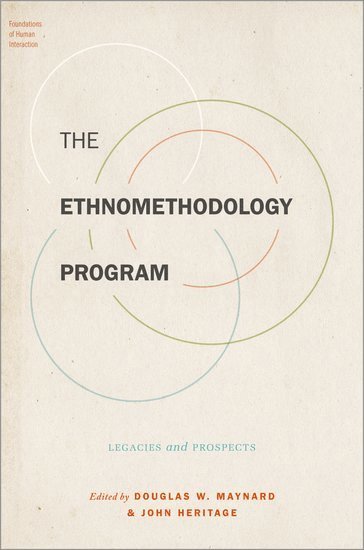
It's been more than fifty years since Harold Garfinkel created the field of ethnomethodology--a discipline that offers a new way of understanding how people make sense of their everyday world. Since his book Studies in Ethnomethodology published in 1967, there has been a substantial--although often subterranean--growth in ethnomethodological (EM) work. Studies in and appreciation of ethnomethodological work continue to grow, but the breadth and penetration of his insights and inspiration for ongoing research have yet to secure their full measure of recognition. This volume celebrates Harold Garfinkel's enormous contributions to sociology and conversation analysis, exploring how ethnomethodology emerged, the empirical consequences of Garfinkel's work, and the significant contemporary work that has resulted from it. Douglas W. Maynard and John Heritage bring together experts from a wide range of theoretical and empirical areas to create the first comprehensive collection of work on EM that encompasses its role in "studies of work," in Conversation Analysis, and in other subdisciplines. Chapters highlight ethnomethodology's distinctive forms of ethnographic inquiry and its influences on a host of substantive domains including legal environments, science and technology, workplace and organizational inquiries, survey research, social problems and deviance, and disability and atypical interaction. The book explains how EM especially helped to set the agenda for gender studies, while also developing insights for inquiries into racial and ethnic features of everyday life and experience. Still, there is much of what Garfinkel called "unfinished business," which means that ethnomethodological inquiries are continuing to intensify and develop. Harold Garfinkel and Ethnomethodology ddresses this unfinished business: not only drawing attention to past accomplishments in the field, but also suggesting how these accomplishments set the stage for future endeavors that will benefit from EM-inspired approaches to social organization and interaction.
597 kr
Skickas inom 5-8 vardagar
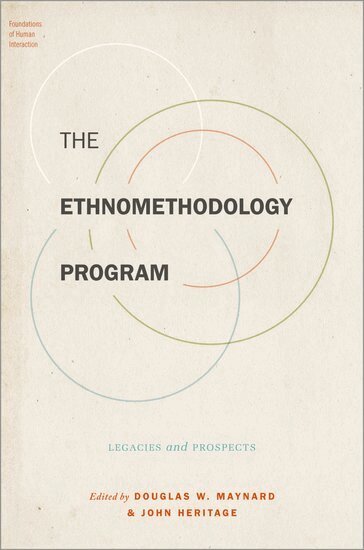
It's been more than fifty years since Harold Garfinkel created the field of ethnomethodology--a discipline that offers a new way of understanding how people make sense of their everyday world. Since his book Studies in Ethnomethodology published in 1967, there has been a substantial--although often subterranean--growth in ethnomethodological (EM) work. Studies in and appreciation of ethnomethodological work continue to grow, but the breadth and penetration of his insights and inspiration for ongoing research have yet to secure their full measure of recognition. This volume celebrates Harold Garfinkel's enormous contributions to sociology and conversation analysis, exploring how ethnomethodology emerged, the empirical consequences of Garfinkel's work, and the significant contemporary work that has resulted from it. Douglas W. Maynard and John Heritage bring together experts from a wide range of theoretical and empirical areas to create the first comprehensive collection of work on EM that encompasses its role in "studies of work," in Conversation Analysis, and in other subdisciplines. Chapters highlight ethnomethodology's distinctive forms of ethnographic inquiry and its influences on a host of substantive domains including legal environments, science and technology, workplace and organizational inquiries, survey research, social problems and deviance, and disability and atypical interaction. The book explains how EM especially helped to set the agenda for gender studies, while also developing insights for inquiries into racial and ethnic features of everyday life and experience. Still, there is much of what Garfinkel called "unfinished business," which means that ethnomethodological inquiries are continuing to intensify and develop. Harold Garfinkel and Ethnomethodology ddresses this unfinished business: not only drawing attention to past accomplishments in the field, but also suggesting how these accomplishments set the stage for future endeavors that will benefit from EM-inspired approaches to social organization and interaction.
Bad News, Good News
Conversational Order in Everyday Talk and Clinical Settings
Häftad, Engelska, 2003
353 kr
Skickas inom 7-10 vardagar
When we share or receive good or bad news, from ordinary events such as the birth of a child to public catastrophes such as 9/11, our "old" lives come to an end, and suddenly we see the world with new eyes. In "Bad News, Good News", Douglas W. Maynard explores how we tell and hear such news, and what's similar and different about the ways we experience good and bad news itself. Uncovering the verbal and nonverbal patterns in the bearing of news on everyday conversations as well as in hospitals and other settings, Maynard shows how people give and receive good or bad news, how they come to "realize" the news and their new world, and how they construct social relationships through the sharing of news. He also reveals the implications of his study for understanding public affairs in which the conveyance of news may influence society at large, and he provides recommendations for professionals and others on how to convey bad or good news more effectively. For anyone who wants to understand how news gets communicated, "Bad News, Good News" offers a wealth of scholarly insights and practical advice.
Autistic Intelligence
Interaction, Individuality, and the Challenges of Diagnosis
Inbunden, Engelska, 2022
777 kr
Skickas inom 7-10 vardagar
Winner 2024 Outstanding Recent Contribution in Social Psychology Award, Social Psychology Section, American Sociological AssociationWinner 2024 Melvin Pollner Prize, Ethnomethodology and Conversation Analysis Section, American Sociological AssociationAs autism has grown in prevalence, so too have our attempts to make sense of it. From placing unfounded blame on vaccines to seeking a genetic cause, Americans have struggled to understand what autism is and where it comes from. Amidst these efforts, however, a key aspect of autism has been largely overlooked: the diagnostic process itself. That process is the central focus of Autistic Intelligence. The authors ask us to question the norms by which we measure autistic behavior, to probe how that behavior can be considered sensible rather than disordered, and to explore how we can better appreciate the individuality of those who receive the diagnosis. Drawing on hundreds of hours of video recordings and ethnographic observations at a clinic where professionals evaluated children for autism, the authors’ analysis of interactions among clinicians, parents, and children demystifies the categories, tools, and practices involved in the diagnostic process. Autistic Intelligence shows that autism is not a stable category; it is the outcome of complex interactional processes involving professionals, children, families, and facets of the social and clinical environments they inhabit. The authors suggest that diagnosis, in addition to carefully classifying children, also can highlight or include unique and particular contributions those with autism potentially can make to the world around us.
Autistic Intelligence
Interaction, Individuality, and the Challenges of Diagnosis
Häftad, Engelska, 2022
250 kr
Skickas inom 7-10 vardagar
Winner 2024 Outstanding Recent Contribution in Social Psychology Award, Social Psychology Section, American Sociological AssociationWinner 2024 Melvin Pollner Prize, Ethnomethodology and Conversation Analysis Section, American Sociological AssociationAs autism has grown in prevalence, so too have our attempts to make sense of it. From placing unfounded blame on vaccines to seeking a genetic cause, Americans have struggled to understand what autism is and where it comes from. Amidst these efforts, however, a key aspect of autism has been largely overlooked: the diagnostic process itself. That process is the central focus of Autistic Intelligence. The authors ask us to question the norms by which we measure autistic behavior, to probe how that behavior can be considered sensible rather than disordered, and to explore how we can better appreciate the individuality of those who receive the diagnosis. Drawing on hundreds of hours of video recordings and ethnographic observations at a clinic where professionals evaluated children for autism, the authors’ analysis of interactions among clinicians, parents, and children demystifies the categories, tools, and practices involved in the diagnostic process. Autistic Intelligence shows that autism is not a stable category; it is the outcome of complex interactional processes involving professionals, children, families, and facets of the social and clinical environments they inhabit. The authors suggest that diagnosis, in addition to carefully classifying children, also can highlight or include unique and particular contributions those with autism potentially can make to the world around us.
Del 324 - Wiley Series in Survey Methodology
Standardization and Tacit Knowledge
Interaction and Practice in the Survey Interview
Inbunden, Engelska, 2002
2 089 kr
Skickas inom 7-10 vardagar
An interdisciplinary look at interaction in the standardized surveyinterview This volume presents a theoretical and empirical inquiry into theinteraction between interviewers and respondents in standardizedresearch interviews. The editors include a range of articles thatshowcase the perspectives of conversation analysts,ethnomethodologists, and survey methodologists, to gain a morecomplete picture of interaction in the standardized surveyinterview than was previously available. This book is the first to focus solely on the interactionalsubstrate or conversational architecture of interviewing. It offersa range of insights into standardized interviewing as interactionand forms a bridge between survey methodology and the study ofinteraction and tacit practices. The articles are arranged intofour subject groups: theoretical orientations, survey recruitment,interaction during the substantive interview, and interaction andsurvey data quality. Articles include:* Interactions in telephone surveys* Recruitment of respondents* Respondent laughter* Interaction coding* Impact of technology on interaction* Occasions for interviewer intervention Standardization and Tacit Knowledge serves as a one-of-a-kindreference for survey methodologists, linguists, and researchers andalso as a postgraduate coursebook in survey interviewing.
Del 20 - Studies in Interactional Sociolinguistics
Communication in Medical Care
Interaction between Primary Care Physicians and Patients
Inbunden, Engelska, 2006
1 295 kr
Skickas inom 7-10 vardagar
This 2006 volume provides a comprehensive discussion of communication between doctors and patients in primary care consultations. It brings together a team of leading contributors from the fields of linguistics, sociology and medicine to describe each phase of the primary care consultation, identifying the distinctive tasks, goals and activities that make up each phase of primary care as social interaction. Using conversation analysis techniques, the authors analyze the sequential unfolding of a visit, and describe the dilemmas and conflicts faced by physicians and patients as they work through each of these activities. The result is a view of the medical encounter that takes the perspective of both physicians and patients in a way that is both rigorous and humane. Clear and comprehensive, this book will be essential reading for students and researchers in sociolinguistics, communication studies, sociology, and medicine.
Del 20 - Studies in Interactional Sociolinguistics
Communication in Medical Care
Interaction between Primary Care Physicians and Patients
Häftad, Engelska, 2006
694 kr
Skickas inom 7-10 vardagar
This 2006 volume provides a comprehensive discussion of communication between doctors and patients in primary care consultations. It brings together a team of leading contributors from the fields of linguistics, sociology and medicine to describe each phase of the primary care consultation, identifying the distinctive tasks, goals and activities that make up each phase of primary care as social interaction. Using conversation analysis techniques, the authors analyze the sequential unfolding of a visit, and describe the dilemmas and conflicts faced by physicians and patients as they work through each of these activities. The result is a view of the medical encounter that takes the perspective of both physicians and patients in a way that is both rigorous and humane. Clear and comprehensive, this book will be essential reading for students and researchers in sociolinguistics, communication studies, sociology, and medicine.