Douglas Webster – författare
Visar alla böcker från författaren Douglas Webster. Handla med fri frakt och snabb leverans.
8 produkter
8 produkter
Häftad, Engelska, 2021
266 kr
Skickas inom 5-8 vardagar
Häftad, Engelska, 2023
720 kr
Skickas
Häftad, Engelska, 2024
214 kr
Skickas inom 5-8 vardagar
Inbunden, Engelska, 2021
444 kr
Skickas inom 3-6 vardagar
Häftad, Engelska, 2021
296 kr
Skickas inom 3-6 vardagar
Häftad, Engelska, 2026
608 kr
Kommande
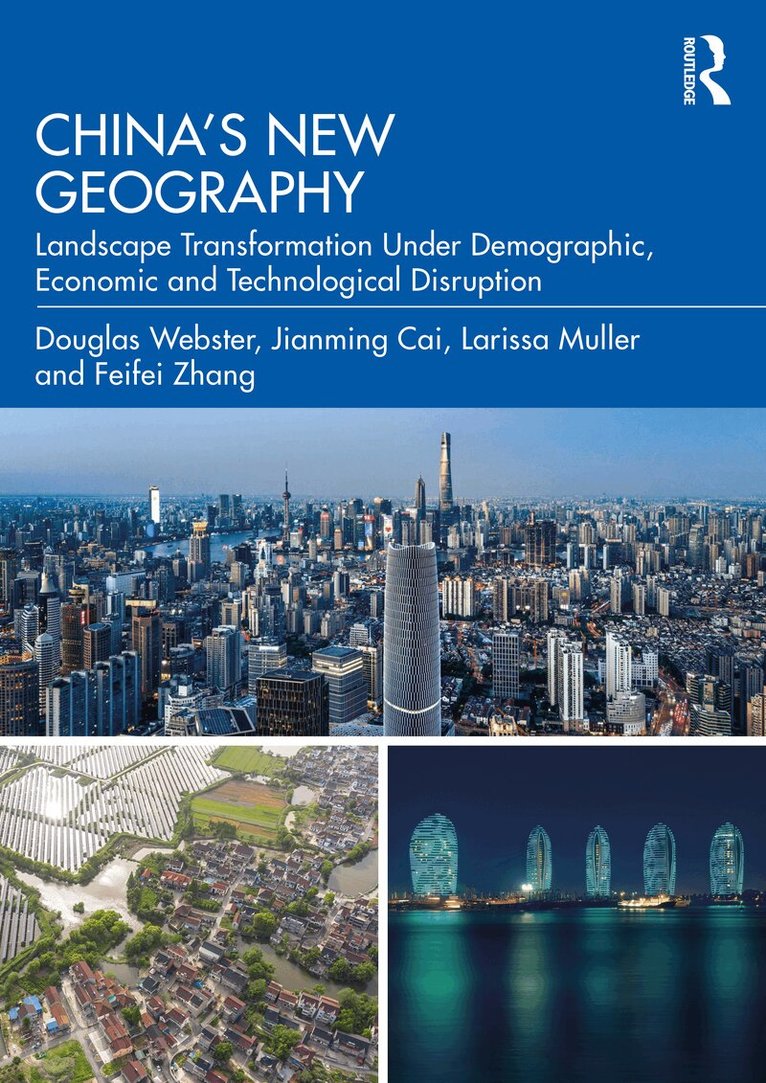
This book explores China’s spatial future through 2060, a future which will be dramatically different from both the Opening Up period starting in 1979, when the rules of landscape building were rewritten, and the Factory of the World era following China’s 2001 WTO accession. Drawing on decades of participation in China’s spatial transformation, the authors explore the country’s future landscape by analyzing the intersecting forces of demographic, societal, economic, policy, and technological change. They examine a rapidly changing context shaped by population decline, the pursuit of global technological leadership, and changing lifestyles and consumption patterns.The book addresses pressing questions: How will China’s hollowing out rural landscapes be transformed as new economic nodes emerge based on alternative energy production, digitally enabled agriculture, ecological restoration and amenity development? As urbanization peaks at 85% and China’s urban population declines by at least 125 million between 2030 and 2060, how will the national urban system be reshaped? Which urban clusters will emerge as new “Silicon Valleys”? Which will be caught in negative rust belt cycles? And as urban outward expansion and physical development slows dramatically, how will technological change, shifting social expectations, and new mobility and production systems reshape China’s built landscape? This will be a useful resource for designers, investors, developers and all those interested in better understanding China’s emerging new geography and landscape, as well as students and academics across a range of disciplines, including Urban and Regional Planning, Landscape Architecture, Geography and Asian Studies.
Inbunden, Engelska, 2026
2 225 kr
Kommande
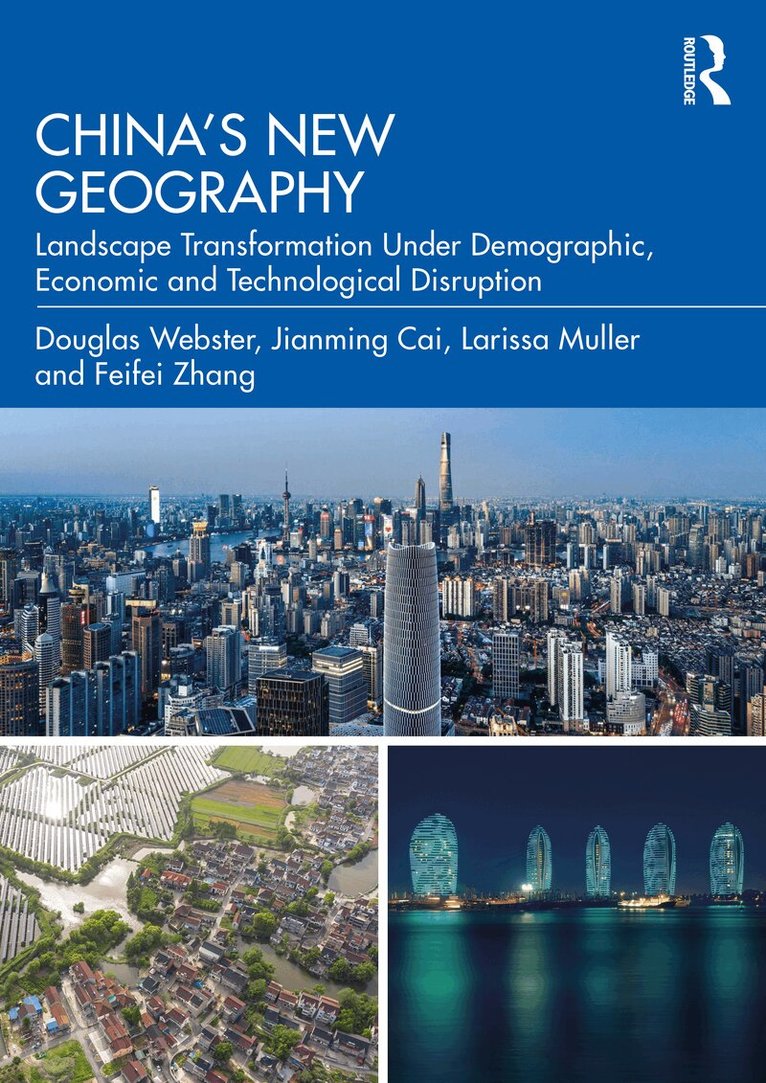
This book explores China’s spatial future through 2060, a future which will be dramatically different from both the Opening Up period starting in 1979, when the rules of landscape building were rewritten, and the Factory of the World era following China’s 2001 WTO accession. Drawing on decades of participation in China’s spatial transformation, the authors explore the country’s future landscape by analyzing the intersecting forces of demographic, societal, economic, policy, and technological change. They examine a rapidly changing context shaped by population decline, the pursuit of global technological leadership, and changing lifestyles and consumption patterns.The book addresses pressing questions: How will China’s hollowing out rural landscapes be transformed as new economic nodes emerge based on alternative energy production, digitally enabled agriculture, ecological restoration and amenity development? As urbanization peaks at 85% and China’s urban population declines by at least 125 million between 2030 and 2060, how will the national urban system be reshaped? Which urban clusters will emerge as new “Silicon Valleys”? Which will be caught in negative rust belt cycles? And as urban outward expansion and physical development slows dramatically, how will technological change, shifting social expectations, and new mobility and production systems reshape China’s built landscape? This will be a useful resource for designers, investors, developers and all those interested in better understanding China’s emerging new geography and landscape, as well as students and academics across a range of disciplines, including Urban and Regional Planning, Landscape Architecture, Geography and Asian Studies.
E-bok
PDF, Engelska, 2013979 kr
Läs direkt efter köp
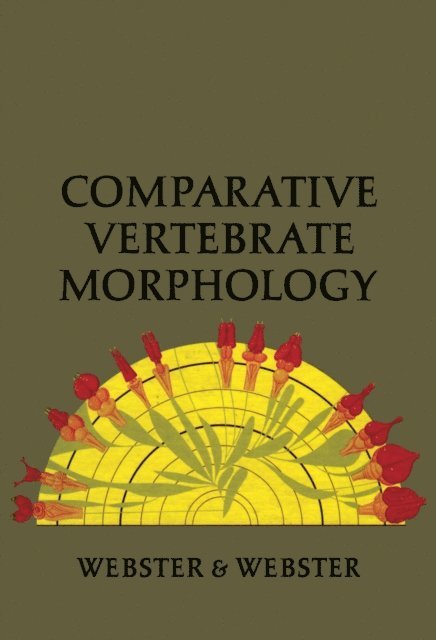
Comparative Vertebrate Morphology provides a comprehensive discussion of vertebrate morphology. The structure-function concept at the level of organs and organ systems is fundamental to an understanding of comparative evolutionary morphology. It is upon these three interrelated aspects—structure, function, and evolution— that that contents of this volume have been organized and presented. The book opens with a discussion of general concepts on vertebrate evolution. This is followed by separate chapters on vertebrate phylogeny, skeletal components, the cranial and postcranial skeleton, muscular tissues, muscular system, and development of the integument, nervous tissues, sense organs, nervous system structure, nervous pathways, and endocrines. Subsequent chapters deal with the digestive, respiratory, circulatory, excretory and water balance, and reproductive systems. This book was designed to meet the needs of a one-semester course for students who have already had an introductory course in biology. It is assumed that the lectures will be supplemented by a laboratory with its own laboratory manual. The organization of the text allows the instructor to coordinate the laboratory and lecture portions of the course.