D.R Anderson - Böcker
Visar alla böcker från författaren D.R Anderson. Handla med fri frakt och snabb leverans.
4 produkter
4 produkter
1 430 kr
Skickas inom 7-10 vardagar
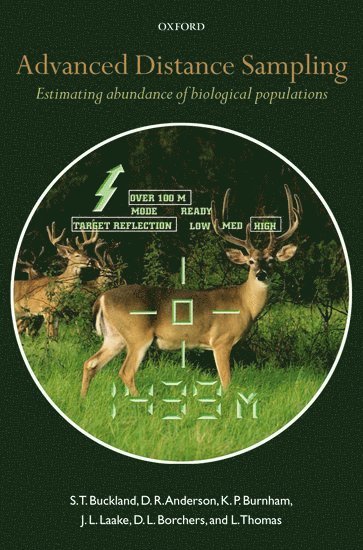
This advanced text focuses on the uses of distance sampling to estimate the density and abundance of biological populations. It addresses new methodologies, new technologies and recent developments in statistical theory and is the follow up companion to Introduction to Distance Sampling (OUP, 2001). In this text, a general theoretical basis is established for methods of estimating animal abundance from sightings surveys, and a wide range of approaches to analysis of sightings data is explored. These approaches include: modelling animal detectability as a function of covariates, where the effects of habitat, observer, weather, etc. on detectability can be assessed; estimating animal density as a function of location, allowing for example animal density to be related to habitat and other locational covariates; estimating change over time in populations, a necessary aspect of any monitoring programme; estimation when detection of animals on the line or at the point is uncertain, as often occurs for marine populations, or when the survey region has dense cover; survey design and automated design algorithms, allowing rapid generation of sound survey designs using geographic information systems; adaptive distance sampling methods, which concentrate survey effort in areas of high animal density; passive distance sampling methods, which extend the application of distance sampling to species that cannot be readily detected in sightings surveys, but can be trapped; and testing of methods by simulation, so that performance of the approach in varying circumstances can be assessed. Authored by a leading team this text is aimed at professionals in government and environment agencies,statisticians, biologists, wildlife managers, conservation biologists and ecologists, as well as graduate students, studying the density and abundance of biological populations.
817 kr
Skickas inom 7-10 vardagar
This advanced text focuses on the uses of distance sampling to estimate the density and abundance of biological populations. It addresses new methodologies, new technologies and recent developments in statistical theory and is the follow up companion to Introduction to Distance Sampling (OUP, 2001). In this text, a general theoretical basis is established for methods of estimating animal abundance from sightings surveys, and a wide range of approaches to analysis of sightings data is explored. These approaches include: modelling animal detectability as a function of covariates, where the effects of habitat, observer, weather, etc. on detectability can be assessed; estimating animal density as a function of location, allowing for example animal density to be related to habitat and other locational covariates; estimating change over time in populations, a necessary aspect of any monitoring programme; estimation when detection of animals on the line or at the point is uncertain, as often occurs for marine populations, or when the survey region has dense cover; survey design and automated design algorithms, allowing rapid generation of sound survey designs using geographic information systems; adaptive distance sampling methods, which concentrate survey effort in areas of high animal density; passive distance sampling methods, which extend the application of distance sampling to species that cannot be readily detected in sightings surveys, but can be trapped; and testing of methods by simulation, so that performance of the approach in varying circumstances can be assessed.
1 069 kr
Skickas inom 10-15 vardagar
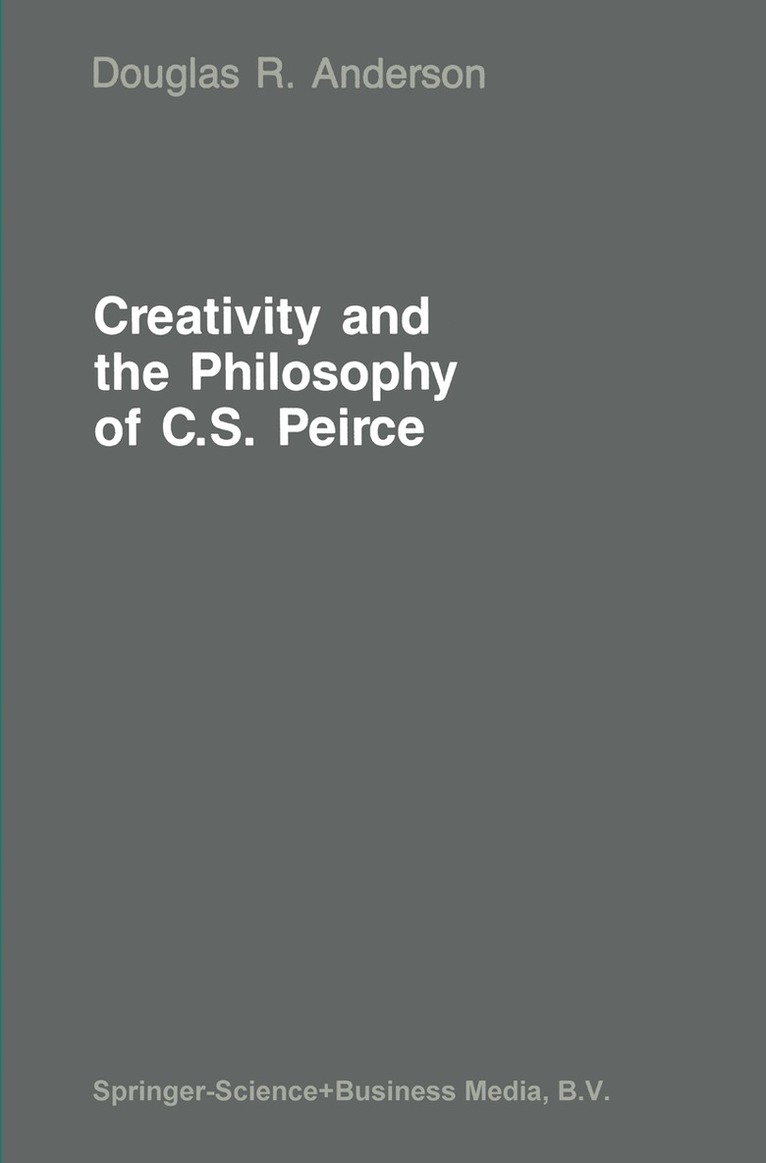
Charles Sanders Peirce is quickly becoming the dominant figure in the history of American philosophy. The breadth and depth of his work has begun to obscure even the brightest of his contemporaries. Concerning the interpretation of his work, however, there are two distinct schools. The first holds that Peirce's work is an aggregate of important but disconnected insights. The second school argues that his work is a systematic philosophy with many pieces of the overall picture still obscure or missing. It is this second view which seems to me the most reasonable, in part because it has been convincingly defended by other scholars, but most importantly because Peirce himself described his philosophy as systematic: What I would recommend is that every person who wishes to form an opinion concerning fundamental problems should first of all make a complete survey of human knowledge, should take note of all the valuable ideas in each branch of science, should observe in just what respect each has been successful and where it has failed, in order that, in the light of the thorough acquaintance so attained of the available materials for a philosophical theory and of the nature and strength of each, he may proceed to the study of what the problem of philosophy consists in, and of the proper way of solving it (6. 9) [1].
1 069 kr
Skickas inom 10-15 vardagar
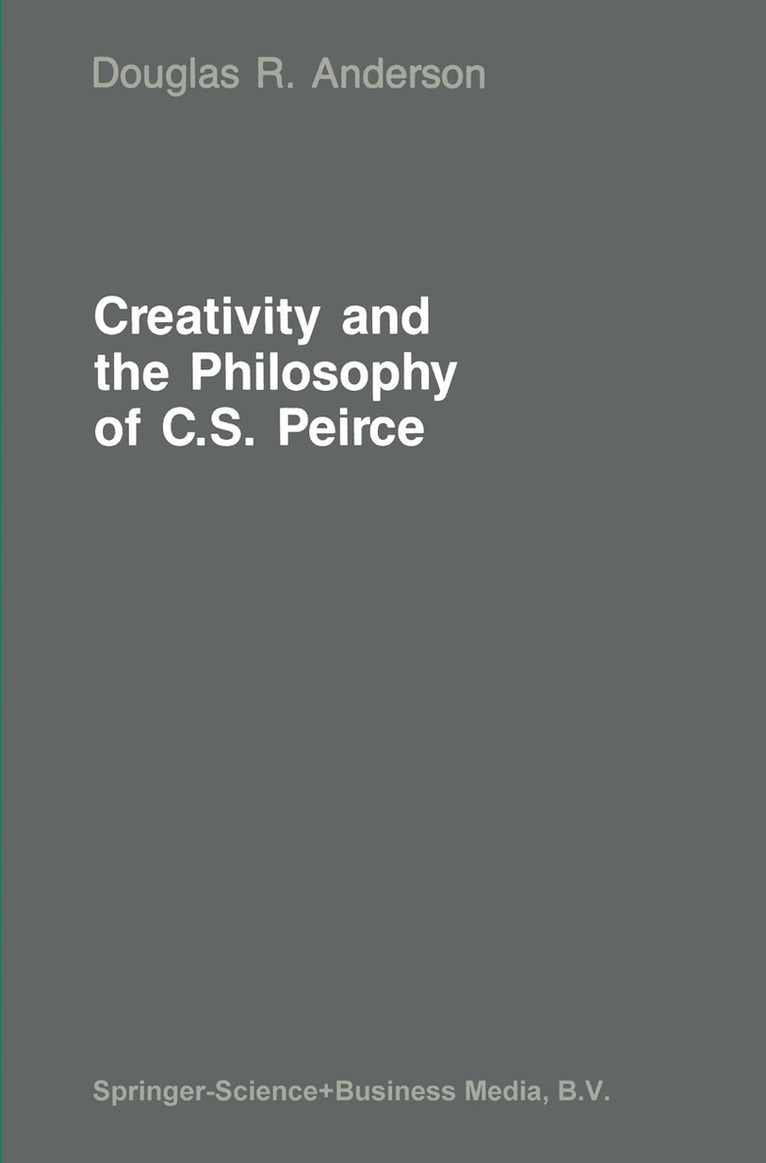
Charles Sanders Peirce is quickly becoming the dominant figure in the history of American philosophy. The breadth and depth of his work has begun to obscure even the brightest of his contemporaries. Concerning the interpretation of his work, however, there are two distinct schools. The first holds that Peirce's work is an aggregate of important but disconnected insights. The second school argues that his work is a systematic philosophy with many pieces of the overall picture still obscure or missing. It is this second view which seems to me the most reasonable, in part because it has been convincingly defended by other scholars, but most importantly because Peirce himself described his philosophy as systematic: What I would recommend is that every person who wishes to form an opinion concerning fundamental problems should first of all make a complete survey of human knowledge, should take note of all the valuable ideas in each branch of science, should observe in just what respect each has been successful and where it has failed, in order that, in the light of the thorough acquaintance so attained of the available materials for a philosophical theory and of the nature and strength of each, he may proceed to the study of what the problem of philosophy consists in, and of the proper way of solving it (6. 9) [1].