DWYER - Böcker
Visar alla böcker från författaren DWYER. Handla med fri frakt och snabb leverans.
2 produkter
2 produkter
2 779 kr
Skickas inom 5-8 vardagar
Ten years after the Civil Procedure Rules changed the landscape of civil justice in England and Wales, this book presents an analysis, by some of the leading judges, academics and practitioners involved in civil litigation in this country, of the effectiveness of the Woolf Reforms, and the challenges facing civil procedure today. With a Foreword by Lord Woolf of Barnes, contributors include some of those involved in the Access to Justice inquiry and the implementation of the CPR, as well as critics of the reforms. The book includes sections on the nature of the CPR as 'a new procedural code', case management, costs and funding, civil evidence (including the changes to expert evidence under the CPR), alternative dispute resolution, the influence of the CPR on reforms in civil law jurisdictions and the effect of EC law on English civil procedure, and empirical evidence for the effectiveness of the CPR.
3 797 kr
Skickas inom 7-10 vardagar
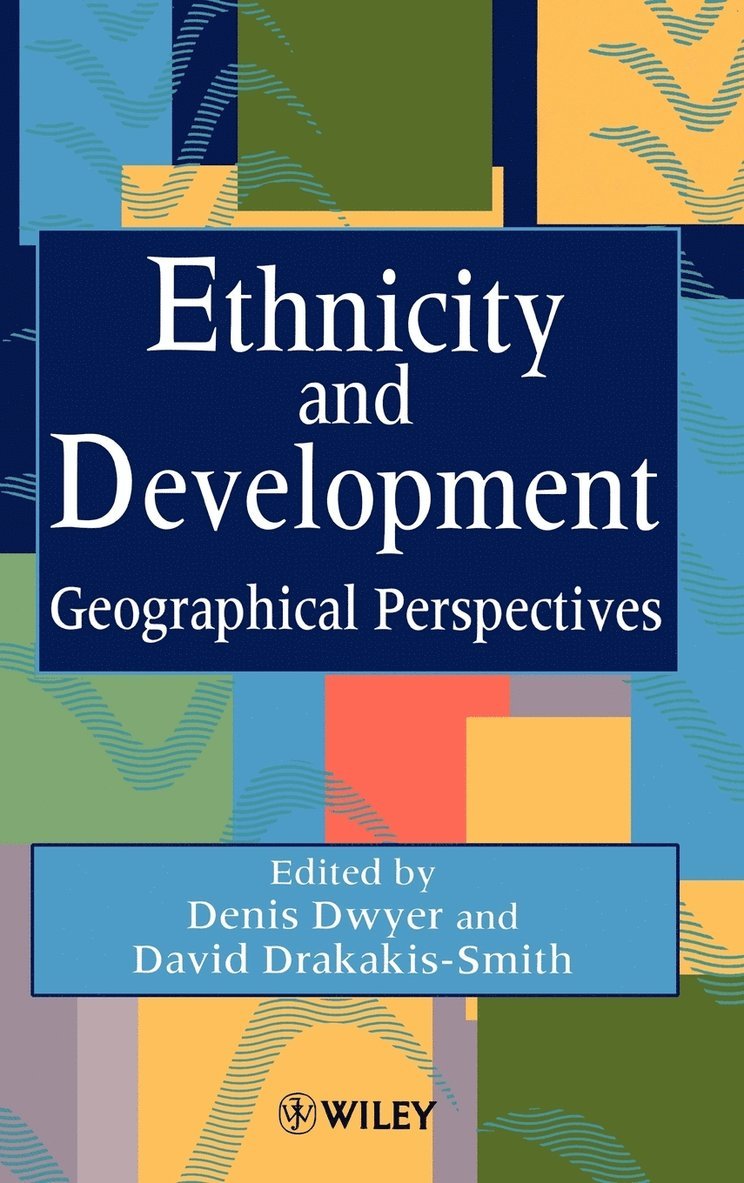
Following the collapse of international communism and the ending of the Cold War, the decade of the 1990s has seen international conflict replaced by internal, largely ethnic, conflict both of a violent and of a nonviolent nature. As a result, ethnicity has become one of the most important issues of the day. The social sciences and development studies have been slow to adopt new theoretical and practical perspectives with which to address this fundamentally changed situation. In traditional modernisation theory, ethnicity has been seen as an obstacle and claims to ethnic identity as anti-developmental. This book seeks to contribute towards a re-thinking of this position by focusing on the question of how policies of material improvement can be made compatible with the maintenance of fundamental ethnic identities which, in some senses, can even be considered a human right. Its argument is developed in two ways: firstly through a series of geographical studies, which examine the political and the economic contexts of the relationship between ethnicity and development through the consideration of significant national cases, such as South Africa, Kenya, Ethiopia, Mexico, Malaysia, Thailand and Singapore; and secondly through overview chapters, which place the case studies both within an appropriate theoretical frame and within a broader practical perspective of ethnicity as a highly significant contemporary global phenomenon. Ethnicity and Development will make essential reading for students of geography, development studies and African studies.