Earl M. Maltz – författare
Visar alla böcker från författaren Earl M. Maltz. Handla med fri frakt och snabb leverans.
8 produkter
8 produkter
613 kr
Skickas inom 10-15 vardagar
A new perspective on the debate about the 13th, 14th and 15th amendments to the American Constitution which cover civil rights legislation. The author argues that the political dynamic that produced them reflected the ideology and intentions of the more conservative Republicans.
Rethinking Constitutional Law
Originalism, Interventionism and the Politics of Judicial Review
Inbunden, Engelska, 1994
548 kr
Skickas inom 10-15 vardagar
This text calls for a re-evaluation of US Constitutional theory. The work re-orients the debate between originalists (those who believe that judges should be bound by the original understanding in constitutional adjudication) and non-originalists.
363 kr
Skickas inom 10-15 vardagar
With seven of its justices appointed by Republican presidents, today's Supreme Court has significantly altered America's legal landscape since 1986 by tilting constitutional jurisprudence to the right. That was the goal of Presidents Reagan and Bush in filling court vacancies and has been felt in cases related to federalism, economic rights, and affirmative action. However, liberal issues such as abortion have moved only marginally to the right, while rulings by the Court on school prayer and gay rights have moved constitutional doctrine slightly to the left. Here prominent constitutional scholars are joined by new voices from the cutting edge of academia to show that the Rehnquist Court's conservatism is less extreme than many have supposed. Reflecting views across the political spectrum, the contributors help readers understand the Court dynamic, its constrained conservatism, and the forces that shape constitutional law in general. As these authors show, the overall pattern of decision-making in the Rehnquist era cannot be attributed to any single, unified approach to constitutional analysis. Instead, it can only be understood as the product of a complex interaction among individual justices, each with an idiosyncratic view of the proper interpretation of the Constitution and the role of the Court in the American political system. These essays provide insight into this interaction by focusing on each member of the bench. From the staunch conservatism of Clarence Thomas, to the ""accommodationism"" of Sandra Day O'Connor, to the ""liberal constitutionalism"" of David Souter, the essays analyze the unique approach of each justice to interpreting the Constitution. They also show that the current justices are the product of a nomination and confirmation process that has undergone a major transformation - one which now favors experienced, often unknown jurists over high-profile public servants. By concentrating attention on its members, Rehnquist Justice allows us to better understand the Supreme Court as a whole. And by assessing today's judiciary in light of a public philosophy that looks askance at government, it shows us that the Supreme Court has truly become a mirror of its times.
716 kr
Skickas inom 5-8 vardagar
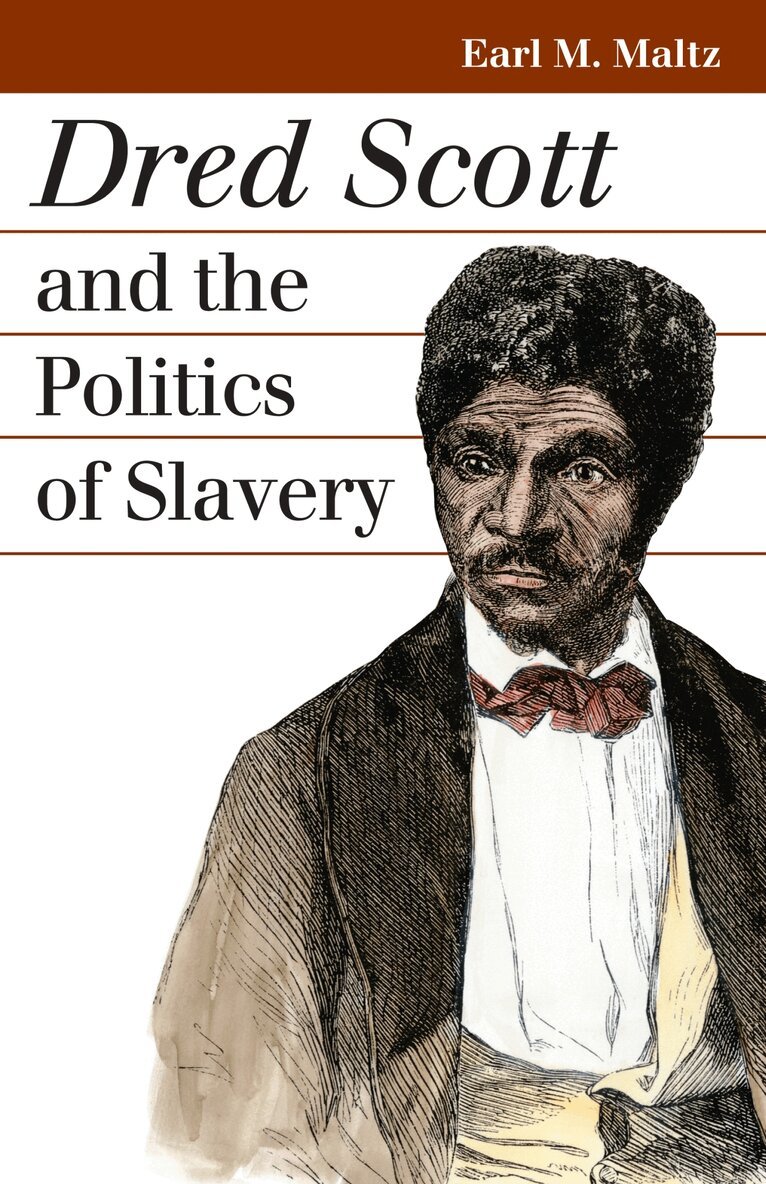
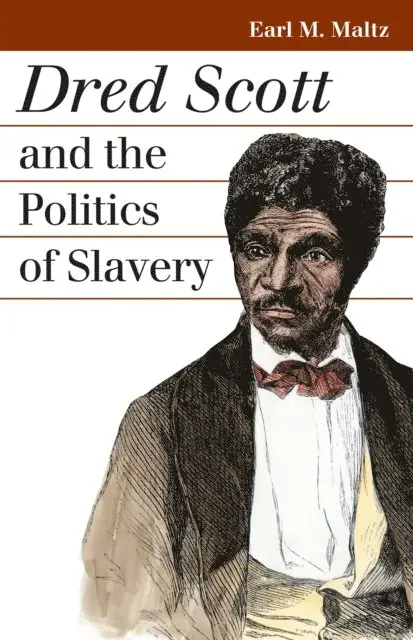
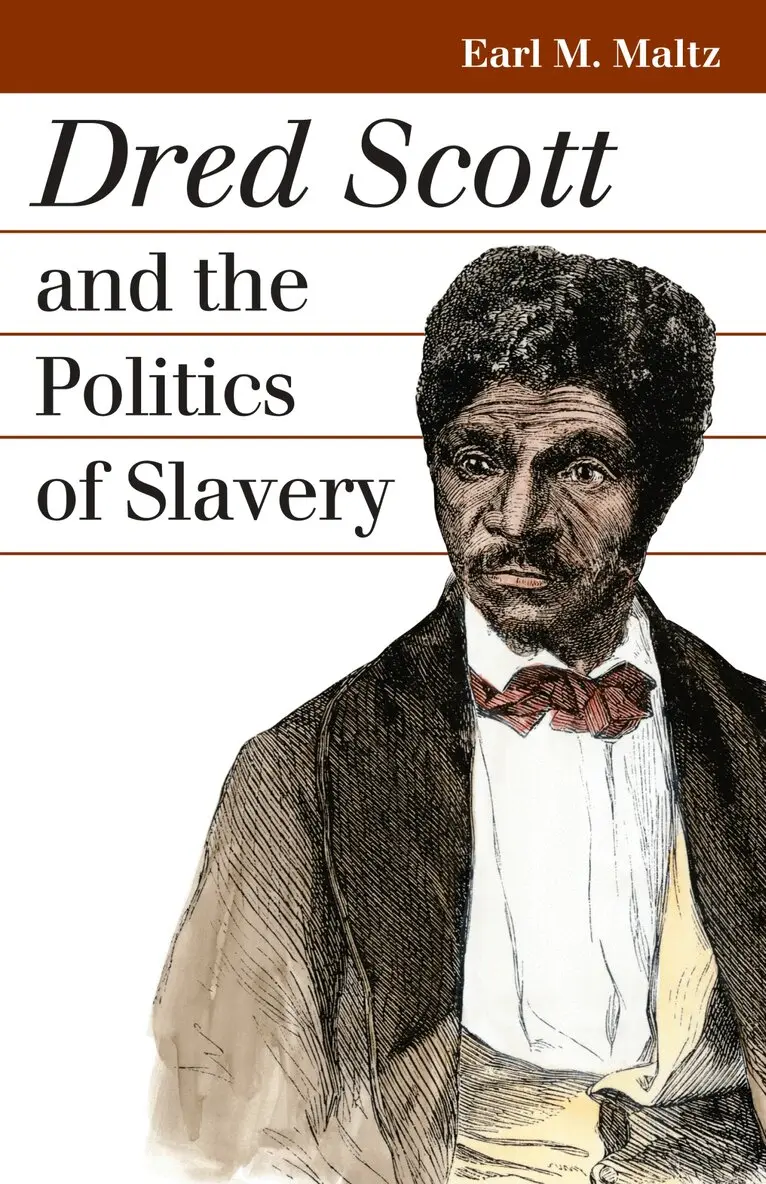
The slave Dred Scott claimed that his residence in a free state transformed him into a free man. His lawsuit took many twists and turns before making its way to the Supreme Court in 1856. But when the Court ruled against him, the ruling sent shock waves through the nation and helped lead to civil war. Writing for the 7-to-2 majority, Chief Justice Roger Taney asserted that blacks were not and never could be citizens. Taney also ruled that the Missouri Compromise of 1820 was unconstitutional, upsetting the balance of slave and free states. Earl Maltz now offers a new look at this landmark case, presenting Dred Scott as a turning point in an already contentious national debate. Maltz's accessible account depicts Dred Scott as both a contributing factor to war and the result of a political climate that had grown so threatening to the South that overturning the Missouri Compromise was considered essential. As the nation continued its rapid expansion, Southerners became progressively more fearful of the free states' growing political clout. In that light, the ruling from a Court filled with justices sympathetic to the Southern cause, though far from surprising helped light the long fuse that eventually exploded into Civil War. Maltz offers an uncommonly balanced look at the case, taking Southern concerns seriously to cast new light on why proponents of slavery saw things as they did. He presents the arguments of all the parties impartially, tracks the sequence of increasingly strained compromises between pro- and anti-slavery forces, and demonstrates how political and sectional influences infiltrated the legal issues. He then traces the impact of the case on Northern and Southern public opinion, showing how a decision meant to resolve the question of slavery in the territories only aggravated sectional animosity. By presenting a more nuanced picture of the pro-Southern justices on the Court, Maltz offers readers a better understanding of how they came to their opinions, even as they failed to anticipate the impact their decision would have - a miscalculation that to some degree undermined the Court's power and authority within the American political system. Ultimately, as Maltz suggests, this is a story of judicial failure, one that remains a vital chapter in American law and one that must be mastered by anyone wishing to understand the peculiar nature of our national history.
661 kr
Skickas inom 5-8 vardagar
534 kr
Skickas inom 3-6 vardagar
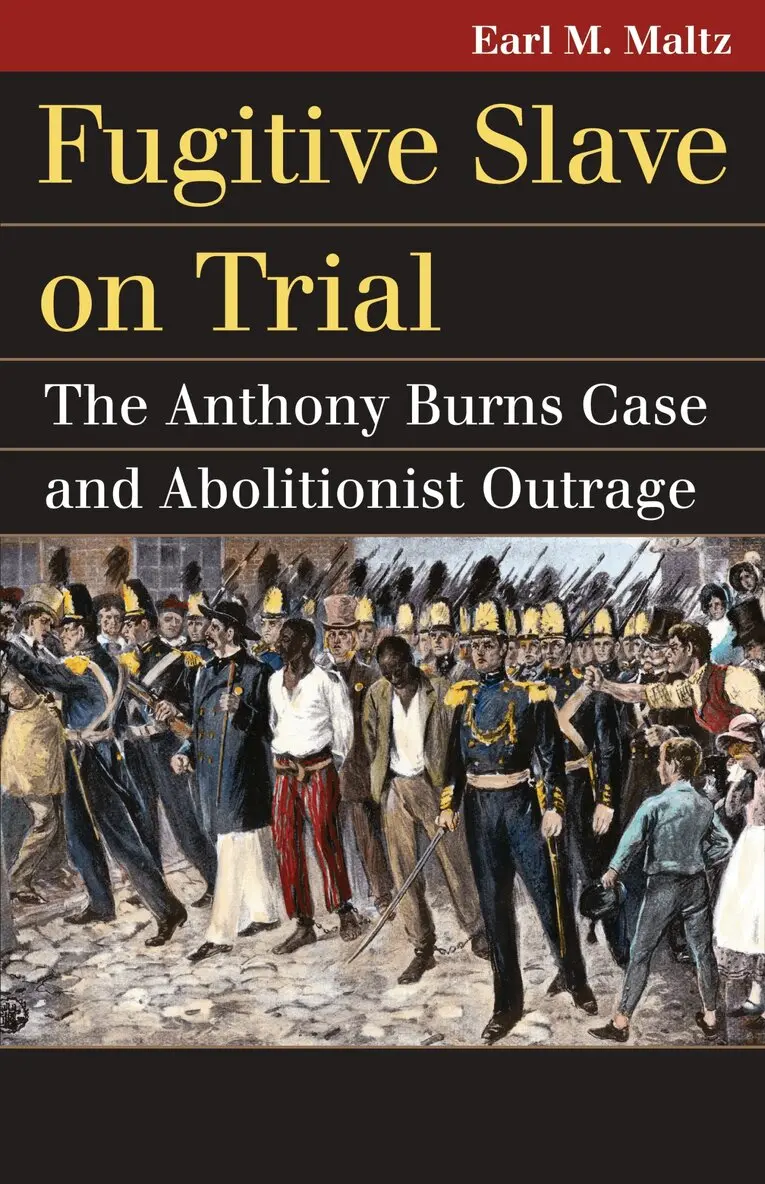
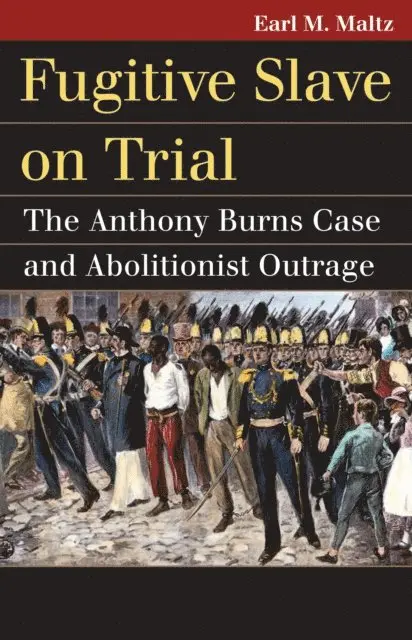
When runaway slave Anthony Burns was tracked to Boston by his owner Charles Suttle, the struggle over his fate became a focal point for national controversy. Boston, a hotbed of antislavery sentiment, provided the venue for the 1854 hearing that determined Burns's legal status, one of the most dramatic and widely publicized events in the long-running conflict over the issue of fugitive slaves.Earl Maltz's compelling chronicle of this case shows how the violent emotions surrounding it played out at both the local and national levels, focusing especially on the awkward position in which trial judge Edward Loring found himself. A unionist who also supported enforcement of the Fugitive Slave Act, Loring was committed to the idea that each individual case should be decided by reference to neutral principles, which ultimately led him to remand Burns to Suttle's custody. Although, as Maltz argues, Loring's decision was indisputably correct on the facts and justified by existing legal precedent, it also ignited a firestorm of protest.Maltz locates the Burns case in arguments over slavery going back to the Constitution's rendition clause, then follows it through two iterations of federal statutes in 1793 and 1850, a miniature legal war between the governors of Massachusetts and Virginia, and abolitionists' violent resistance to federal law. He also cites Loring's intellectual honesty and determination to apply the law as written, no matter what it might cost him.As the last of a series of high-profile disputes in Massachusetts, the Burns case underscores the abolitionist attitude of many of the state's residents toward the fugitive slave issue, providing readers with a you-are-there view of an actual fugitive slave case hearing and encouraging them to grapple with the question of how a conscientious judge committed to the rule of law should act in such a case. It also sheds light on the political costs and consequences for any judicial official attempting to deliver a decision on such a controversial issue while surrounded by a hostile public.A story as dramatic and compelling as any in our legal annals, Fugitive Slave on Trial dissects an important historical event as it sheds new light on the state of the Union in the mid-1850s and the events that led to its eventual dismemberment.
Coming of the Nixon Court
The 1972 Term and the Transformation of Constitutional Law
Inbunden, Engelska, 2016
613 kr
Skickas inom 10-15 vardagar
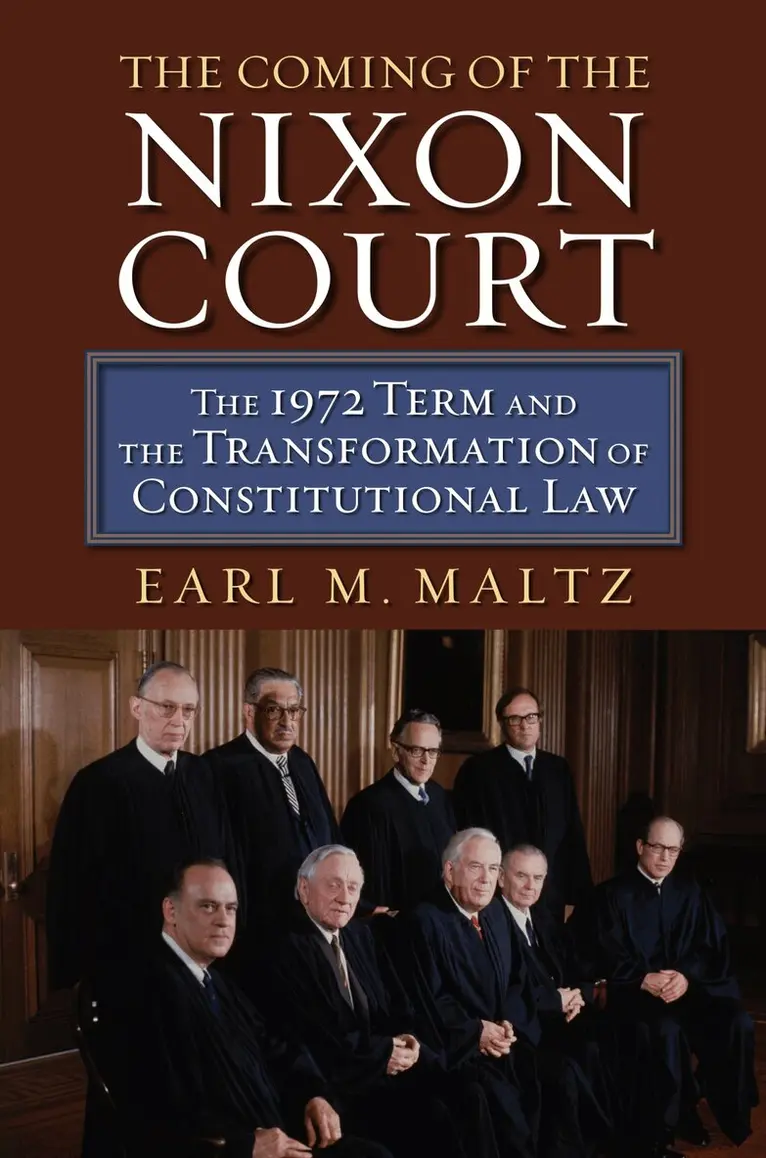
Beginning with Brown v. Board of Education and continuing with a series of decisions that, among other things, expanded the reach of the Bill of Rights, the Supreme Court that Richard Nixon inherited had presided over a progressive revolution in the law. But by 1972 Nixon had managed to replace four members of the so-called Warren Court with justices more aligned with his own law-and-order conservatism. Nixon's appointees-Warren Burger as Chief Justice and Harry Blackmun, Lewis Powell, and William Rehnquist as associate justices-created a politically diverse bench, one that included not only committed progressives and conservatives, but also justices with a wide variety of more moderate views. The addition of the Nixon justices dramatically changed the trajectory of American constitutional jurisprudence with ramifications continuing to this day.This book is an account of the actions of the ""Nixon Court"" during the 1972 term-a term during which one of the most politically diverse benches of the era would confront a remarkably broad array of issues with major implications for the future of constitutional law. By looking at the term's cases-most notably Roe v. Wade, but also those addressing school desegregation, criminal procedure, obscenity, the rights of the poor, gender discrimination, and aid to parochial schools-Earl Maltz offers a detailed picture of the unique interactions behind each decision. His book provides the reader with a rare close-up view of the complexity of the forces that shape the responses of a politically diverse Court to ideologically divisive issues-responses that, taken together, would shape the evolution of constitutional doctrine for decades to come.
679 kr
Skickas inom 7-10 vardagar
A summary and analysis of the Supreme Court's impact on American law and government during the tenureship of Warren Burger. Earl M. Maltz contends that in many areas of constitutional law the Burger Court produced the most liberal jurisprudence in history.