Earl Wright – författare
Visar alla böcker från författaren Earl Wright. Handla med fri frakt och snabb leverans.
4 produkter
4 produkter
440 kr
Skickas inom 5-8 vardagar
1 078 kr
Kommande
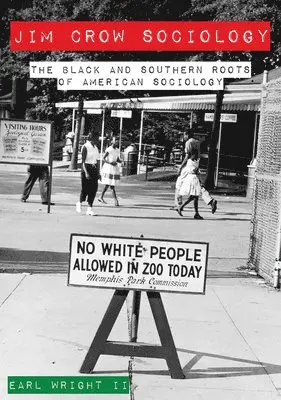
Originally published in 2020, Jim Crow Sociology is a lauded history of how “Black sociology” came into existence. Diving into the history of four historically Black colleges and universities and their roles in pioneering a new intellectual field, Earl Wright II argues that the roots of sociology lie not in the primarily white Ivies but in HBCUs. Wright’s work is foundational in tracing the roots of sociology at distinct institutions. Tuskegee Institute, for example, established the first program of applied rural sociology under the leadership of Booker T. Washington. Fisk University, under the guidance of first George Edmund Haynes and then Charles S. Johnson, developed one of the earliest and most influential programs of applied urban sociology. The history of W. E. B. Du Bois’s Atlanta Sociological Laboratory reveals the contributions of women to the first American school of sociology. In exploring the histories of these institutions and programs, Wright upends old ideas about the roots of an academic discipline and makes the case that sociology began in the United States as a Black and Southern enterprise.
297 kr
Kommande
Originally published in 2020, Jim Crow Sociology is a lauded history of how “Black sociology” came into existence. Diving into the history of four historically Black colleges and universities and their roles in pioneering a new intellectual field, Earl Wright II argues that the roots of sociology lie not in the primarily white Ivies but in HBCUs. Wright’s work is foundational in tracing the roots of sociology at distinct institutions. Tuskegee Institute, for example, established the first program of applied rural sociology under the leadership of Booker T. Washington. Fisk University, under the guidance of first George Edmund Haynes and then Charles S. Johnson, developed one of the earliest and most influential programs of applied urban sociology. The history of W. E. B. Du Bois’s Atlanta Sociological Laboratory reveals the contributions of women to the first American school of sociology. In exploring the histories of these institutions and programs, Wright upends old ideas about the roots of an academic discipline and makes the case that sociology began in the United States as a Black and Southern enterprise.
414 kr
Skickas inom 7-10 vardagar
Jim Crow Sociology: The Black and Southern Roots of American Sociology is an extraordinary new volume that examines the origin, development, and significance of Black Sociology through the accomplishments of early African American sociologists at Historically Black Colleges and Universities (HBCUs) such as Atlanta University, Tuskegee Institute, Fisk University, and Howard University. Black Sociology is a concept that weaponizes the discipline for that which is “right and good” and prioritizes scholar-activist inspired research directed at impacting real world conditions of African Americans.Guided by this approach, this book debunks the idea that the sociology practiced by early African Americans does not exemplify scholarly excellence. Instead, Earl Wright demonstrates that Tuskegee Institute, under the leadership of Booker T. Washington, established the first applied program of rural sociology. Fisk University, first under the guidance of George Edmund Haynes then Charles S. Johnson, developed one of the earliest and most impactful programs of applied urban sociology. Wright extends our understanding of W. E. B. Du Bois’s Atlanta Sociological Laboratory with an articulation of the contributions of women to the first American school of sociology. Jim Crow Sociology forces contemporary scholars to grapple with who are and who are not included in the disciplinary canon. Specifically, this book forces us to ask why early African American sociologists and HBCUs are not canonized. What makes this book most consequential is that it provides evidence supporting the proposition that sociology began in earnest in the United States as a Black and southern enterprise.