Edward E. Cohen – författare
Visar alla böcker från författaren Edward E. Cohen. Handla med fri frakt och snabb leverans.
12 produkter
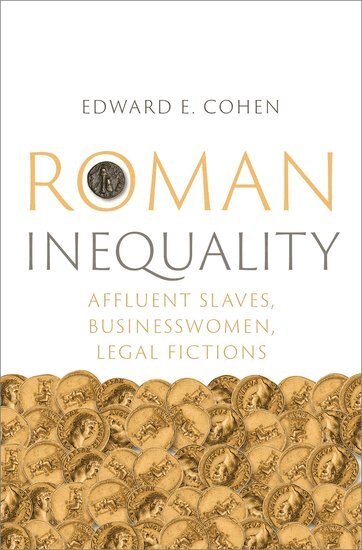
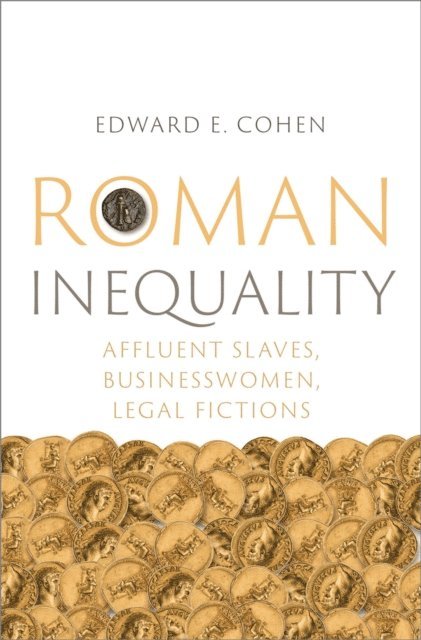
Roman Inequality
Affluent Slaves, Businesswomen, Legal Fictions
Inbunden, 2023
888 kr
Lägg i varukorg
Roman Inequality explores how in Rome in the first and second centuries CE a number of male and female slaves, and some free women, prospered in business amidst a population of generally impoverished free inhabitants and of impecunious enslaved residents. Edward E. Cohen focuses on two anomalies to …
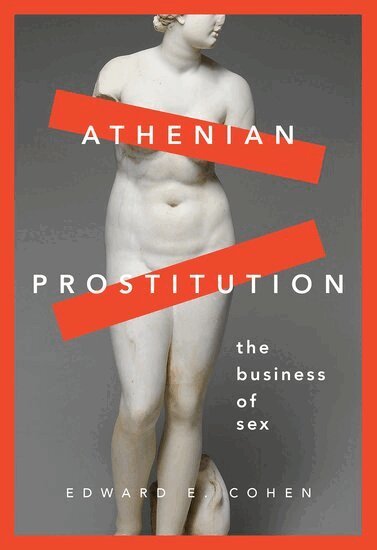
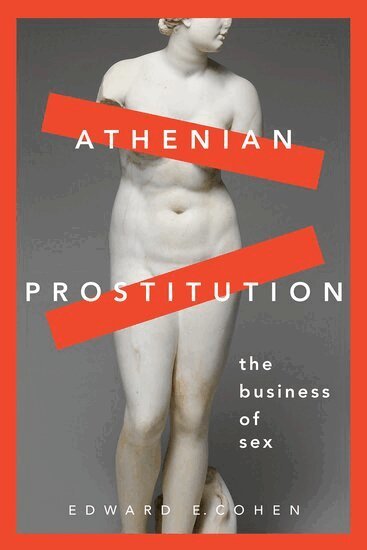
Athenian Prostitution
The Business of Sex
Inbunden, 2016
2092 kr
Lägg i varukorg
This is a pioneering study that examines the sale of sex in classical Athens from a commercial (rather than from a cultural or moral) perspective. Following the author's earlier book on Athenian banking, Athenian Prostitution analyzes erotic business at Athens not anachronistically, but in the …
Athenian Prostitution
The Business of Sex
E-bok, 2015
604 kr
Lägg i varukorg
This is a pioneering study that examines the sale of sex in classical Athens from a commercial (rather than from a cultural or moral) perspective. Following the author''s earlier book on Athenian banking, this work analyzes erotic business at Athens in the context of the Athenian economy. For the …
Athenian Prostitution
The Business of Sex
E-bok, 2015
604 kr
Lägg i varukorg
This is a pioneering study that examines the sale of sex in classical Athens from a commercial (rather than from a cultural or moral) perspective. Following the author''s earlier book on Athenian banking, this work analyzes erotic business at Athens in the context of the Athenian economy. For the …
Athenian Prostitution
The Business of Sex
Häftad, 2018
865 kr
Lägg i varukorg
This is a pioneering study that examines the sale of sex in classical Athens from a commercial (rather than from a cultural or moral) perspective. Following the author's earlier book on Athenian banking, this work analyzes erotic business at Athens in the context of the Athenian economy. For the …
Roman Inequality
Affluent Slaves, Businesswomen, Legal Fictions
E-bok, 2023
793 kr
Lägg i varukorg
Roman Inequality explores how in Rome in the first and second centuries CE a number of male and female slaves, and some free women, prospered in business amidst a population of generally impoverished free inhabitants and of impecunious enslaved residents. Edward E. Cohen focuses on two anomalies to …
Roman Inequality
Affluent Slaves, Businesswomen, Legal Fictions
E-bok, 2023
793 kr
Lägg i varukorg
Roman Inequality explores how in Rome in the first and second centuries CE a number of male and female slaves, and some free women, prospered in business amidst a population of generally impoverished free inhabitants and of impecunious enslaved residents. Edward E. Cohen focuses on two anomalies to …
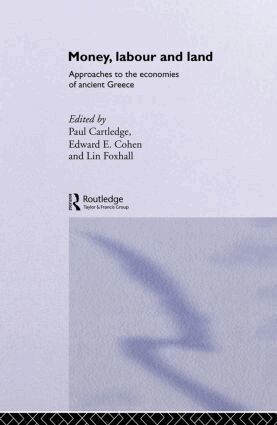
Money, Labour and Land
Approaches to the economics of ancient Greece
Av Paul Cartledge, Edward E. Cohen m. fl.
Inbunden, 2001
2586 kr
Lägg i varukorg
The cultural wealth of the classical Greek world was matched by its material wealth, and there is abundant textual and archaeological evidence for both. However, radically different theoretical and methodological approaches have been used to interpret this evidence, and conflicts continue to rage …
Money, Labour and Land
Approaches to the economics of ancient Greece
Av Paul Cartledge, Edward E. Cohen m. fl.
Häftad, 2012
937 kr
Lägg i varukorg
The cultural wealth of the classical Greek world was matched by its material wealth, and there is abundant textual and archaeological evidence for both. However, radically different theoretical and methodological approaches have been used to interpret this evidence, and conflicts continue to rage …
Money, Labour and Land
Approaches to the economics of ancient Greece
Av Lin Foxhall, Edward E. Cohen m. fl.
E-bok, 2005
1071 kr
Lägg i varukorg
The cultural wealth of the classical Greek world was matched by its material wealth, and there is abundant textual and archaeological evidence for both. However, radically different theoretical and methodological approaches have been used to interpret this evidence, and conflicts continue to rage …
Money, Labour and Land
Approaches to the economics of ancient Greece
Av Lin Foxhall, Edward E. Cohen m. fl.
E-bok, 2005
1106 kr
Lägg i varukorg
The cultural wealth of the classical Greek world was matched by its material wealth, and there is abundant textual and archaeological evidence for both. However, radically different theoretical and methodological approaches have been used to interpret this evidence, and conflicts continue to rage …