Edward John Still - Böcker
Visar alla böcker från författaren Edward John Still. Handla med fri frakt och snabb leverans.
2 produkter
2 produkter
1 492 kr
Skickas inom 5-8 vardagar
This monograph explores the ways in which canonical Francophone Algerian authors, writing in the late-colonial period (1945–1962), namely Kateb Yacine, Mohammed Dib, Mouloud Feraoun, Mouloud Mammeri and Assia Djebar, approached the representation of Algerian women through literature. The book initially argues that a masculine domination of public fields of representation in Algeria contributed to a postcolonial marginalization of women as public agents. However, it crucially also argues that the canonical writers of the period, who were mostly male, both textually acknowledged their inability to articulate the experiences and subjectivity of the feminine Other and deployed a remarkable variety of formal and conceptual innovations in producing evocations of Algerian femininity that subvert the structural imbalance of masculine symbolic hegemony. Though it does not shy from investigating those aspects of its corpus that produce ideologically conditioned masculinist representations, the book chiefly seeks to articulate a shared reluctance concerning representativity, a pessimism regarding the revolution's capacity to deliver change for women, and an omnipresent subversion of masculine subjectivity in its canonical texts.
Del 68 - Mimesis
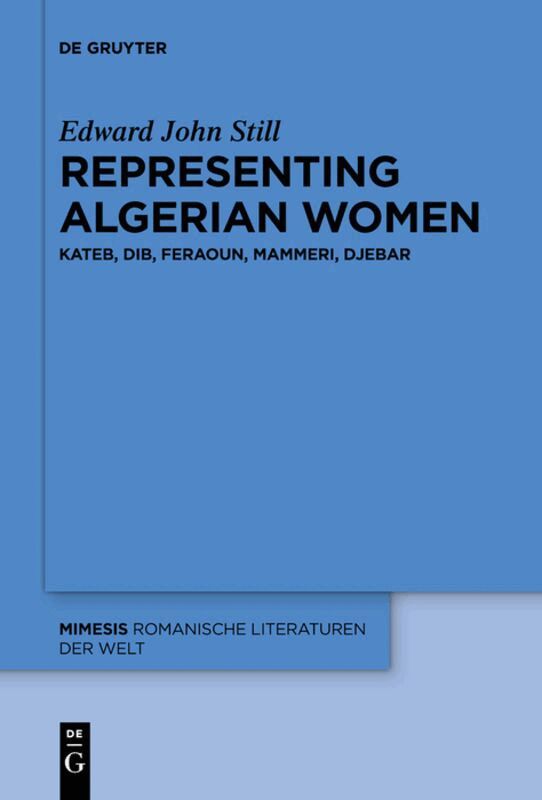
Representing Algerian Women
Kateb, Dib, Feraoun, Mammeri, Djebar
Häftad, Engelska, 2020
360 kr
Skickas inom 5-8 vardagar
This monograph explores the ways in which canonical Francophone Algerian authors, writing in the late-colonial period (1945–1962), namely Kateb Yacine, Mohammed Dib, Mouloud Feraoun, Mouloud Mammeri and Assia Djebar, approached the representation of Algerian women through literature. The book initially argues that a masculine domination of public fields of representation in Algeria contributed to a postcolonial marginalization of women as public agents. However, it crucially also argues that the canonical writers of the period, who were mostly male, both textually acknowledged their inability to articulate the experiences and subjectivity of the feminine Other and deployed a remarkable variety of formal and conceptual innovations in producing evocations of Algerian femininity that subvert the structural imbalance of masculine symbolic hegemony. Though it does not shy from investigating those aspects of its corpus that produce ideologically conditioned masculinist representations, the book chiefly seeks to articulate a shared reluctance concerning representativity, a pessimism regarding the revolution's capacity to deliver change for women, and an omnipresent subversion of masculine subjectivity in its canonical texts.